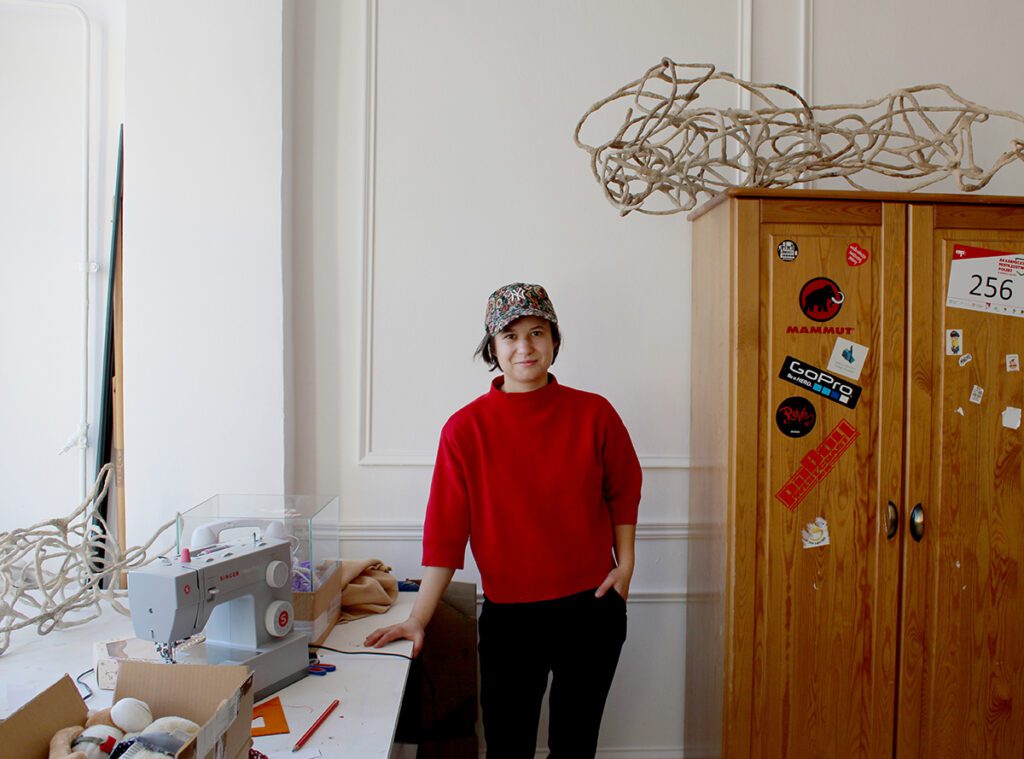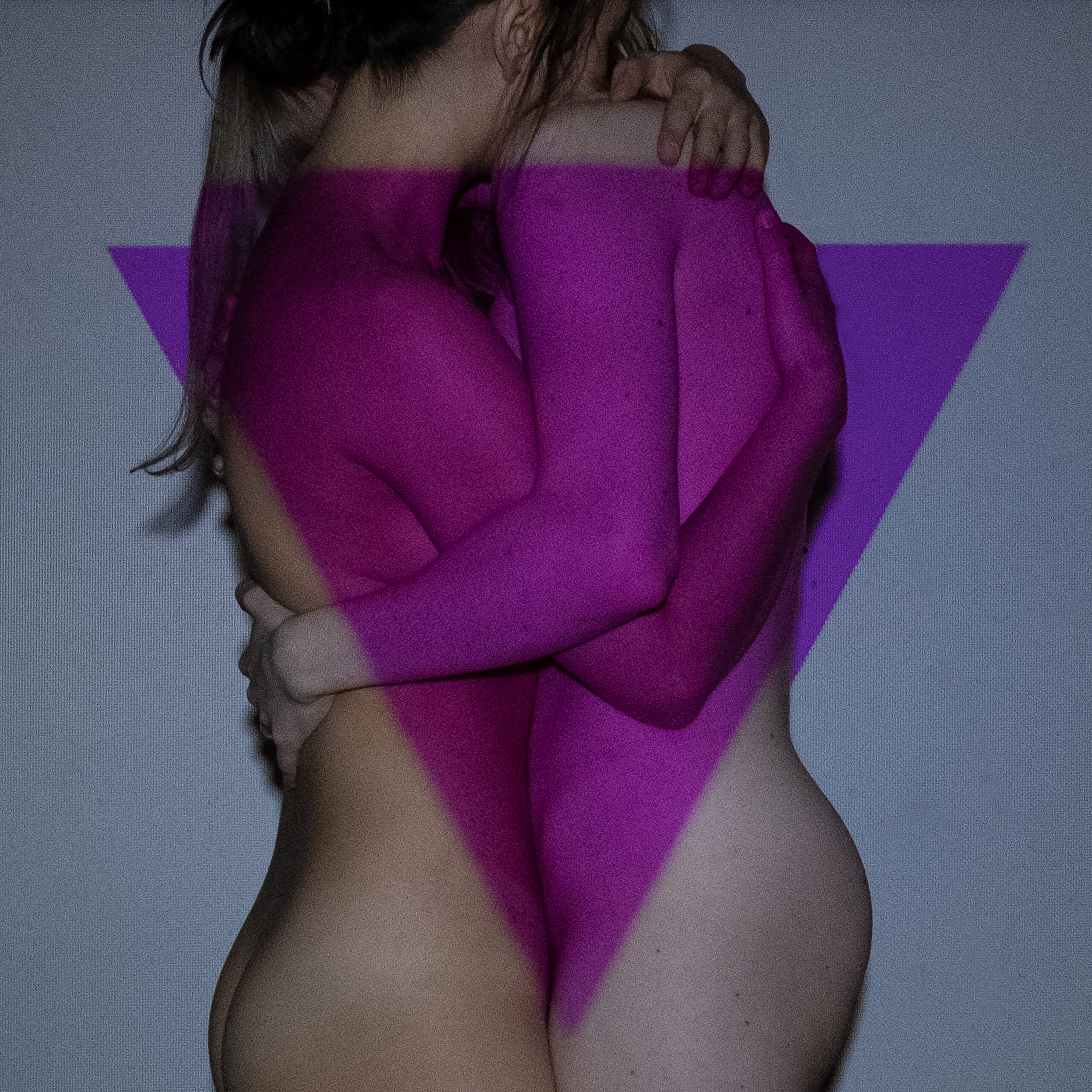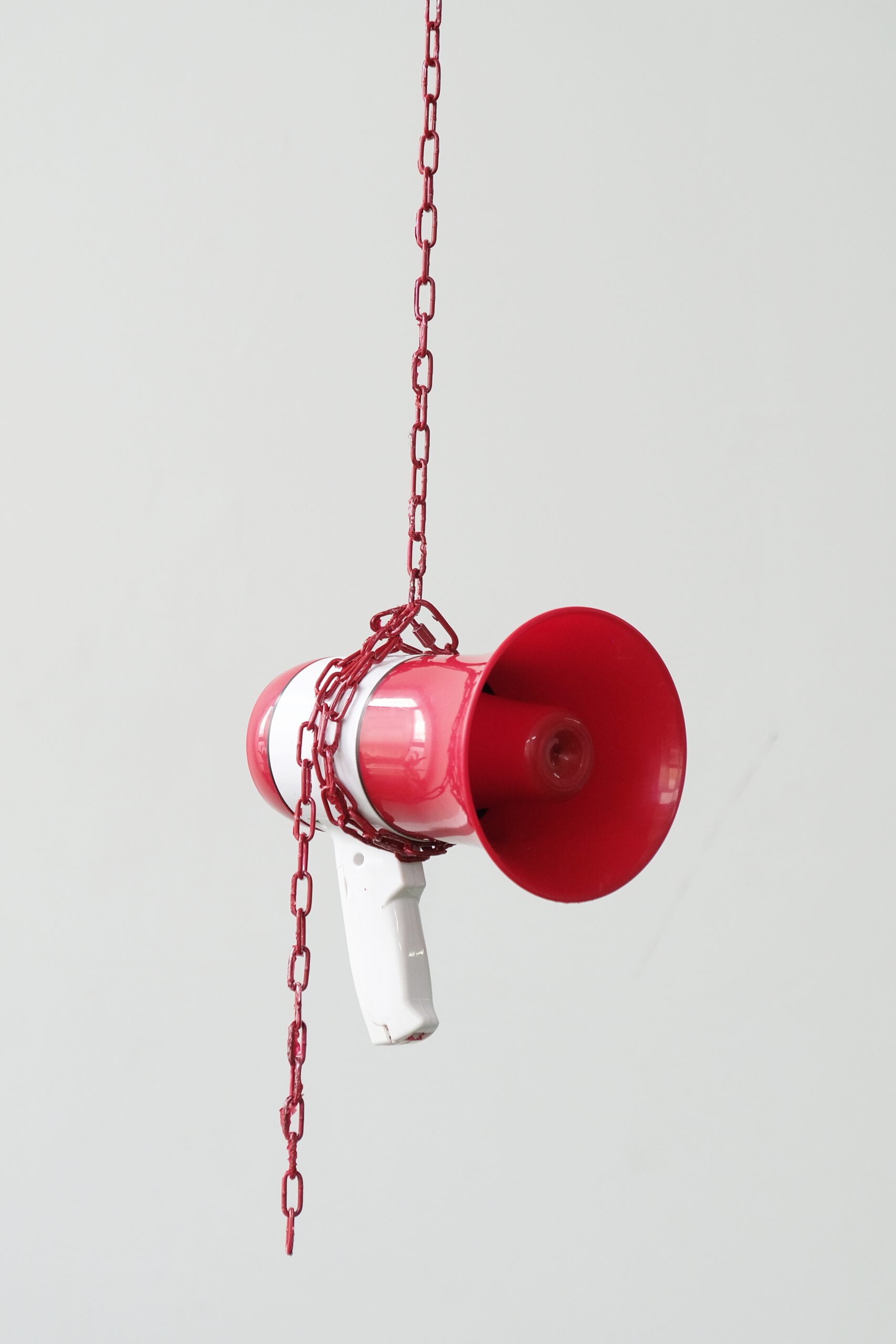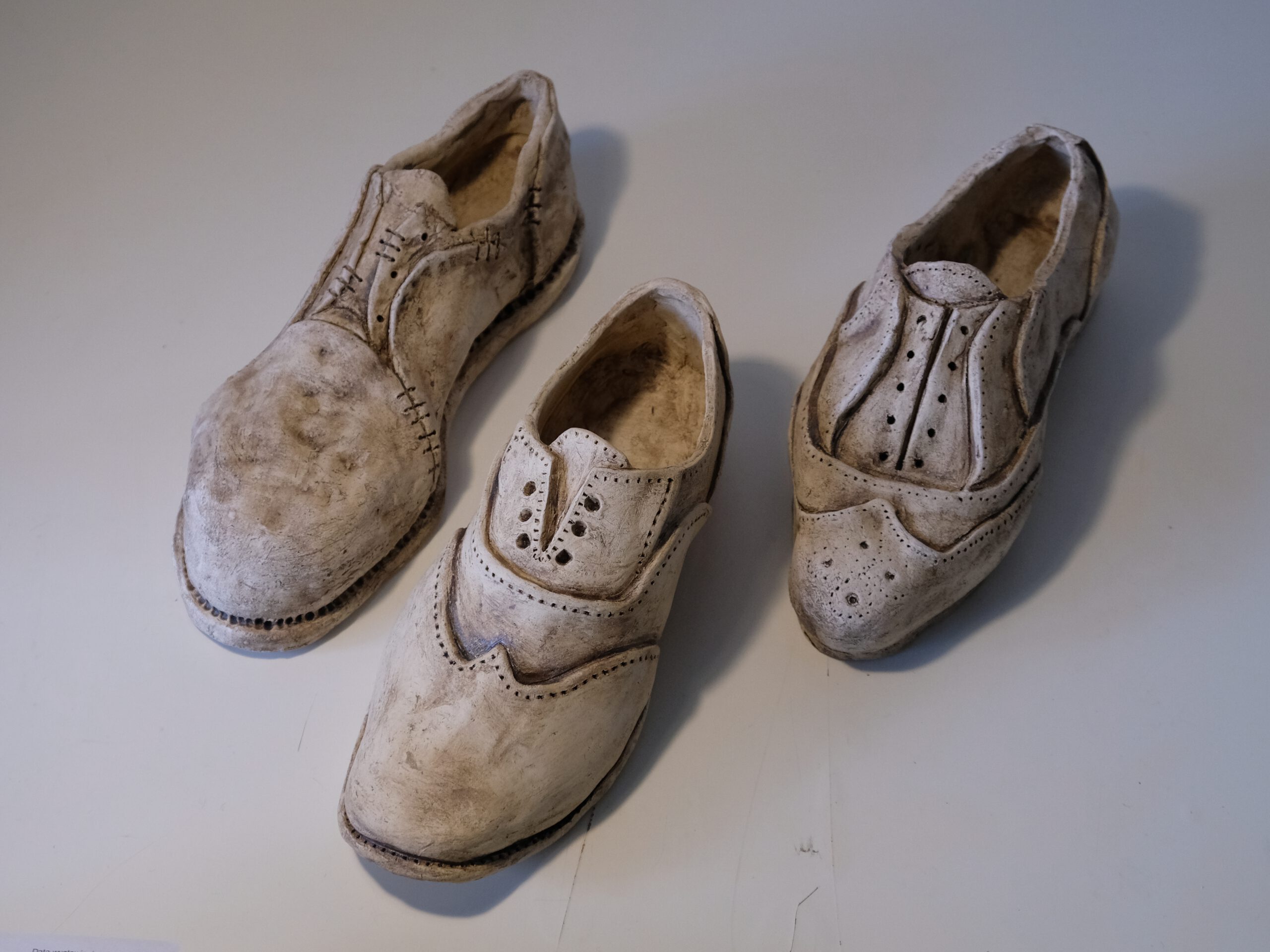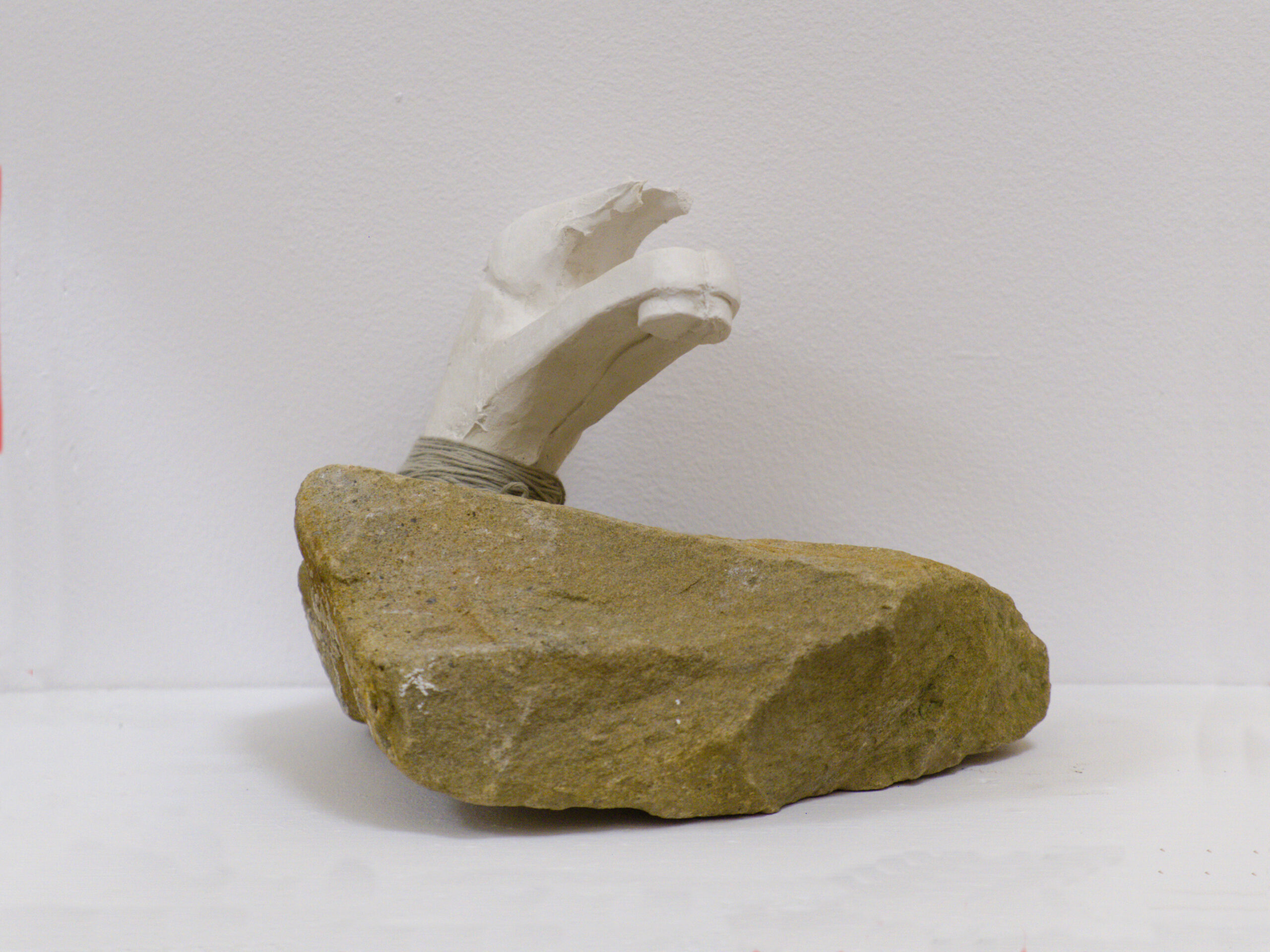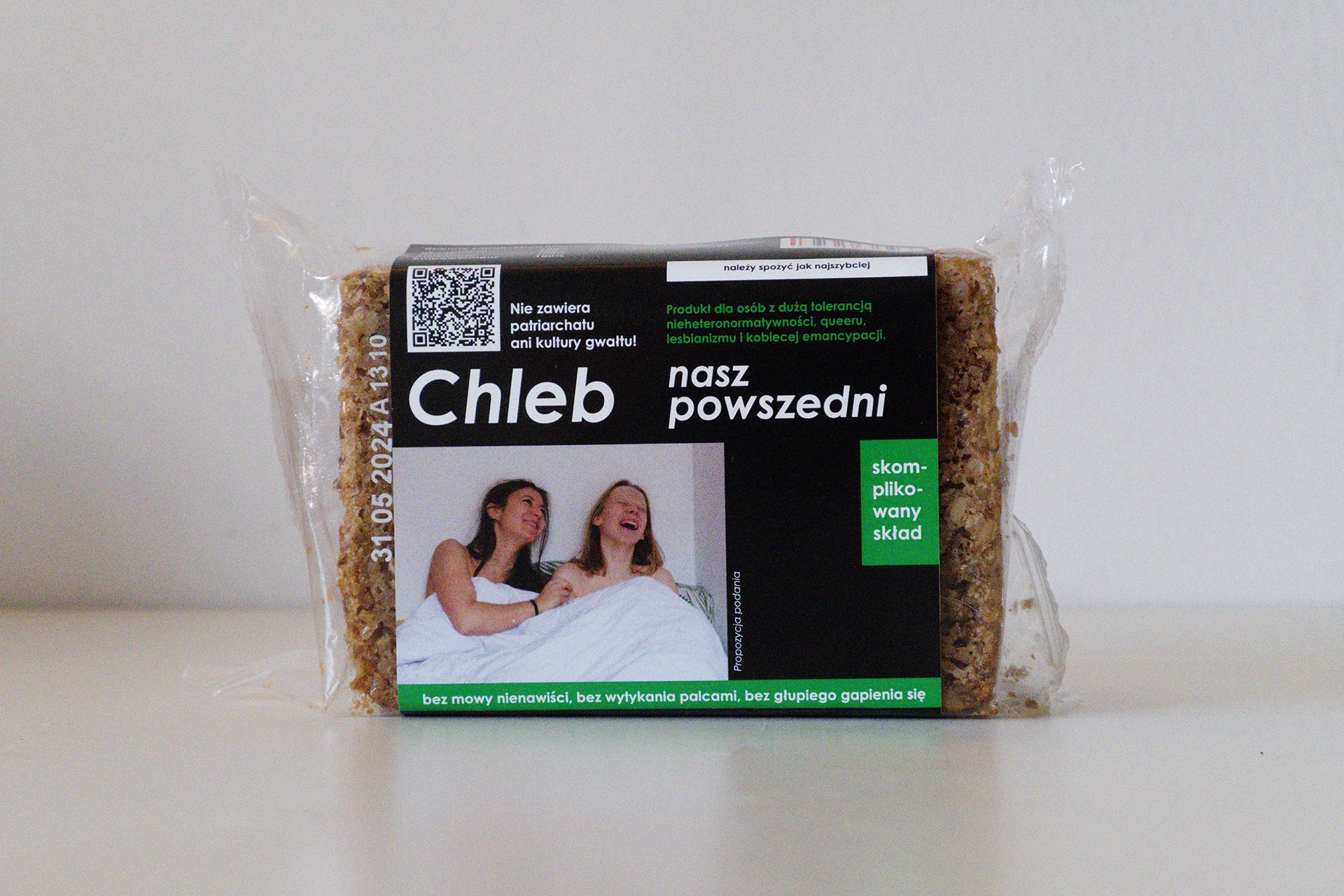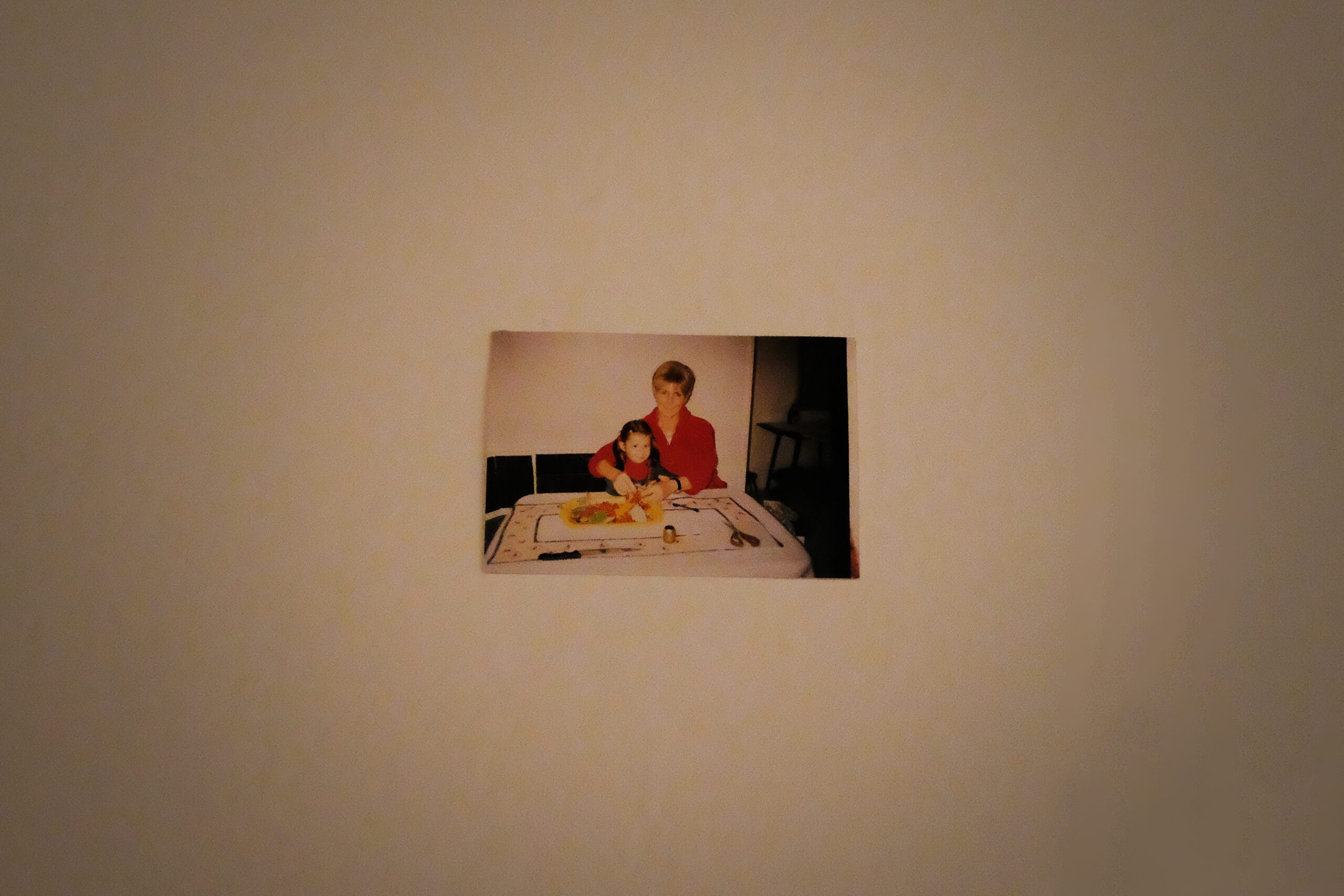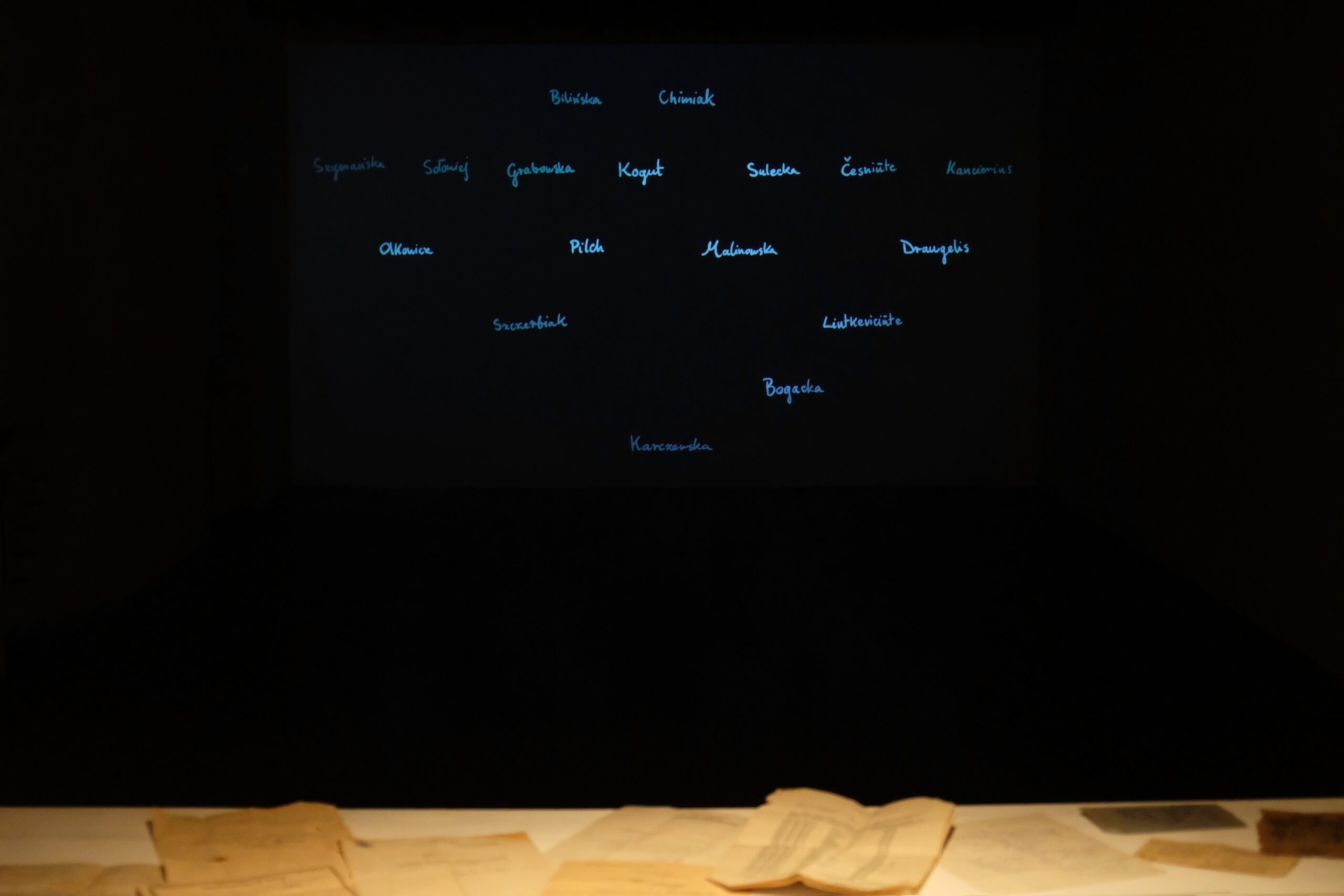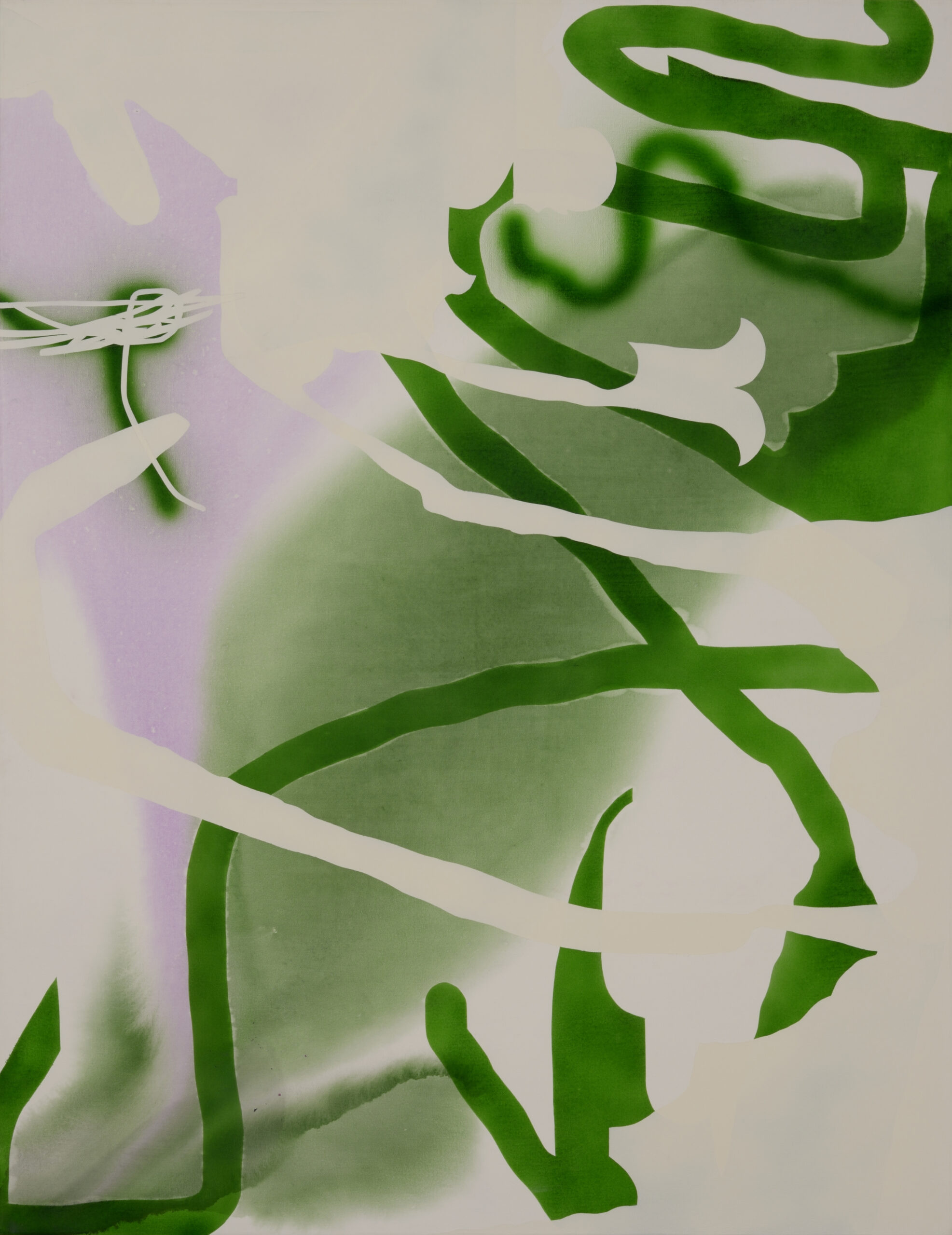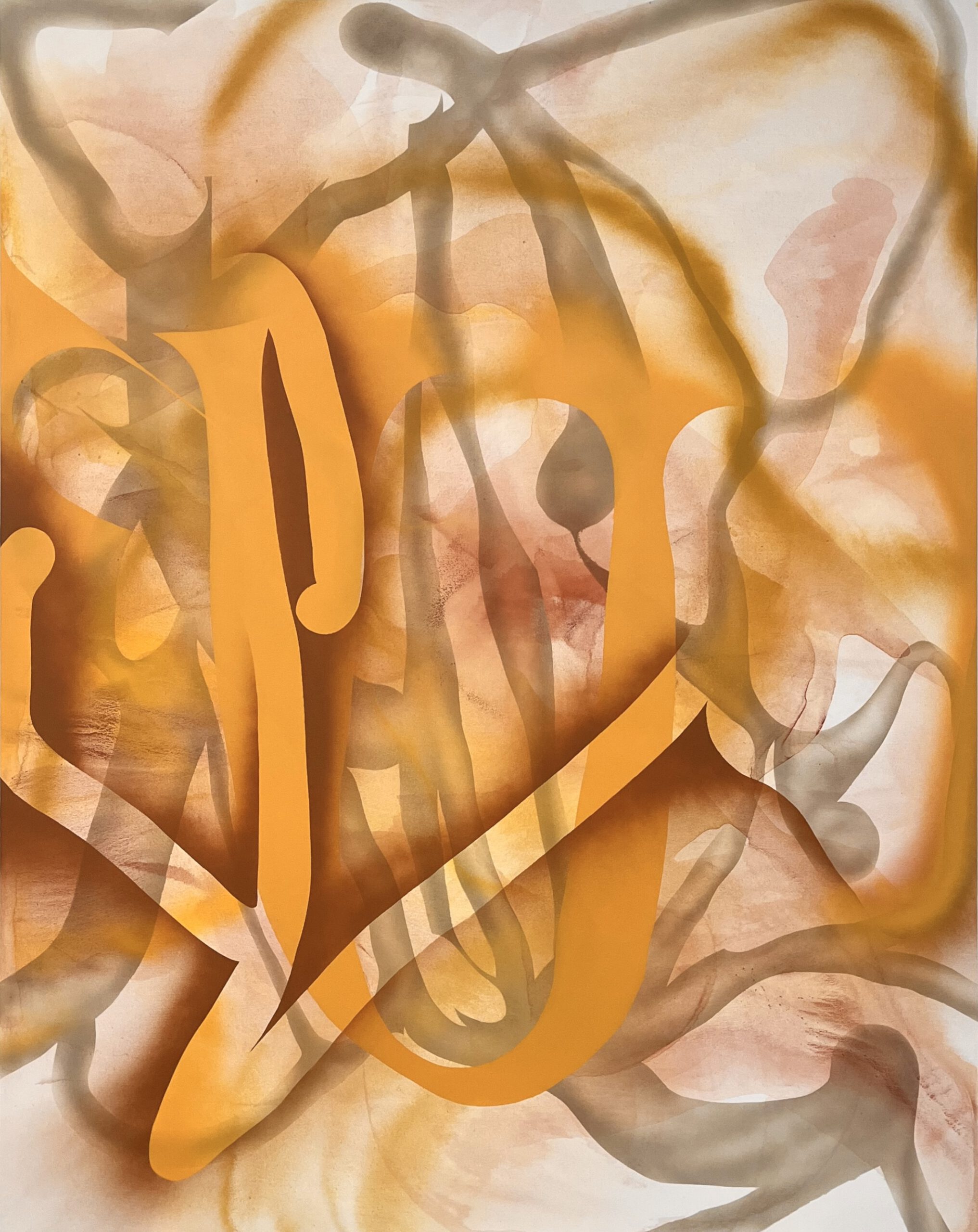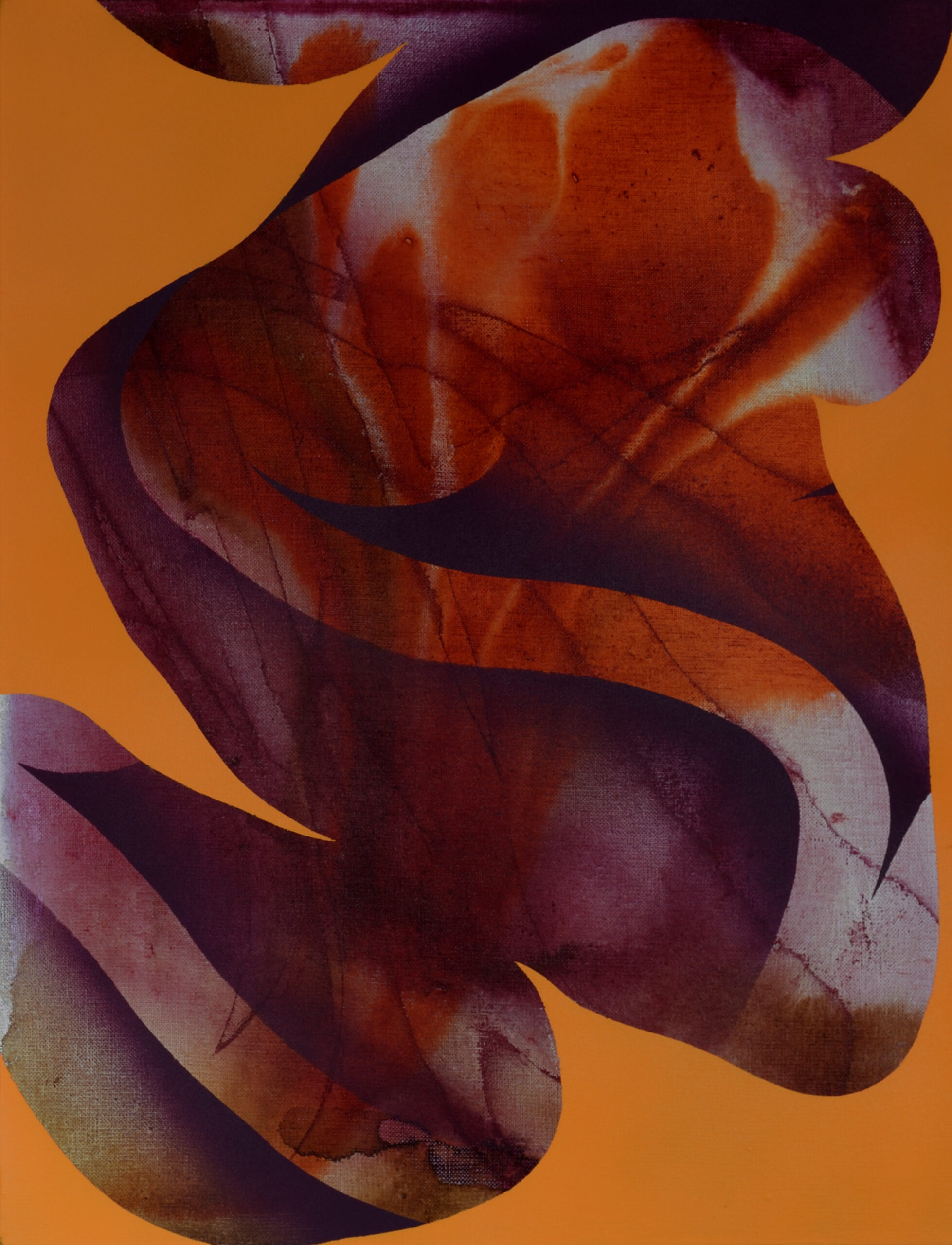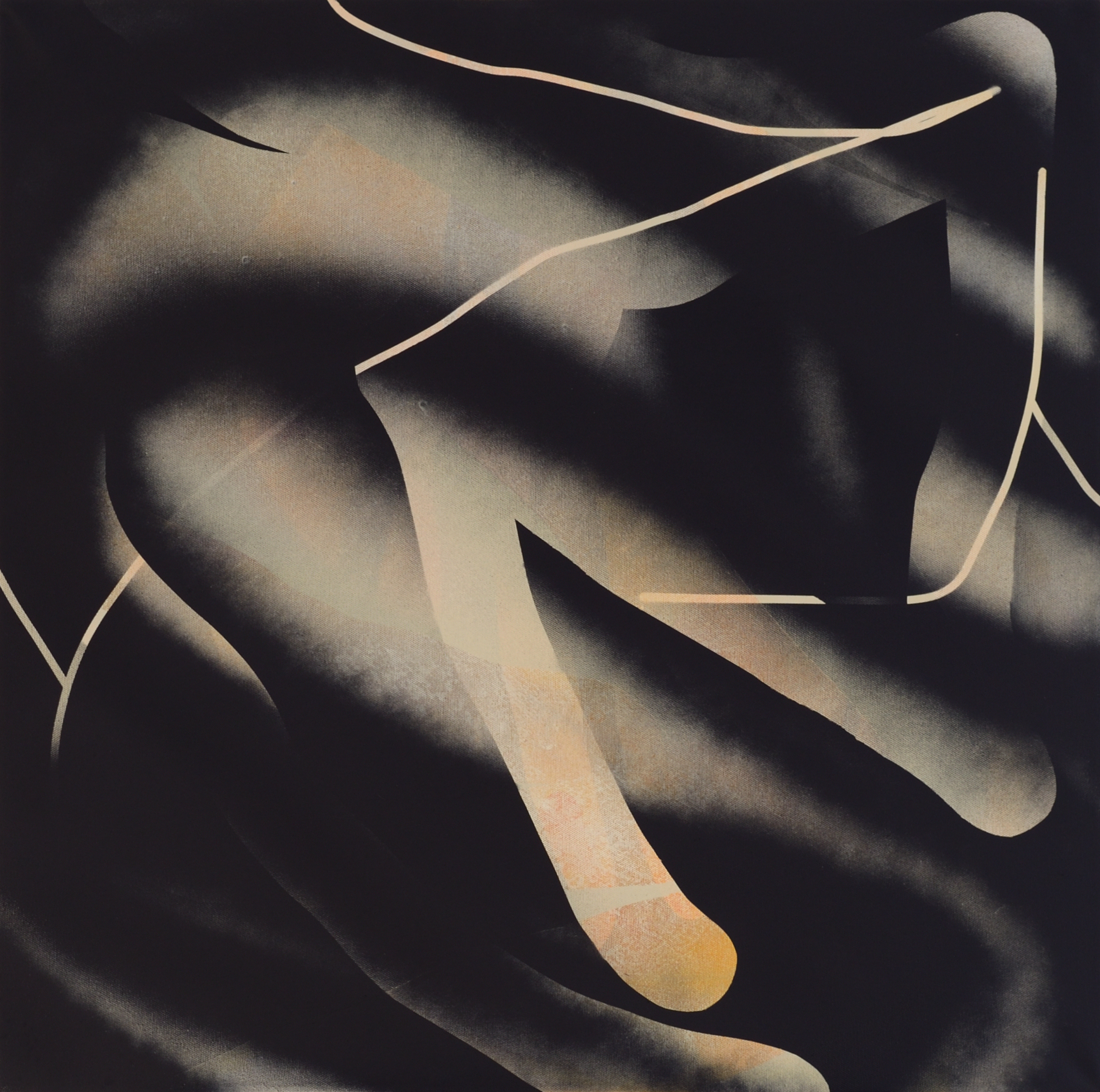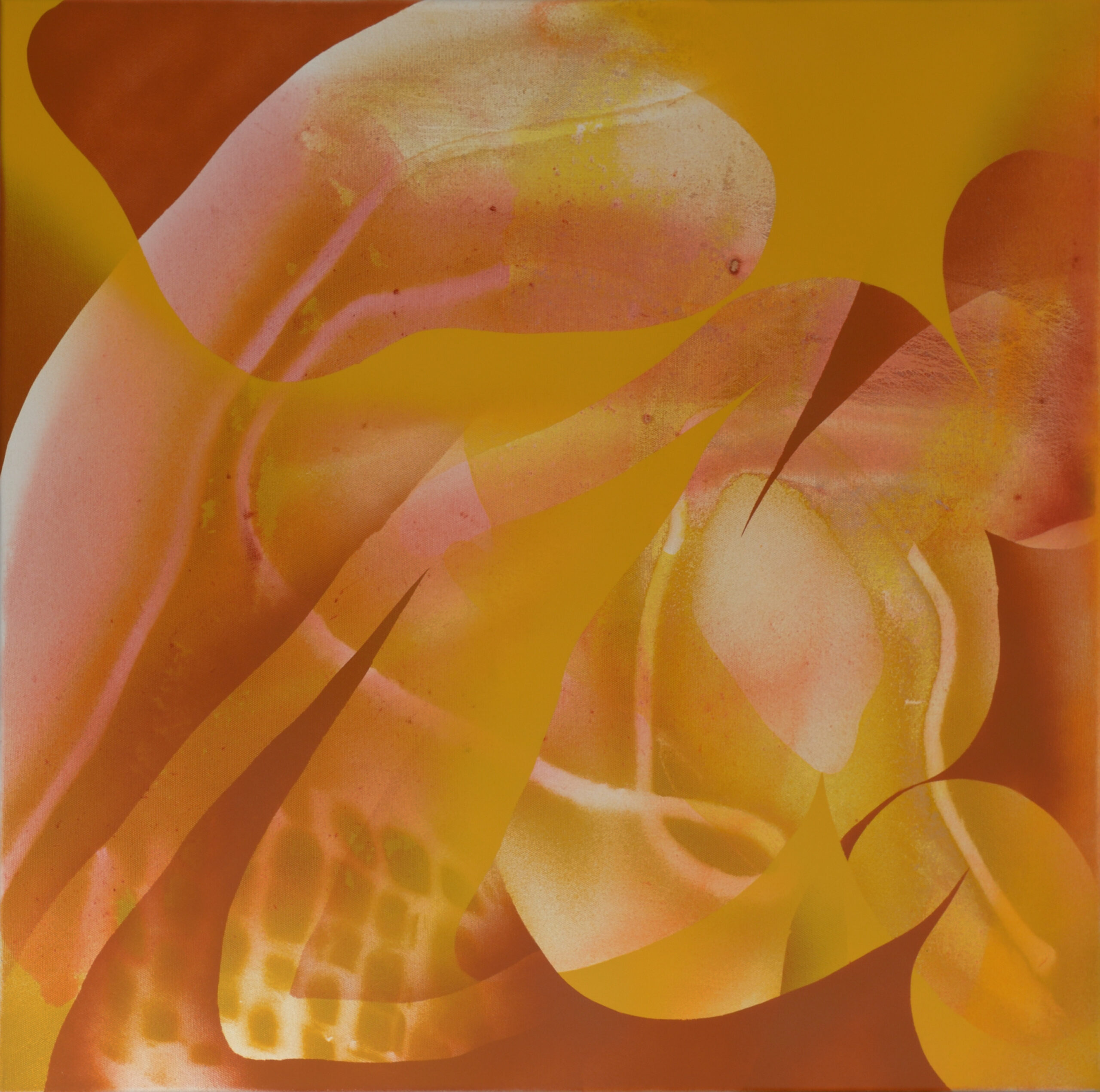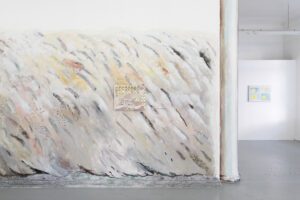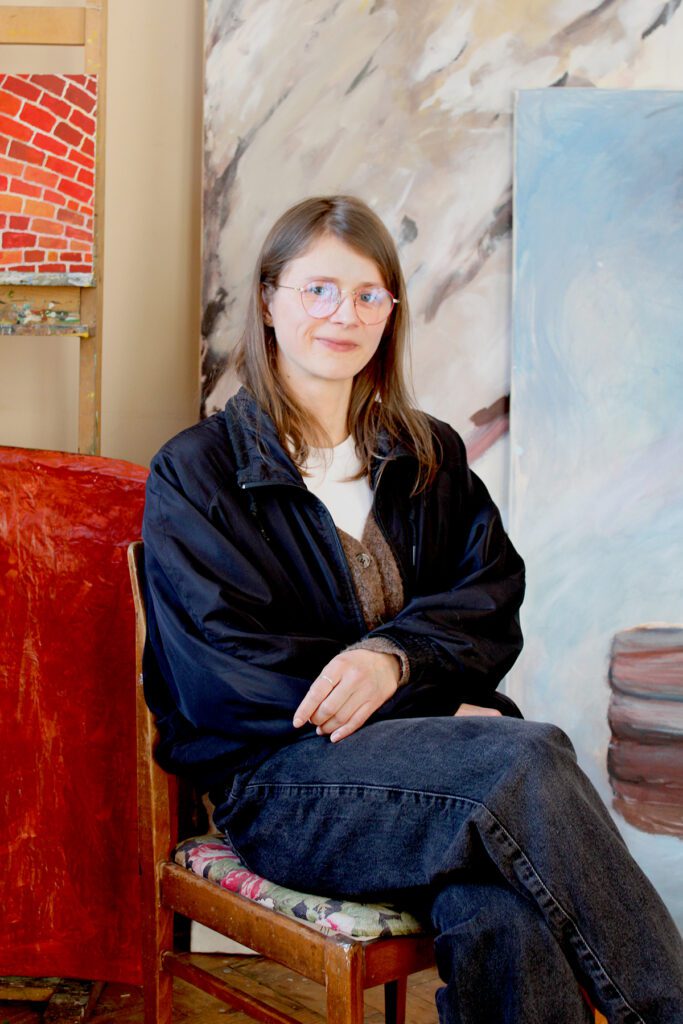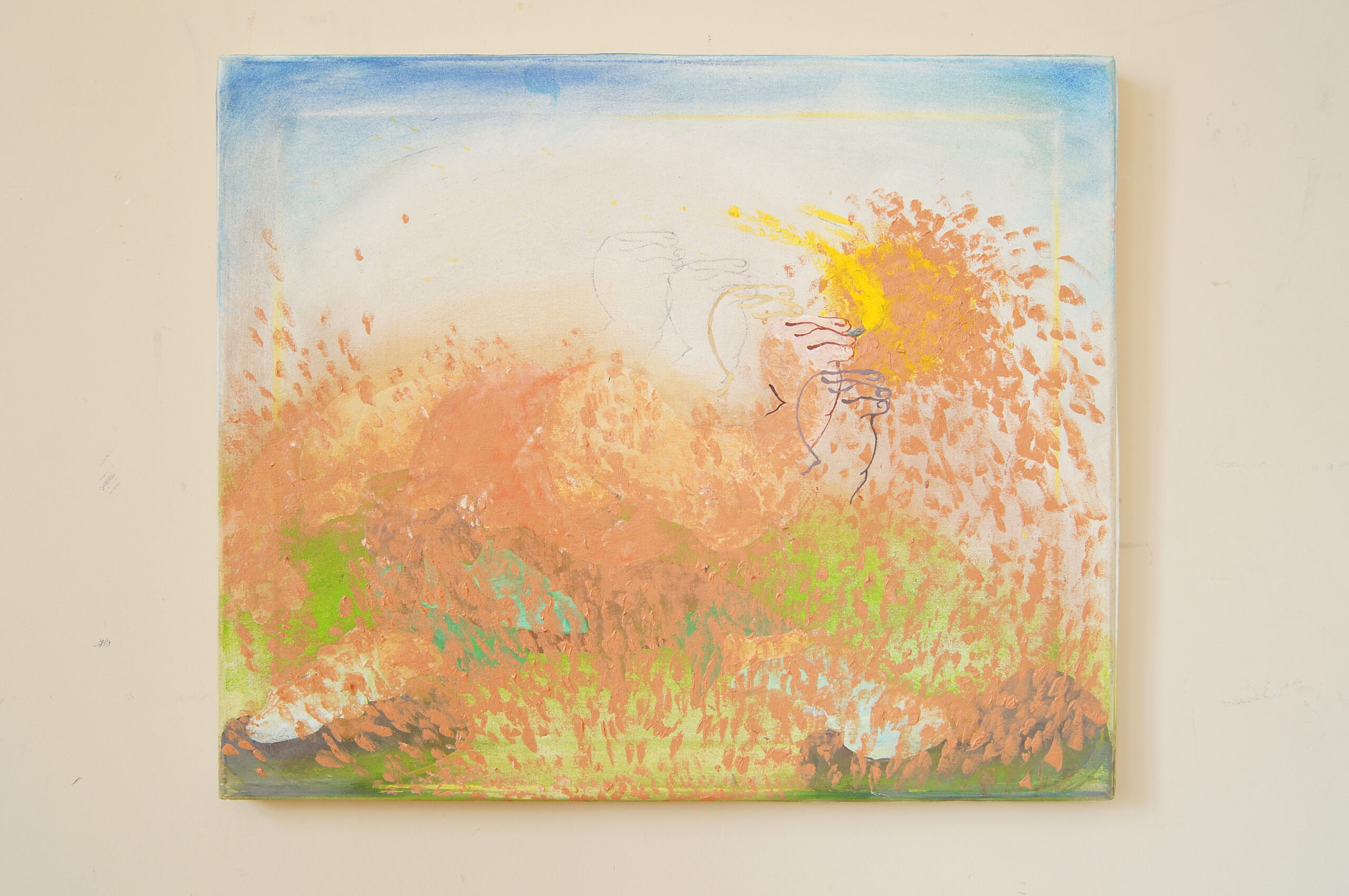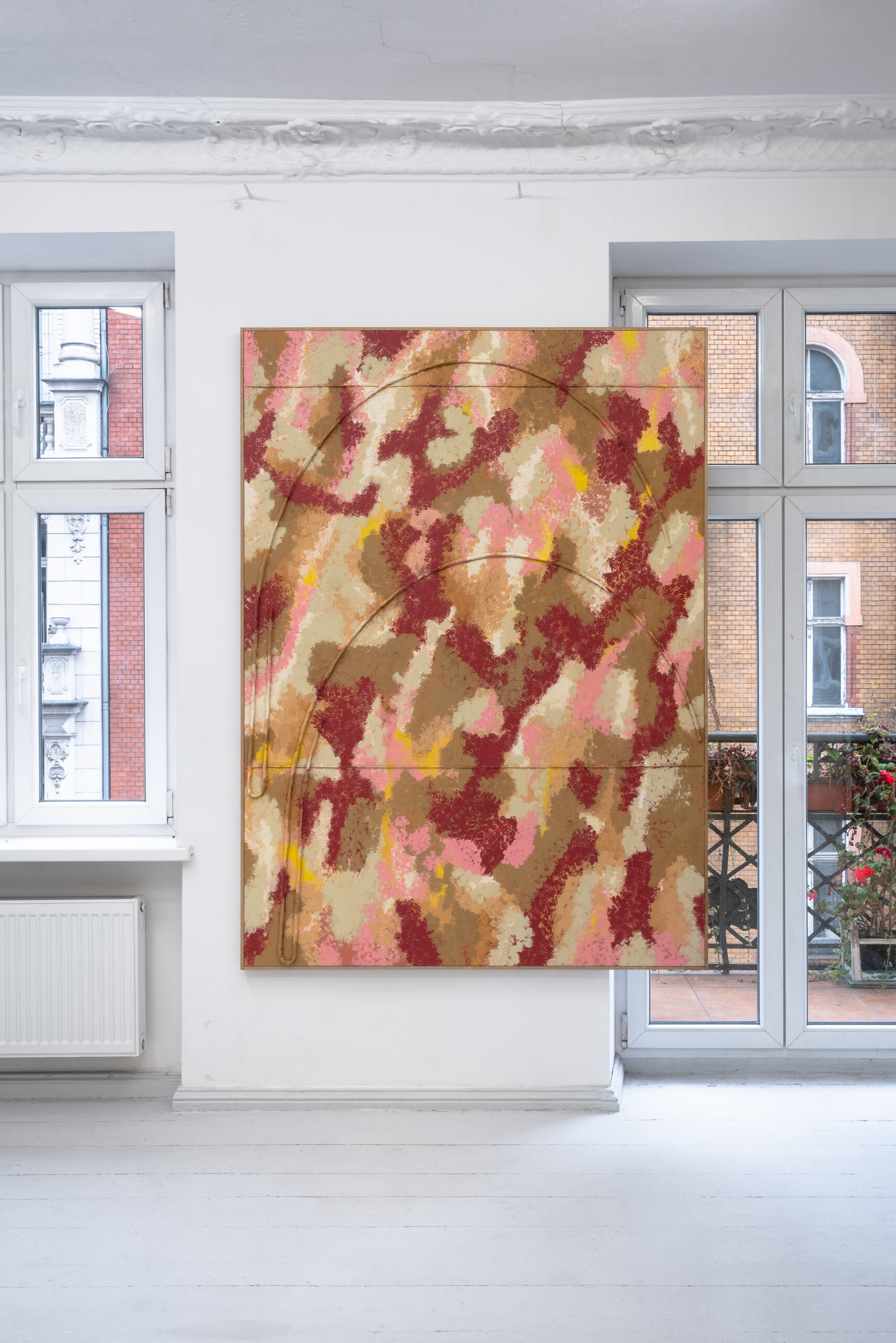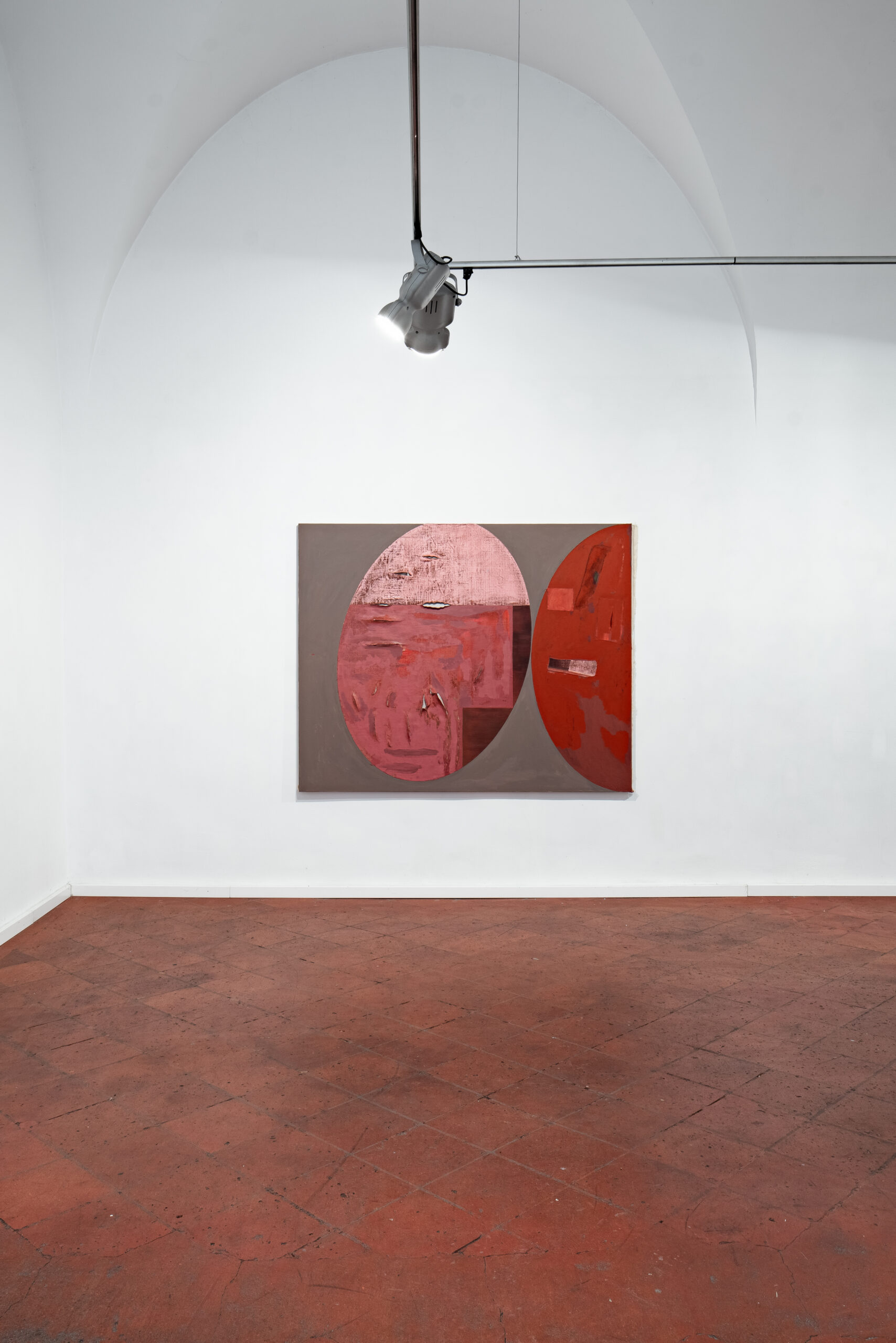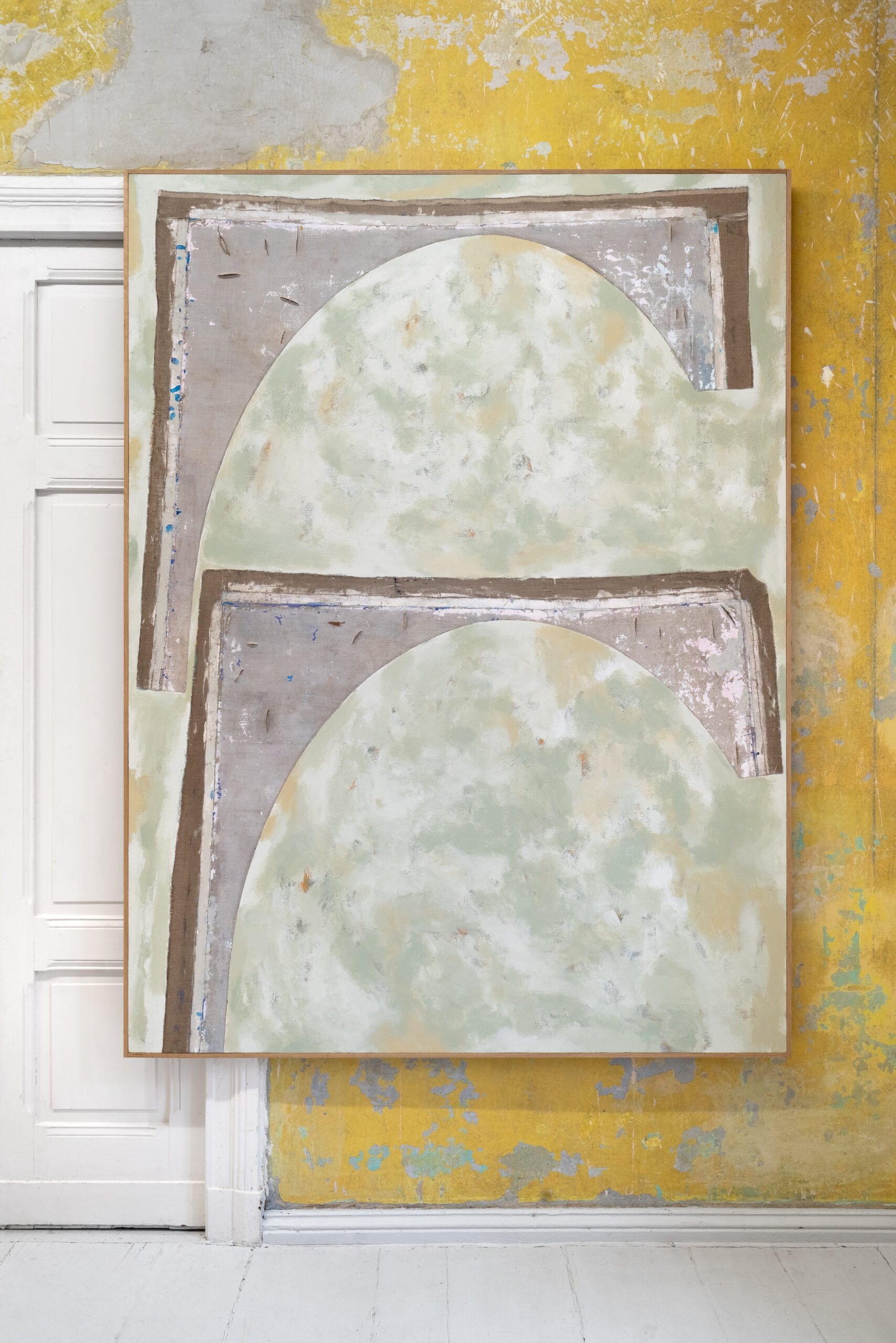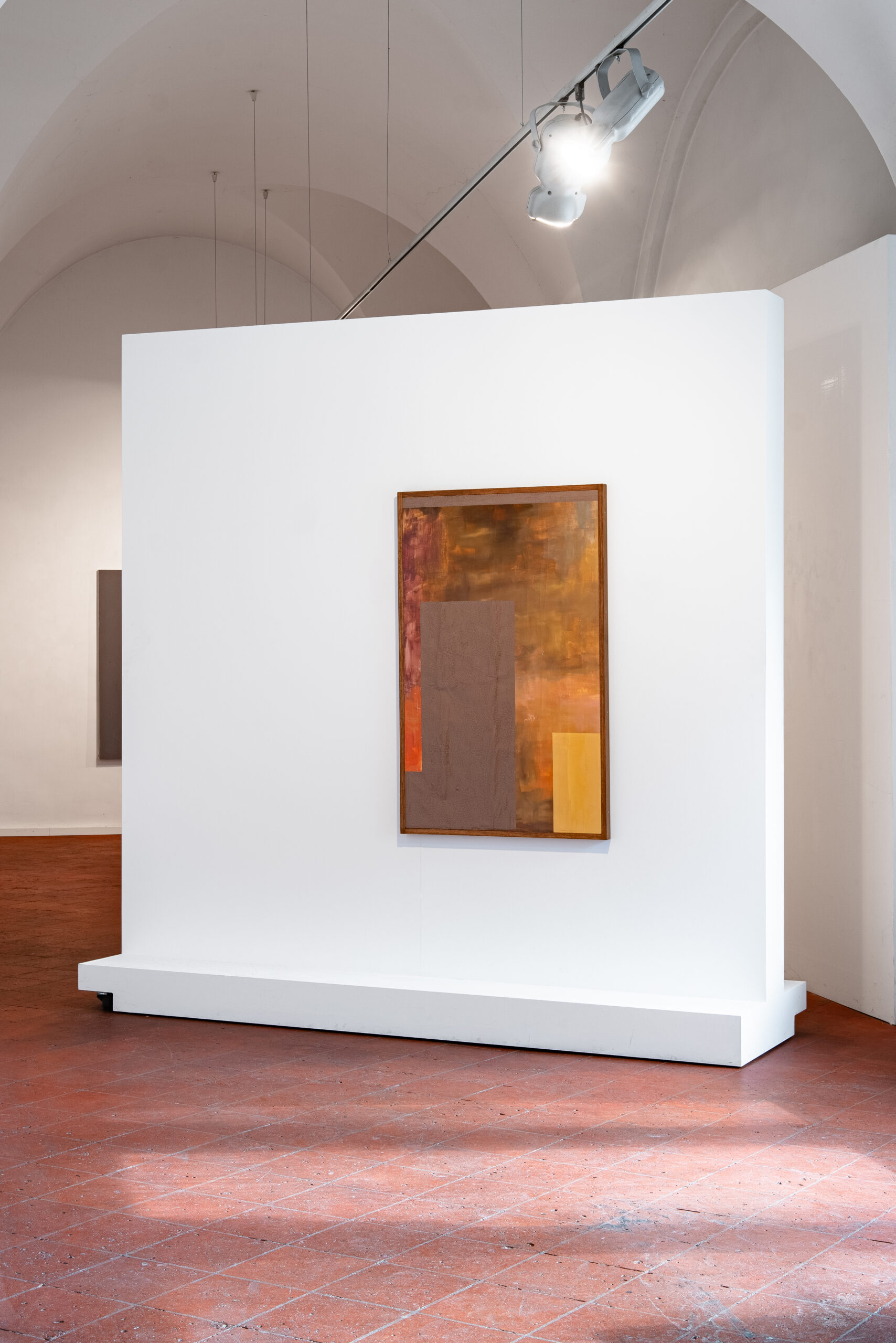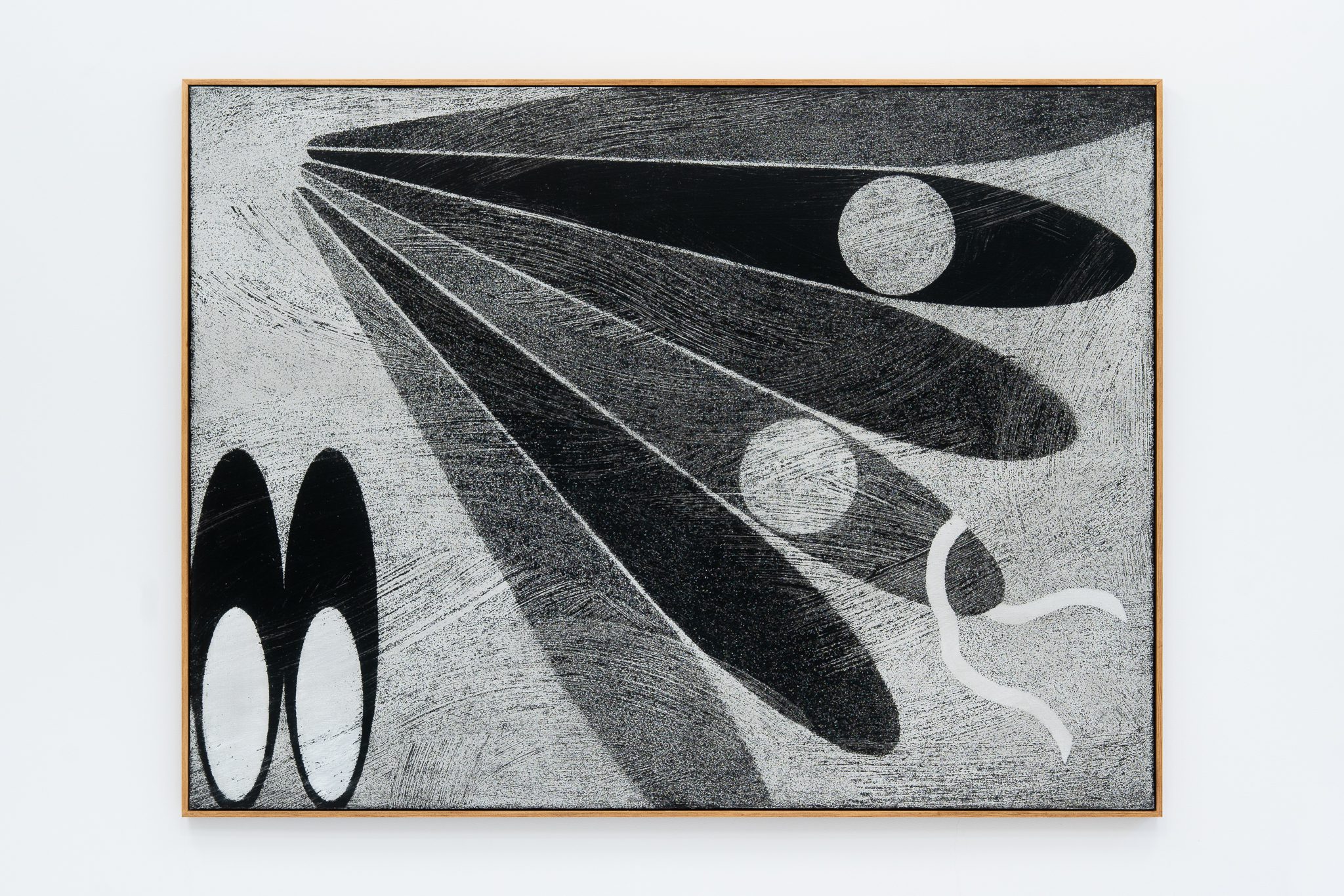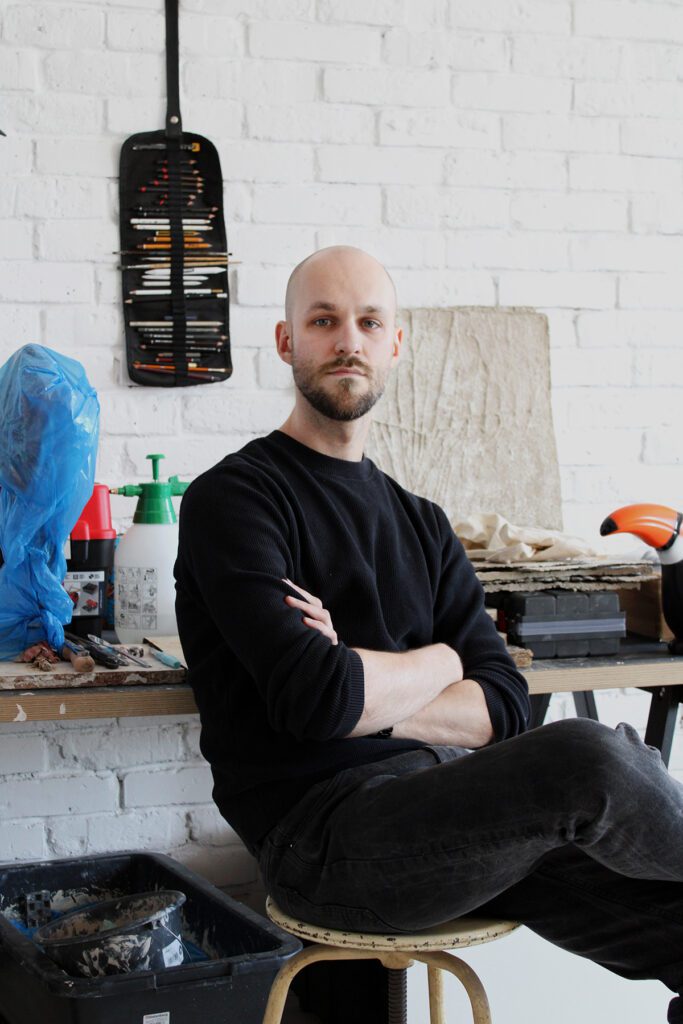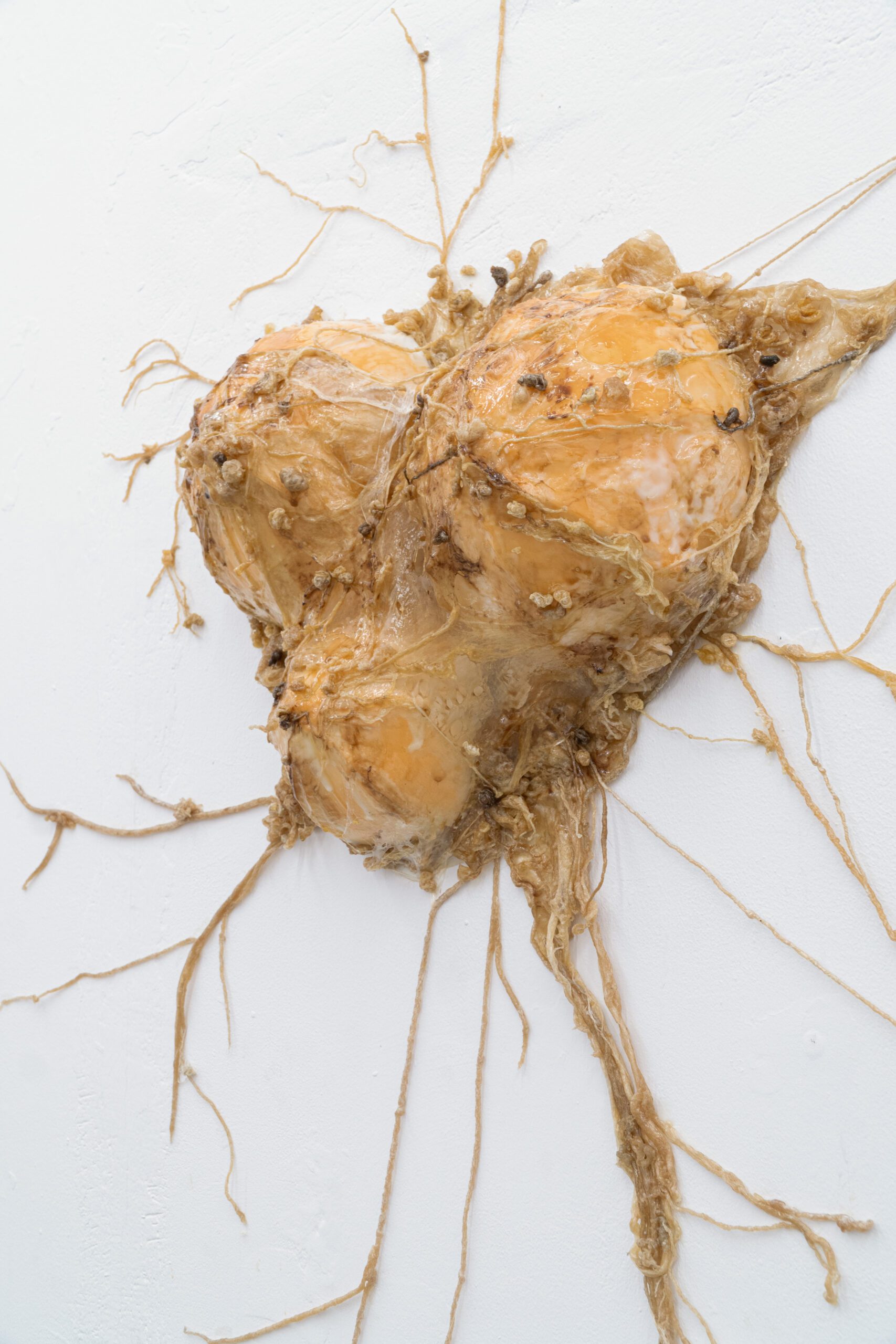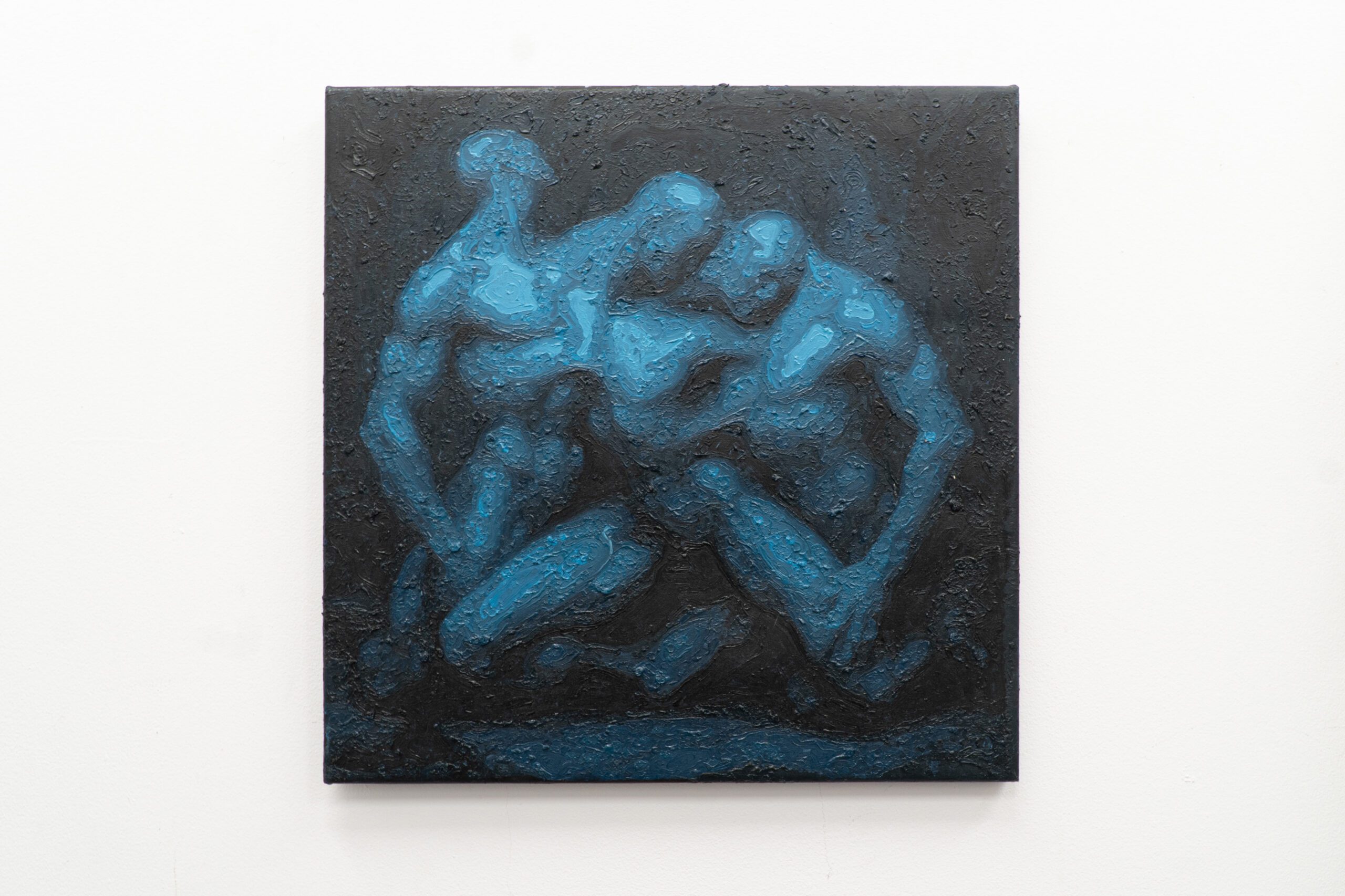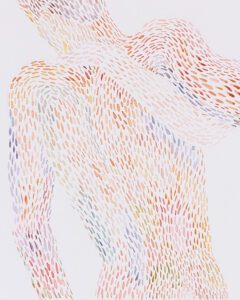
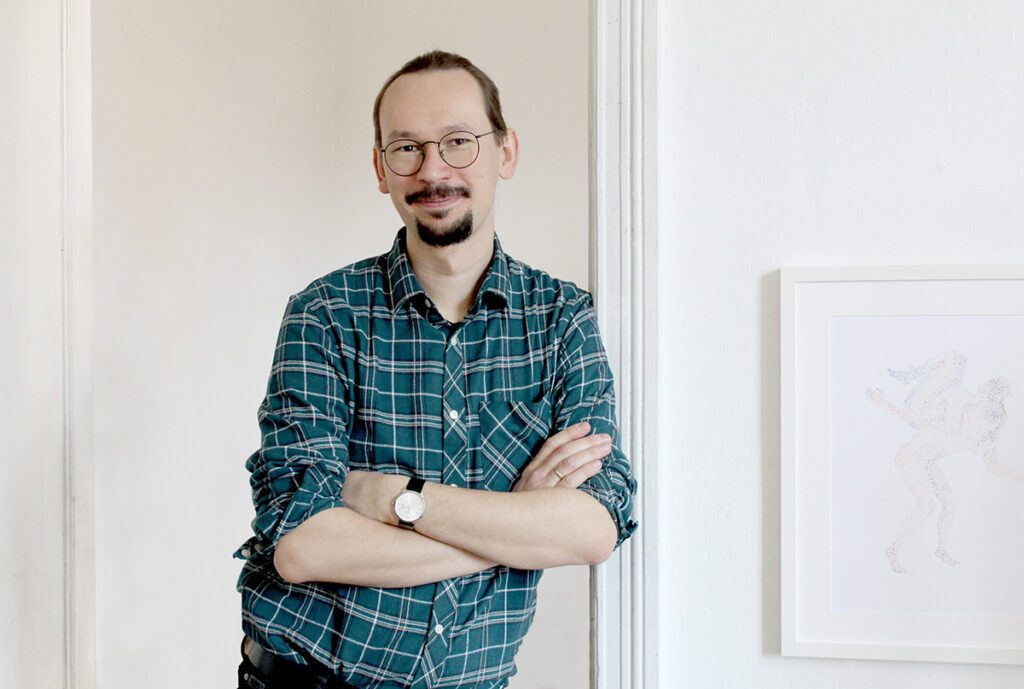
Maciej Andrzejczak

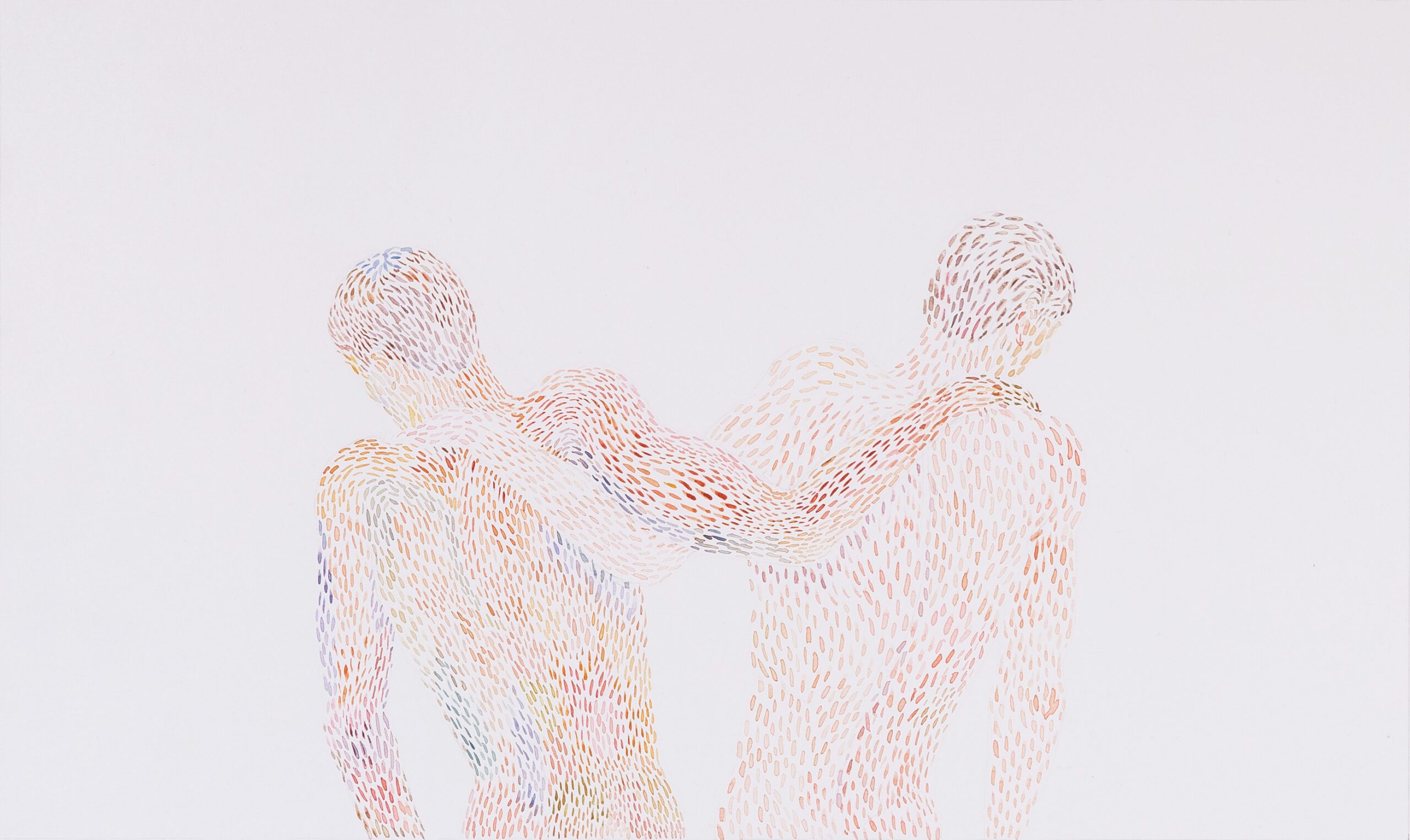
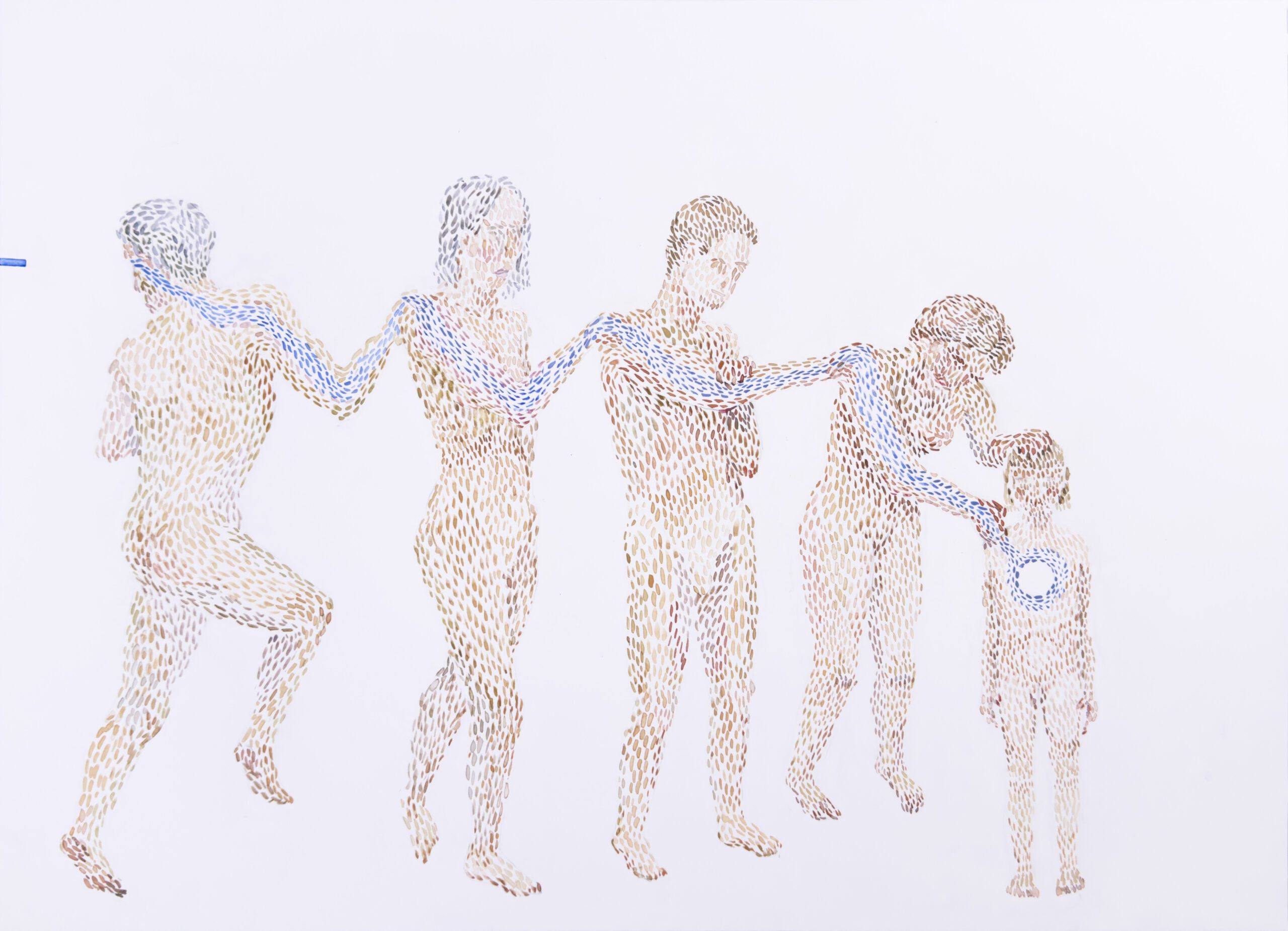
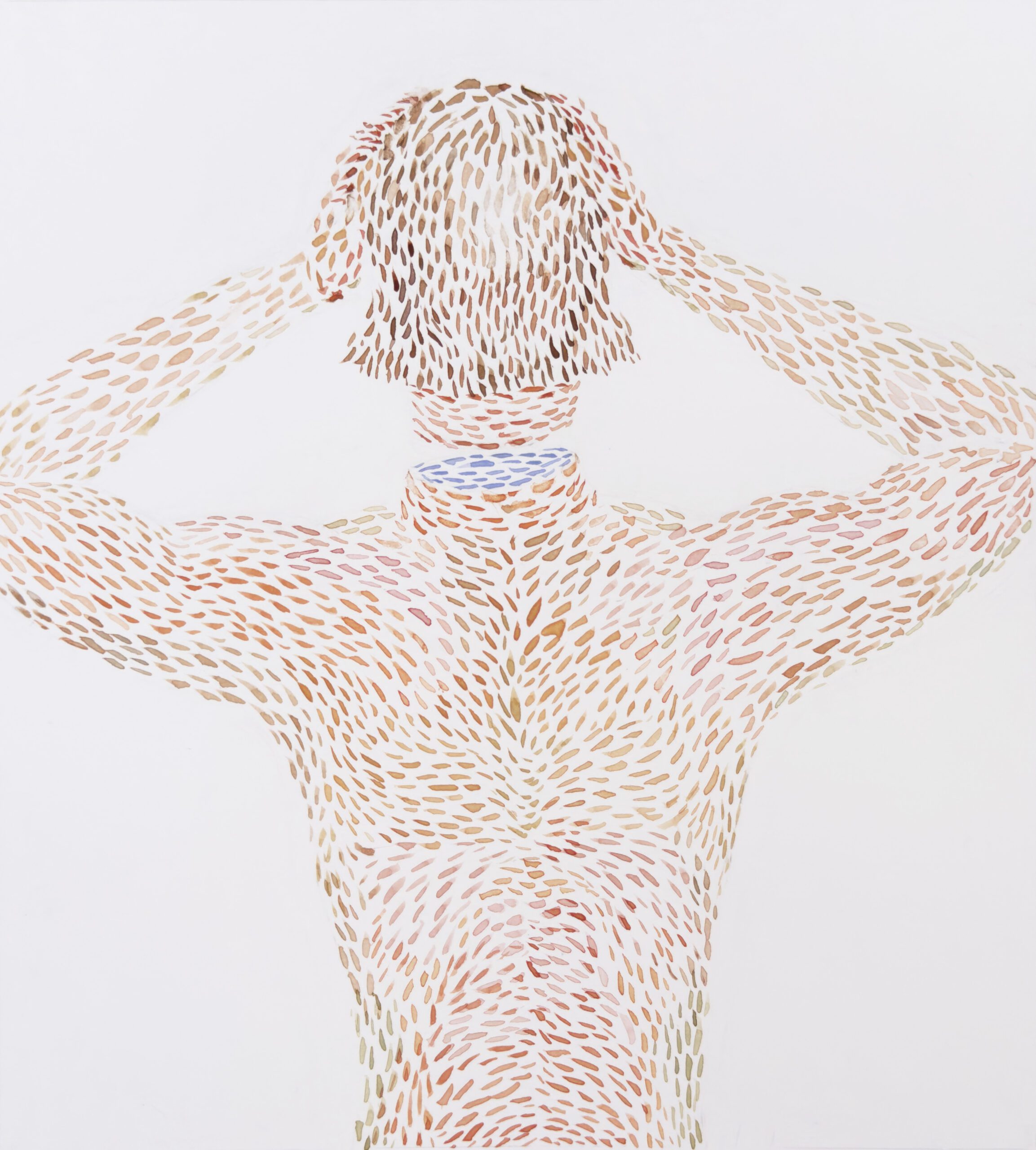
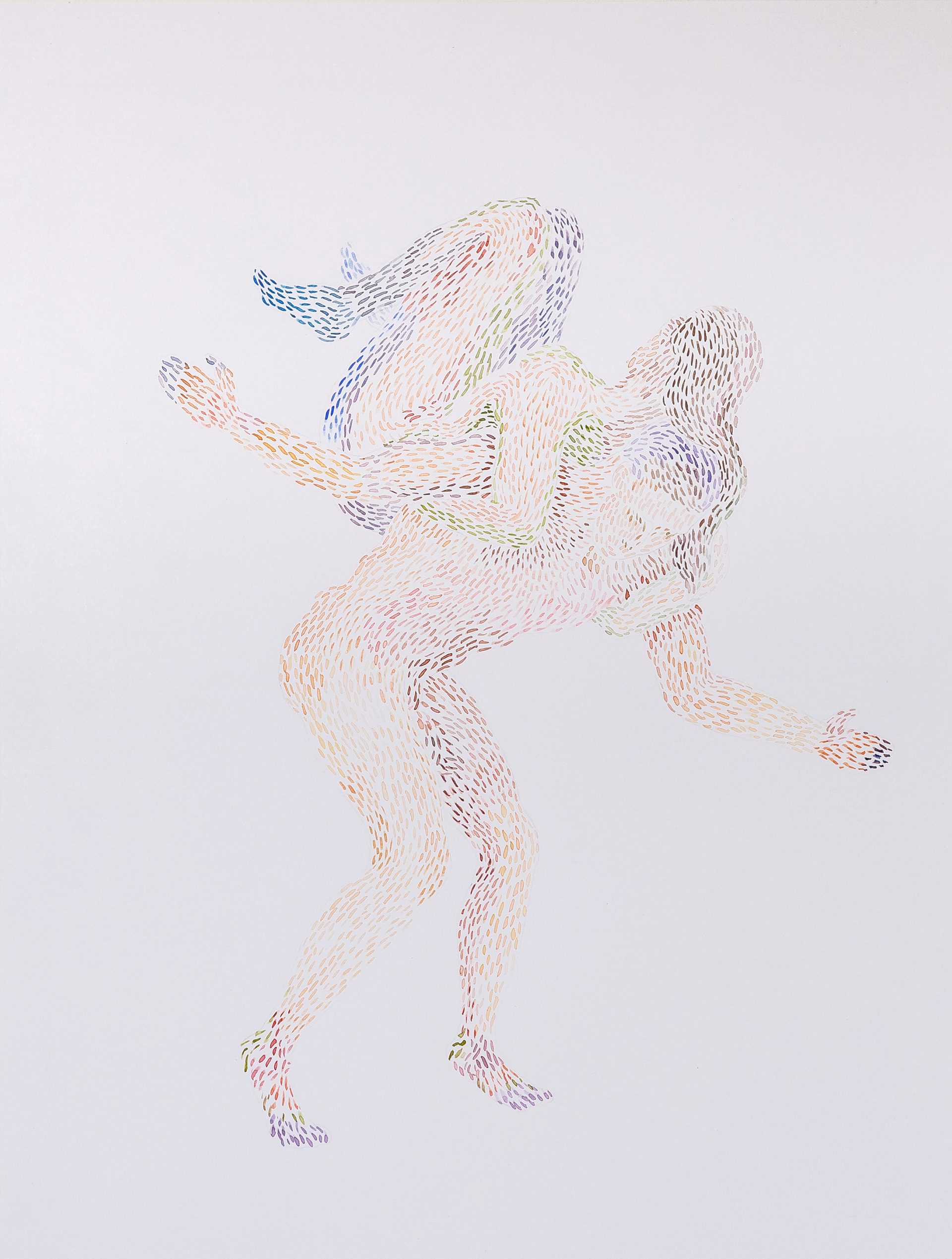
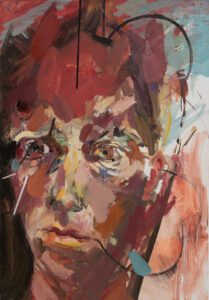
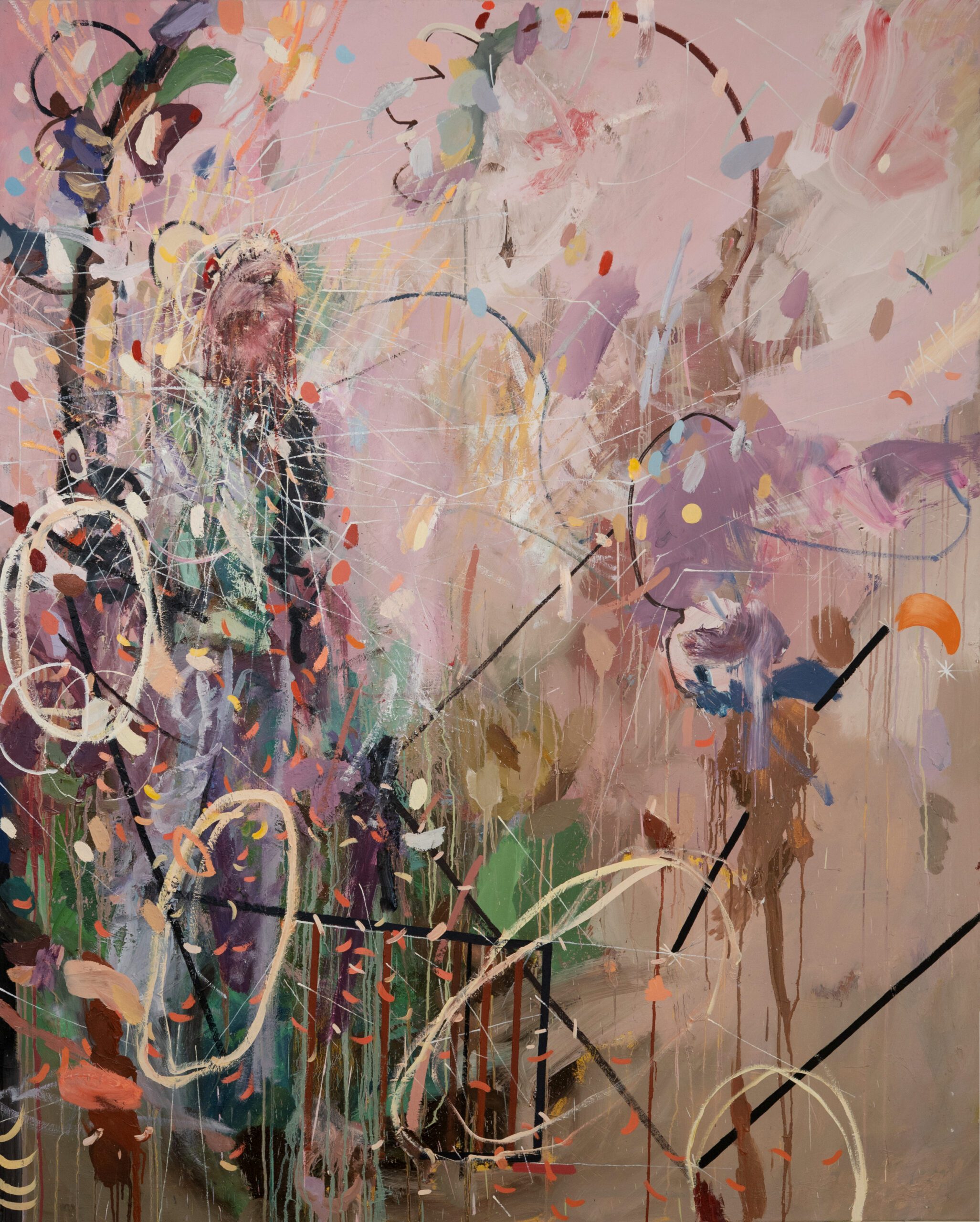
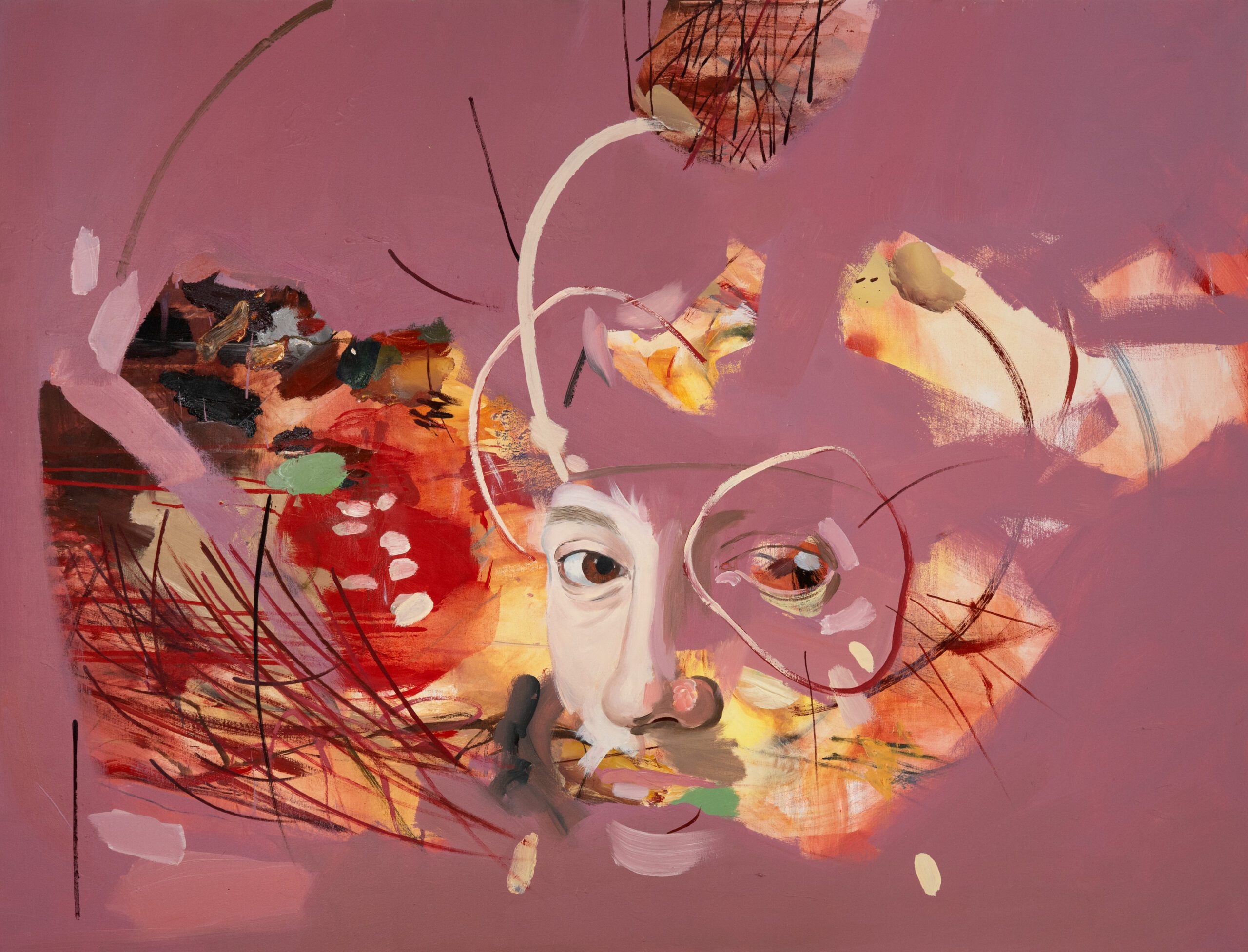
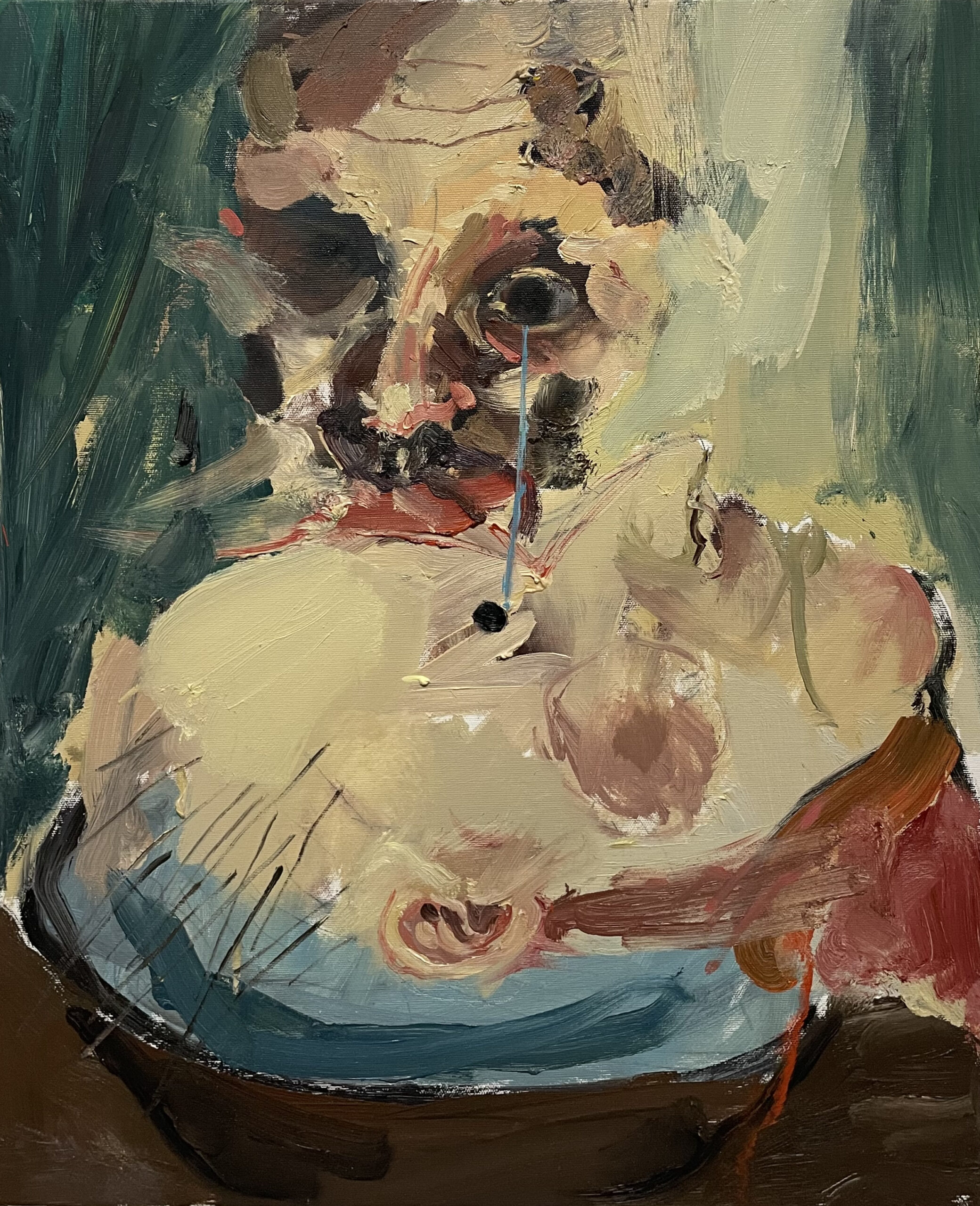
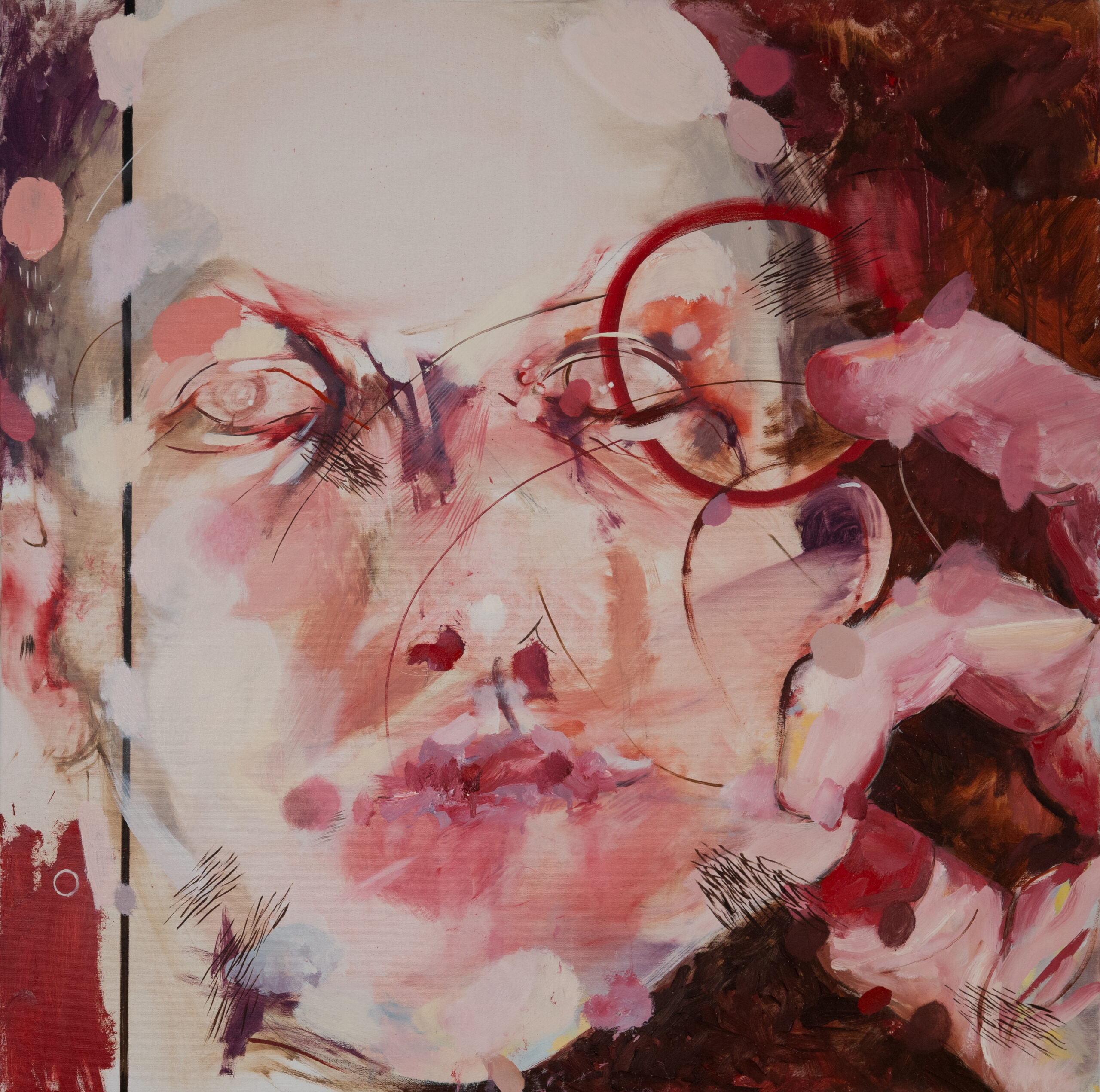
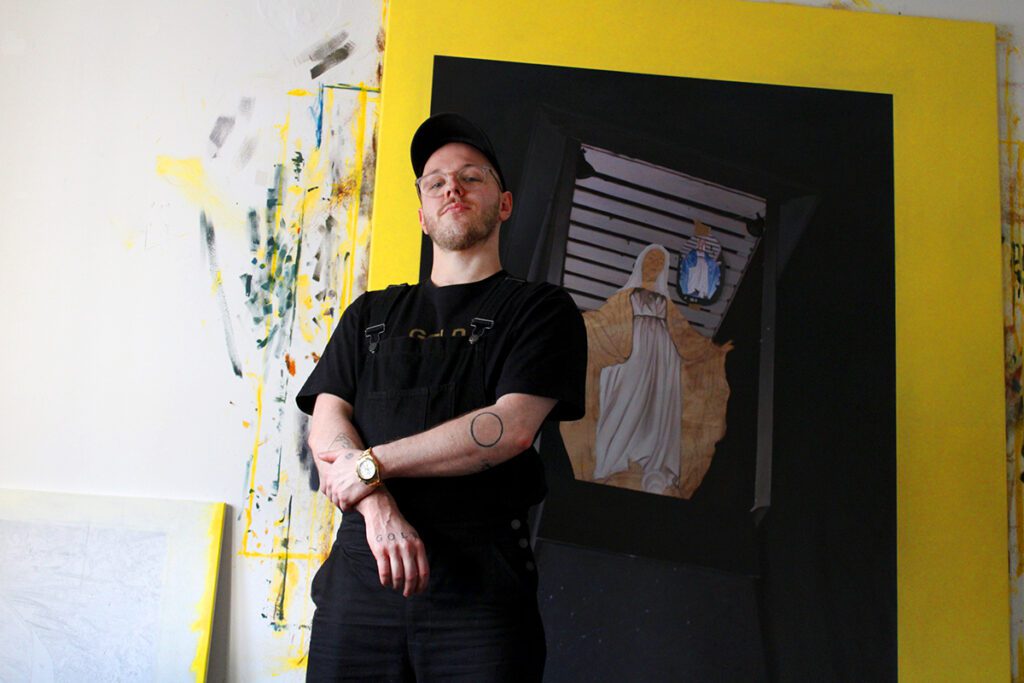
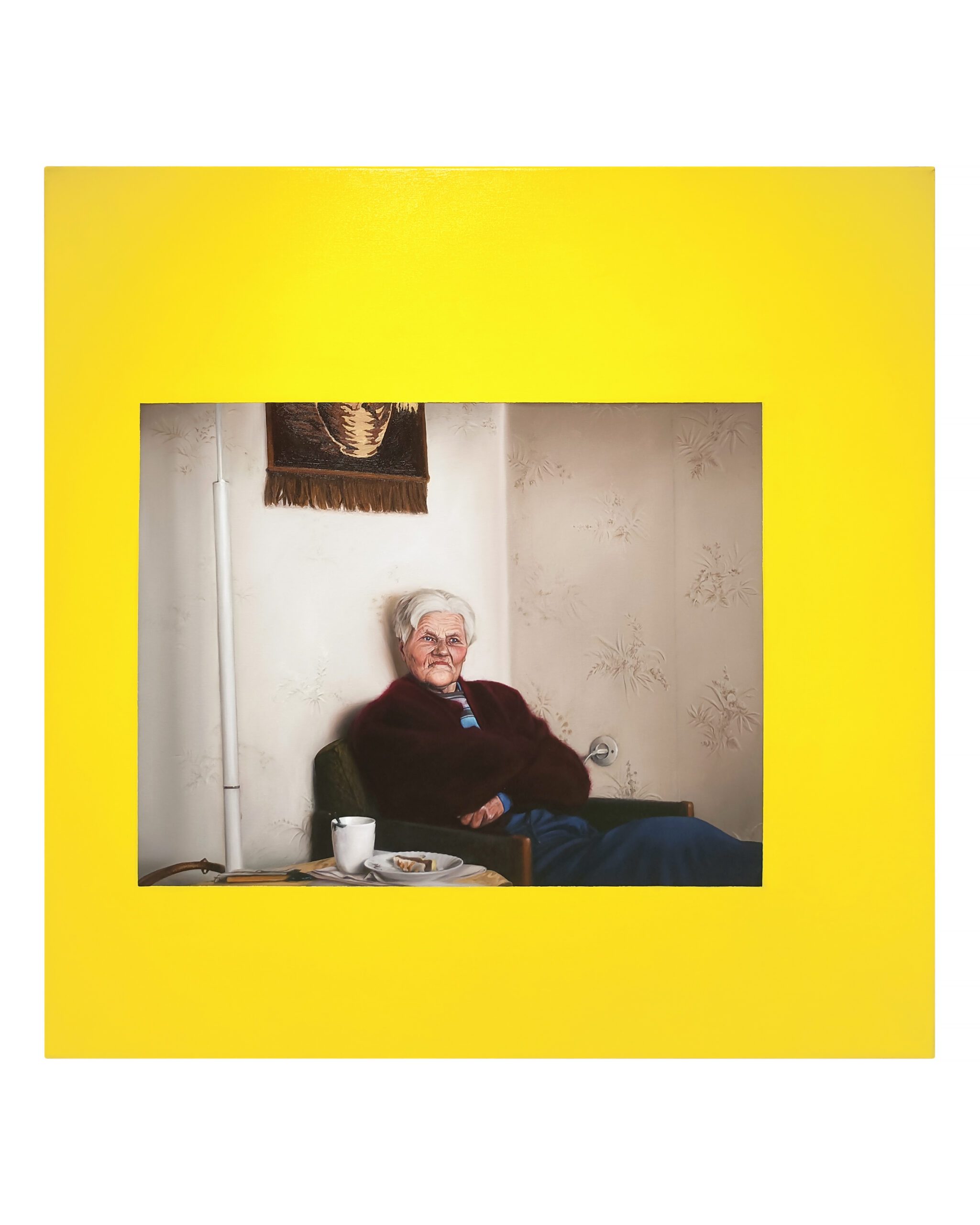
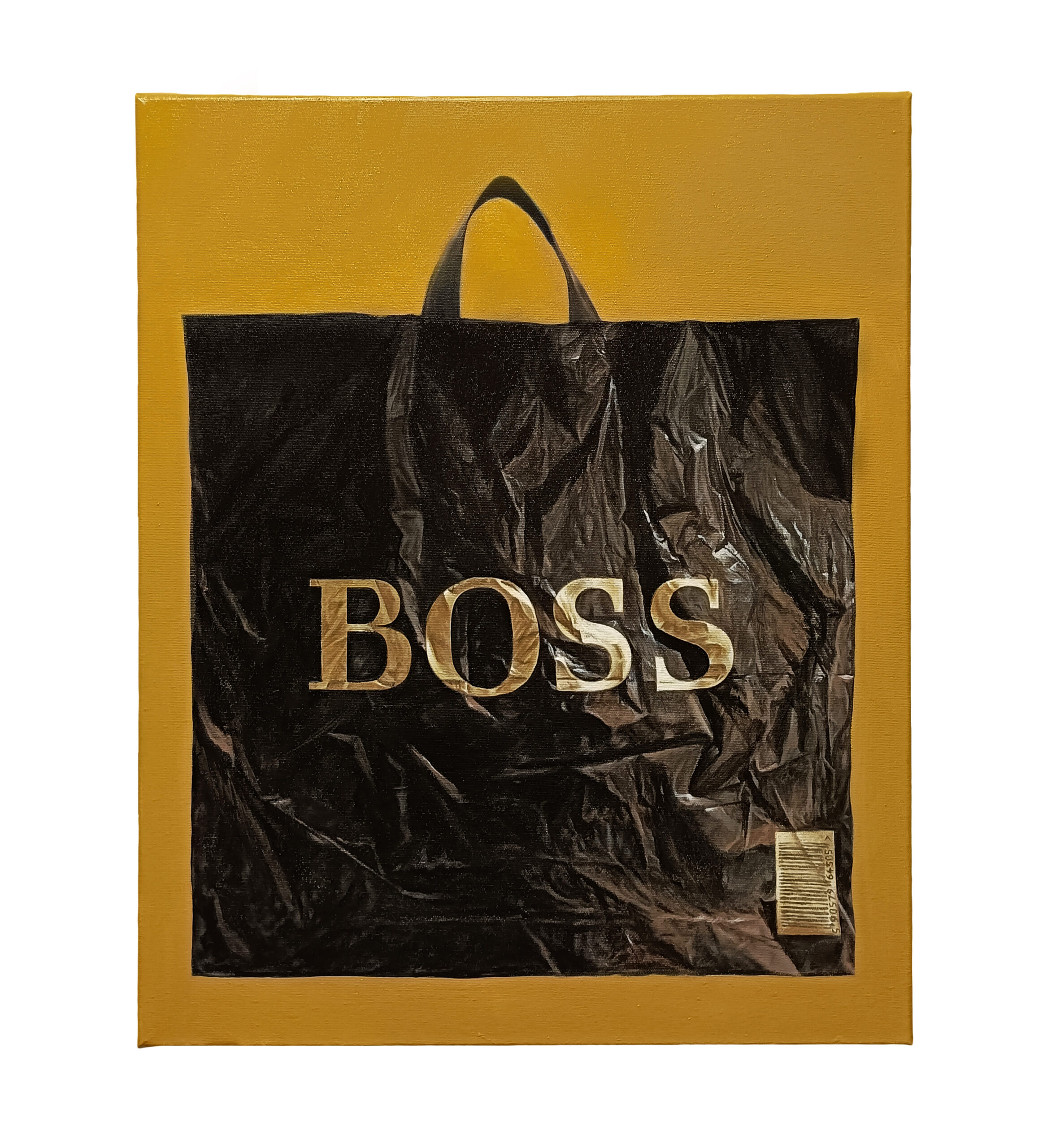
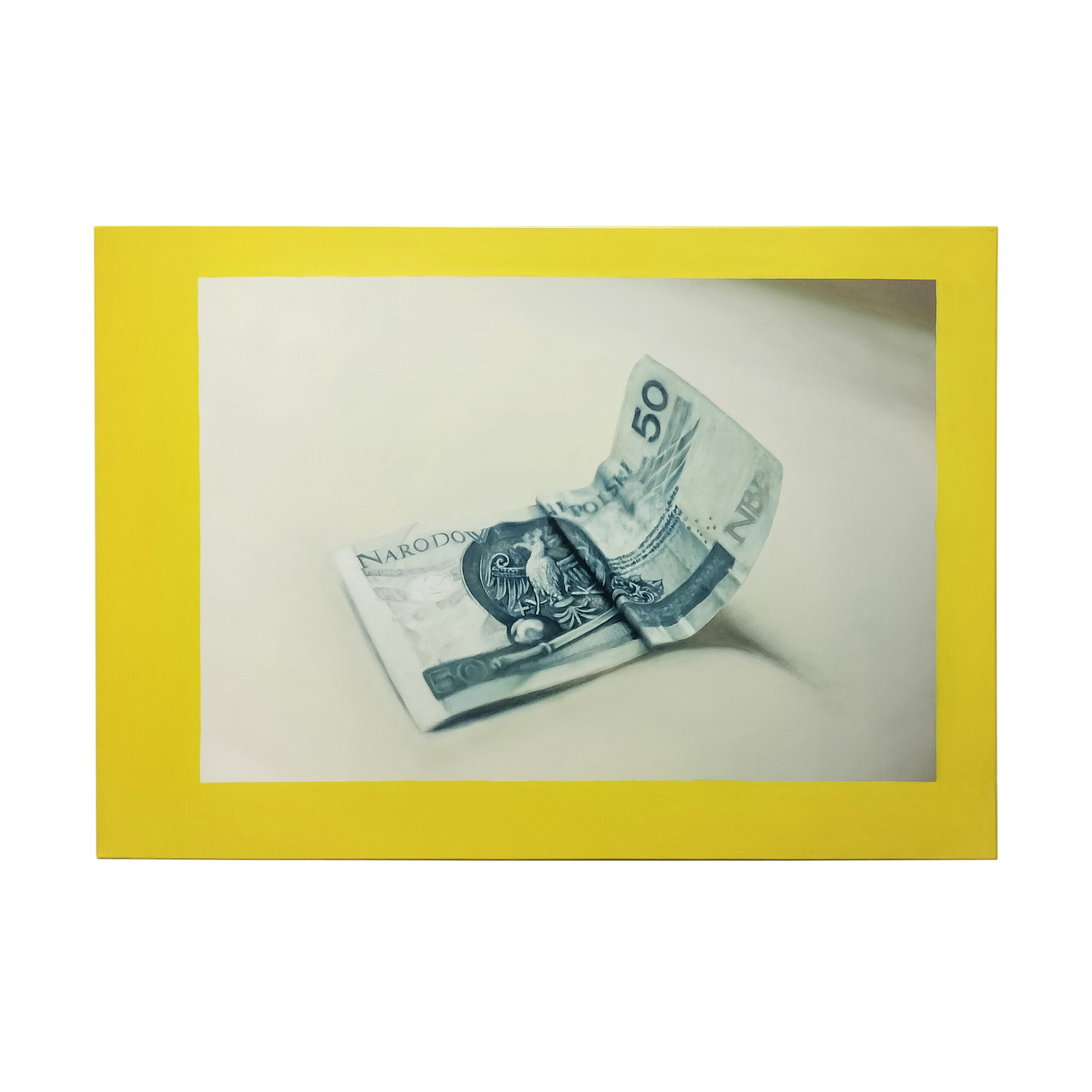
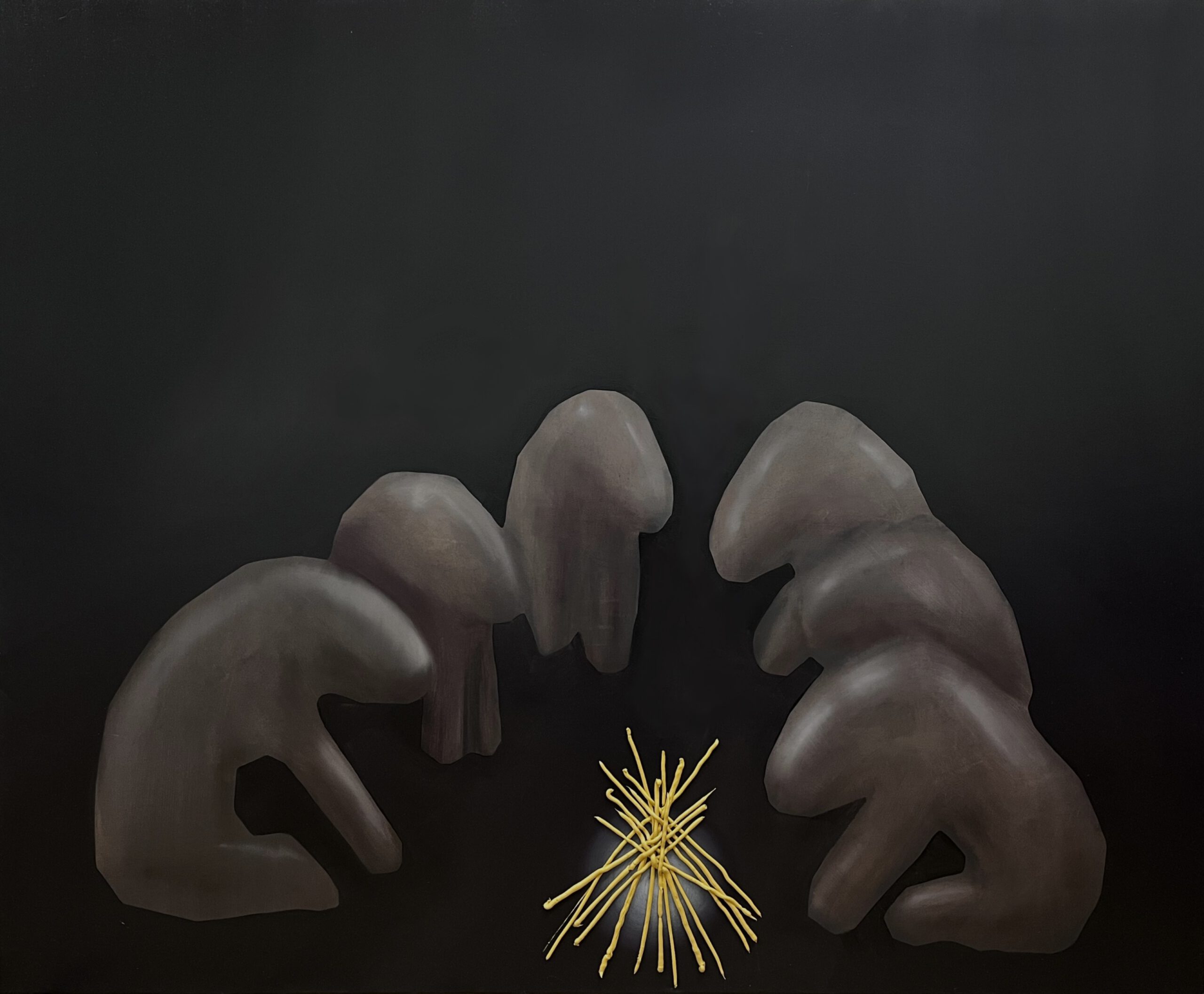
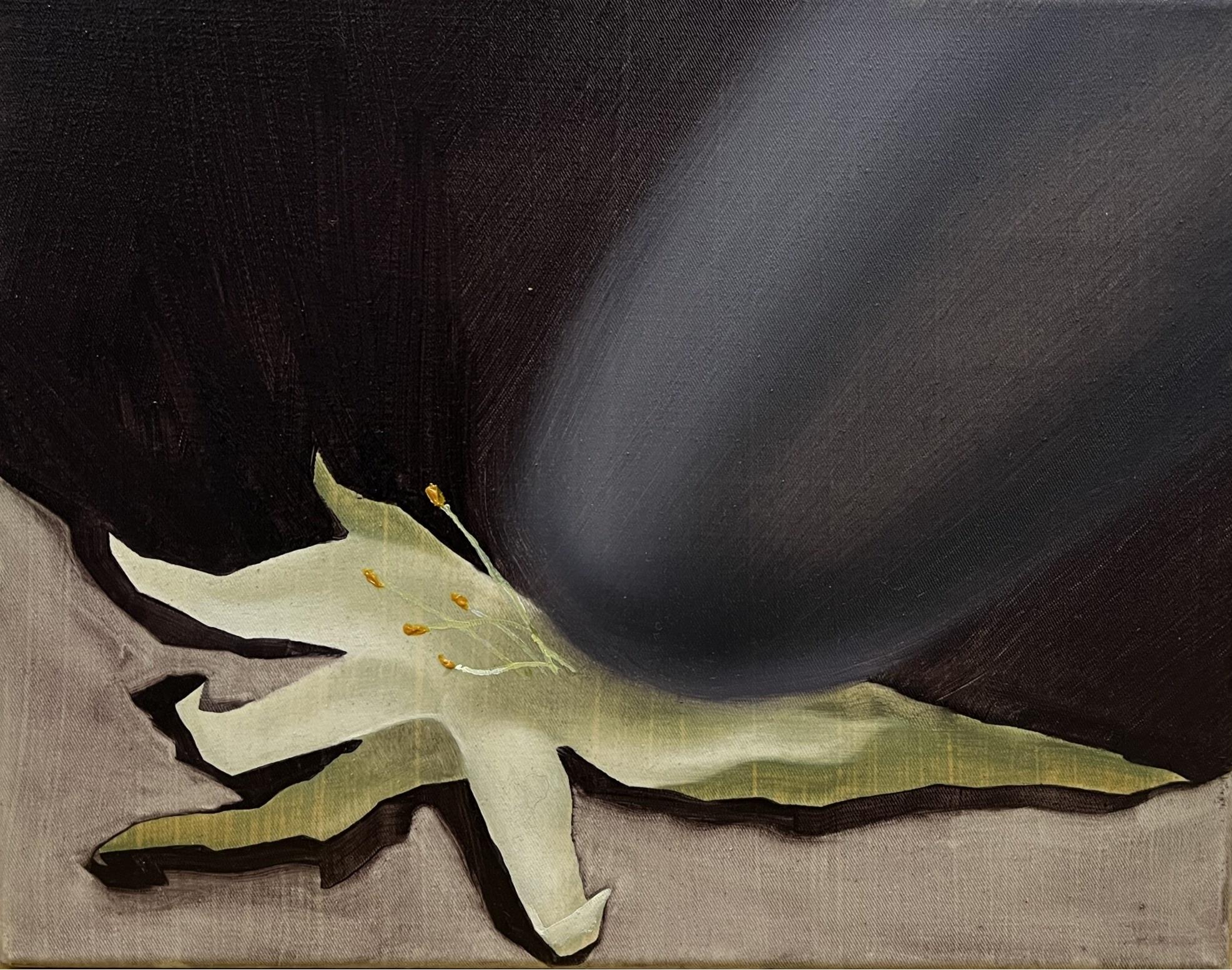
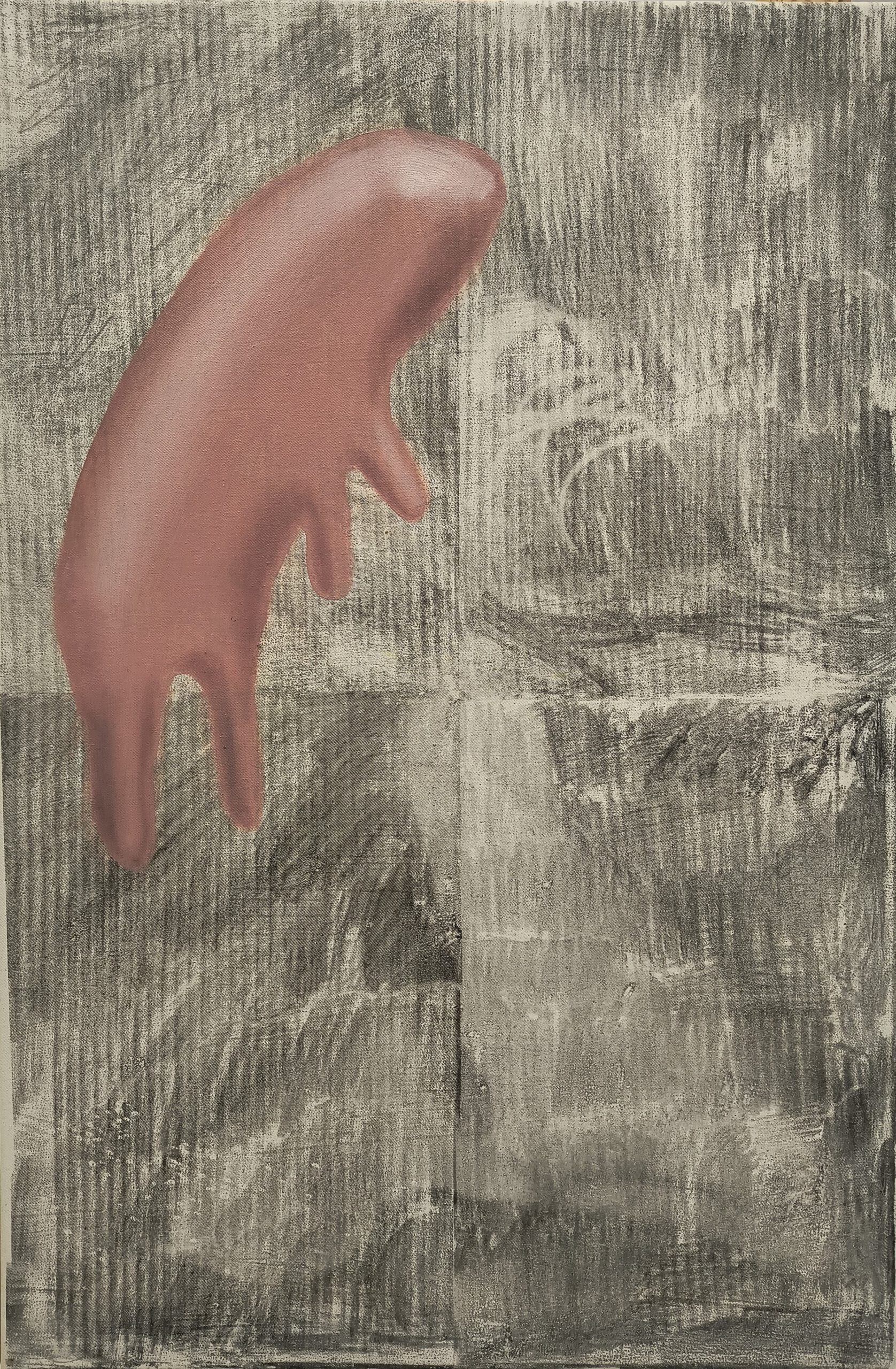
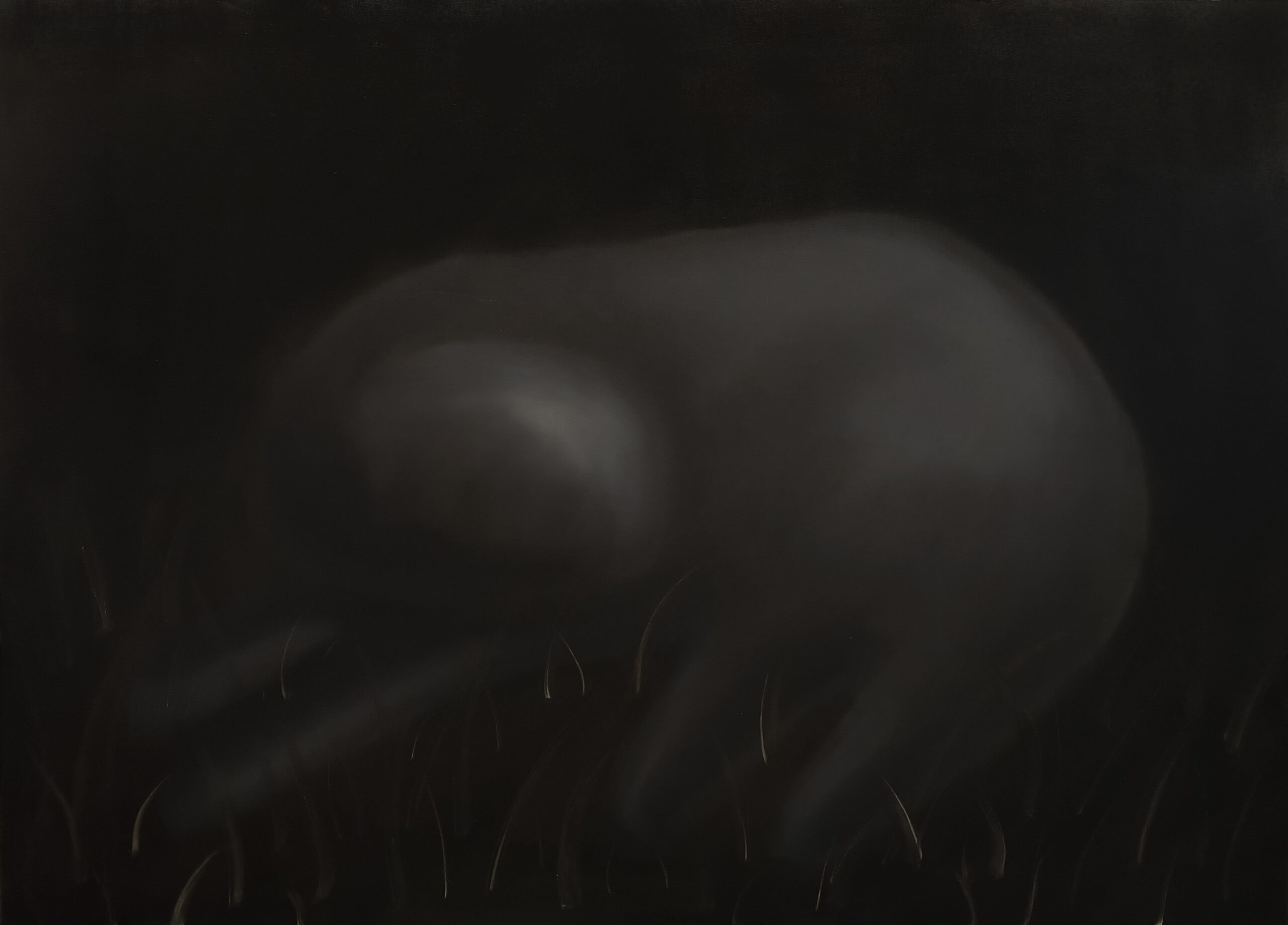
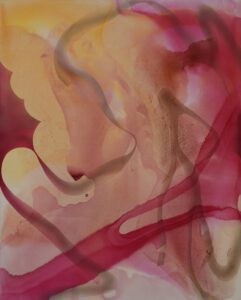
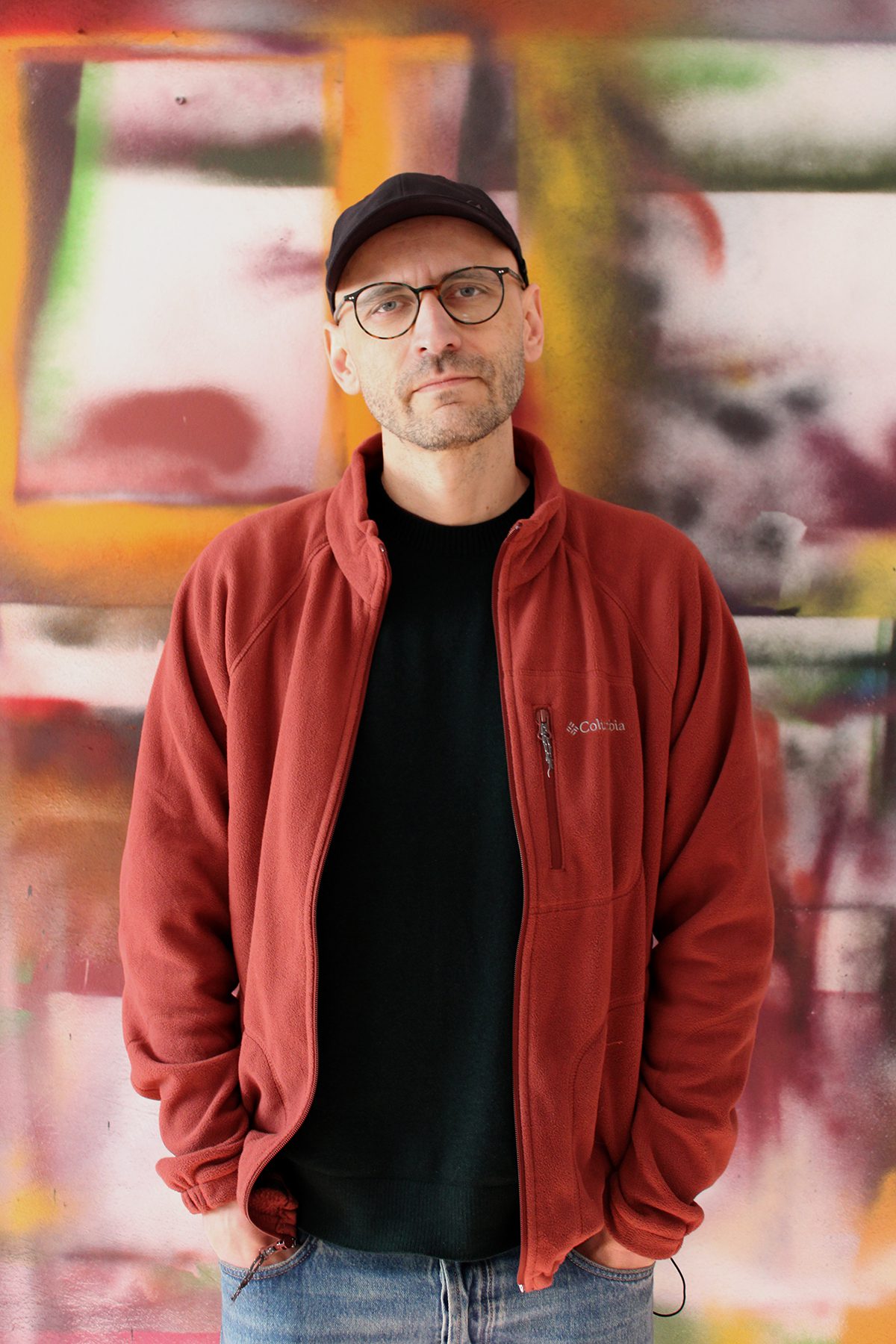
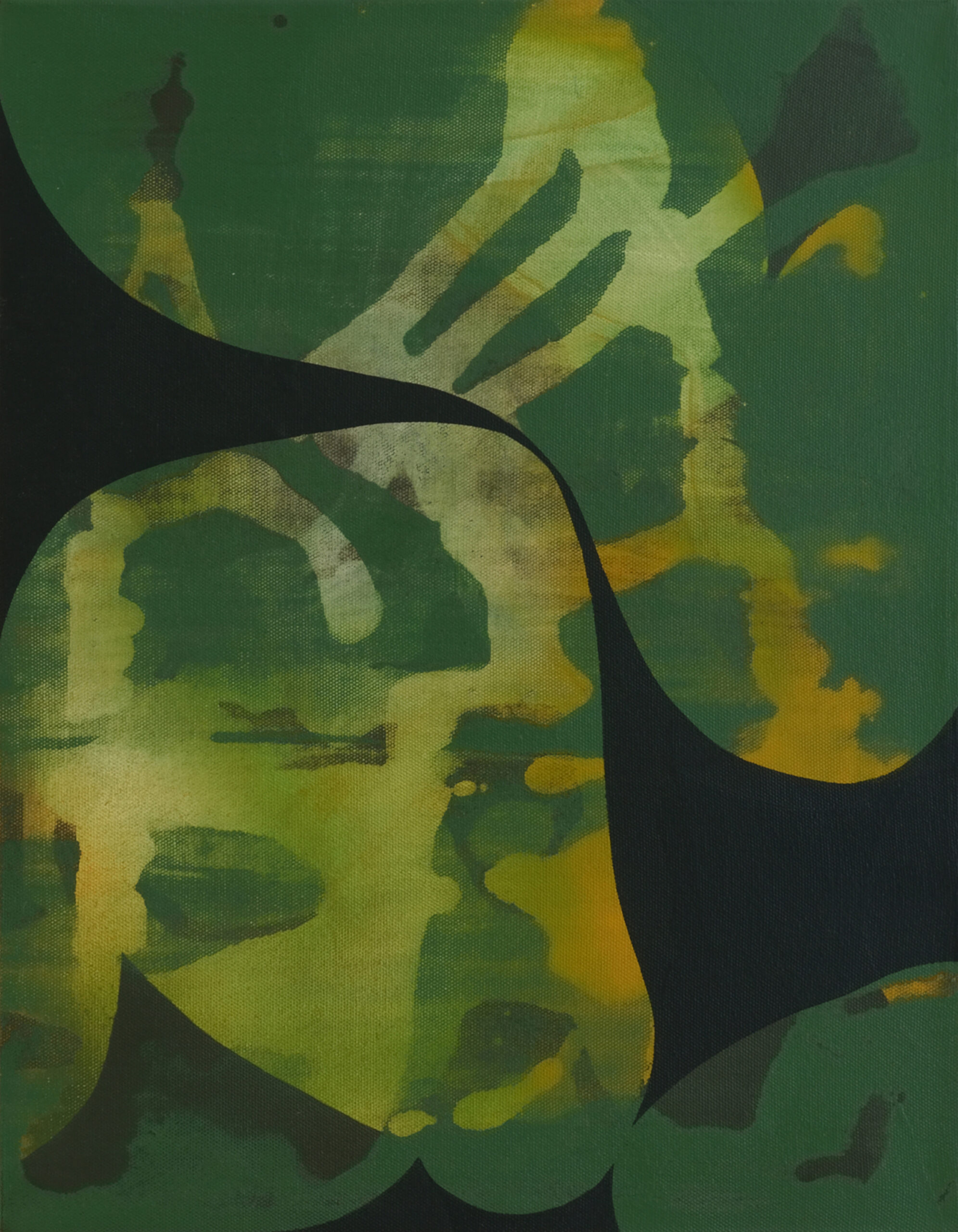
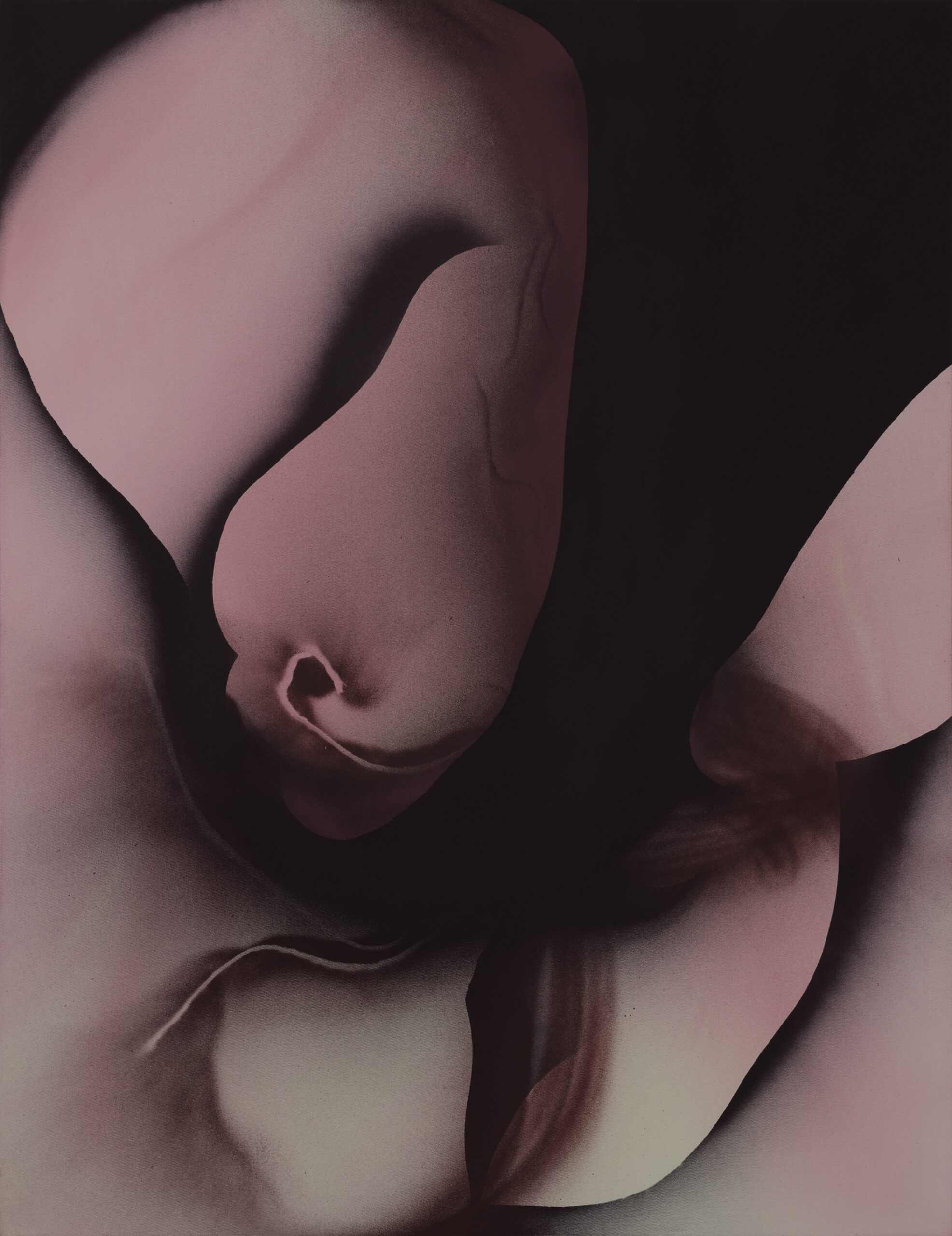
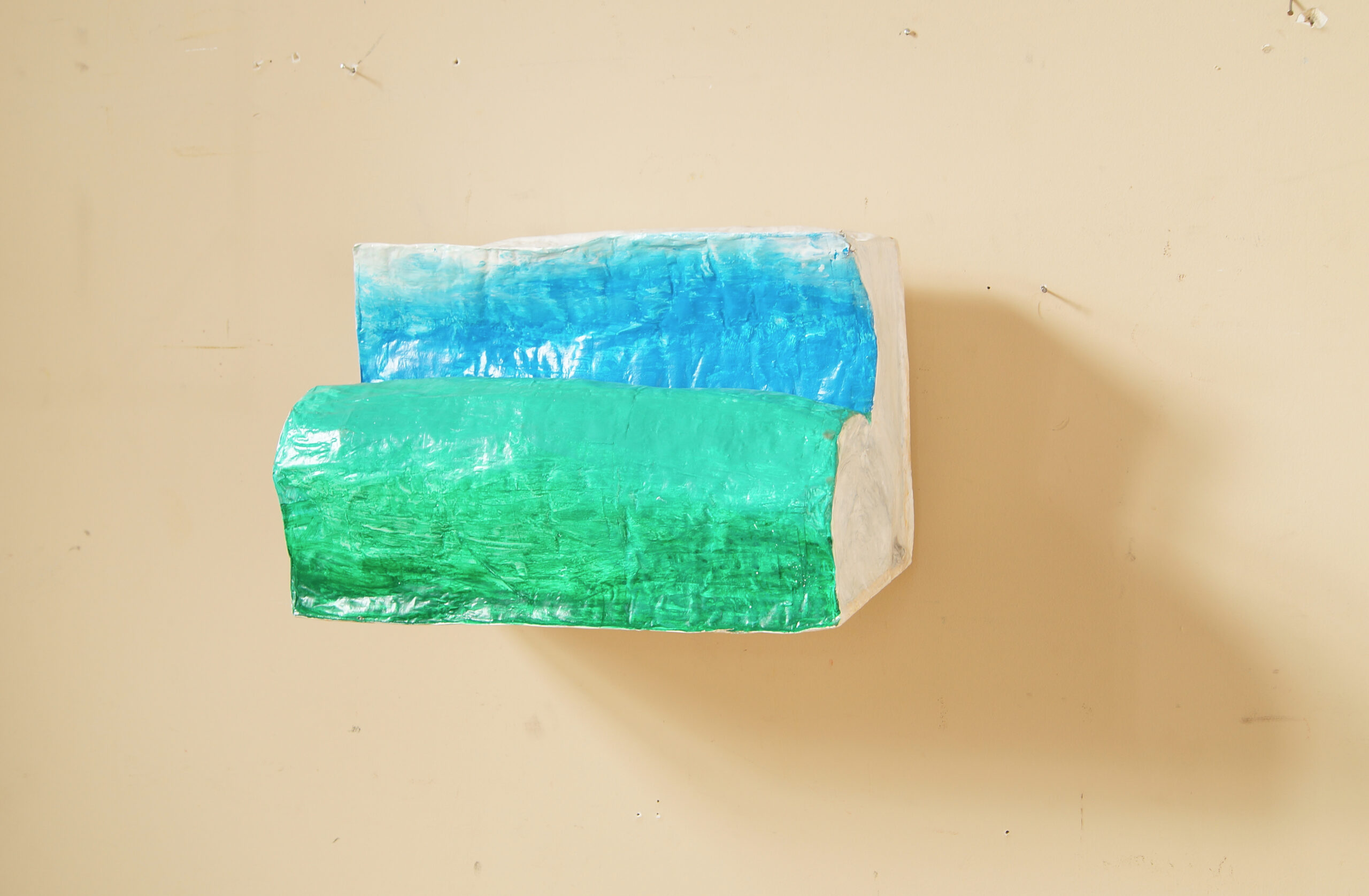
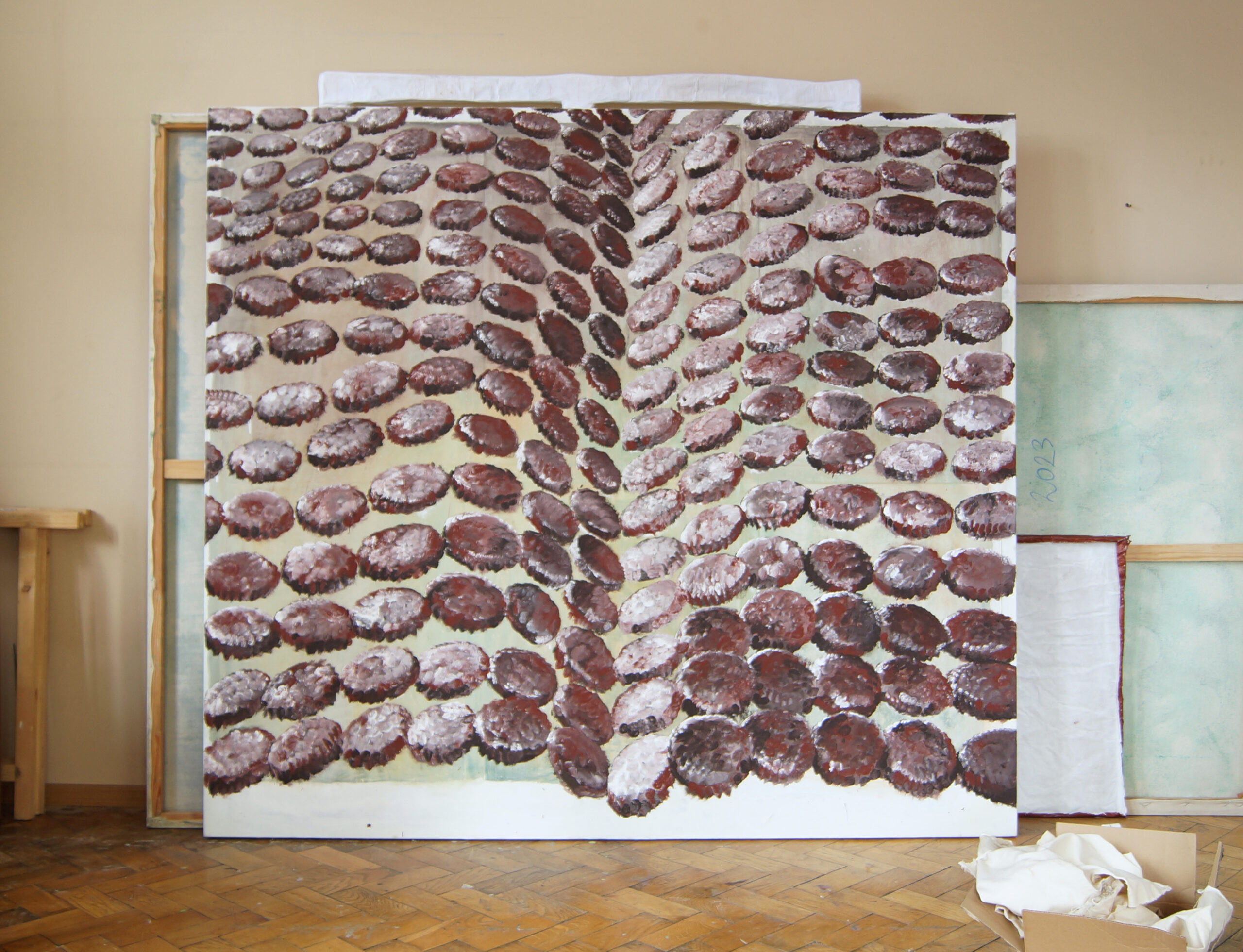
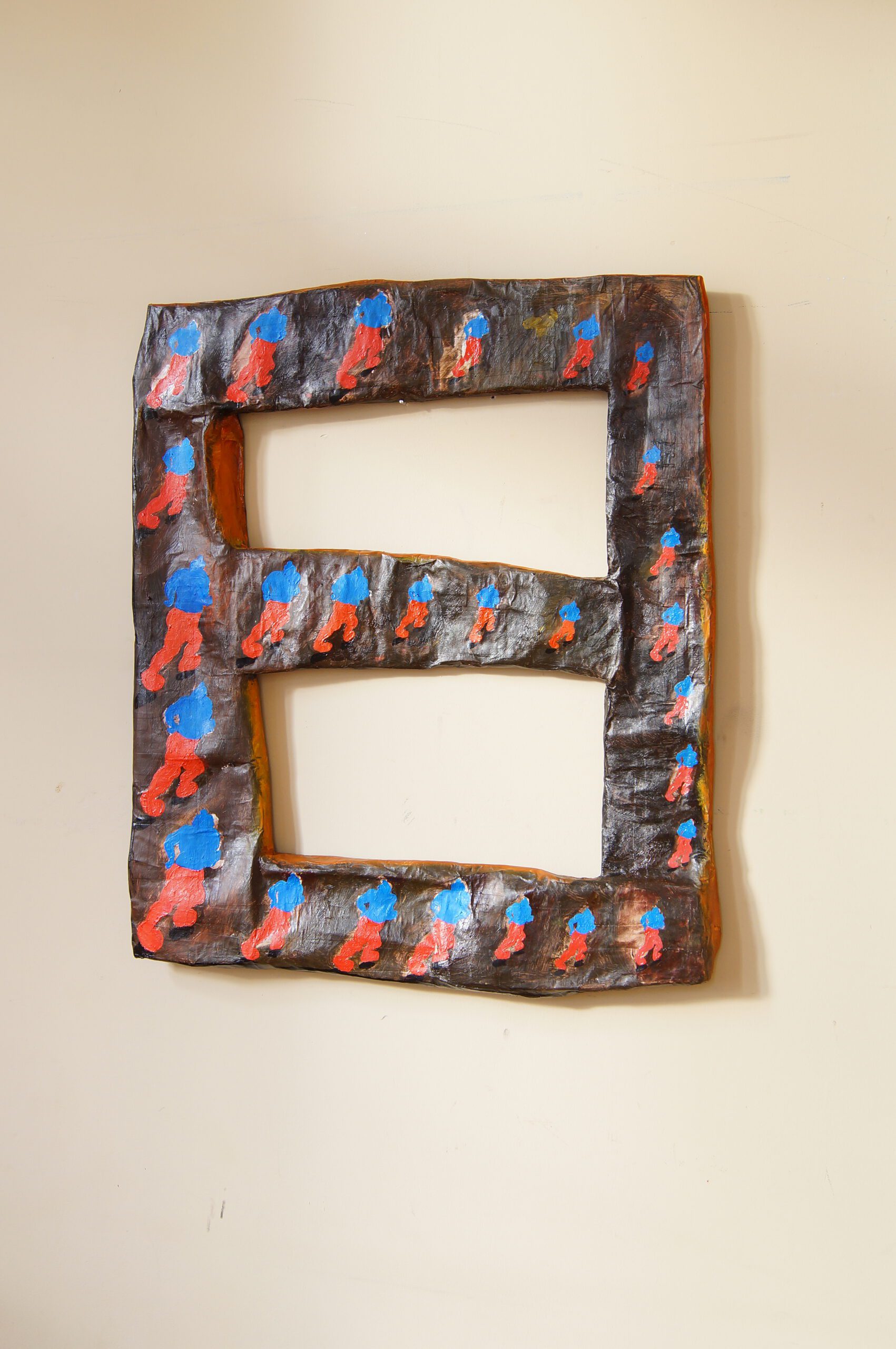
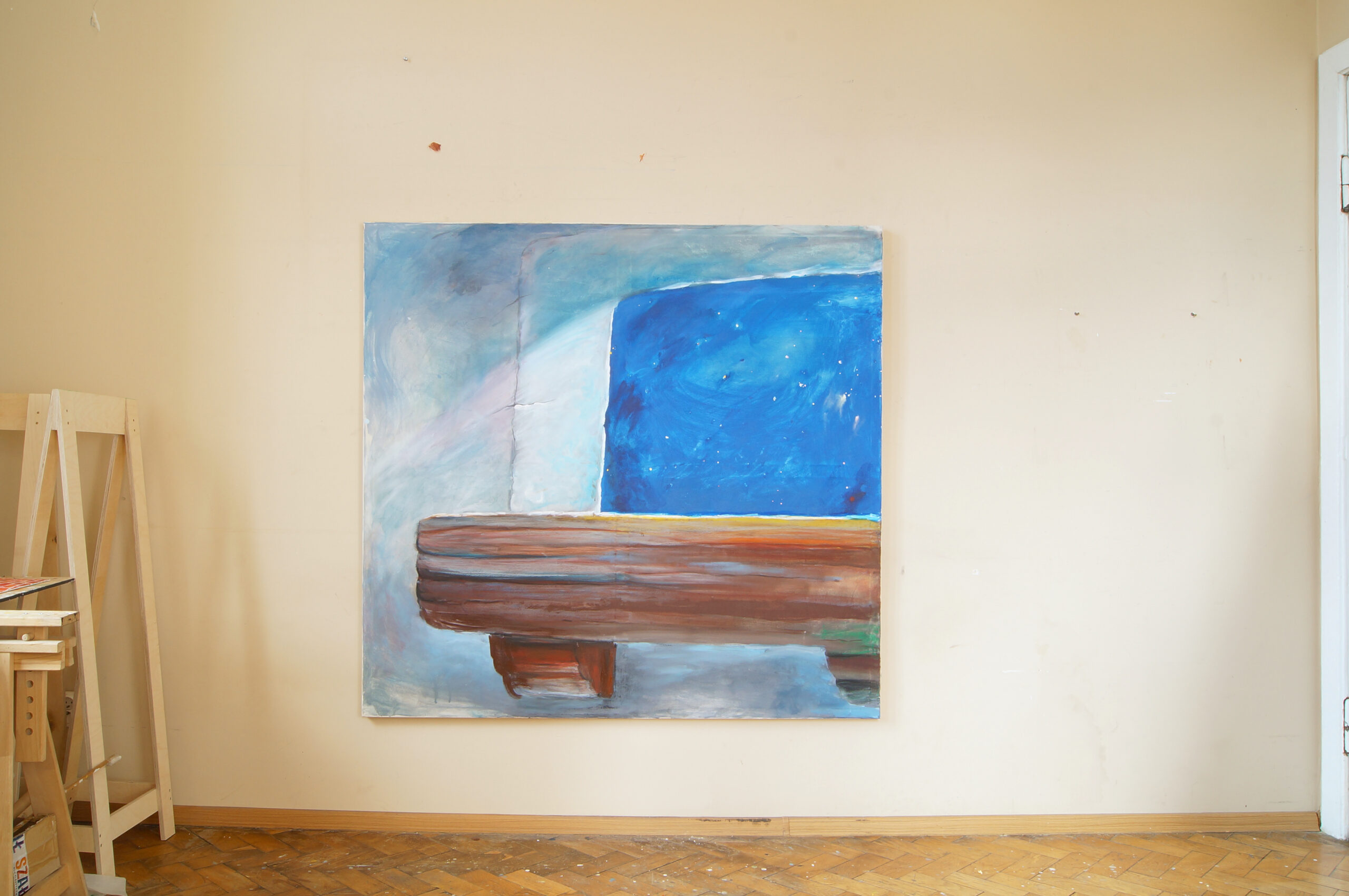
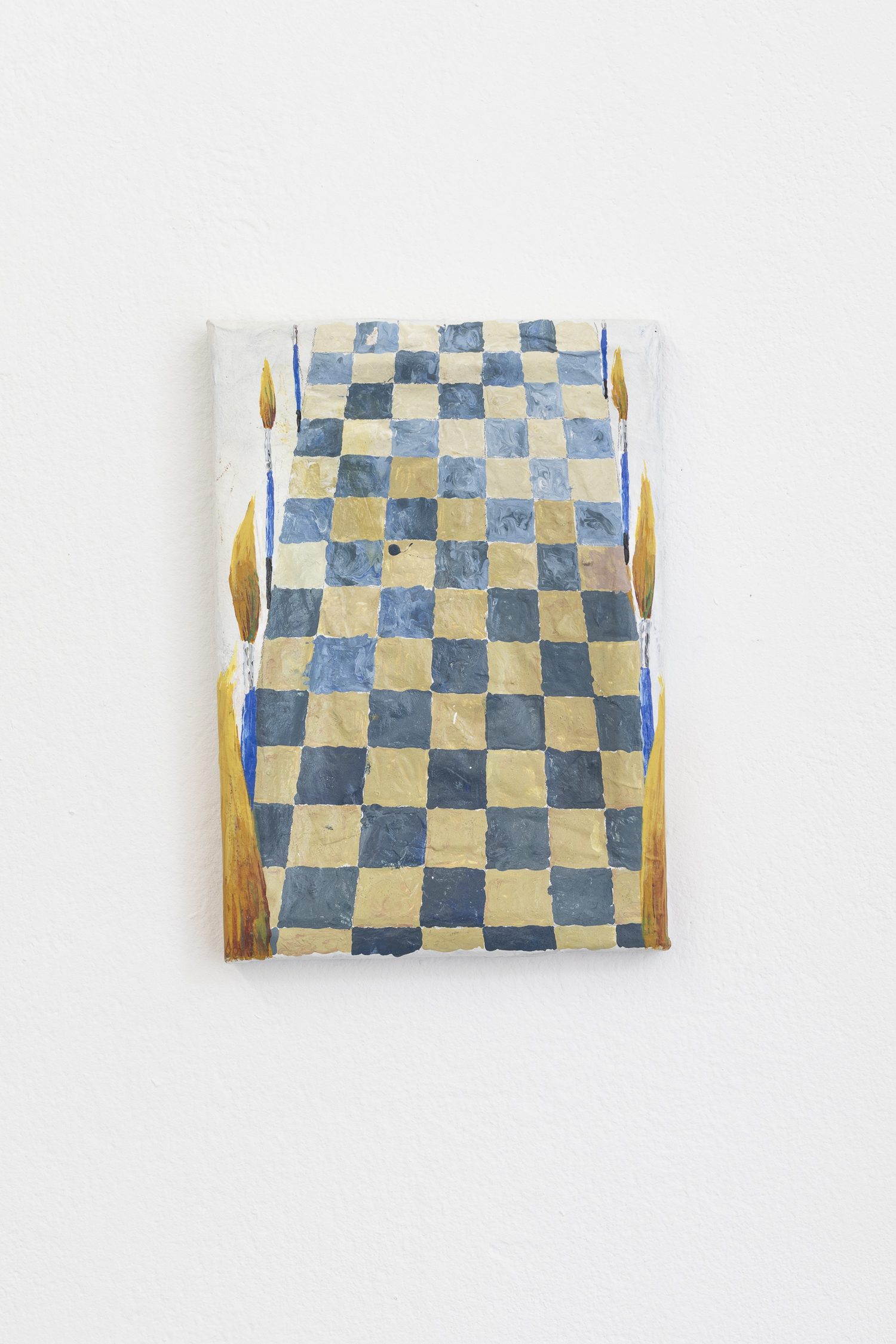
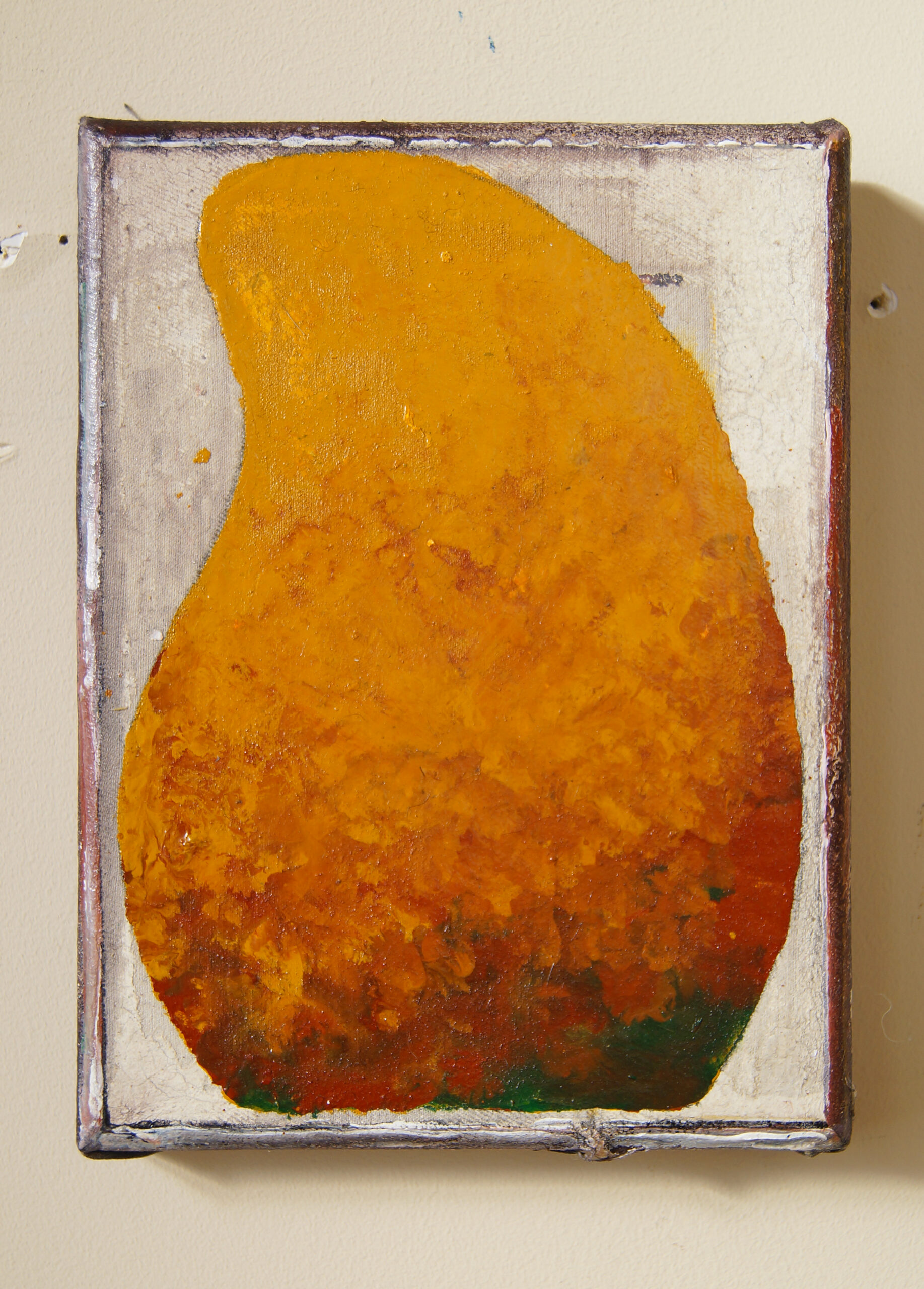
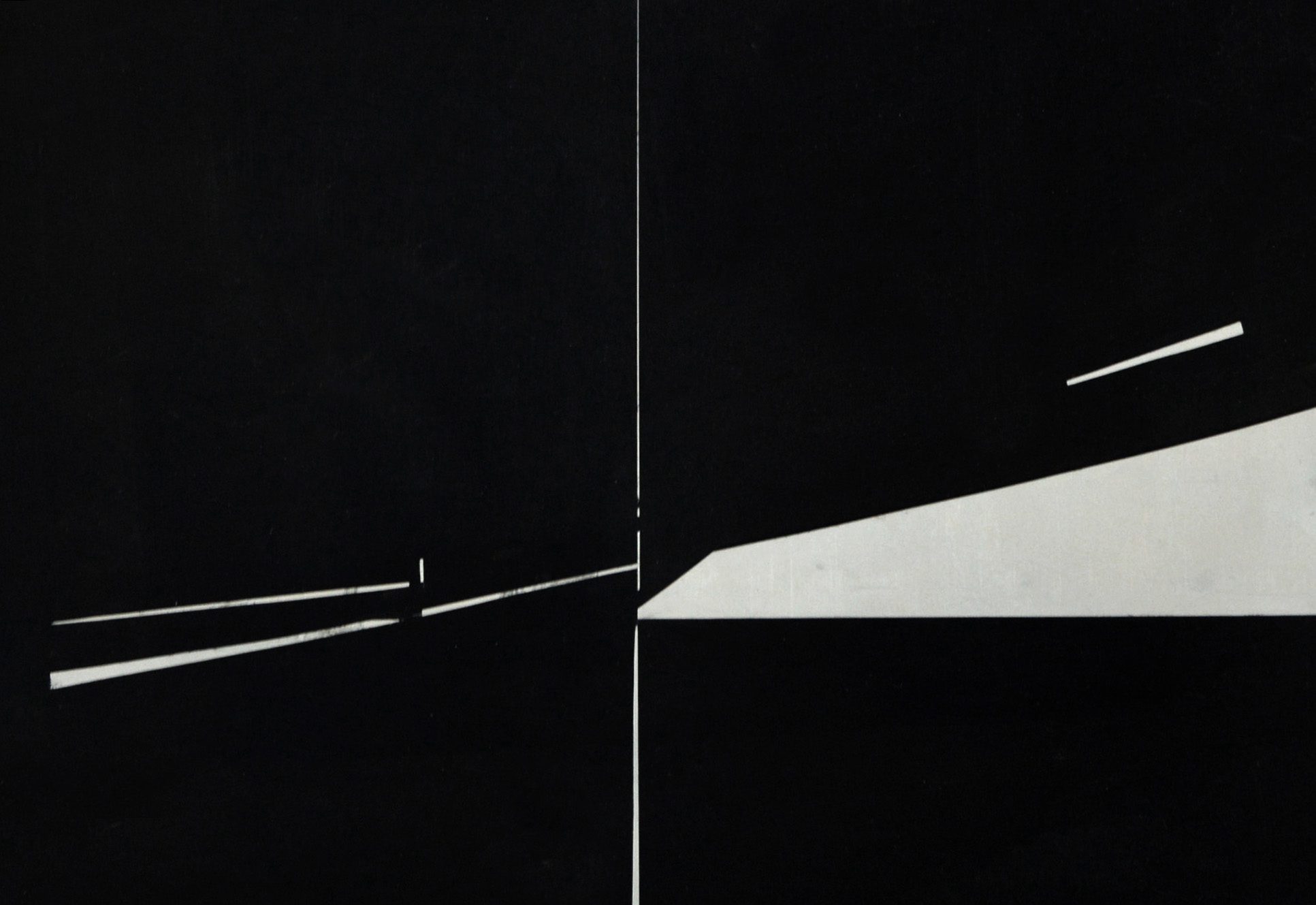
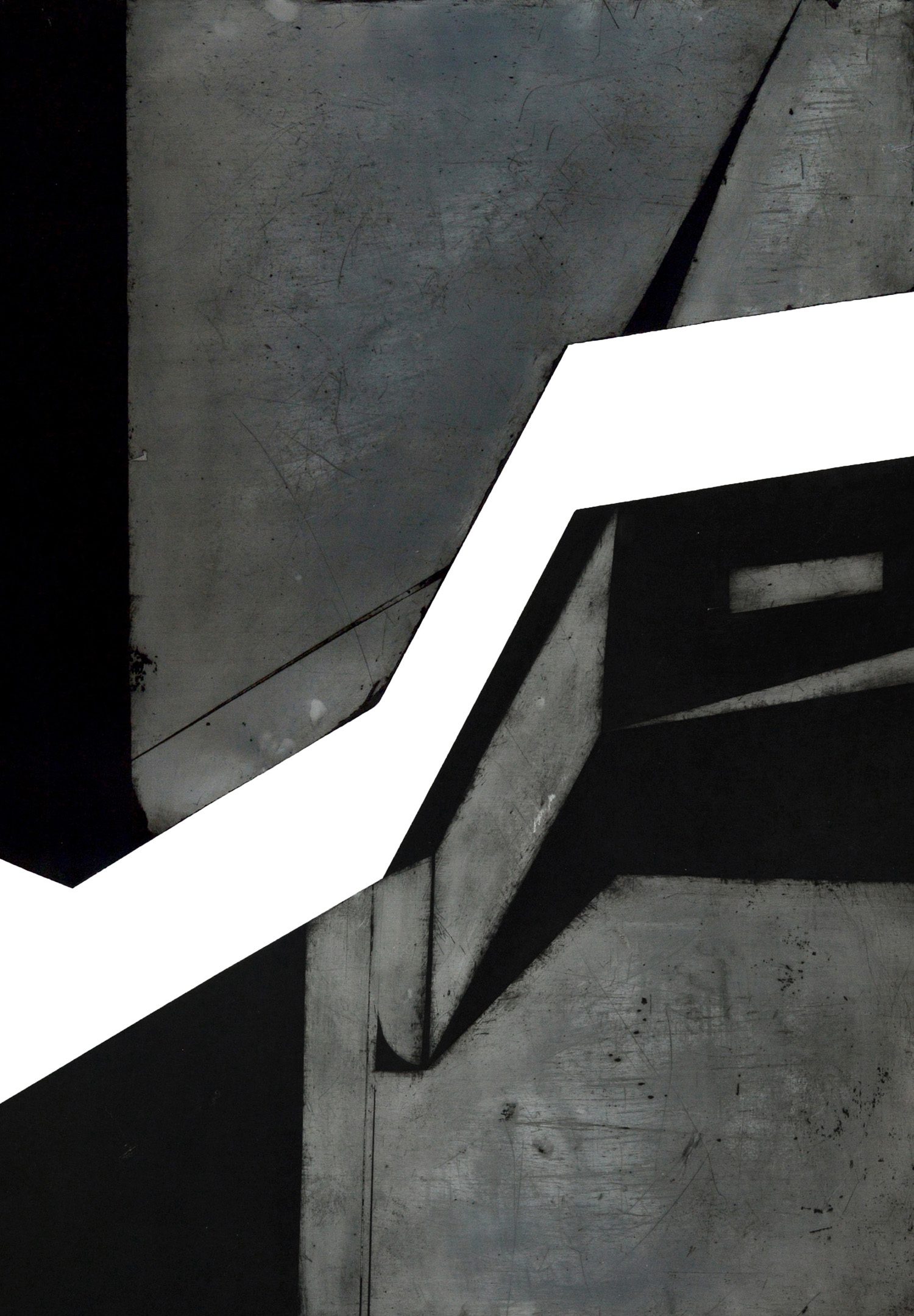
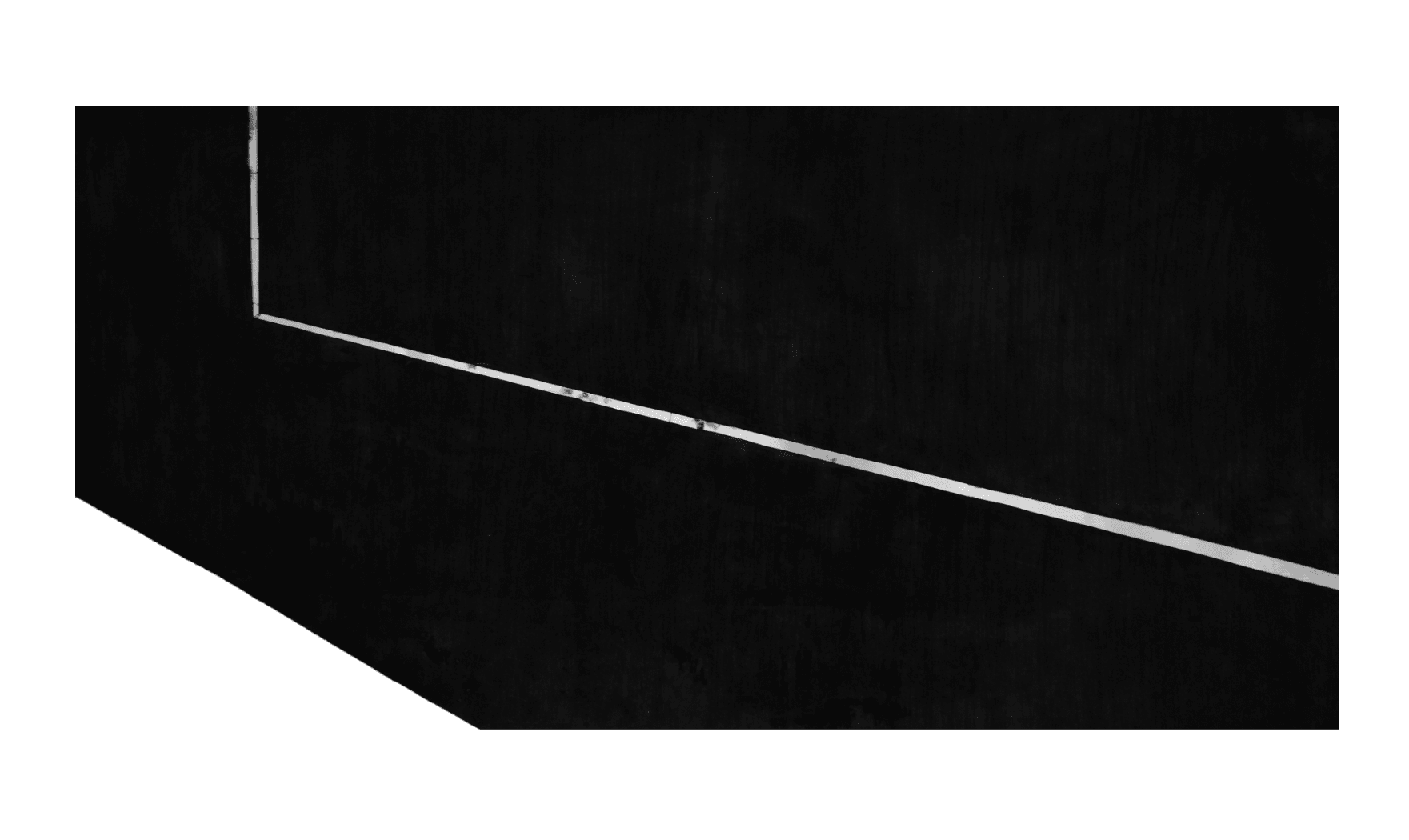
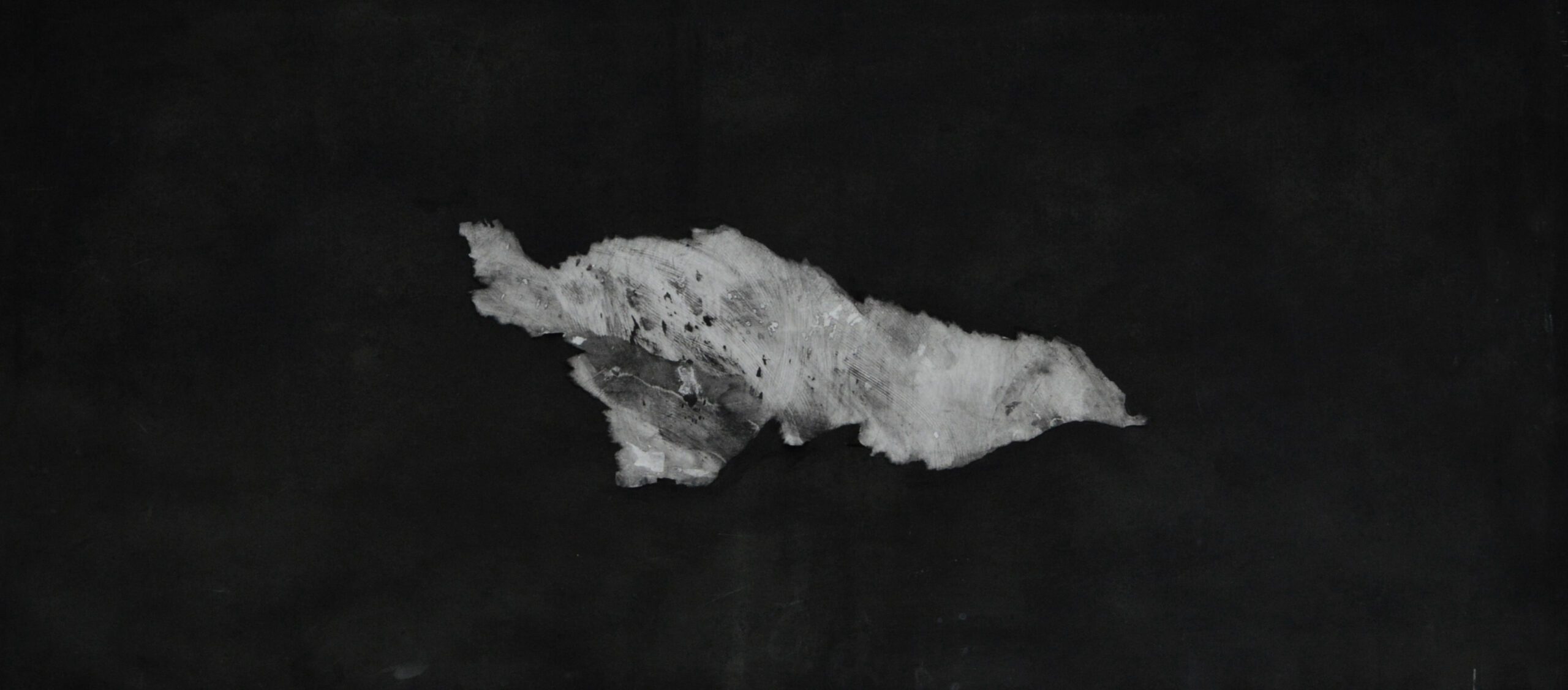
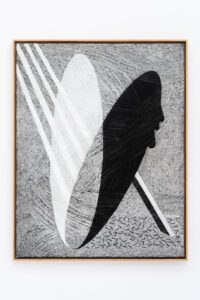
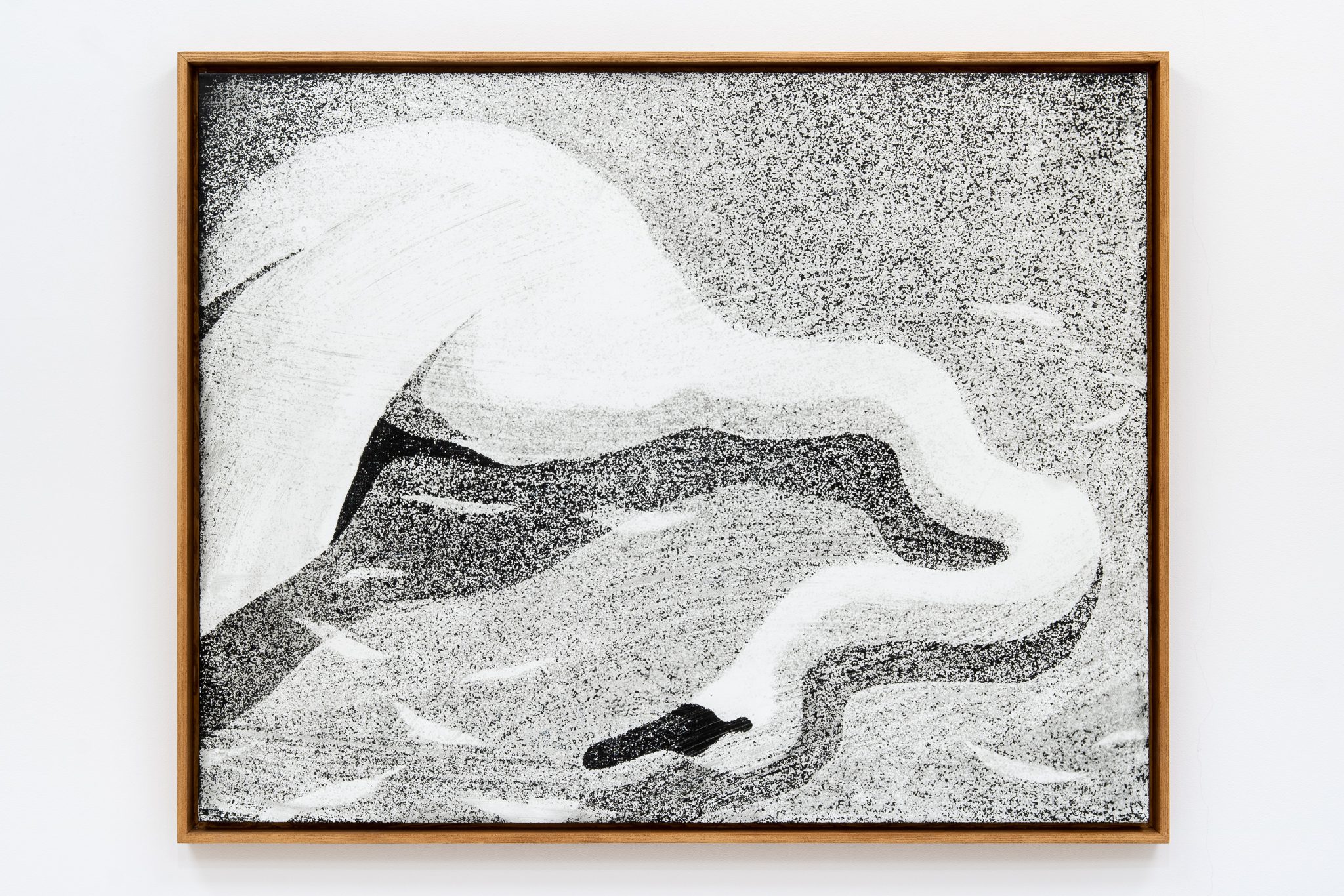
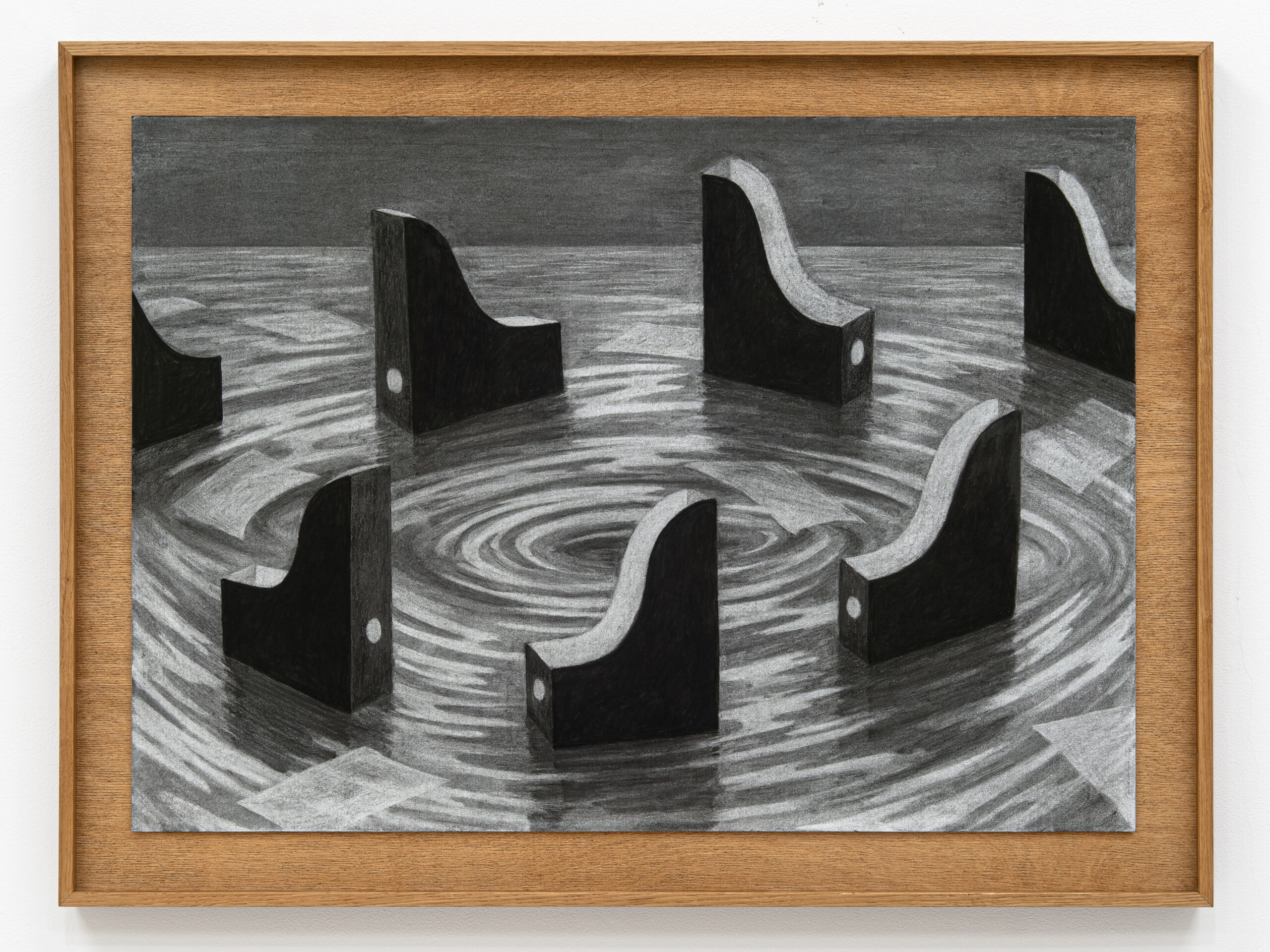
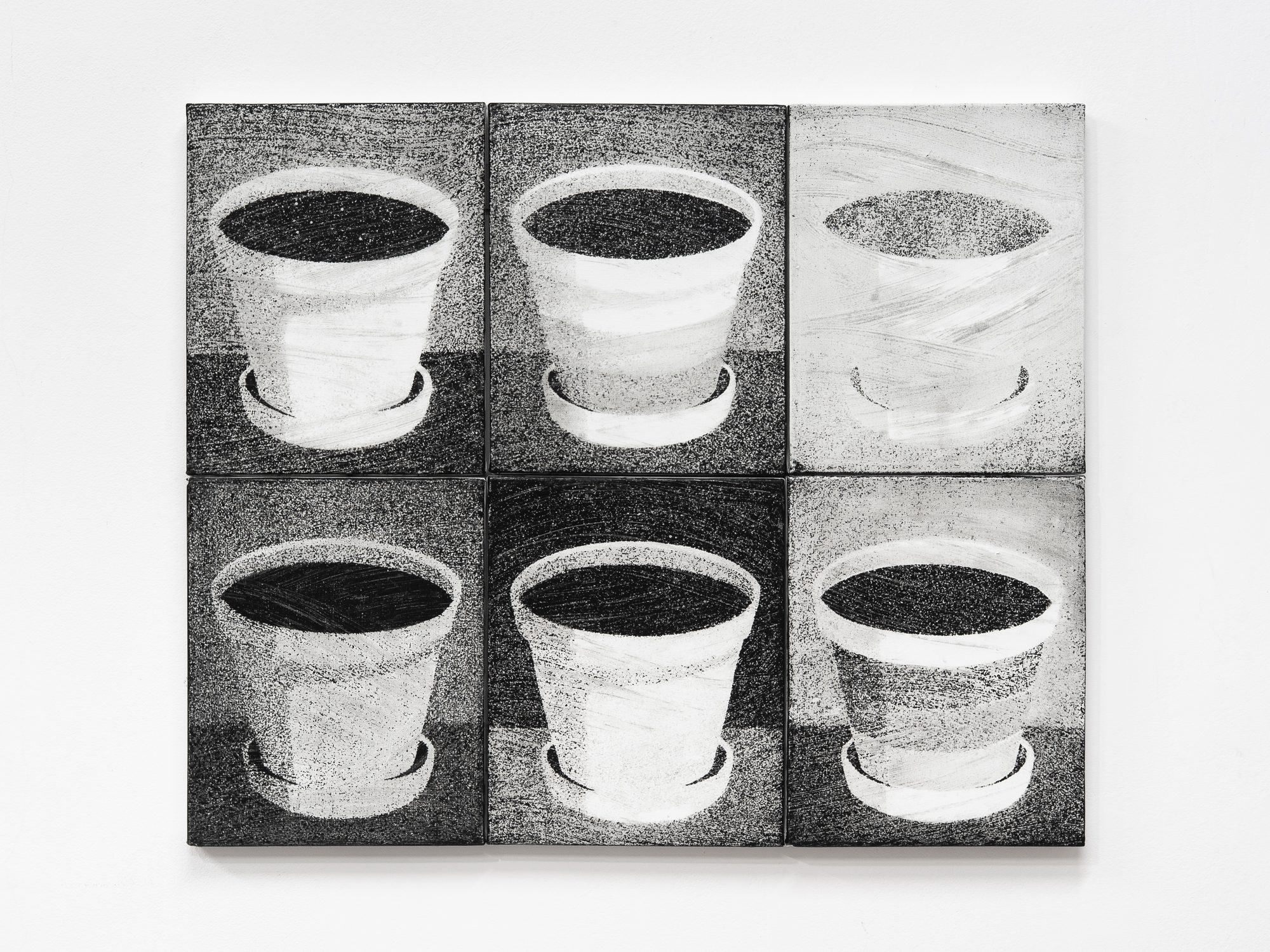
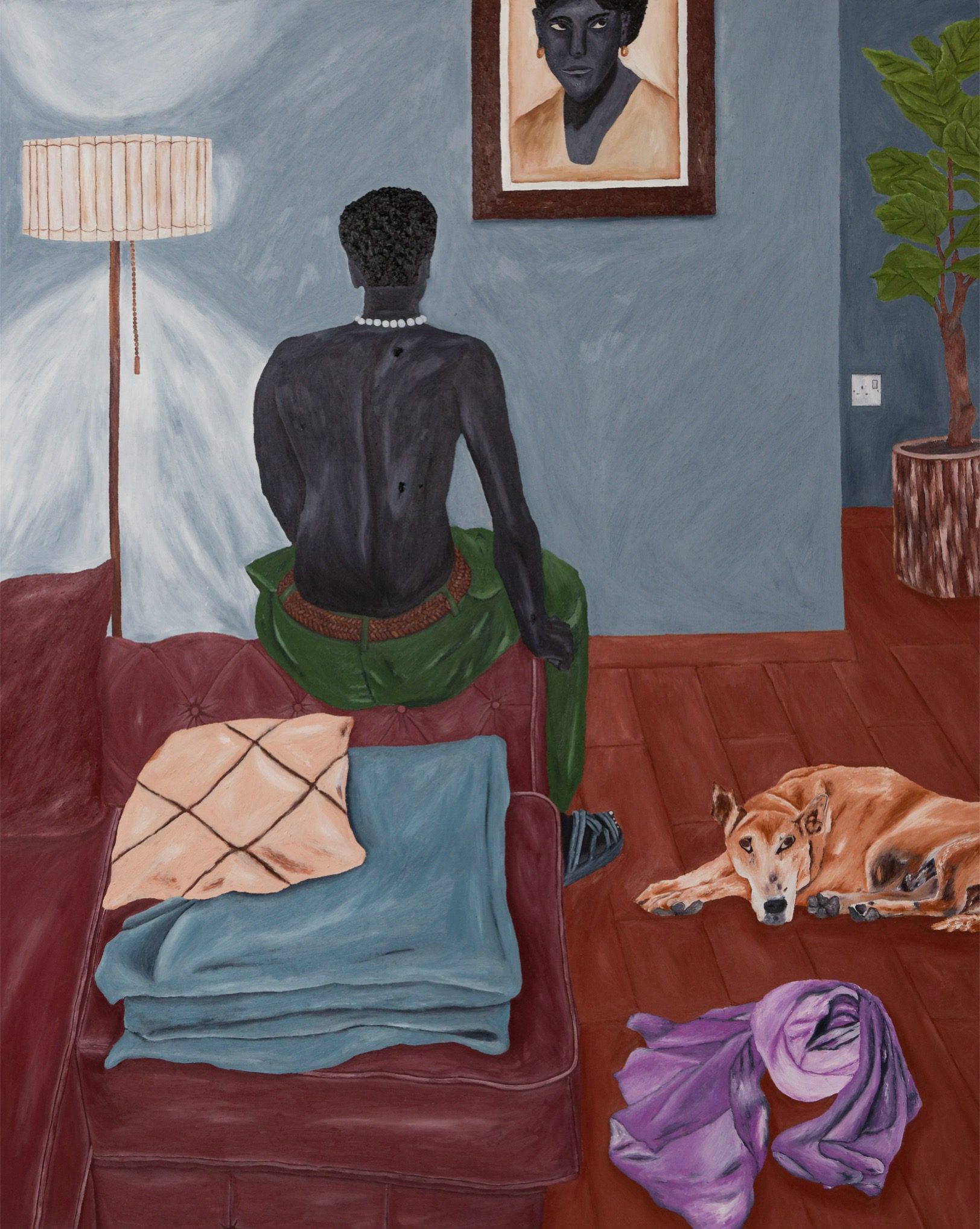
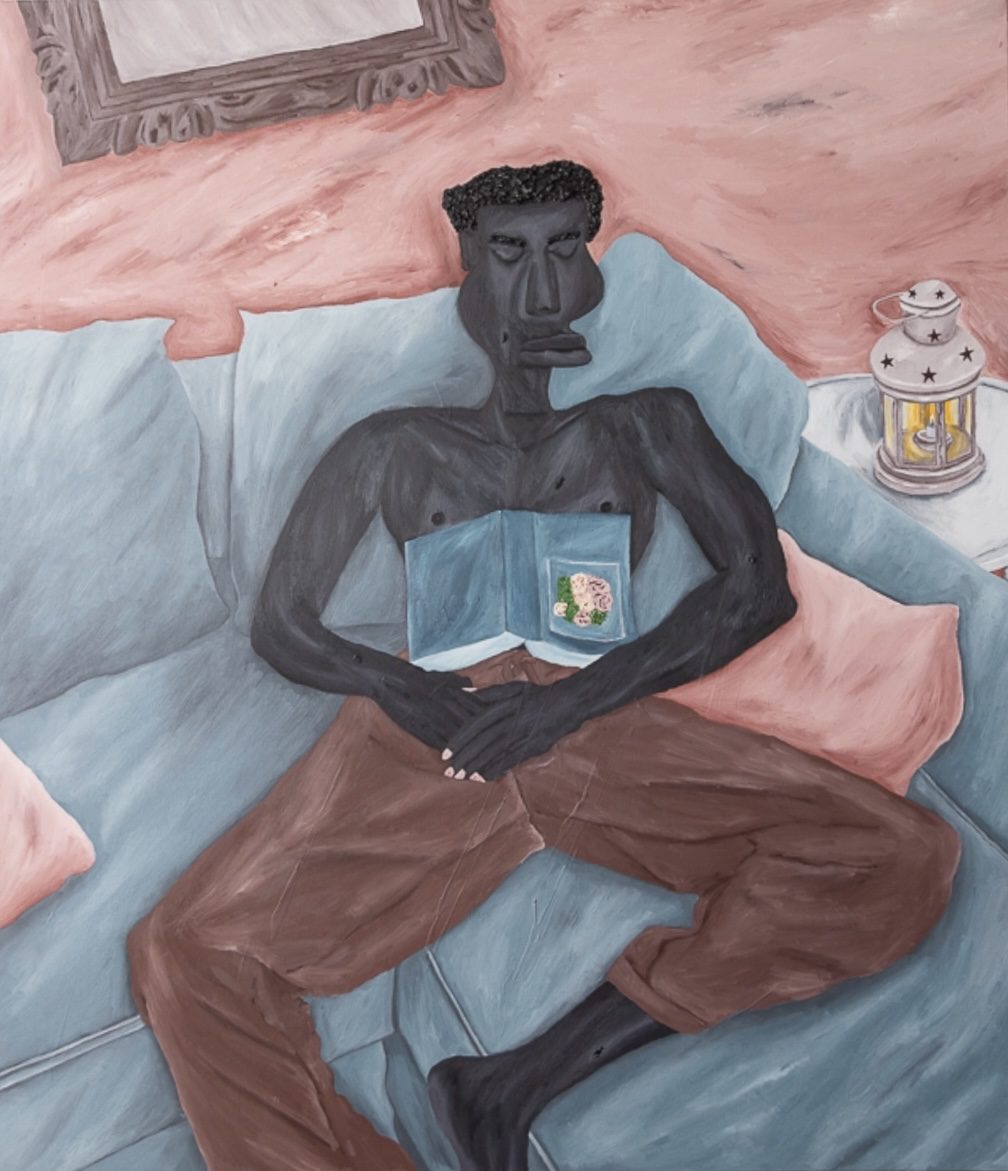
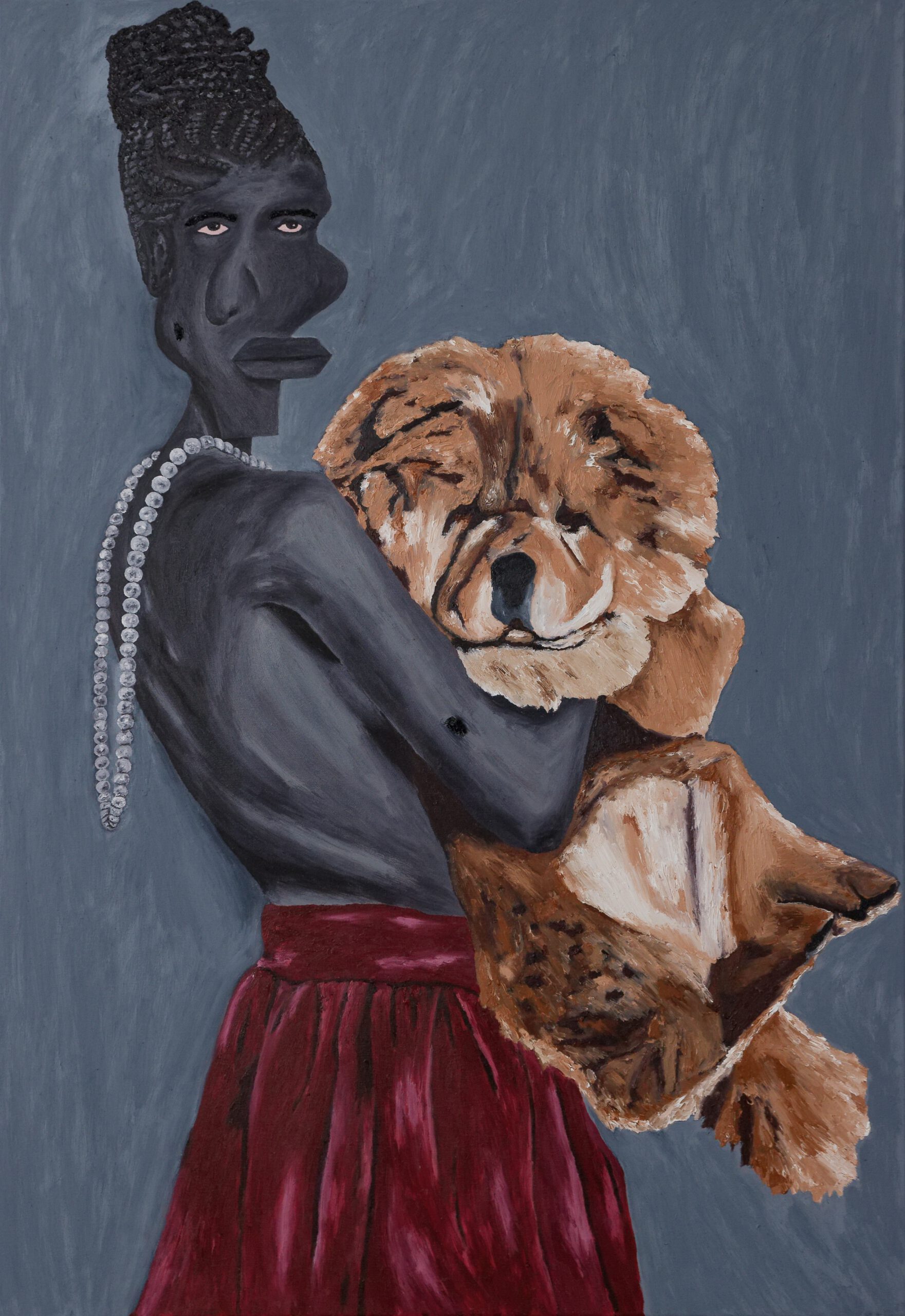
I am interested in human relationships. In painting, I search for their visual equivalent. I believe that what escapes verbal description can, to some extent, be captured through images. I see painting as a medium capable of generating a kind of silence that encourages states of self-reflection — one of the most important reasons why I paint.

Ideas for paintings often emerge from everyday observations. Sometimes it is a small, seemingly insignificant detail that stays with me. I begin with a quick black-and-white sketch so the idea is not lost. I then work on the composition and the relationships between the elements of the image. Before a larger canvas painting is created, I usually develop the idea through watercolours.

Through my work I try to heighten sensitivity to the relationships between people and encourage careful attention to the relations we ourselves create — even when this requires remaining within a state of dissonance.

m.i.andrzejczak@gmail.com

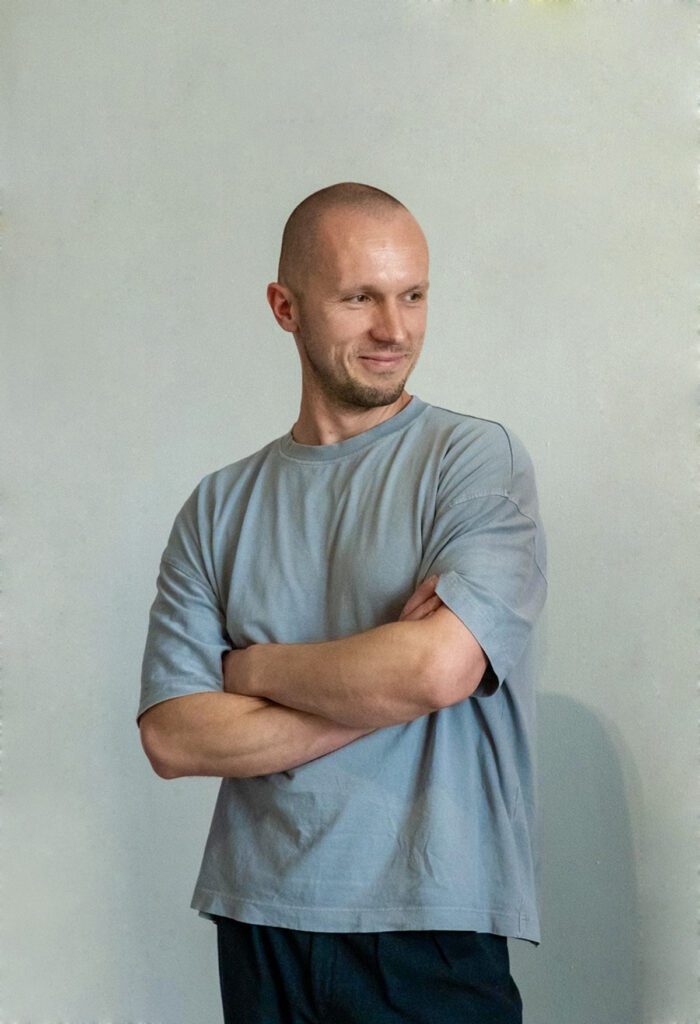
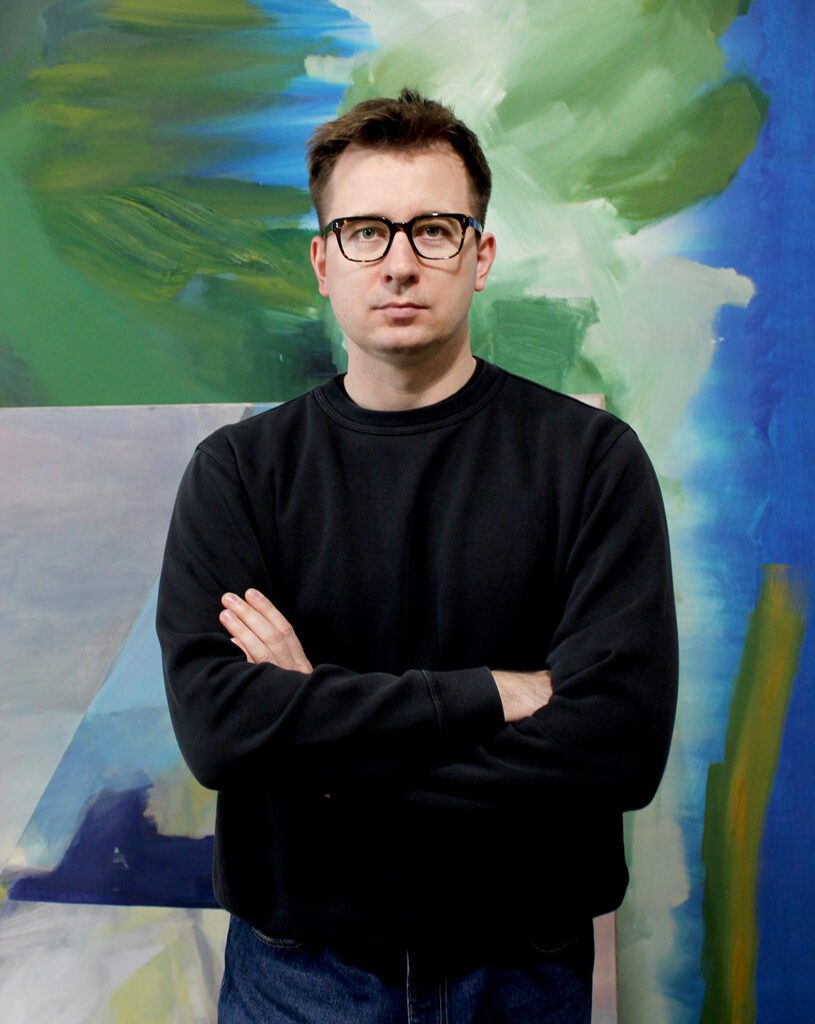
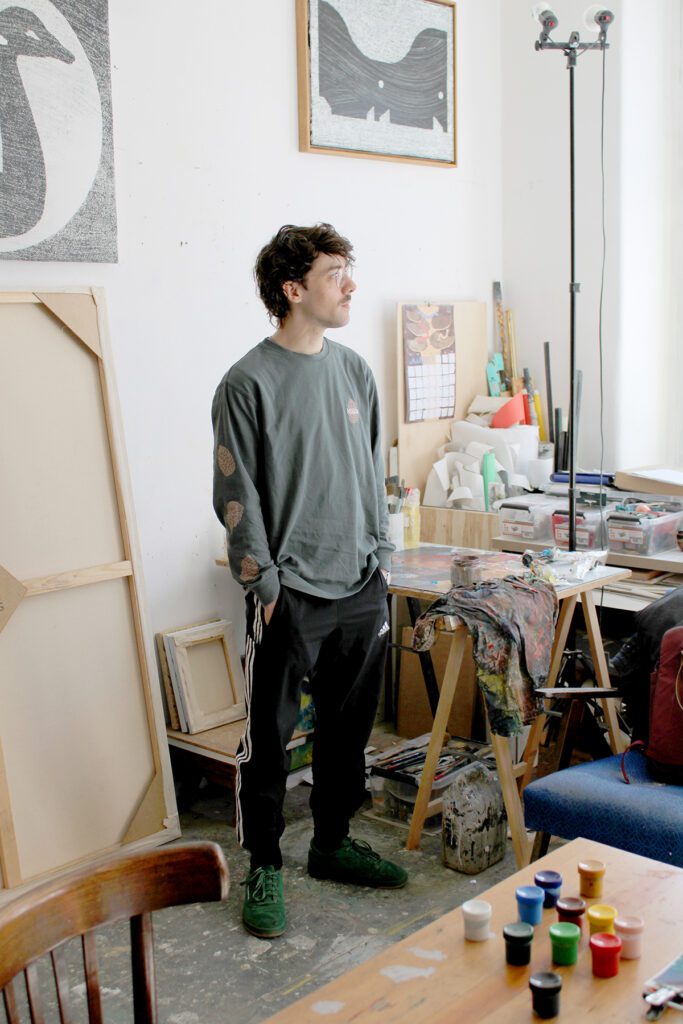
Maciej Andrzejczak (b. 1992) is an artist based in Poznań, Poland, working primarily in painting. He is affiliated with the Magdalena Abakanowicz University of the Arts Poznań, where he received his PhD in 2023.

Recent exhibitions include Przestrzeń obrazu? Przestrzeń obiektu?, Rodriguez Gallery, Poznań (2023); Moment, w którym się chwieje i drży, Szydłowski Gallery, Warsaw 2023; Tana Tana, EGO Gallery, Poznań 2022; Półśrodki, Wozownia Art Gallery, Toruń 2019; Deziluzja, Szewska 16 Gallery, Poznań 2017. He received the Grand Prix of the Pienkow Art Residency 2019, the Grand Prix of ArtNoble 2017, and the Grand Prix of the 37th Maria Dokowicz Competition 2017.

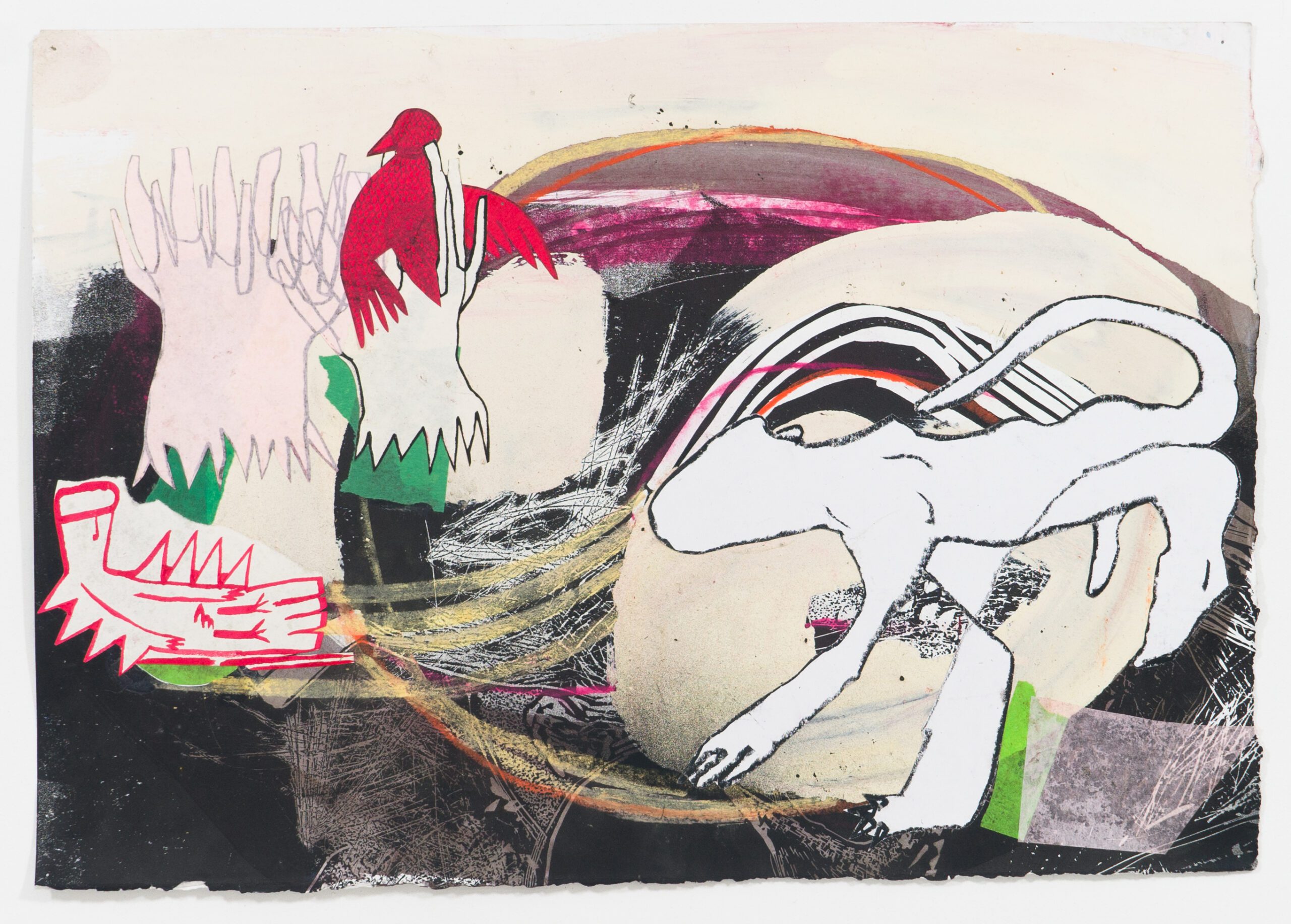
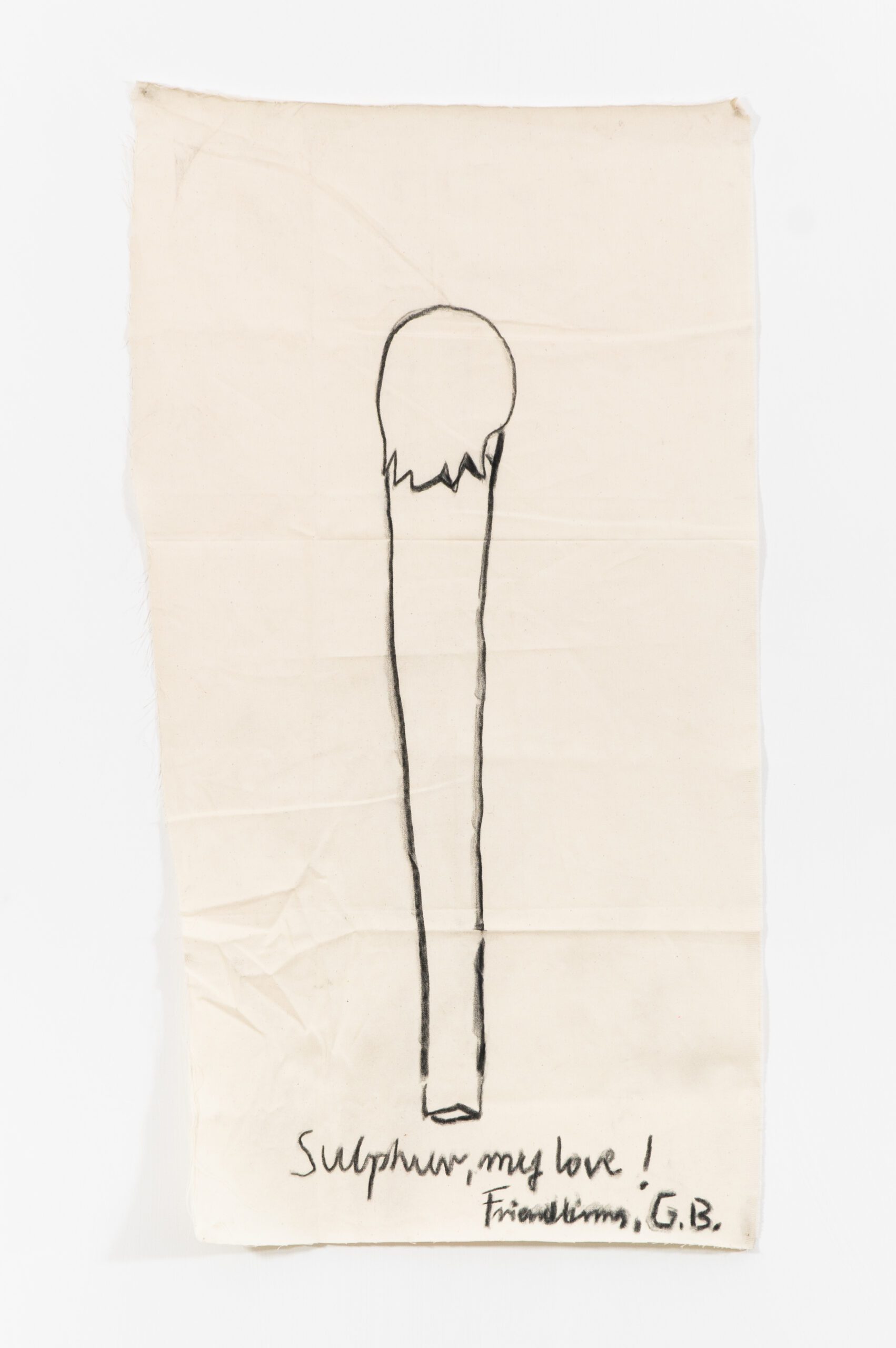
Gosia Bartosik

In my work, I explore the interface between the body and the mind. I examine where they clash and where they work together.
I use contrasts, metaphors and scale shifts.
I employ subversion and humour.
I distort, provoke and probe.
With commitment and seriousness.

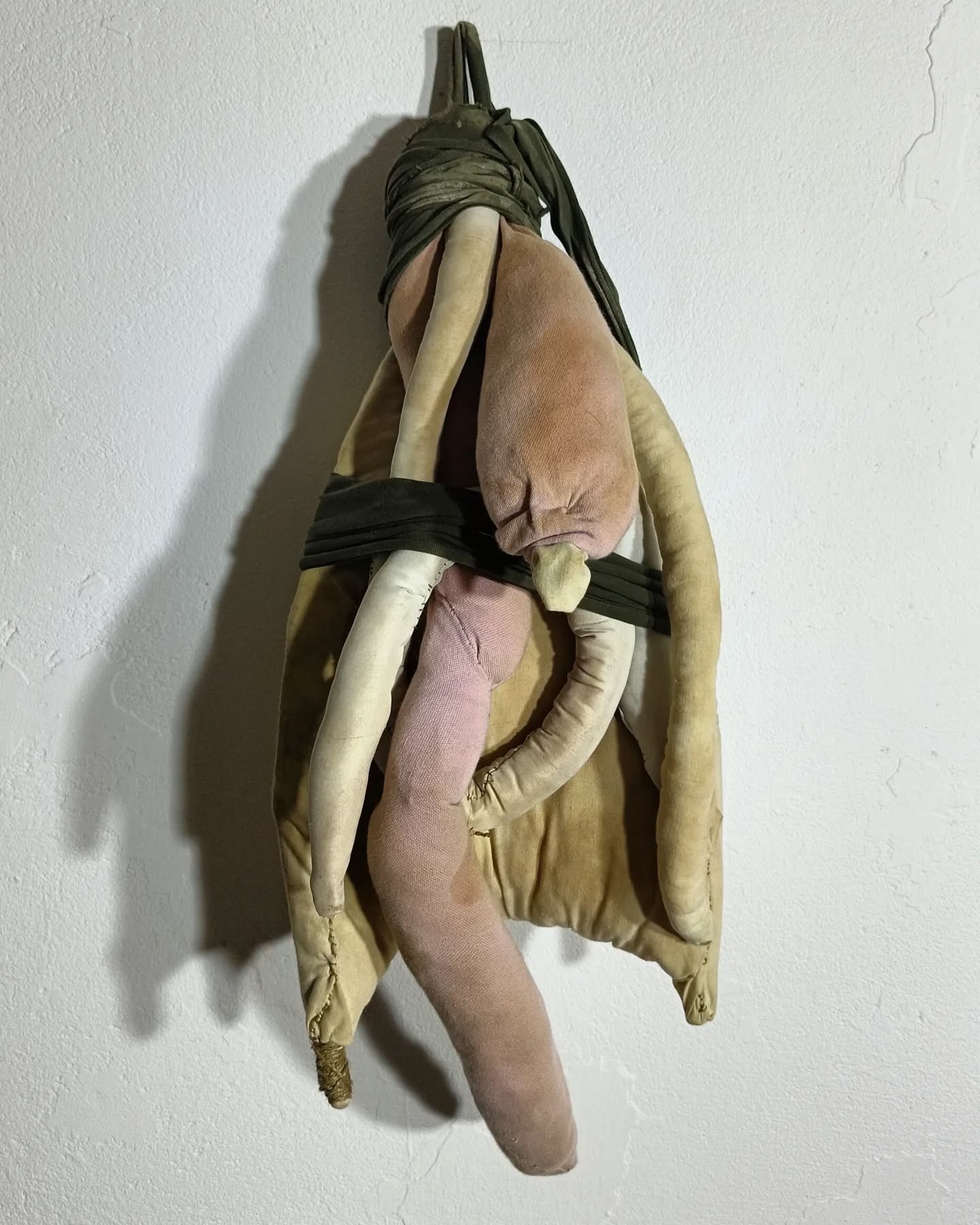
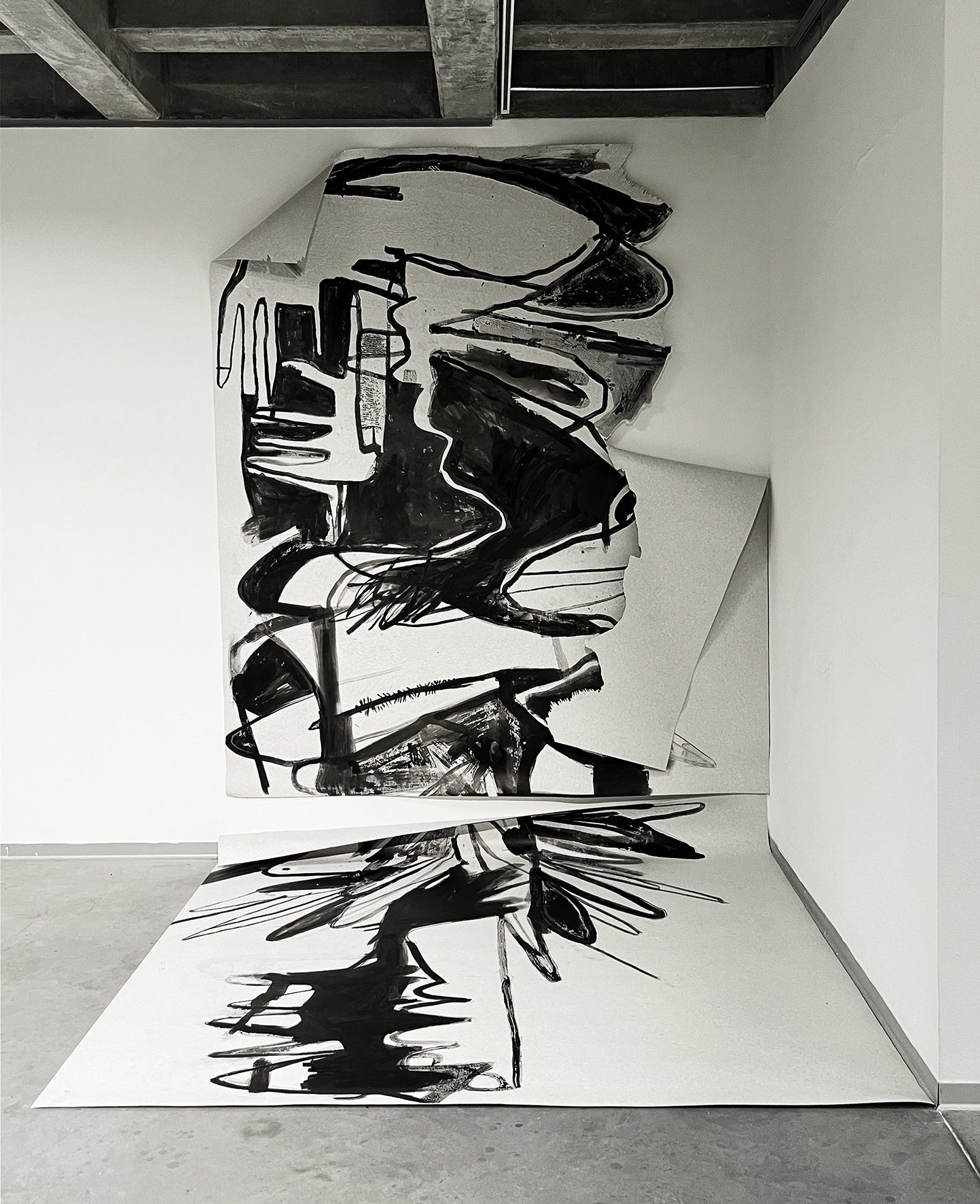
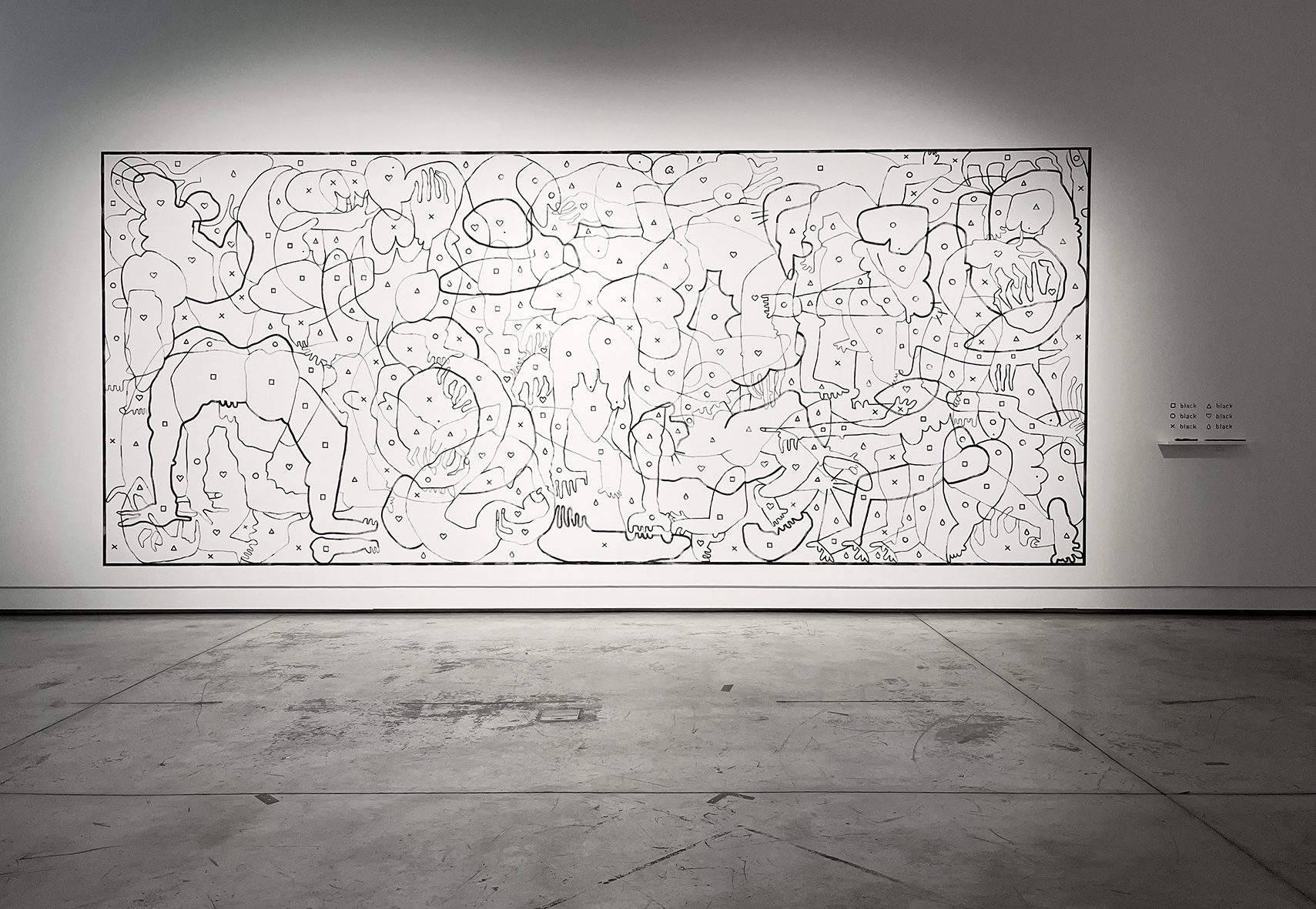
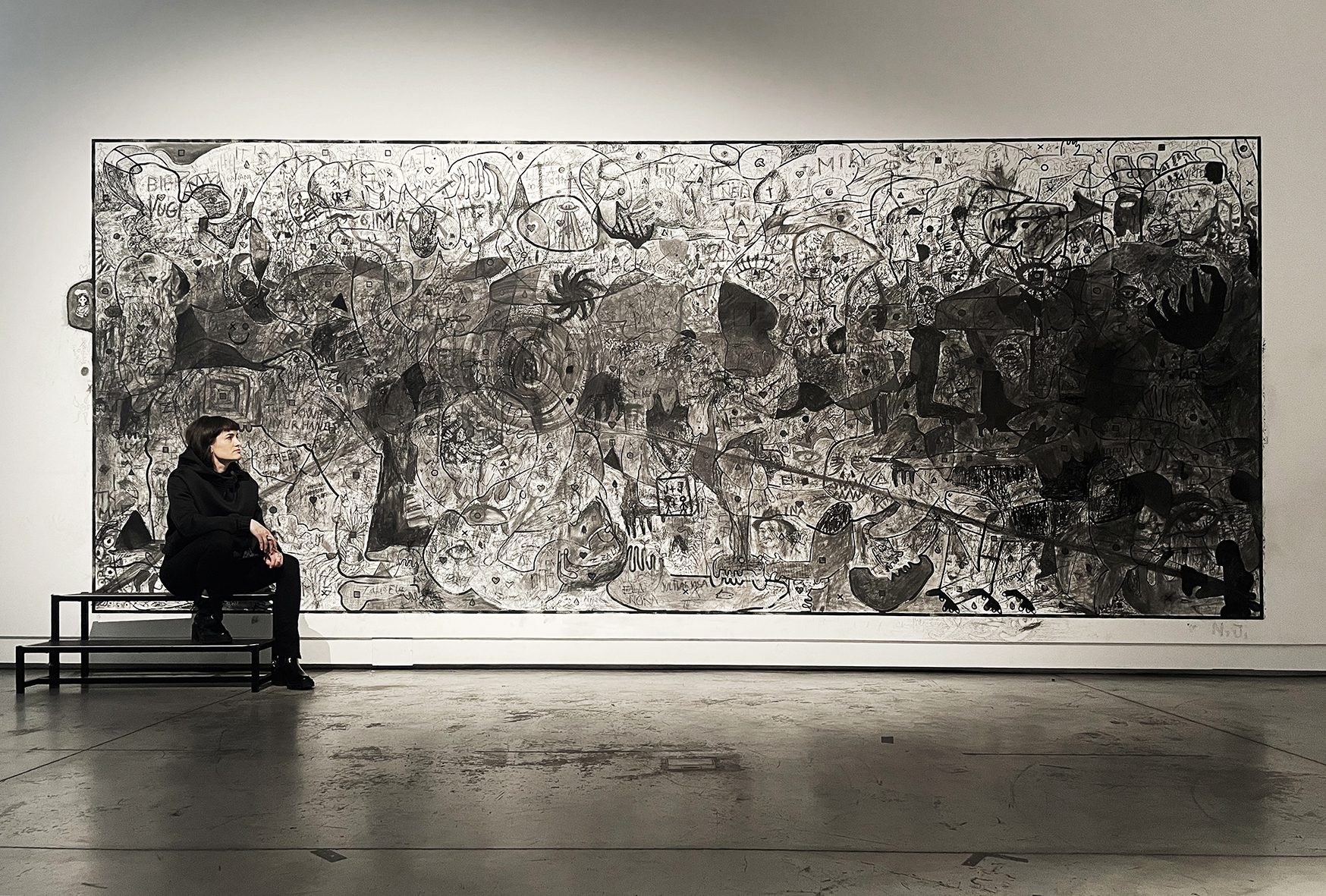
I explore themes that are closest to me: physicality, home, motherhood, as well as the humorous ugliness and dirt, and the relationships between living beings and the world. I create new, biologically inspired forms for these concepts. I manifest the physicality of processes.
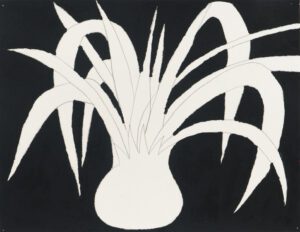
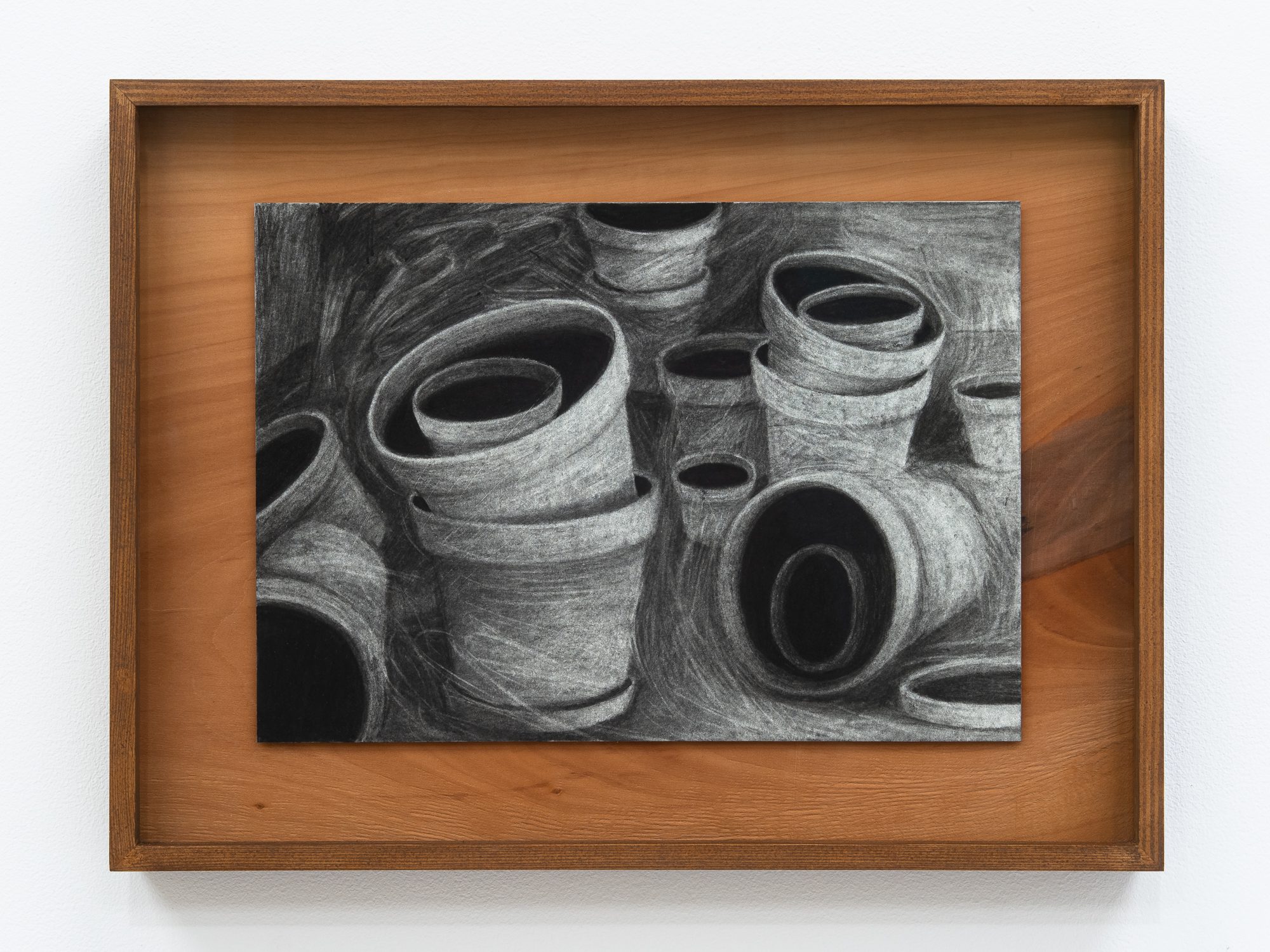
I like black outlines.

I TAKE CARE OF THE MATERIAL I WORK WITH
I CHOOSE: MATERIAL – TOOL – SUBJECT

I work with paper, fabric, walls, and boards.
I use charcoal, pencil, paints, varnishes, ballpoint pens, pastels, crayons, and ink.
I enjoy working within a space where I am free to do anything.
I allow myself this freedom; I relish this responsibility, this opportunity, this liberty and spontaneity. My art is my thinking and feeling combined; it is my daily practice, my bastion, my refuge, my voice, my home.
I take responsibility for what I have created; I do not take responsibility for what my works may create for yooou.

gosia.baartosik@gmail.com

Gosia Bartosik (born in 1986, lives in Poznań) – visual artist working in drawing, painting, and printmaking.
She has presented her work in solo and group exhibitions, participated in artist residencies, and led curatorial and educational projects. Creator of the project “DRAWING TALKS – young Polish drawing today” in collaboration with BWA Zielona Góra.

Urszula Blachnierek

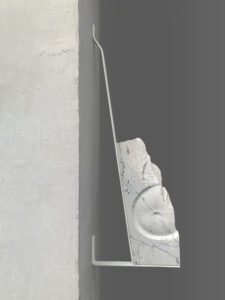
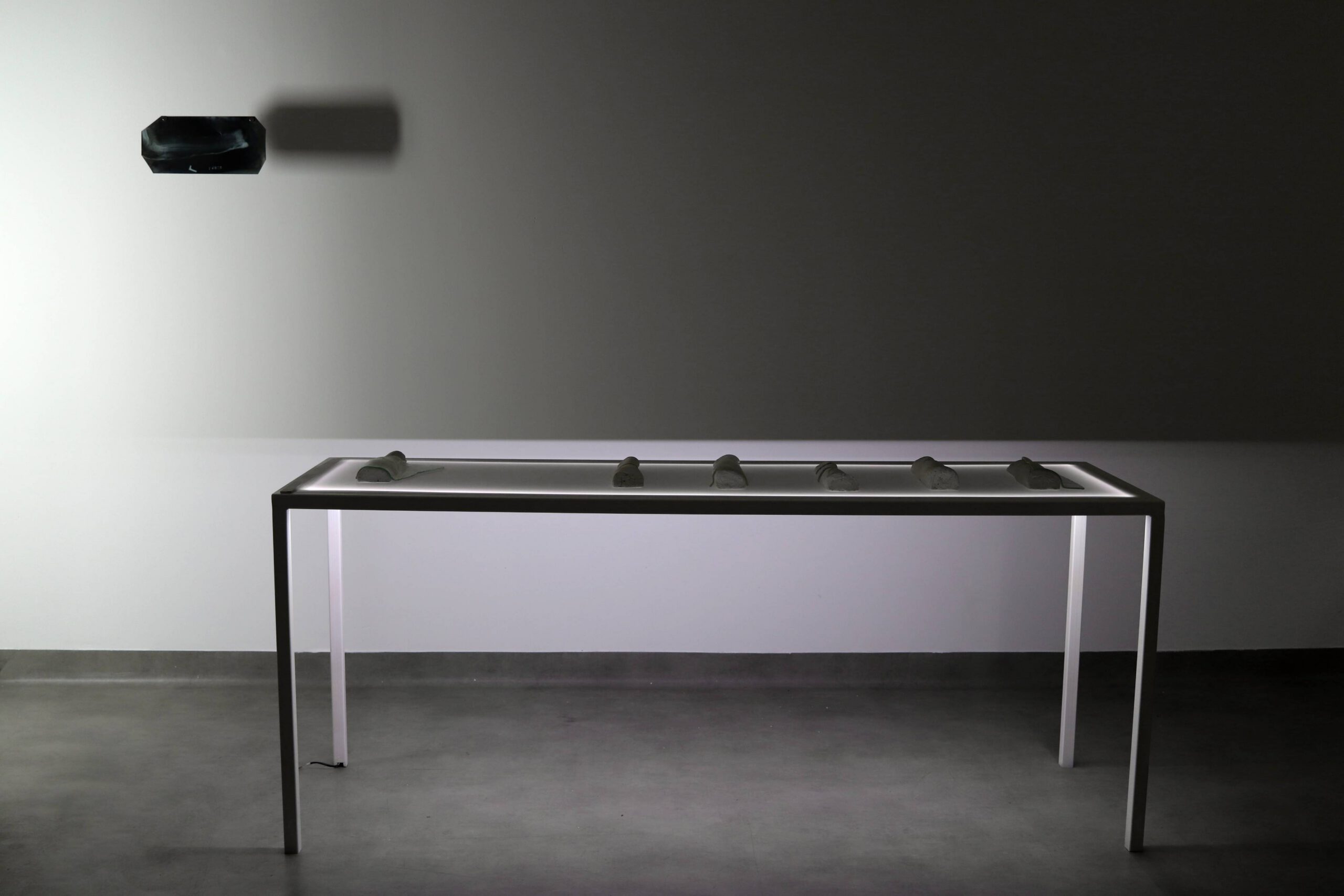
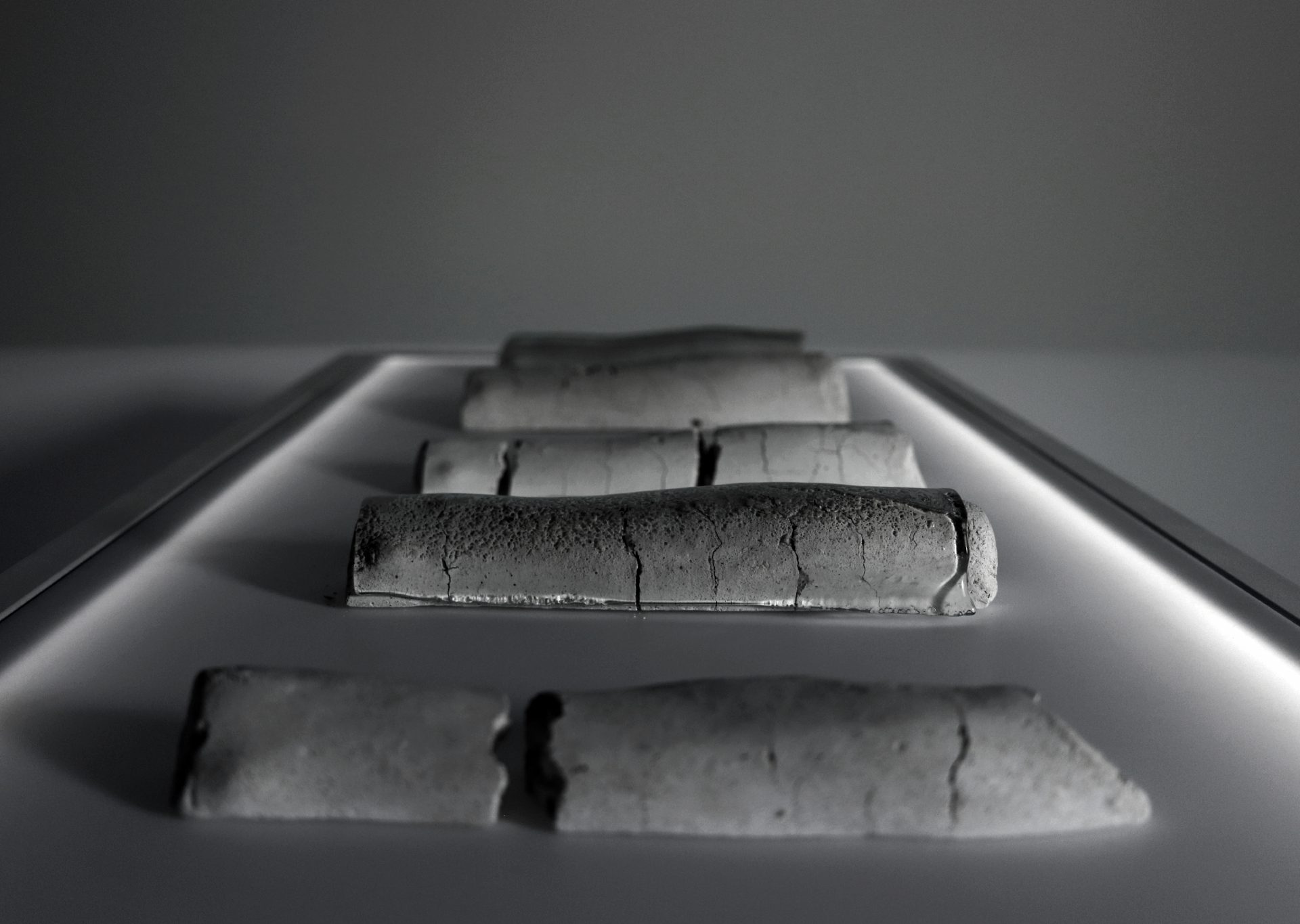
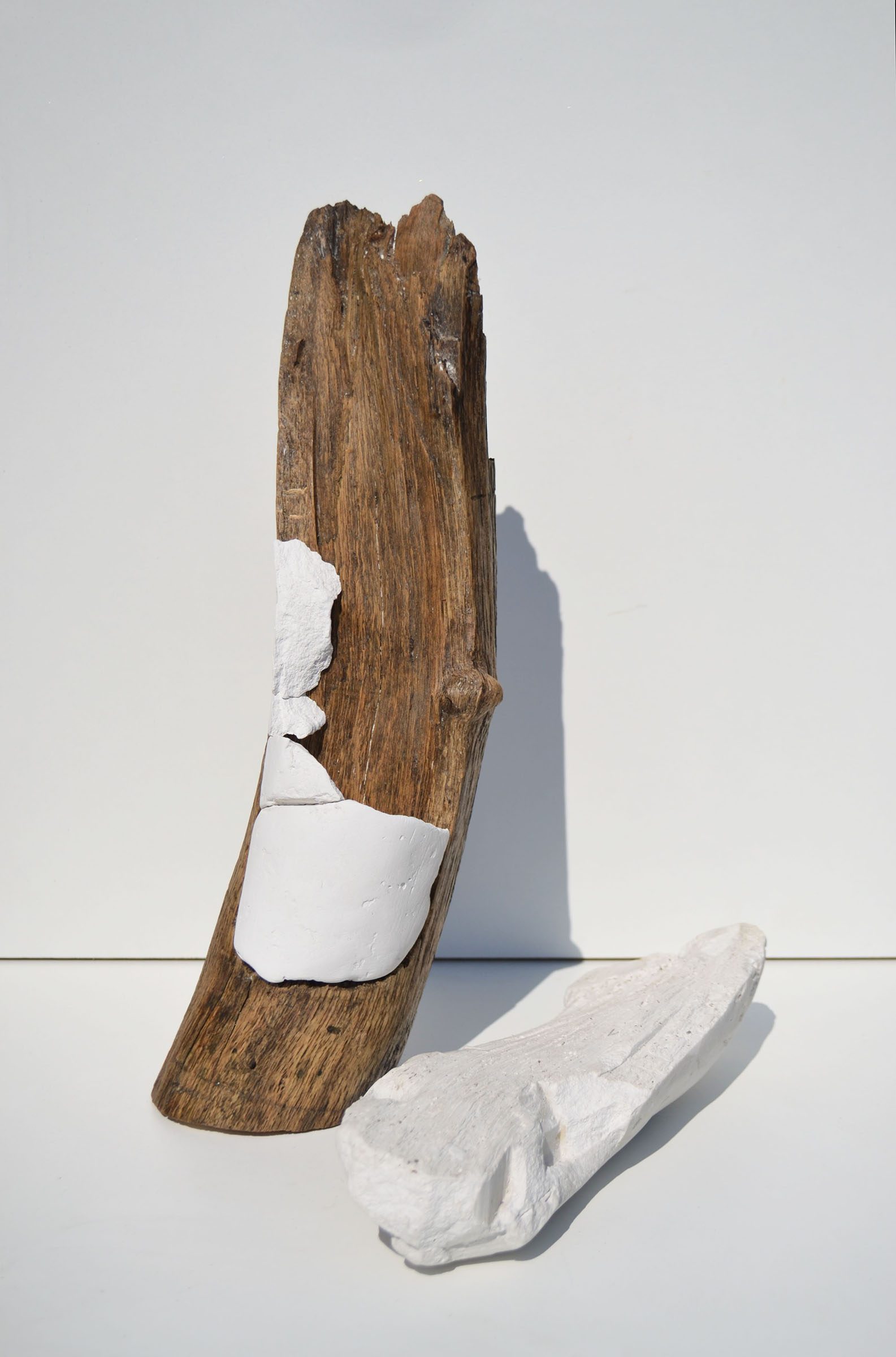
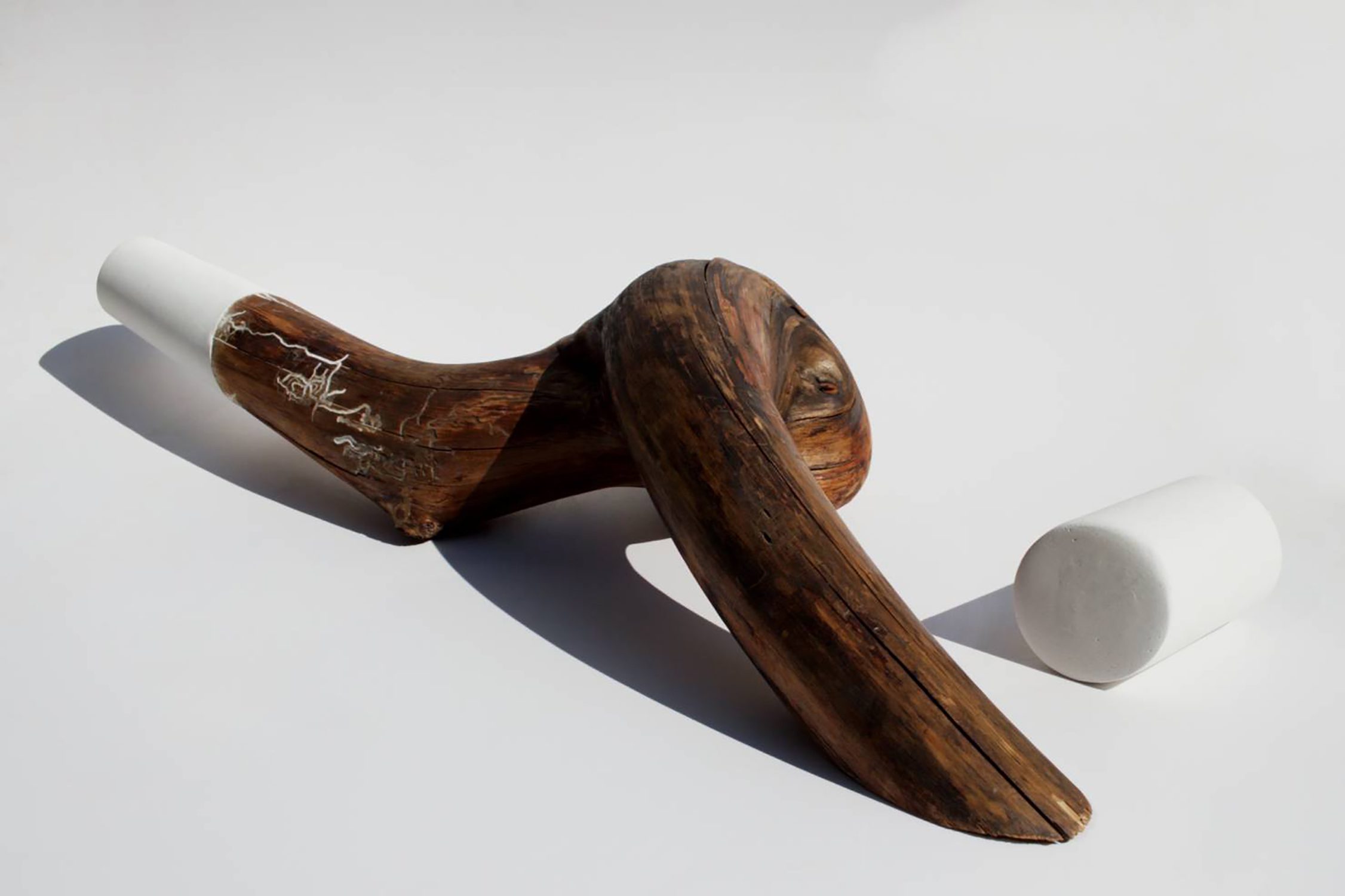
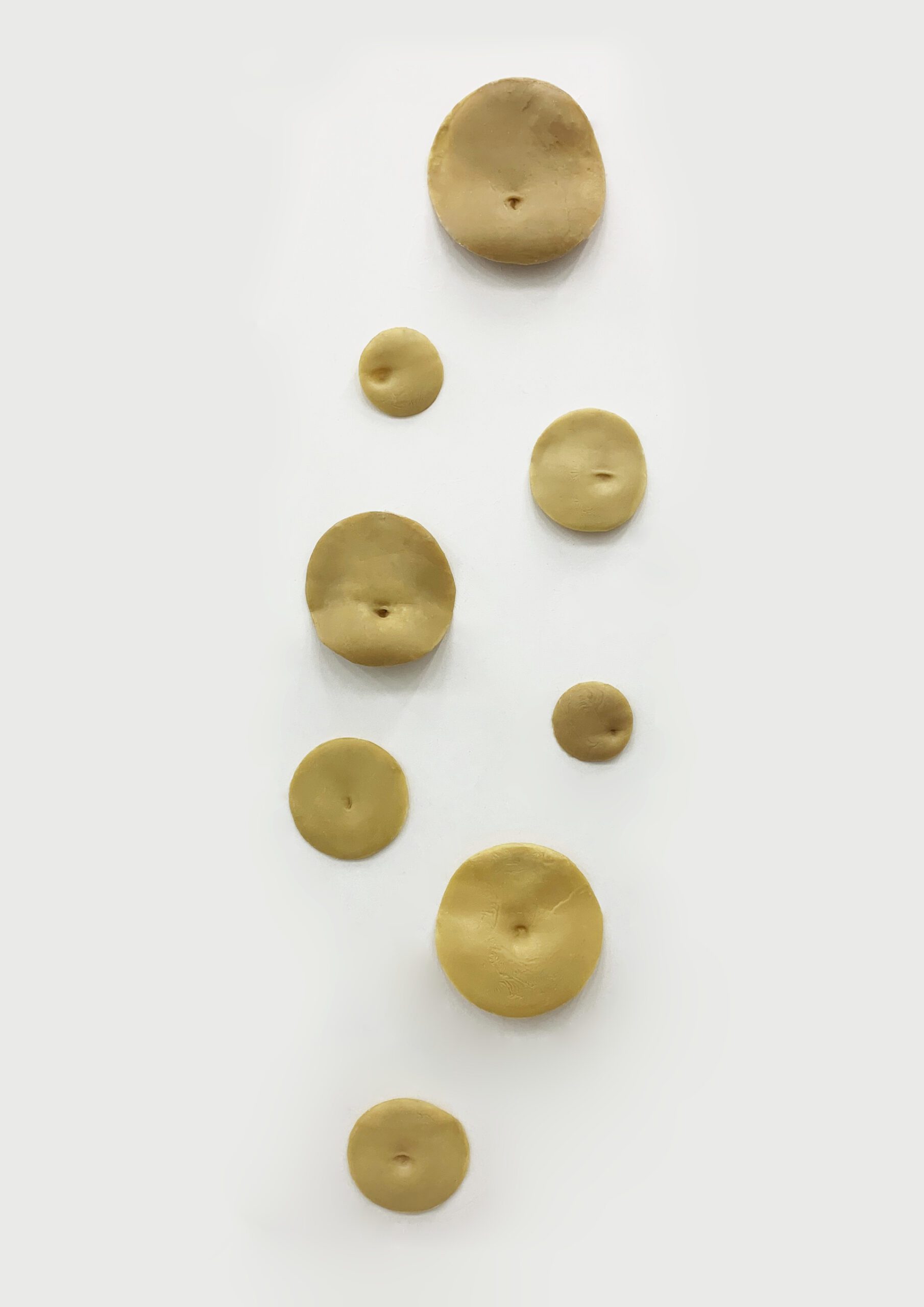
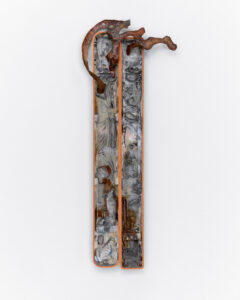
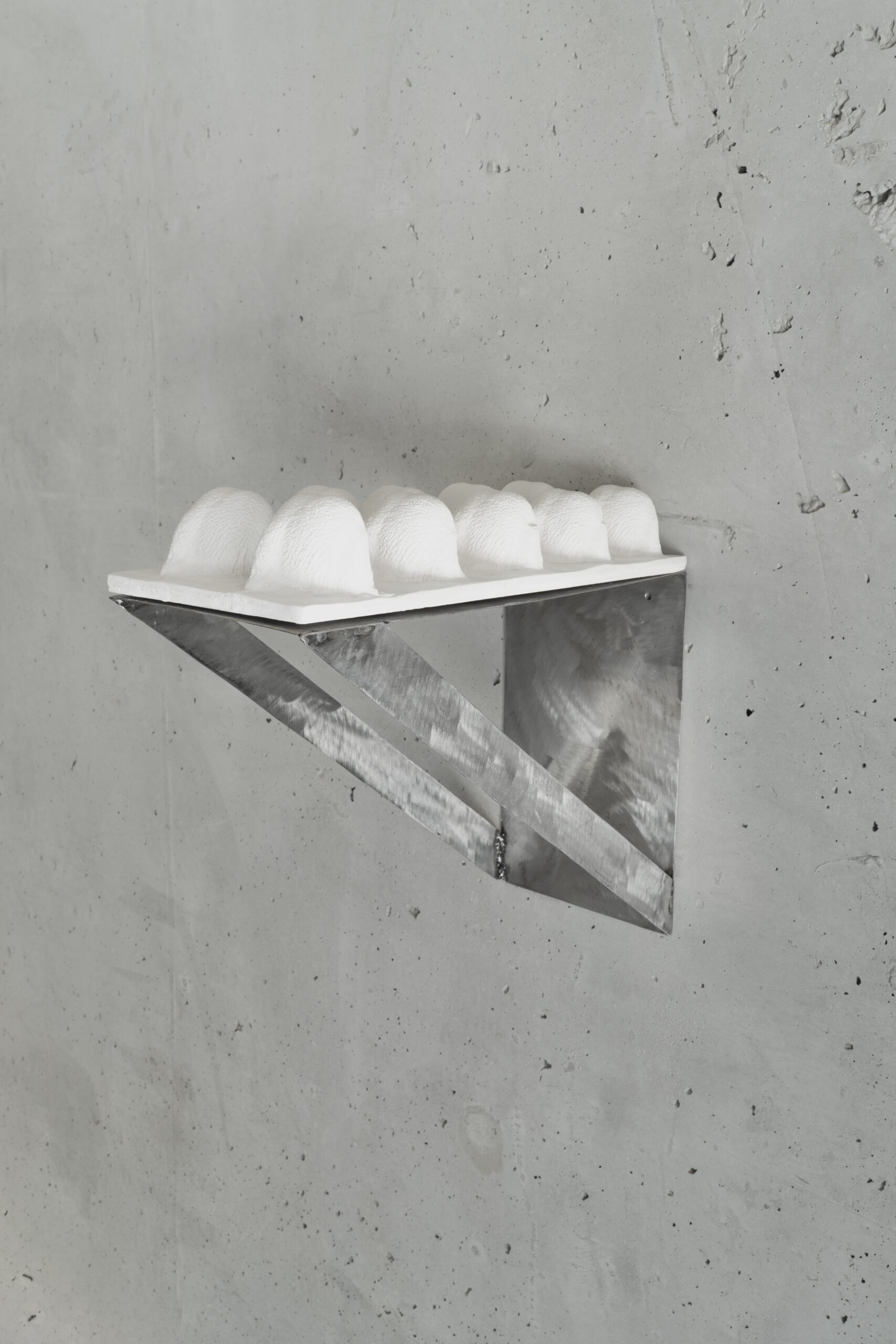
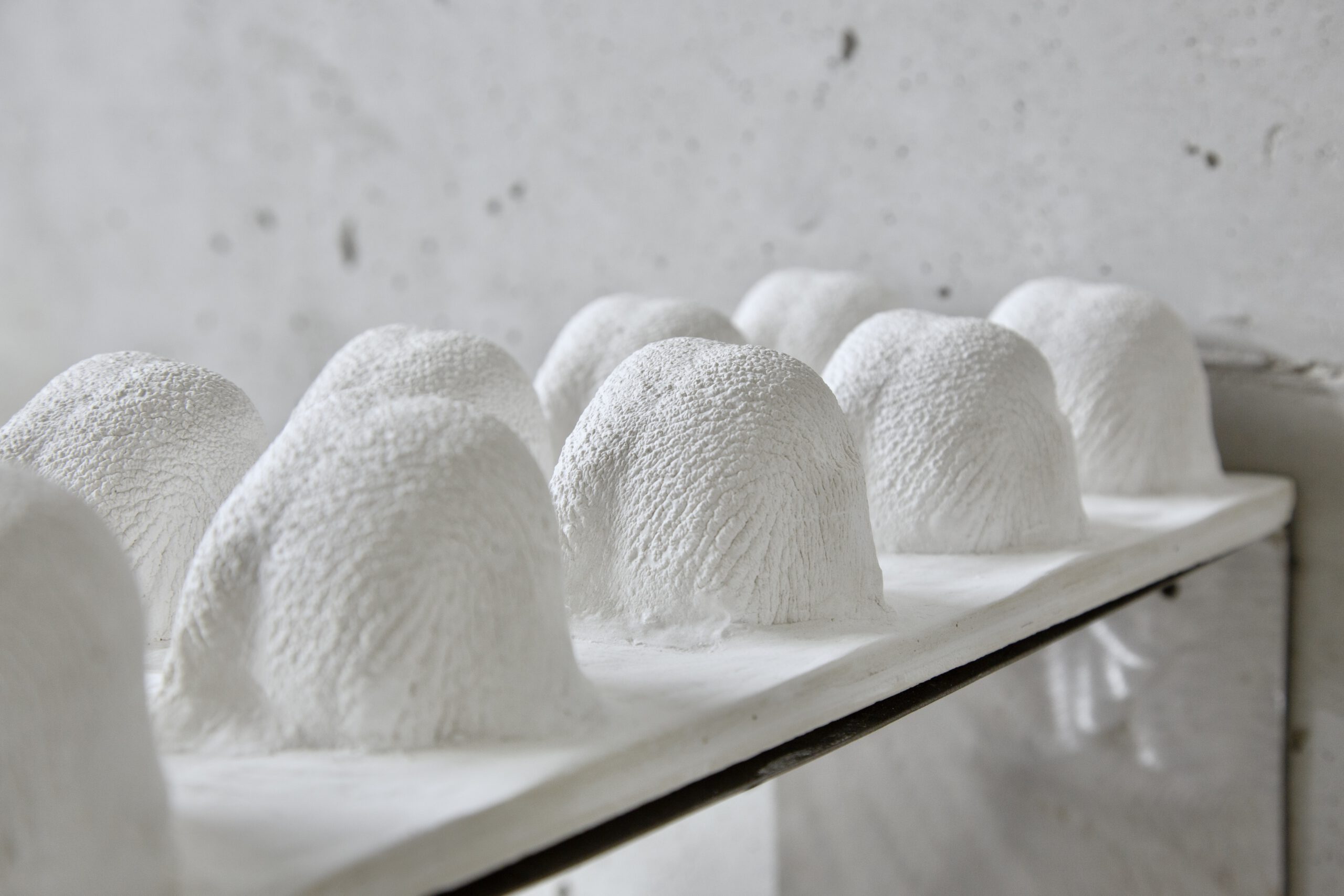
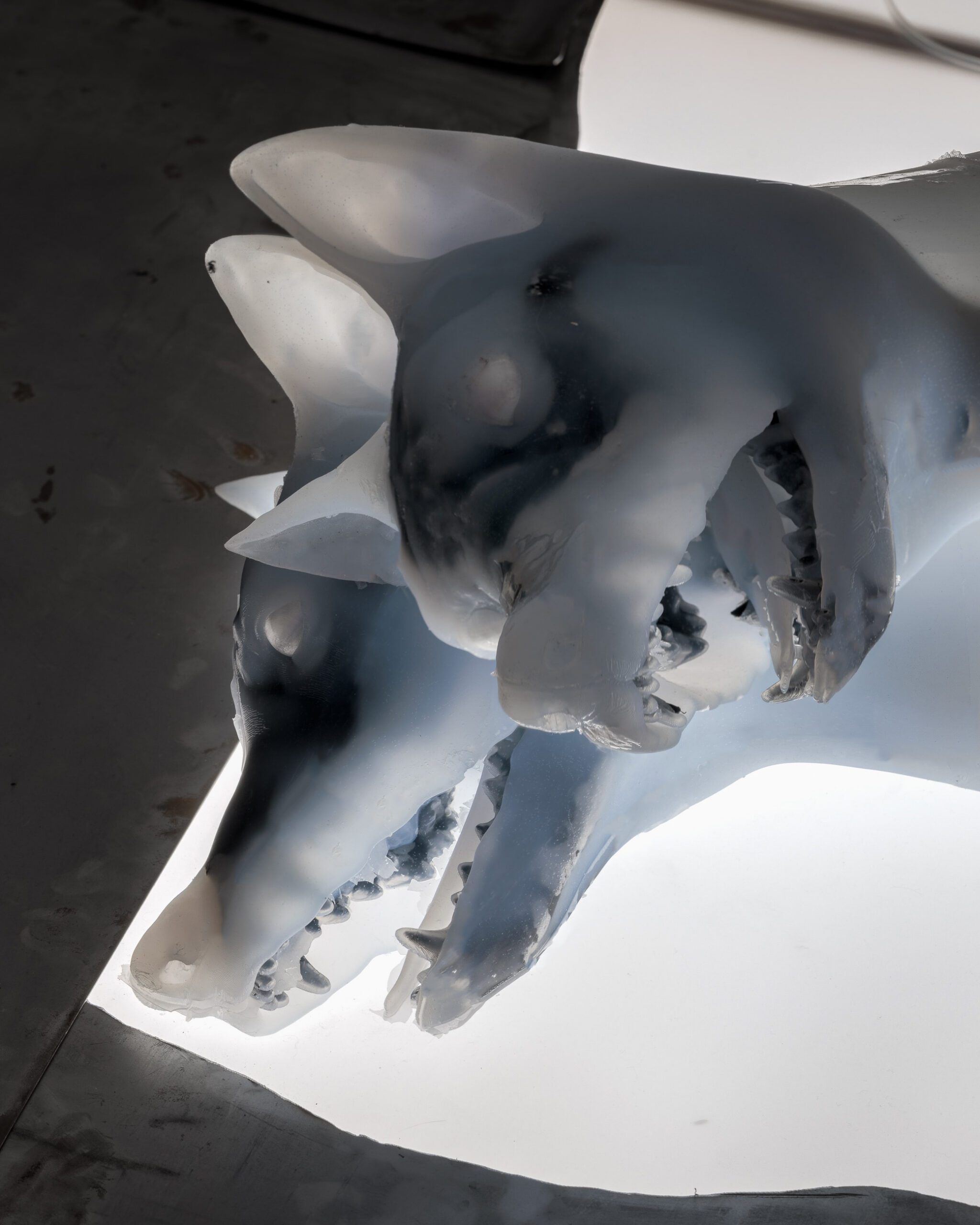
Recently, I have been engaged with broadly understood humanist and posthumanist themes, as well as questions of relationality and identity. My works are often created through the combination of various materials such as wood, metal, plaster, glass, or wax. For each concept, I consciously choose the material so that it is not merely a surface, but an integral part of the work.

In one of my recent works, “The First Scar”, I address the theme of identity mentioned earlier, but also the individuality of each of us. How do our first relationships influence us? How do we change over time, and how does our body transform?

In 2025, I graduated with distinction with a Master’s degree in Sculpture from the Magdalena Abakanowicz University of the Arts in Poznań. My diploma project explored a slightly different theme than my earlier work, focusing on the impossibility of play.

Educational and artistic themes had already appeared in my practice during my studies, but it was only after graduating that I began to realize the connection between art and pedagogy more fully. Currently, I teach ceramics, painting, and drawing to both children and adults, and I also conduct individual classes. In my free time, in the “Błękitna” studio, which I co-create with three other people, I organize workshops that oscillate between art and craft.

ula.blachnierek@gmail.com

Urszula Blachnierek graduated with distinction with a Master’s degree from the Faculty of Sculpture at the Magdalena Abakanowicz University of the Arts in Poznań in 2025. In 2020, she graduated with distinction from the Piotr Potworowski Secondary School of Fine Arts in Poznań.

She works in the broadly understood field of sculpture, creating works based on both figuration and abstraction. She is particularly interested in the relationships between humans and nature, as well as in aspects of otherness and interconnectedness.

She is the recipient of the scholarship of the Minister of Culture and National Heritage in 2023 and 2024, and the scholarship of the Marshal of the Wielkopolska Region in 2023. She received the Special Prize of the Polish Sculpture Center in Orońsko at the 6th Józef Kopczyński Biennale of Small Sculpture Form in 2021. She is also the recipient of The Henryk Starikiewicz Prize, a painting and drawing plein-air residency in Italy in 2020. Her works have been presented in exhibitions in Poland and abroad.

Piotr Bosacki

Piotr Bosacki can be described as a formalist and an abstractionist. In his view, the foundation of poetry lies in syntax and grammar; in music, in the arrangement of notes and form; and in the visual arts, in composition, design, and drawing. These foundational elements constitute the base, while all other aspects are superstructure. At the same time, he considers art to be essentially the creation of ornaments, with other aspects often overstated.

piotr.bosacki@uap.edu.pl

Piotr Bosacki graduated from the Academy of Fine Arts in Poznań. He works across animated film, video, installation, objects, and drawing. His practice also encompasses musical composition, art theory, and literary writing. He co-founded the informal artistic group PENERSTWO. His work has been exhibited in numerous galleries in Poland and internationally. He has been awarded the Katarzyna Kobro Award. He currently leads the Experimental Film Studio at the University of the Arts Poznań.

Wiktoria Cwityńska

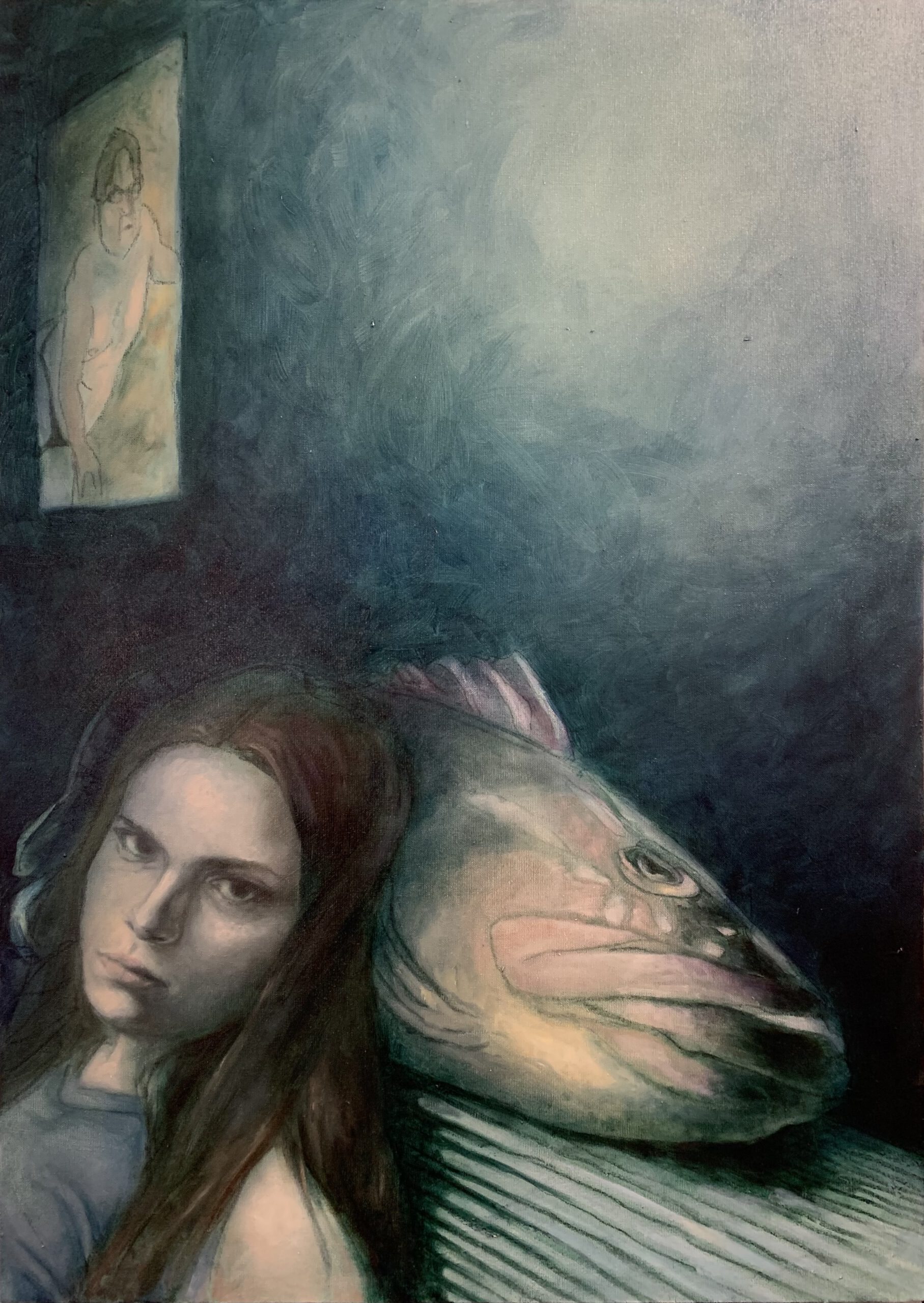
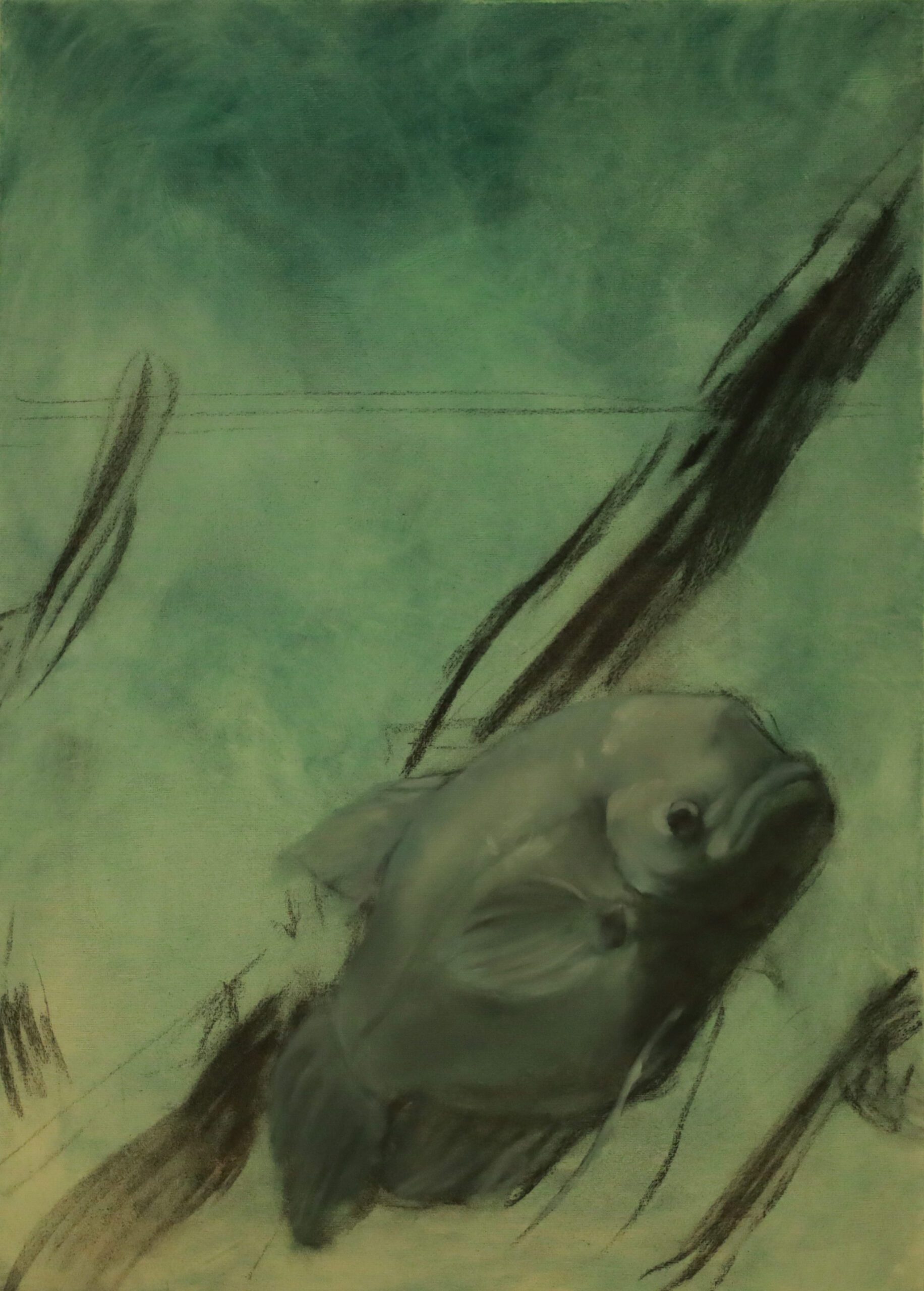
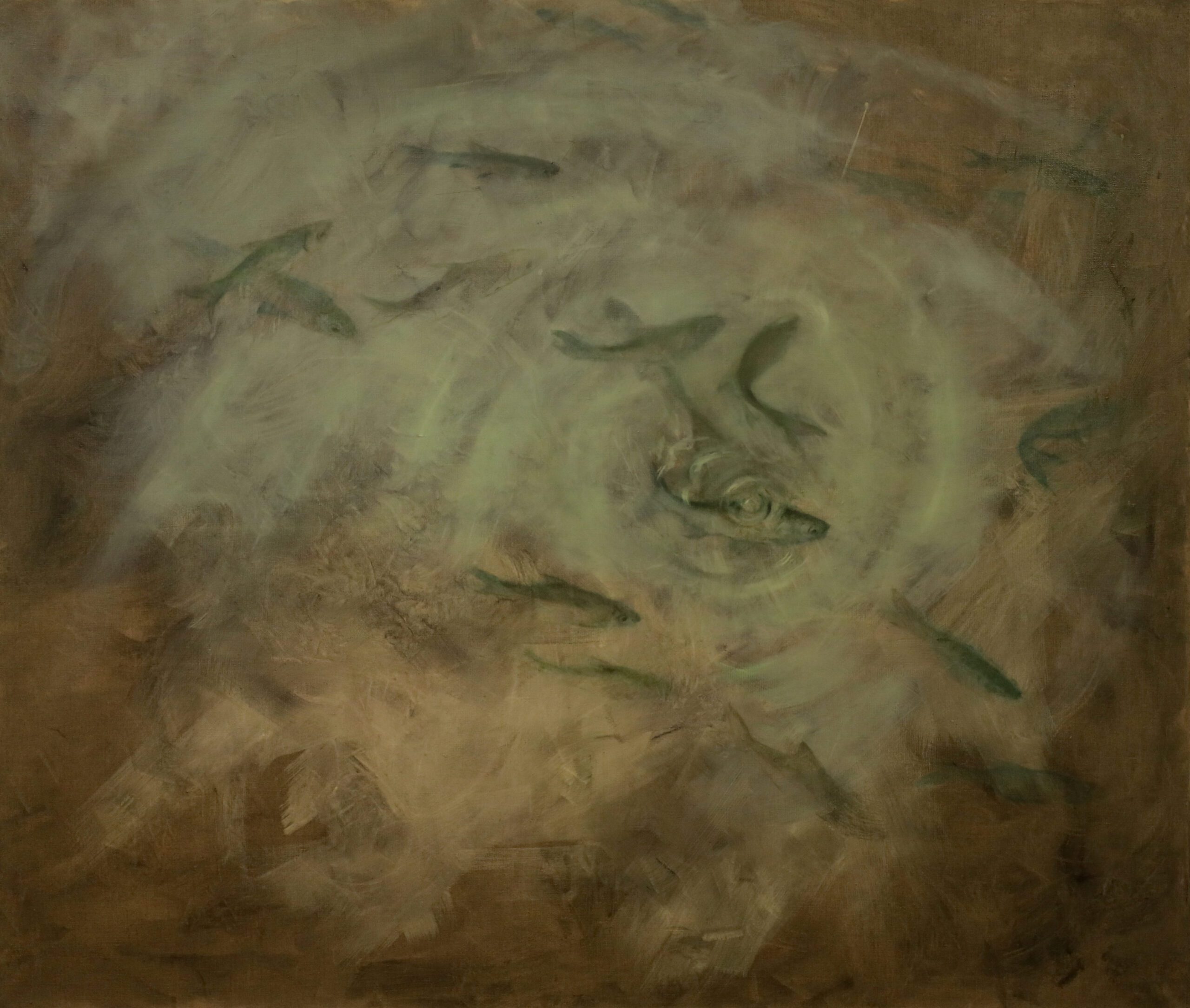
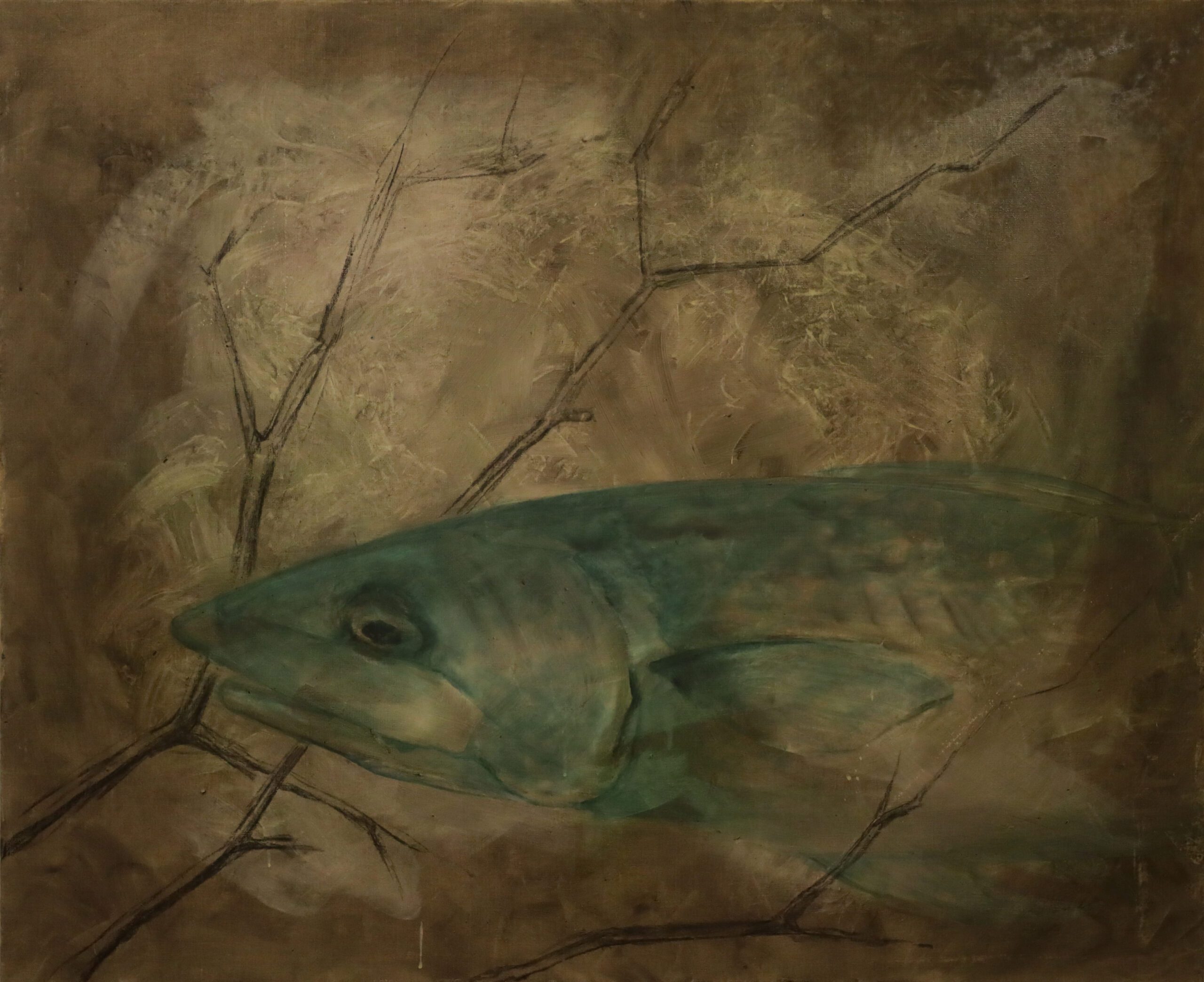
In her work, she primarily uses oil painting, but intertwines it with sculpture, drawing, and artistic installations. Her practice focuses on building an intimate and individual dialogue between the viewer and the presented piece. Drawing and figurative painting serve primarily to convey her vision, but she also incorporates abstract elements and conceptual representations. She intertwines elements that are understandable to the viewer with an original narrative, encouraging a shift in perspective and independent engagement with the issues raised. Through her artistic approach, she comments not only on her immediate surroundings but also on social systems and divisions.

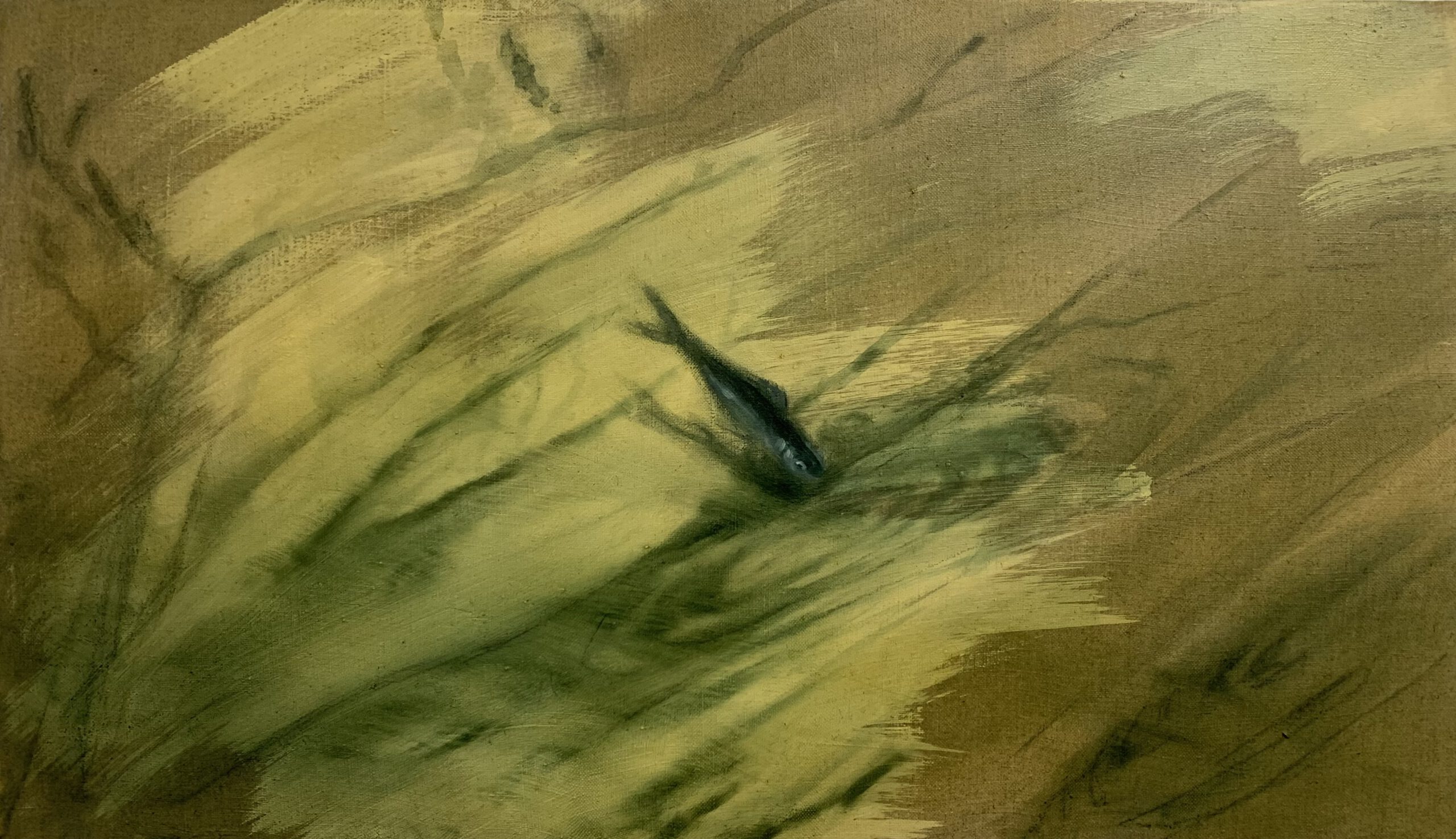
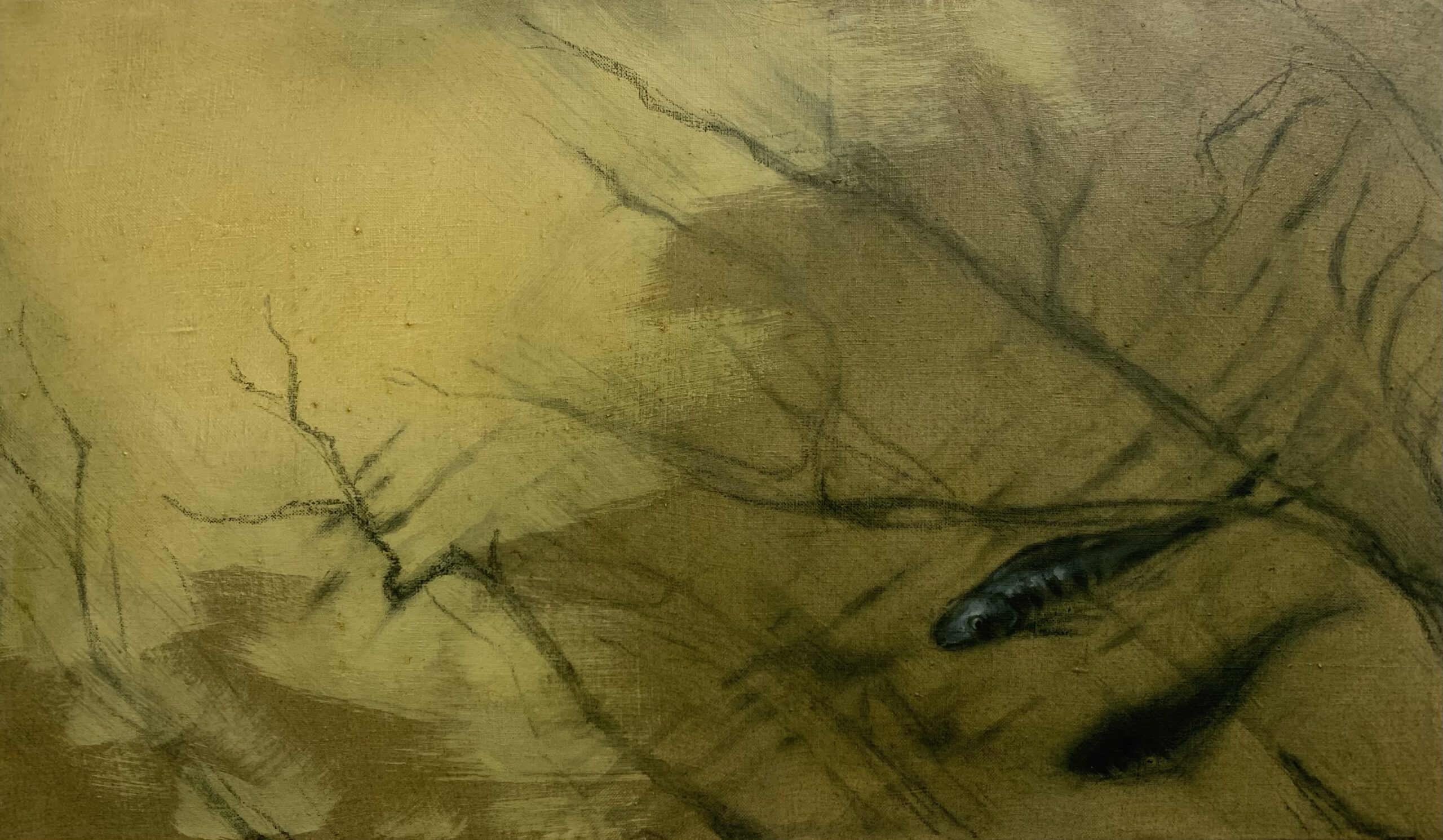
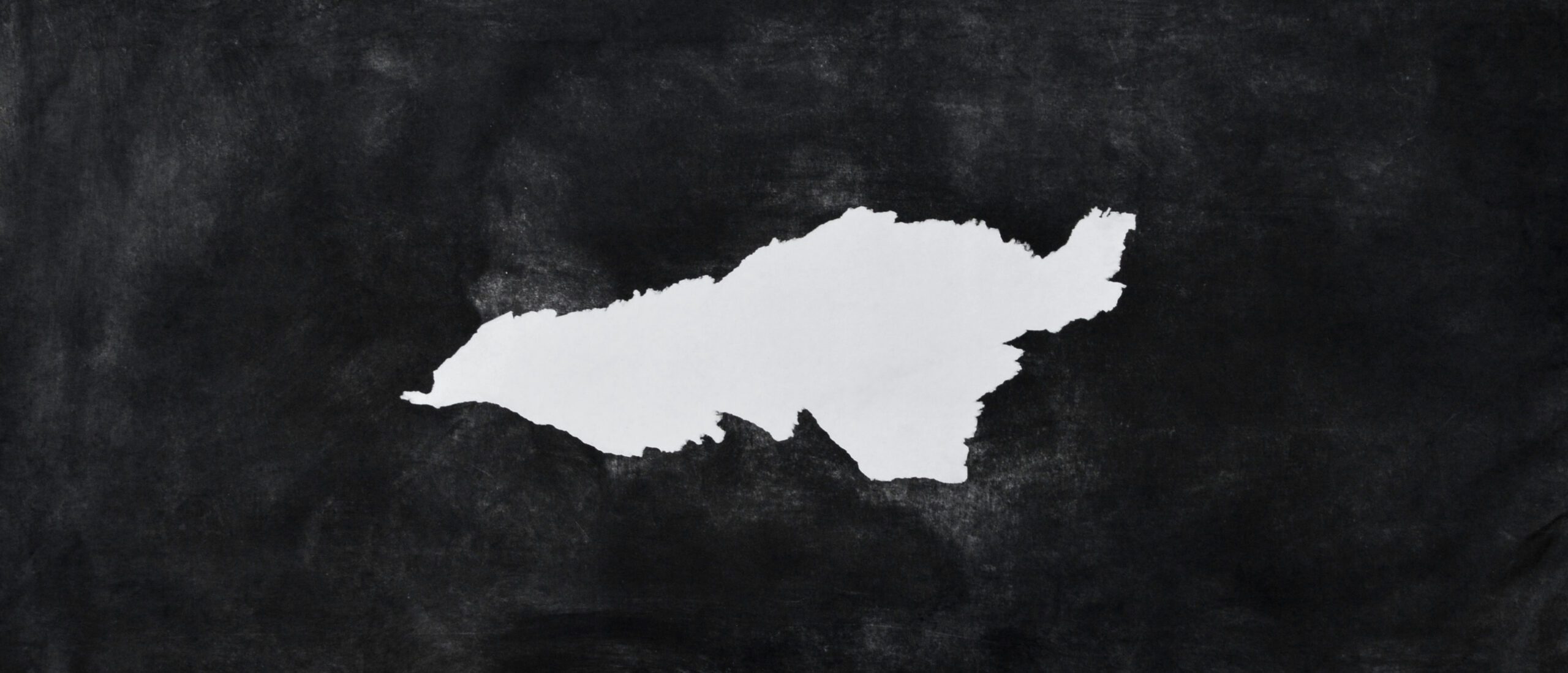
The fish, as a symbol of the poor relationship between humans and their environment, their own bodies, communication failures, and the misunderstandings that occur between organisms, becomes an intensively explored motif in her work. The artist explores issues at the intersection of ecofeminism, neurobiology, and the psychophysiology of vision, among others. Referencing the nostalgic and peculiar underwater world, she transfers its haptic experience to the fabric of painting.

wiktoria.cwitynska@gmail.com

Wiktoria Cwityńska. Born in Poznań in 2002, is currently a fifth-year student of Painting and Drawing at the University of the Arts in Poznań. She is a co-founder of the Dług Gallery, the Pod Ciśnieniem Collective, and an organizer and curator of numerous artistic and cultural events in her hometown. Locally, she has collaborated with the Raczyński Library, WBPiCAK, UAP, Poznań Art Week, Pyramida Gallery, the Poznań Palm House, and the Cortique Theatre, among others. In addition to her local cultural contributions, she won the Egon Schiele First Prize in the international figurative drawing competition Figurama 2024. She has participated in the Świnoujście Fama Festival, the Gorzów Night Cultural Trail, and the Warsaw Off Art Festival, among others. Her work has also been presented in exhibitions in Krotoszyn, Ostrava, Brussels, and Almaty.

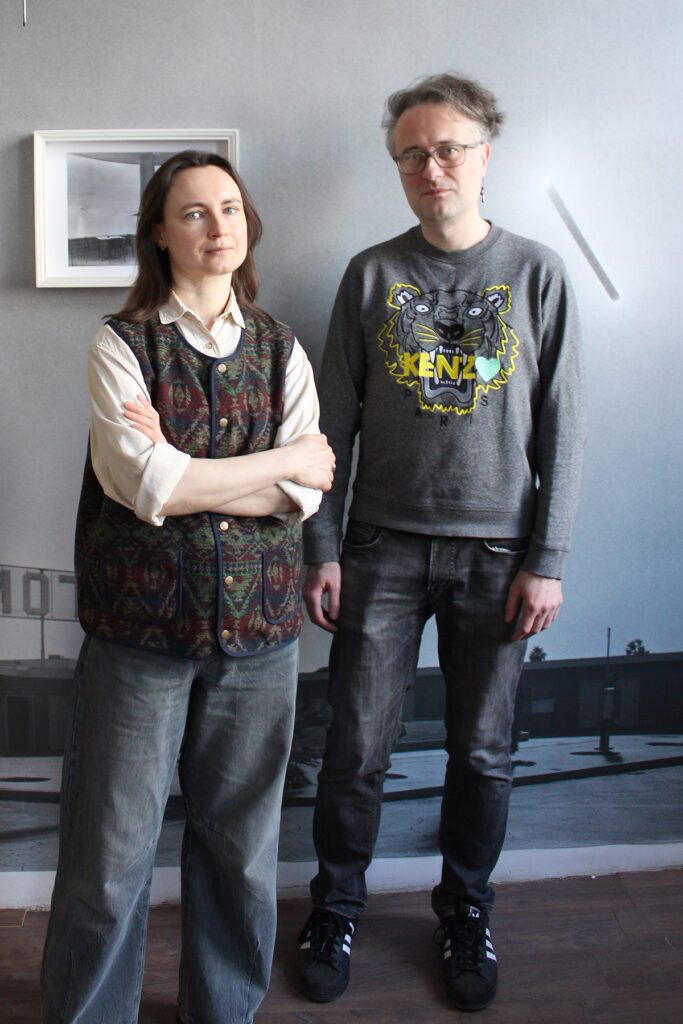
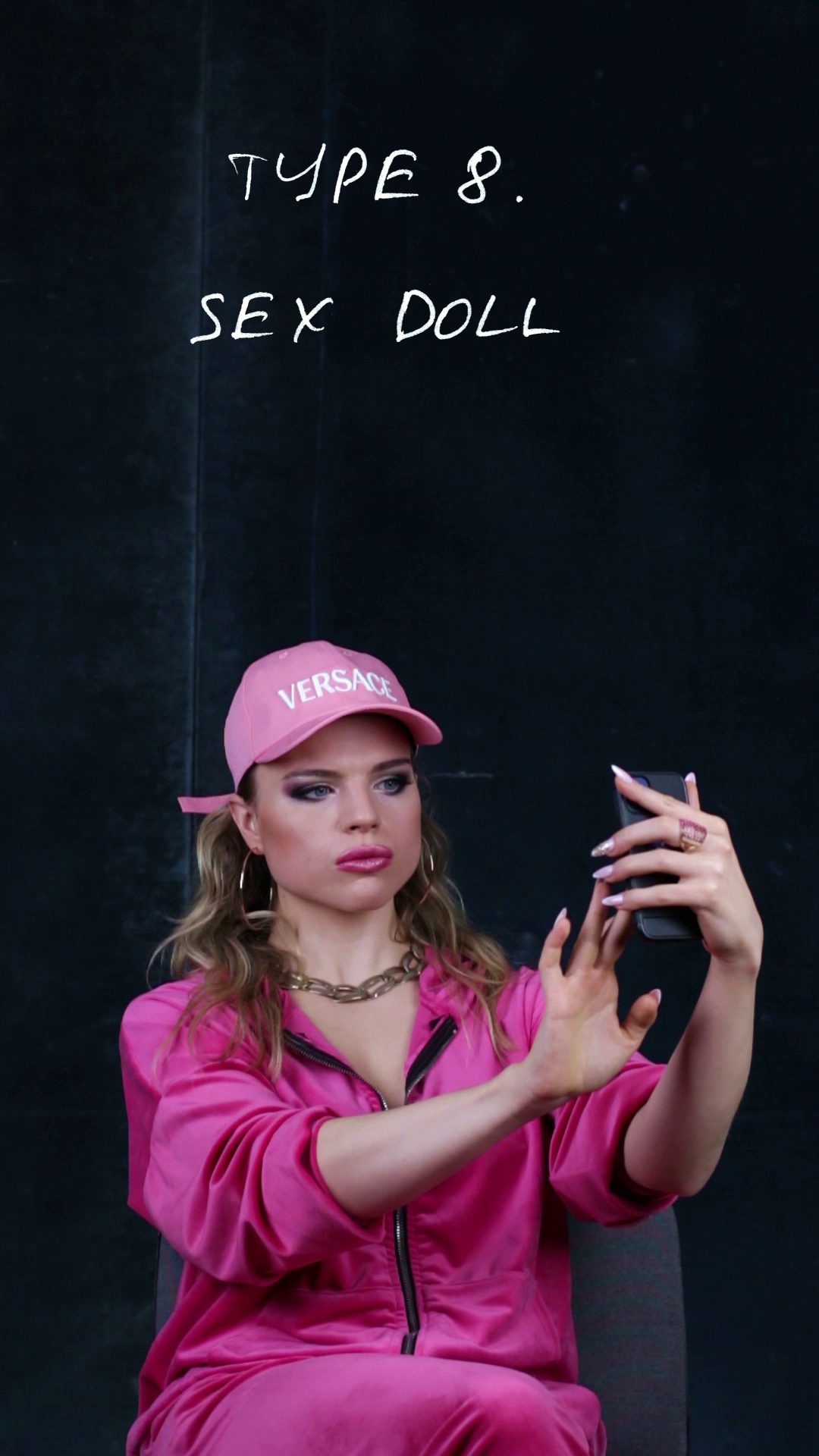
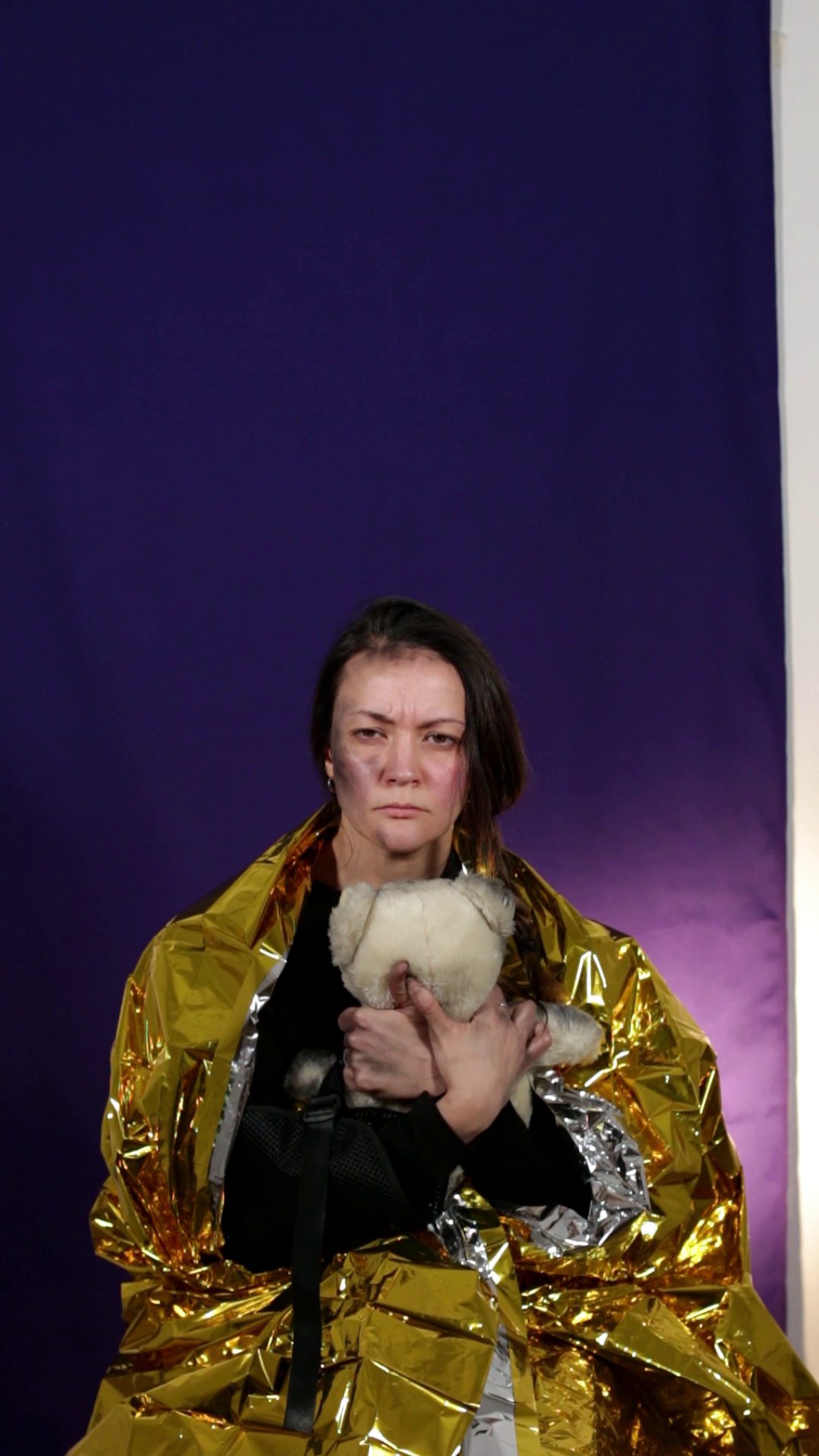
Lia Dostlieva & Andrii Dostliev

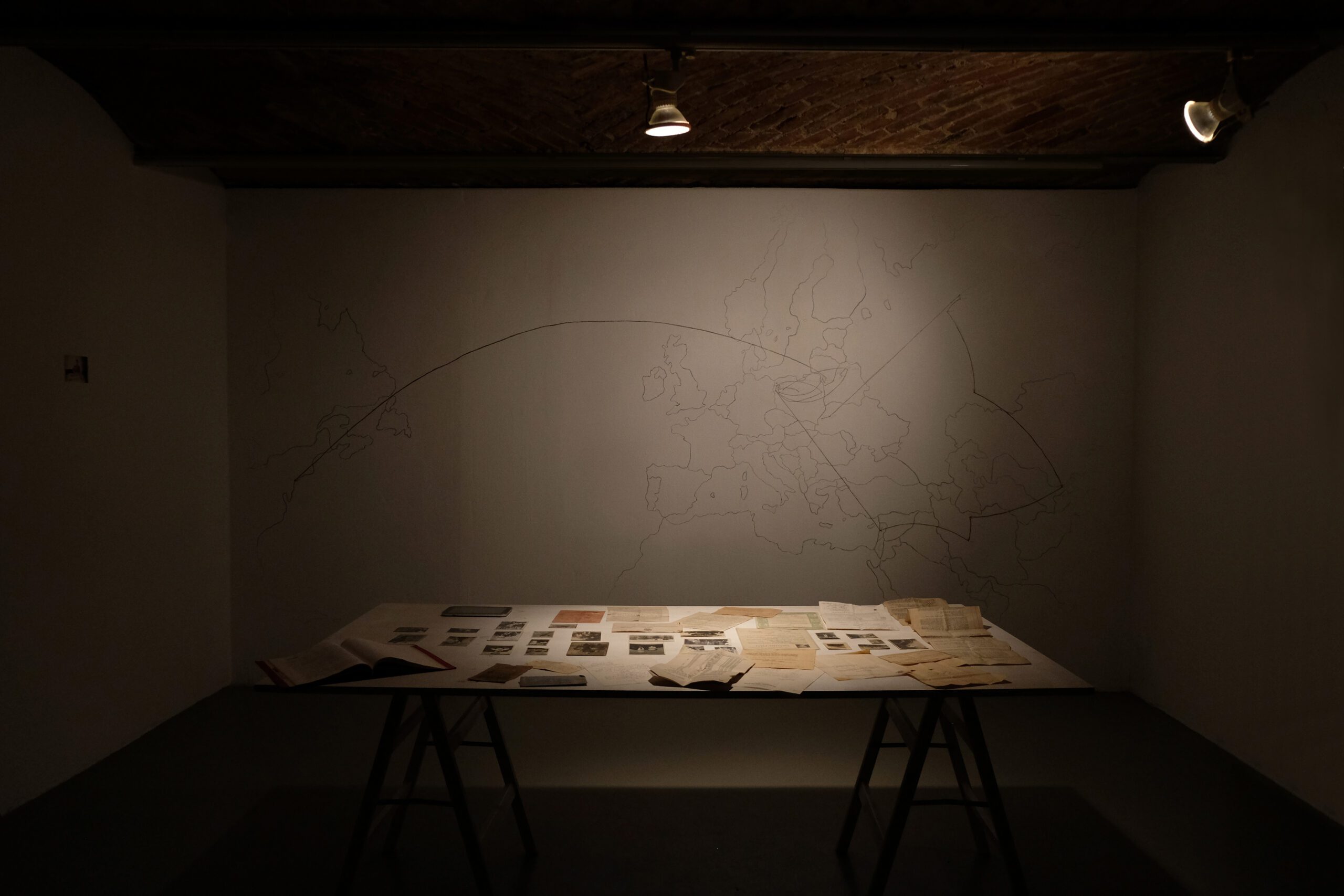
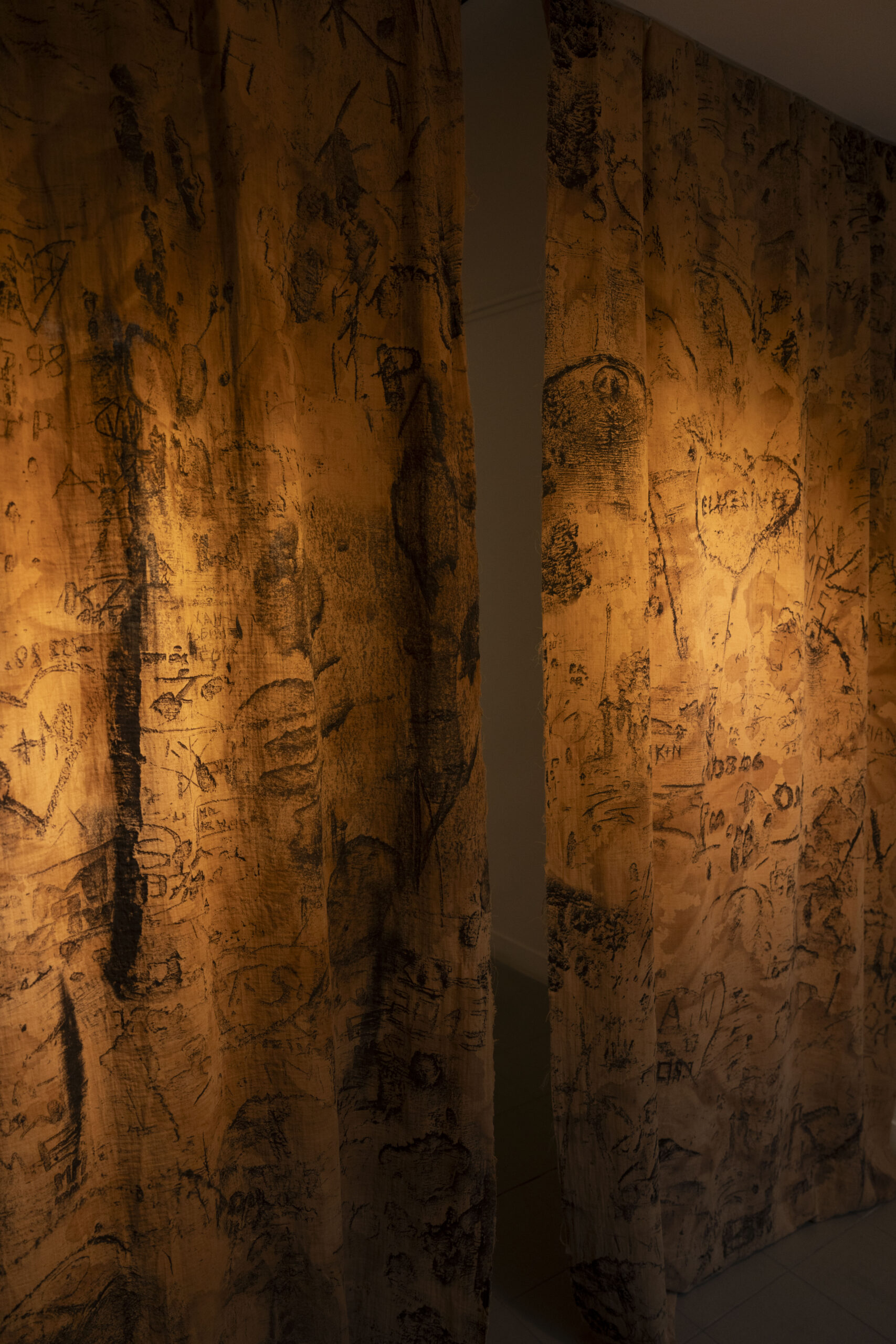
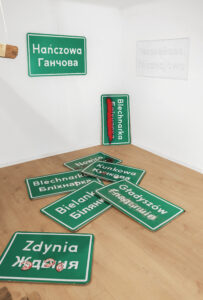
As artists and cultural anthropologists, we focus in our practice on collective memory, mass traumas in visual culture, conflicting identities, and decolonial practices in Eastern Europe. We work across a wide range of media, including video, photography, installations, durational performances, and textile sculptures.

lia.dostlieva@gmail.com
a.dostliev@gmail.com

Lia Dostlieva (1984) is an artist, cultural anthropologist, and essayist. She was a participant in the Ukrainian Pavilion at the 60th Venice Biennale. She has exhibited her work in numerous international institutions, including the Malta Biennale; Akademie der Künste (Berlin, Germany); Kunstinstituut Melly (Rotterdam, the Netherlands); Kolumba Museum (Cologne, Germany); Ludwig Museum (Budapest, Hungary); the National Gallery of Art (Vilnius, Lithuania); the Tbilisi Photography and Multimedia Museum (Tbilisi, Georgia); the National Museum of Fine Arts (Bishkek, Kyrgyzstan); and the Latvian National Museum of Art (Riga, Latvia), among others. She is a member of the RUTA association and a co-founder of the Young Network TransEurope at the Berlin-Brandenburg Academy of Sciences and Humanities.

Andrii Dostliev is a Ukrainian-Polish artist, curator, and photography researcher based between Berlin and Poznań. Andrii’s primary areas of interest are memory, trauma, decolonial practices in Eastern Europe, gay history of Ukraine, and the limits of photography as a medium. Andrii’s art practice works across photography, video, drawing, performance, installations, and book publishing. Former visiting fellow at Institut für die Wissenschaften vom Menschen (Vienna) and artist-in-residence at Central European University (Budapest) and Akademie der Künste (Berlin). Participant of the Ukrainian National Pavilion at Venice Biennale 2024.

Maciej Fricze

The work of Maciej Fricze is an intimate record of the process of self-discovery and a painterly reflection on the dynamics of interpersonal relationships. The artist situates his explorations at the intersection of abstraction and figuration, using portraiture and self-portraiture as tools for visual self-reflection. A key element of his practice is the attempt to find his own reflection within the expression of the painterly gesture itself.
His creative process is based on a specific dualism. The first stage involves a spontaneous gesture, often guided by the rhythm of music, which establishes the basic, raw structure of the composition. The final, disciplined form emerges from the analysis of the initial expressive action, transforming an emotional impulse into a completed painting.
By consciously dismantling past habits and fears, Maciej Fricze chooses a path of radical authenticity. Experimenting with painterly form leads to a pure transmission of personal experiences. In this context, the canvas becomes an autonomous space for confronting the “self” and a manifestation of freedom and inner wildness.

maciejfricze@gmail.com

A painter and art conservator based in Poznań, Maciej Fricze is also the co-founder of Złącze Gallery, an exhibition space in Poznań that has been active since May 2024. He is a graduate of the Jan Matejko Academy of Fine Arts in Krakow, where he studied at the Faculty of Conservation and Restoration of Works of Art. In 2013, he defended his master’s thesis, focusing on the influence of contemporary conservation methods on the perception of a work of art.

Naila Ibupoto

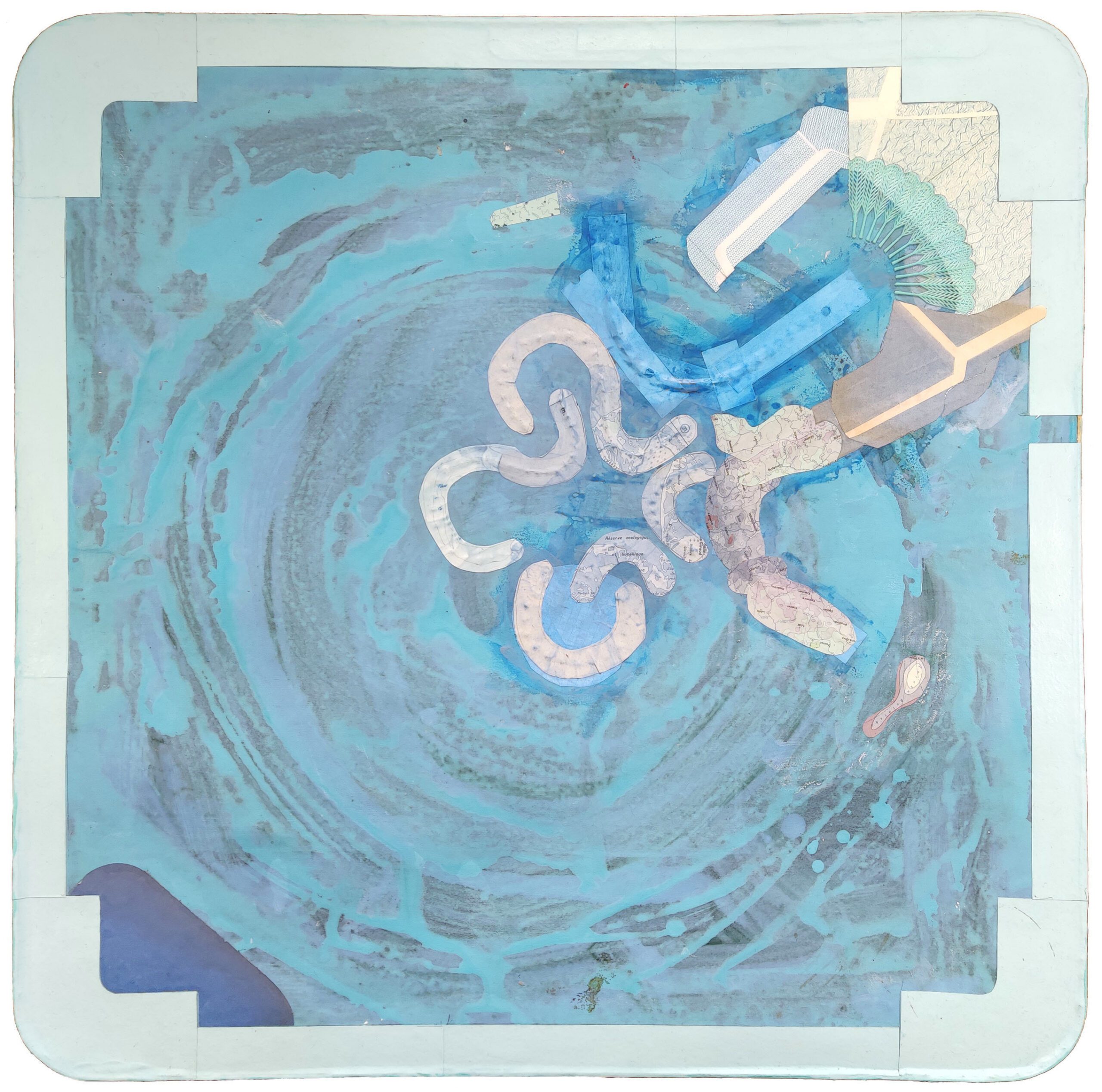
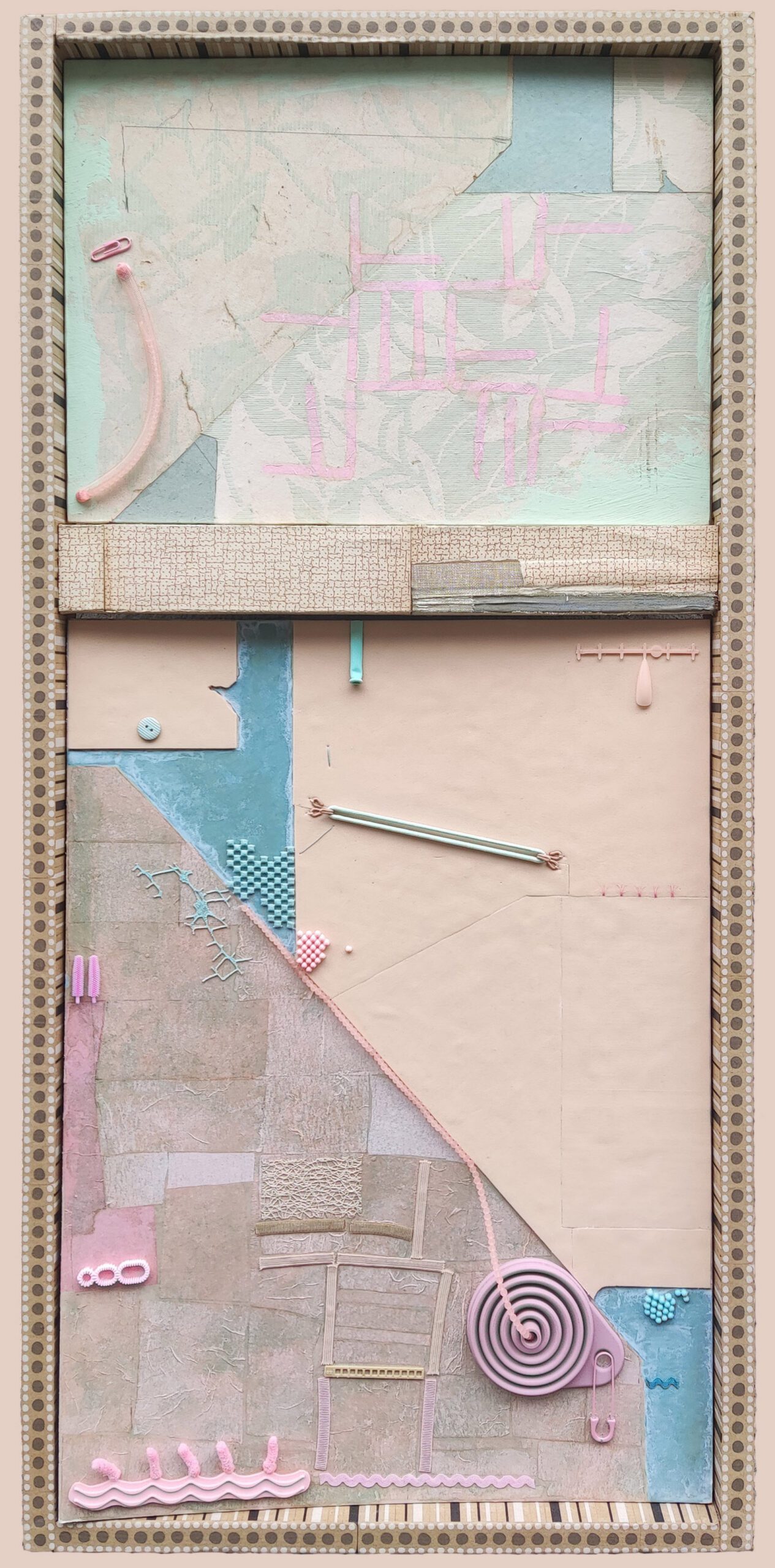
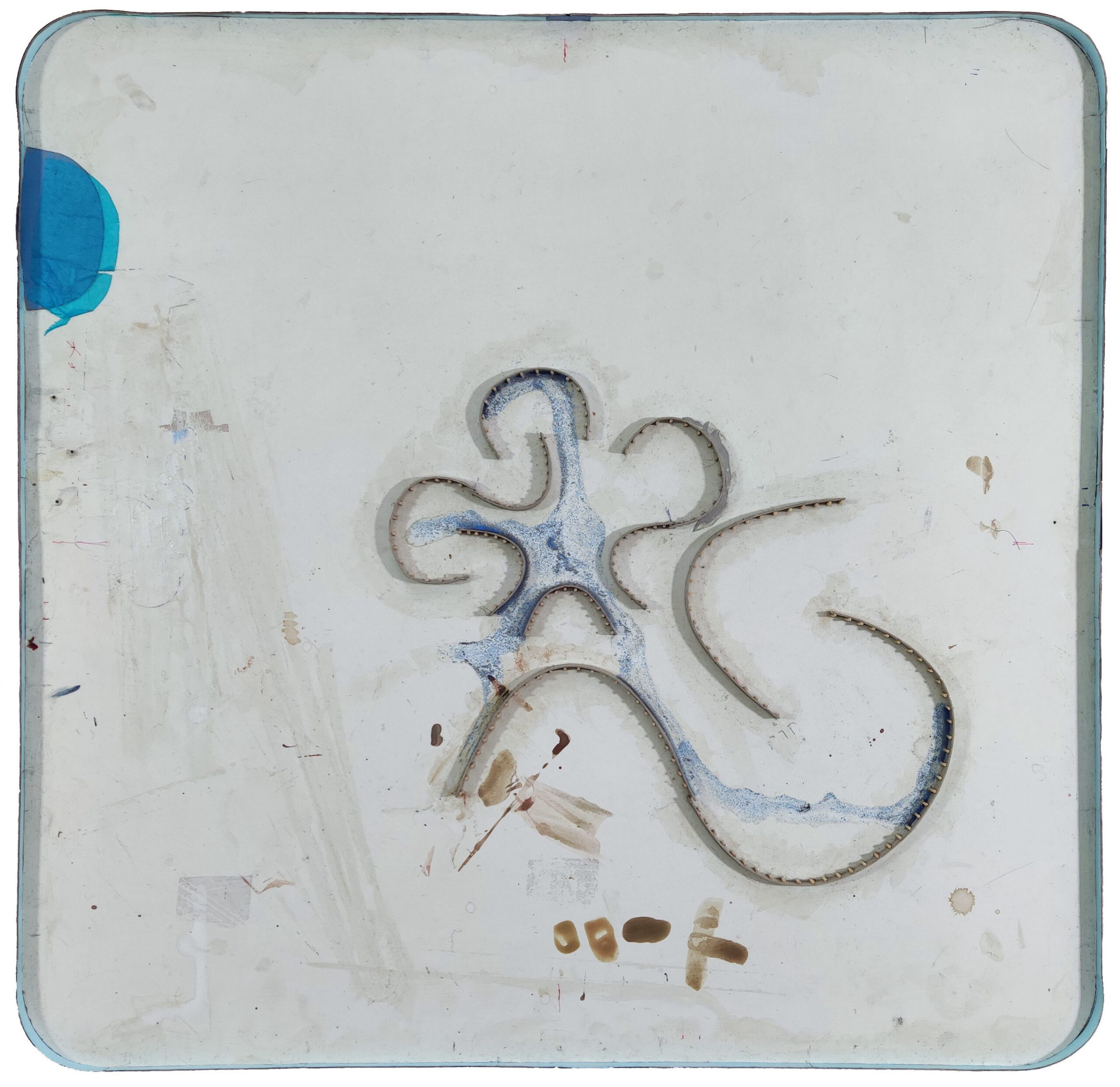
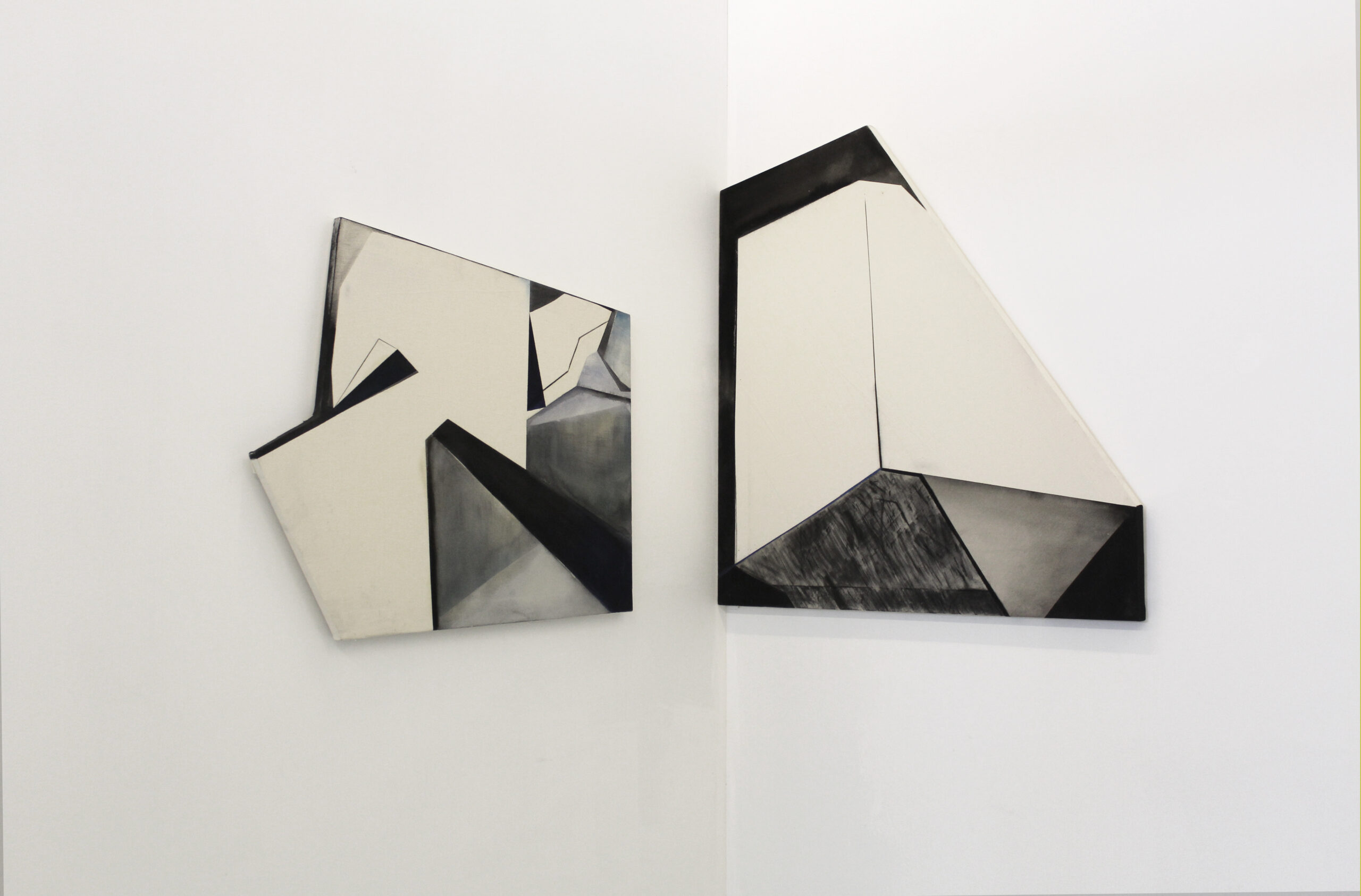
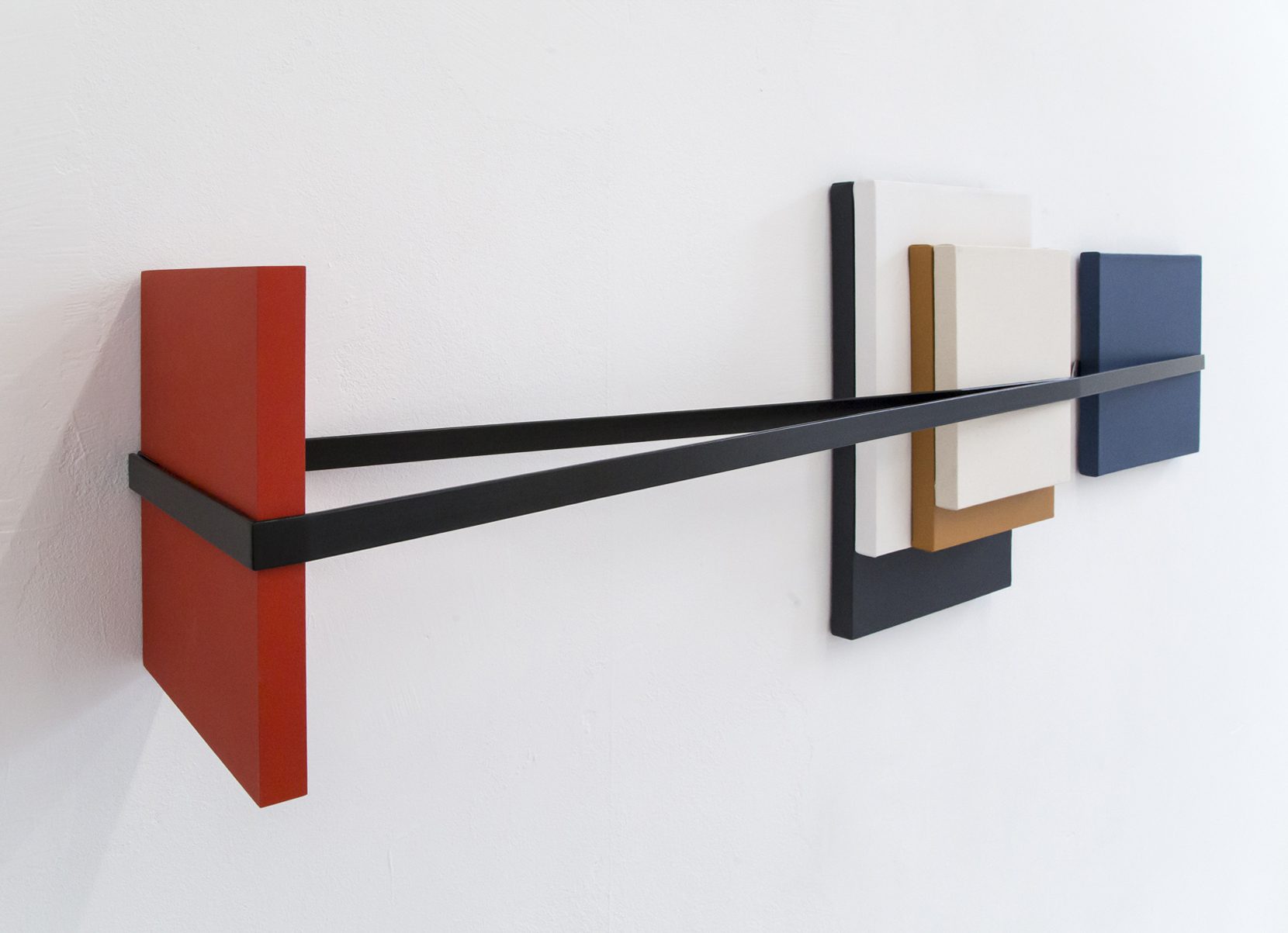
The starting point in my artworks is a fragment. At the beginning, it was a fragment of reality, a common object or a trace noticed in my immediate surroundings. I was interested in ordinary situations of everyday life, in their forms such as marks on a tabletop or the shape of a chair.

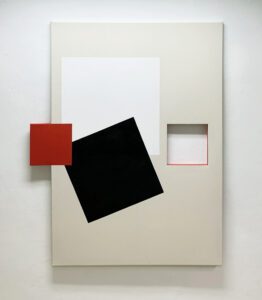
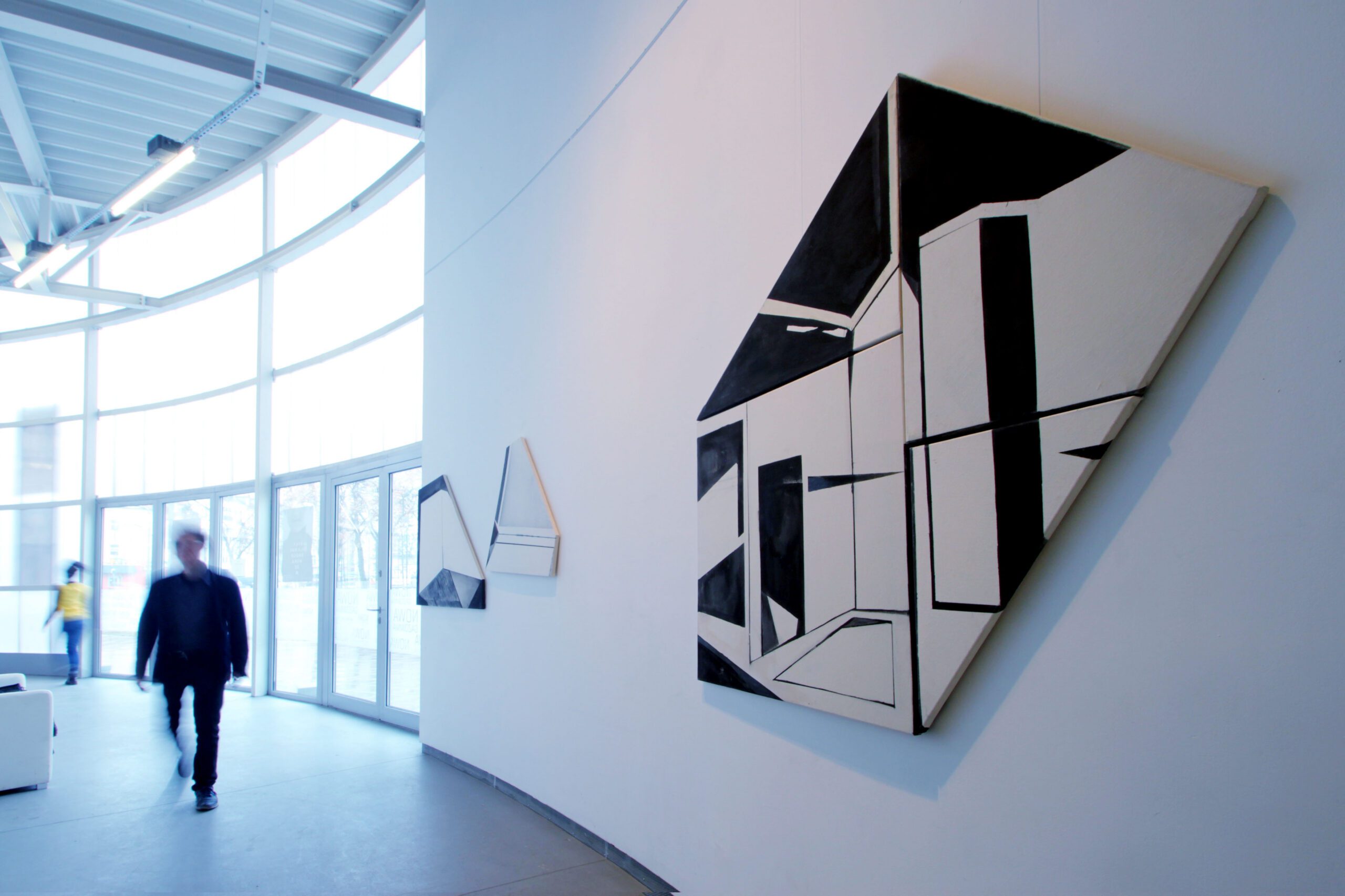
In my paintings I simplified these elements, reduced details and multiplied shapes. I moved my art away from literalism toward abstract compositions. Gradually, the fragment ceased to refer exclusively to the depicted motif and began to concern the painting itself.

The paintings began to exist as systems composed of parts that can form a whole or exist independently. From that moment on, the relationship between them and the environment where they were shown became the focus.

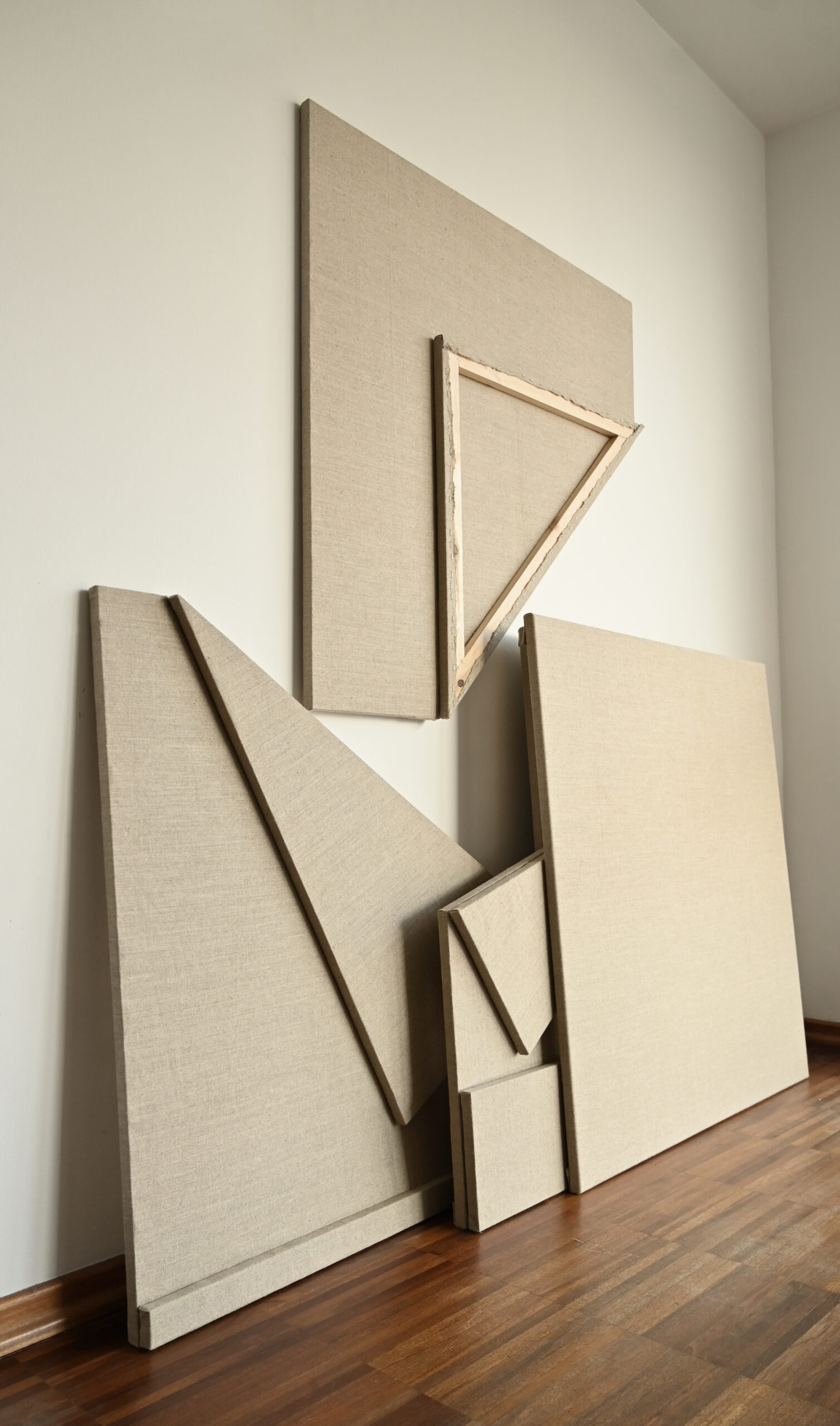
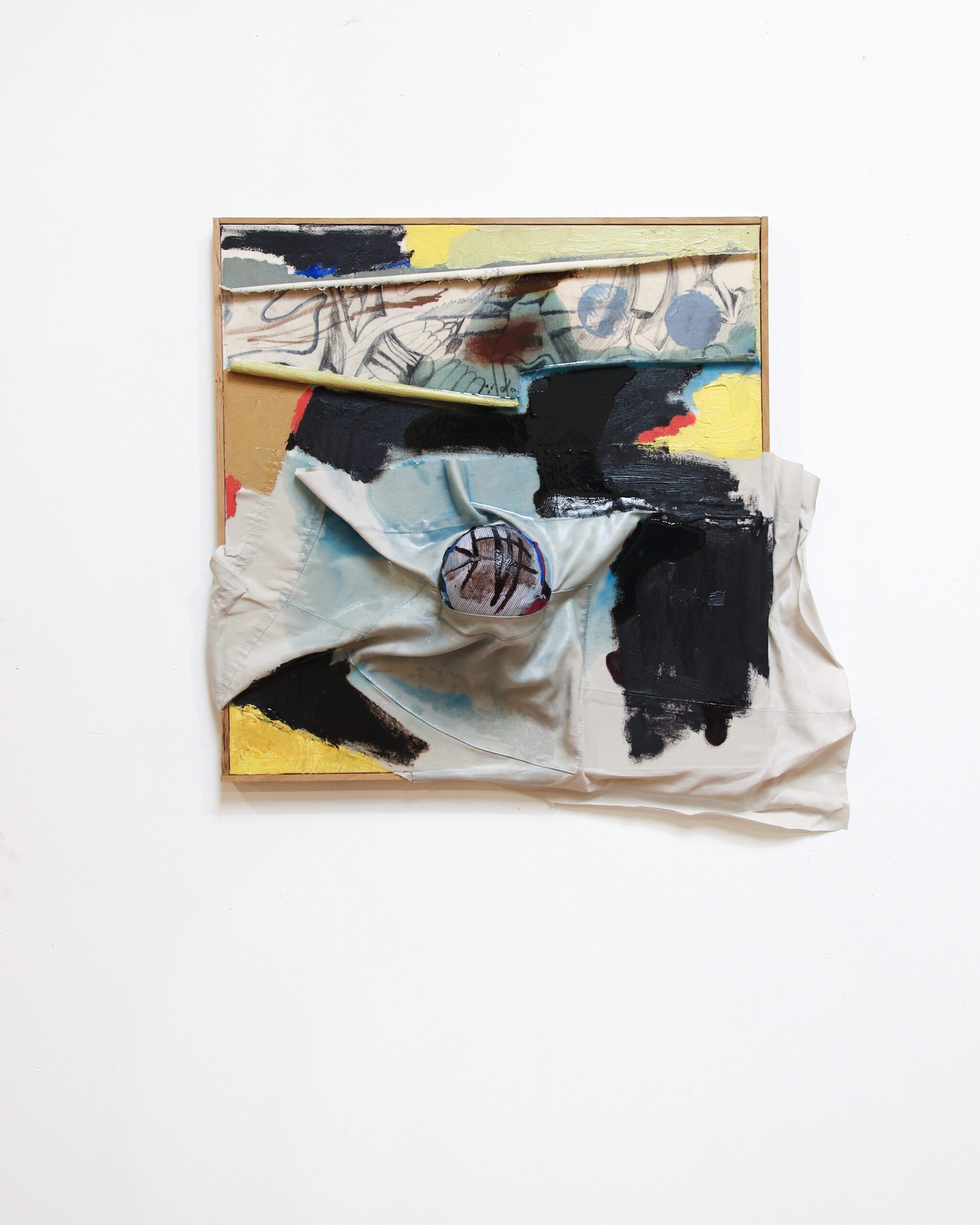
In my most recent works, the fragment refers to the structure of painting. Instead of painting, I often experiment with the stretcher and the canvas, changing their shape, revealing the structure and allowing the painting to function as an autonomous form. Here, the fragment becomes both a starting point and a way to discover new possibilities within painting.

naila.ibupoto@gmail.com

Naila Ibupoto is a graduate of the University of the Arts in Poznań. She completed her Master’s degree at the Faculty of Painting and Drawing in the studio of Prof. Janusz Marciniak. In 2017, she was nominated for the Nowy Obraz / Nowe Spojrzenie Artistic Award and was a finalist in the Franciszka Eibisch Foundation competition for the Eibisch Award. In the same year, she received the Rector’s Scholarship at UAP for outstanding students. In 2018, she was a guest at the Clinch Festival in Hanover. In 2019, she received a distinction in the Nowy Obraz / Nowe Spojrzenie competition. She works in abstraction, which provides unlimited possibilities for exploring and reflecting on the condition of painting. She experiments by creating new meta-painting forms, and her most recent cycles she treats as a playful exploration of the stretcher and form.

Paweł Fraciszek Jaskuła

I come from a small town in the Wielkopolska region. Since moving away for my studies and regularly traveling to other art centers such as Warsaw or Berlin, the financial and class aspects have become highly visible and extremely significant to me.

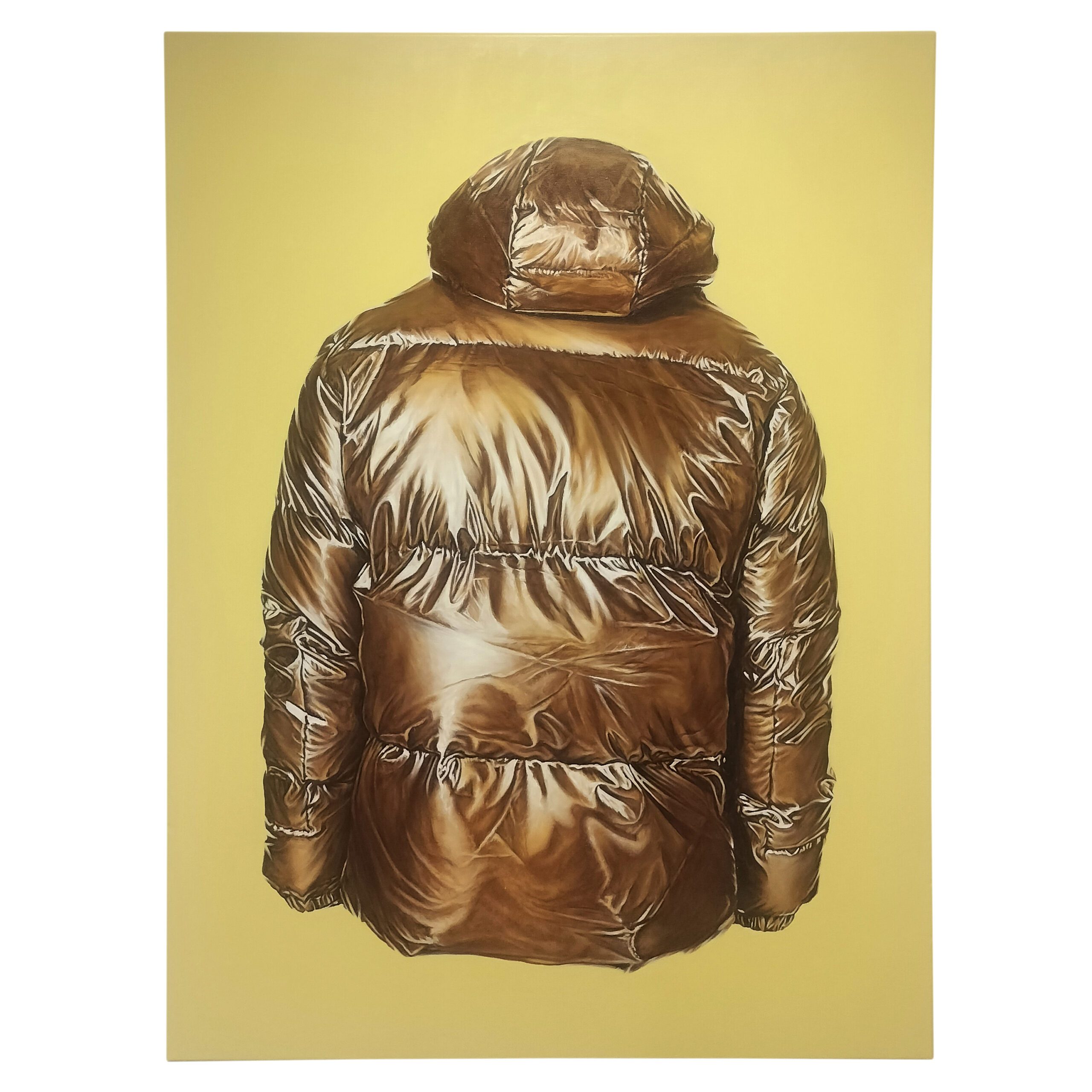
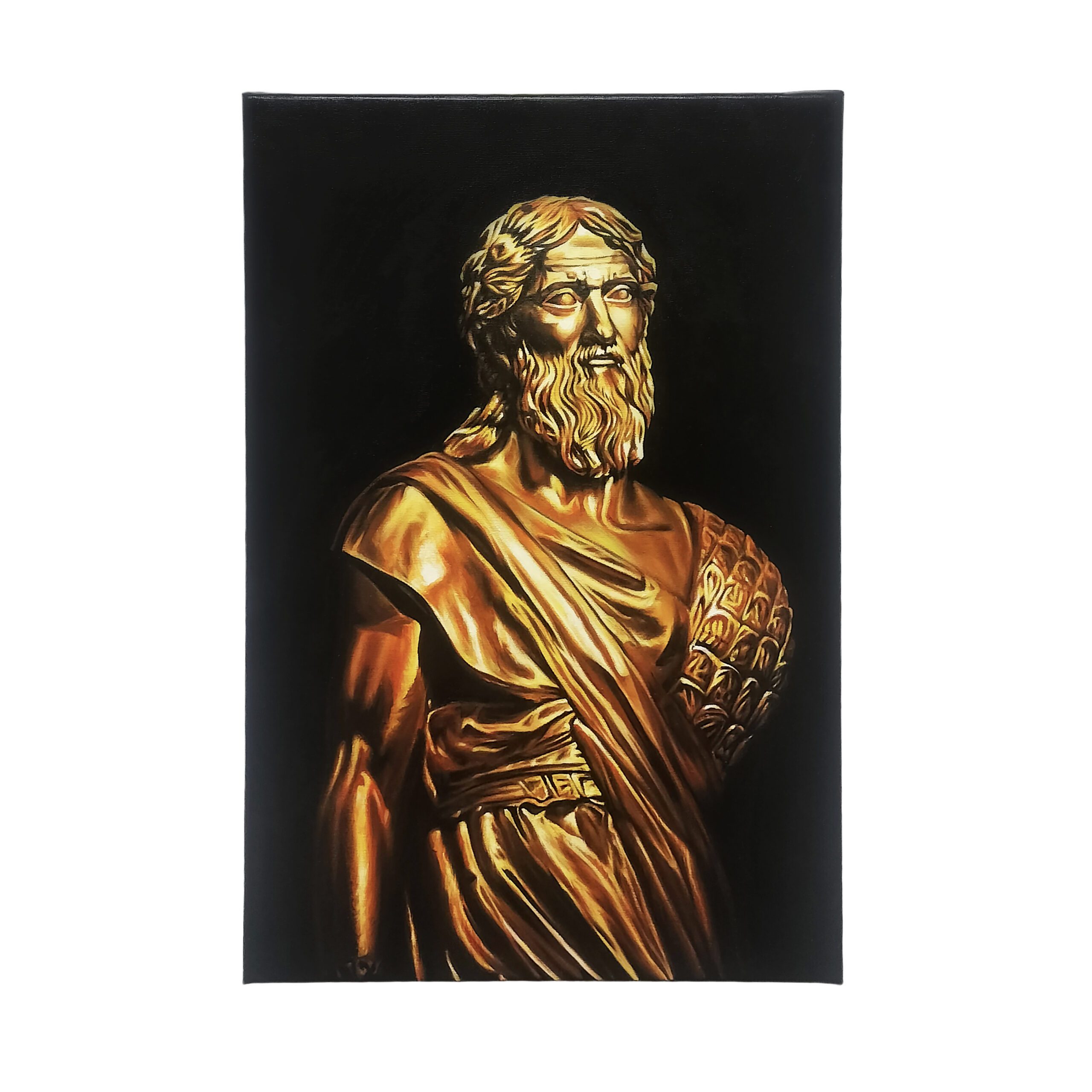
In my practice, I combine painting, photography, and works on the boundary between object and installation. At the center of my artistic inquiry are gold, money, and the concept of value. I examine how culture and economic systems transform matter into a symbol of power, prestige, and desire. I treat gold both as a tangible material and as a metaphor for permanence, the sacred, capital, and control. I am interested in the tension between authenticity and cultural-financial constructs.

In my works, I often refer to class structures and the aesthetics of luxury and provinciality, juxtaposing them with reflections on the fragility of financial systems and the illusory nature of wealth. Through my practice, I attempt to critically yet poetically examine contemporary material culture – how aesthetics intertwine with economics and how objects organize our thinking about the world and about one another.

franciszekjaskula@gmail.com

Paweł Franciszek Jaskuła, born in 1993 in Poznań, Poland, is a visual artist, painter, and photographer. He graduated in Painting and Photography from the Magdalena Abakanowicz University of the Arts in Poznań.
Jaskuła’s works have been presented in numerous galleries across Poland, including the Centre of Contemporary Art in Toruń, Survival Art Review in Wrocław, Rodriguez Gallery, Szczur Gallery, Wozownia Gallery in Toruń, the Baltic Gallery of Contemporary Art in Słupsk, Labirynt Gallery in Lublin, the Art Gallery in Legnica, and Arsenał Gallery in Poznań.
For the past two years, the artist has been included in the Kompas Młodej Sztuki ranking, which highlights leading young Polish artists under the age of 35.
For many years, Jaskuła has explored themes of gold, money, and material value in culture and art, examining phenomena such as post-socialist transformation, class structures, and differing perceptions of wealth between provincial areas and major urban centers.

Antonina Karczewska

I thought, let this master’s thesis be useful for something… especially since it embodies my approach to life, the world, and art:

The anthropocentric tradition of philosophical thought divides the world into nature and culture, thereby isolating people from nature, of which they have always been a part. Moreover, people are separated not only from non-human beings and inanimate nature, but also from each other. The neoliberal narrative also reinforces the individualism present in human societies, which cease to be communities and become “aggregates” of individuals. Not to mention that the demarcation line between nature and culture also runs through the bodies of all these individuals, dividing them post-enlightenment into the head—the culture-creating intellect—and the body—the natural, “unnecessary appendage.” In response to the tragic effects of broadly understood neoliberal isolation, I would like to propose reintegration based on the concept of care ethics created by Carol Gilligan and extended to the natural environment by ecofeminist philosophers. Post-humanist ethics of care is unlikely to save the world from climate catastrophe, but it can become a strategy for individuals and small communities to live a meaningful life – in accordance with higher values in late-capitalist realities. 
(…)
Representatives of this trend in feminist philosophy (…) believe that if the character traits stereotypically attributed to women, i.e., caring, relationality, tenderness, protectiveness, etc., had the opportunity to manifest themselves in the public sphere and supplant widespread competitiveness, rivalry, and greed, it would be possible to save humanity on Earth and restore balance to the natural environment. For ecofeminism, one of the most important categories is care, and in particular the ethics of care formulated by Gilligan. According to ecofeminists, this kind of moral approach may prove to be the key to the survival of the planet as we know it.
(…)

The ethics of care can become one of the strategies for reintegration and rethinking the relationships that connect people with each other and with the broadly understood Others, where the goal is not to “save the world” as such, but rather to go through life with a sense of being part of a larger whole, finding meaning and fulfillment in nurturing the interdependencies inherent in existence. Then, “drinking from paper straws” or other gestures that protect the environment take on new meaning—they become an expression of care, respect, concern, and awareness.

antoninakarczewska@hotmail.com

Antonina Zofia Karczewska, born in 1998 in Toruń. Artist, activist, animator. In June 2025, she defended her master’s thesis at the Magdalena Abakanowicz University of the Arts in Poznań, titled “Everything-Anyway. Cultivating Interdependence as a Daily Practice in an Unstable World.” Her areas of interest and research in art include: memory, women’s history, ecofeminism, queer theory, identity, and relational aesthetics. In her practice, she uses various artistic media (ready-made, audio, photography, sculpture, text, graphics), choosing them depending on the theme being explored. She has participated in numerous group exhibitions across the country and a few solo shows. She occasionally conducts artistic workshops and curates exhibitions.

Natalia Karczewska

I am drawn to what is peripheral — to what slips into our minds subconsciously and gently. Found objects are, for me, among such things. Their unobviousness compels me to explore and uncover a level of abstraction that generates new insights, evokes memories, and recalls the past.

Encountering a found material is like conjuring ghosts — you never know what they have to tell you, or where they will plant the seed of sentiment. Through objects, I examine accidental encounters. They become the starting point for working with the abandoned, with peripheral histories, with nonlinear simulations, with archaeology.

These objects are ignored micro-narratives — inhabitants of a world in which nothing is forgotten. They form constellations between my lack of knowledge about them and what I instinctively understand. This lack becomes the trigger for imagination, a search for completion — a kind of adhesive, a binder.

Catherine Malabou writes about sudden, radical transformations of personality — how accident, trauma, or unexpected change can turn identity into something entirely new, made of different matter, discontinuous, stitched together anew. In this context, the ghost, the object, the memory become not so much traces as impulses for change — fragments of a new personality that has not yet been classified.

Like ghosts, abandoned objects are paradoxical — alive and dead at the same time. The archaeology of found things and words is unsystematic, devoid of logic, and yet it swiftly brings forth true memories. Objects and images, like words, resist detachment from meaning — yet they summon new impressions with ease.

nataliakarczewska121@gmail.com

Natalia Karczewska (b. 1994) is a multidisciplinary artist. She explores the poetic world of memory, attempting to narrate impressions through the construction of peculiar objects, drawings, and paintings — often based on found materials. She graduated from the Faculty of Animation in 2017 and the Faculty of Intermedia Art in 2019, both at the University of the Arts in Poznań. Her diploma project was presented at the Maria Dokowicz Competition for the Best Diploma Project and received an award from the quarterly journal Czas Kultury.

Karczewska is a recipient of the Styrian Artist in Residence scholarship (Graz, Austria), a finalist of the Allegro Prize, and a laureate of the Geppert Prize. She has presented her works in Poland, including at Stereo Gallery (Warsaw), Piana Gallery (Kraków), New Art Dealers (NADA Villa Warsaw), the National Museum (Szczecin and Gdańsk), Arsenal Municipal Gallery (Poznań), Łęctwo Gallery (Poznań), Turnus Gallery (Warsaw), and MOCAK (Kraków); as well as abroad, including Coulisse Gallery (Stockholm), Alliance Française (Mombasa, Kenya), Villa Vertua Masolo (Milan), L.A.L.D. (Polignano a Mare), Lothringer 13 (Munich), and a.s.b.e.s.t.o.s (Melbourne). Her works are held in private and public collections, including the M jak Malarstwo collection at the National Museum in Gdańsk. She teaches drawing at the Academy of Art in Szczecin.

Katarzyna Knychała

In the series I am currently working on, I am expanding the story of a creature I have created, which is supposed to originate from a child’s imagination. Its silhouette is simplified – it is a unification of the image of most animal species.

The motif I am reproducing is meant to return in adult life through dreams (oil paintings) and memories (transfer works based on photographs). In my paintings, I show the environment in which these fantastic creatures live, revealing the rituals, customs, and secrets they uphold.

I explore the theme of simultaneously combining childlike aesthetics with elements that evoke anxiety as the embodiment of the connection between the world of childhood and later adult life.

knychala.katarzyna@gmail.com

Katarzyna Knychała (born 2001 in Poznań) I am currently in my final year of a Master’s degree in Painting at the University of the Arts in Poznań. Oil painting and object-based works are my main forms of expression, through which I explore the theme of creating a surreal universe based on childhood memories. Since 2024, I have been an active member of the Poznań-based Kolektyw Pod Ciśnieniem (Under Pressure Collective). I also organise exhibitions at Dług Gallery, a space co-run by me and Wiktoria Cwityńska.

Kamila Kobierzyńska

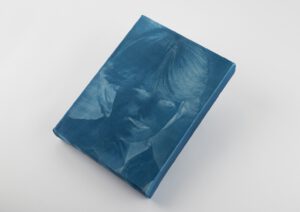
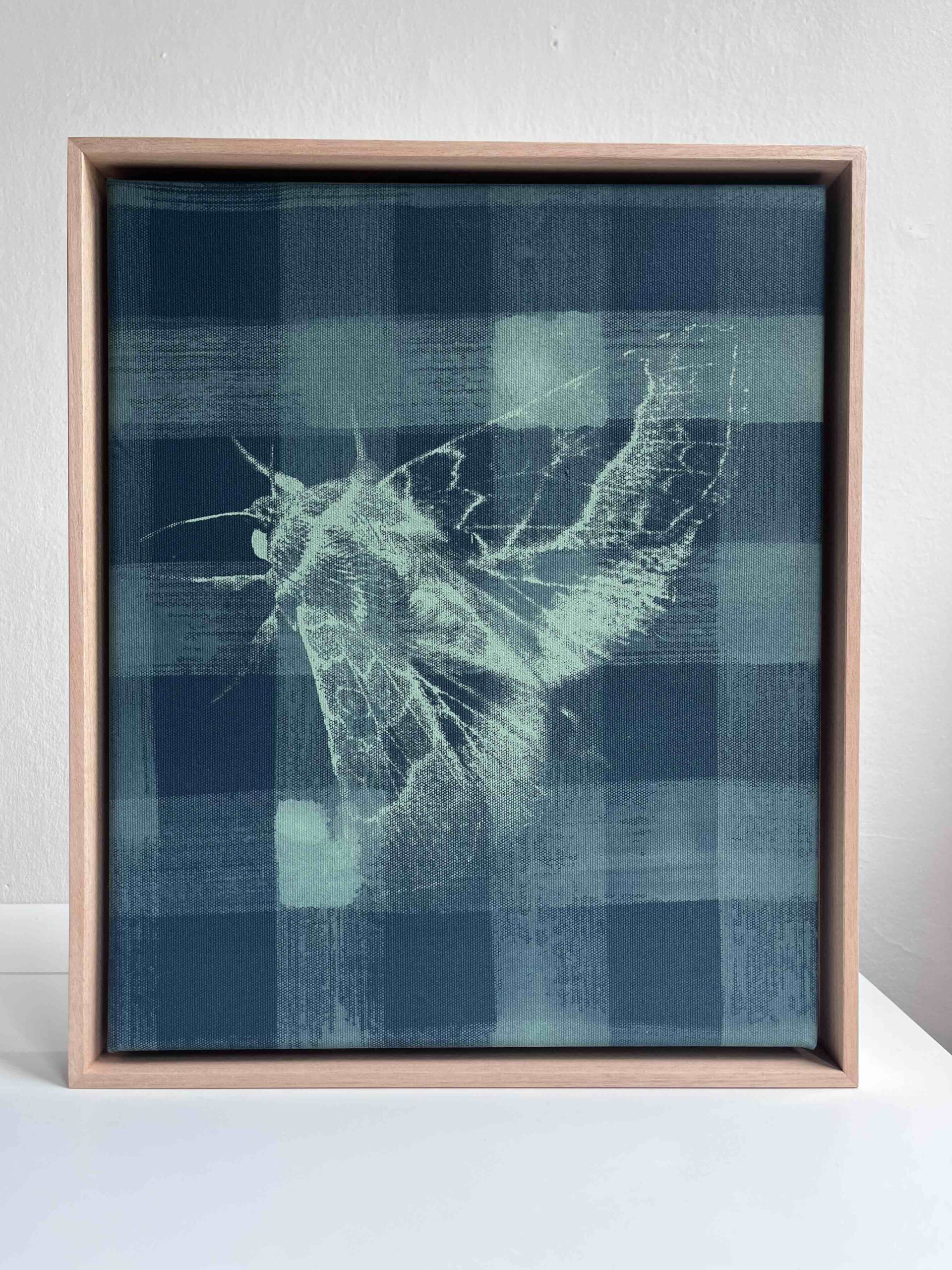
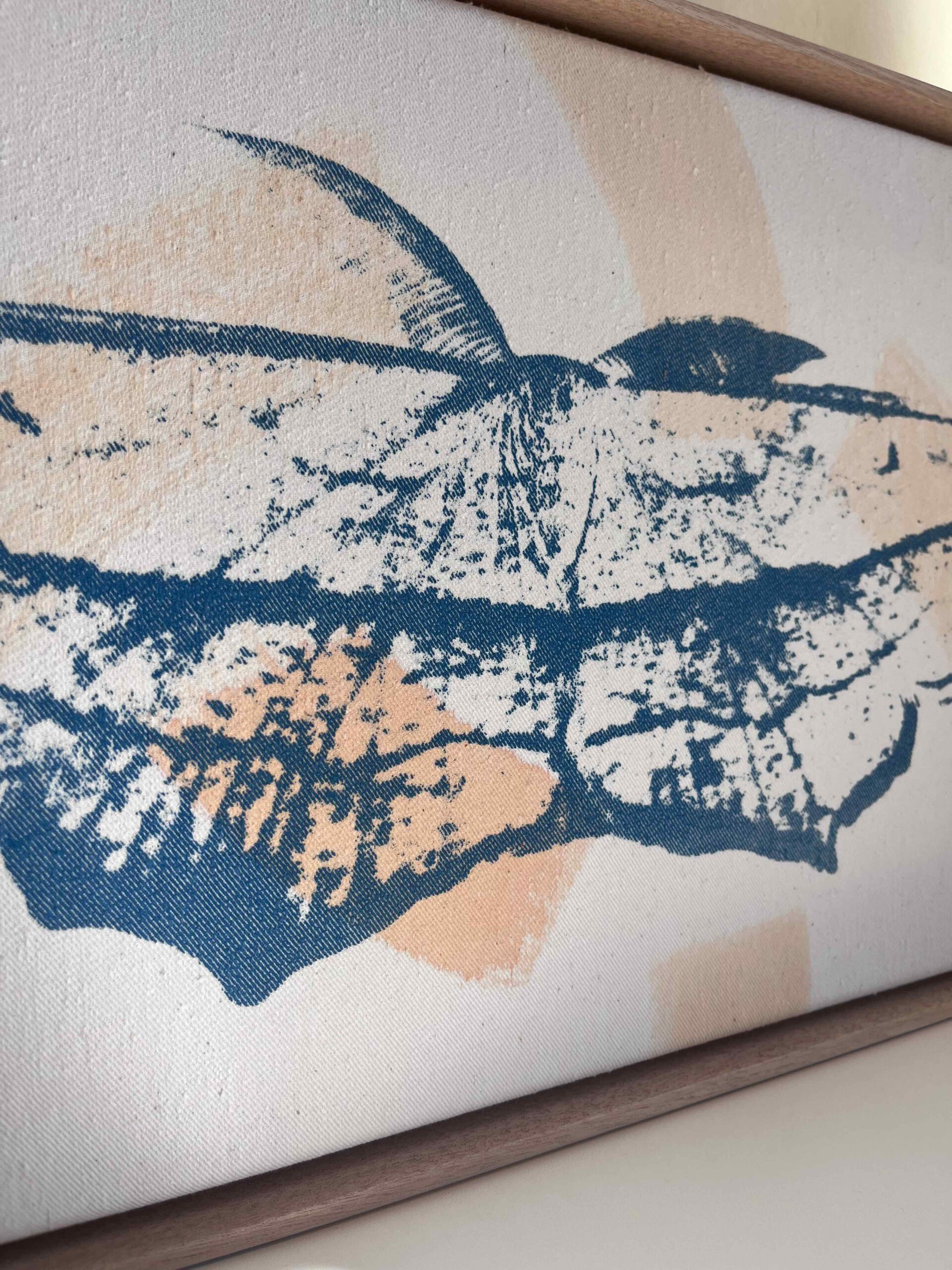
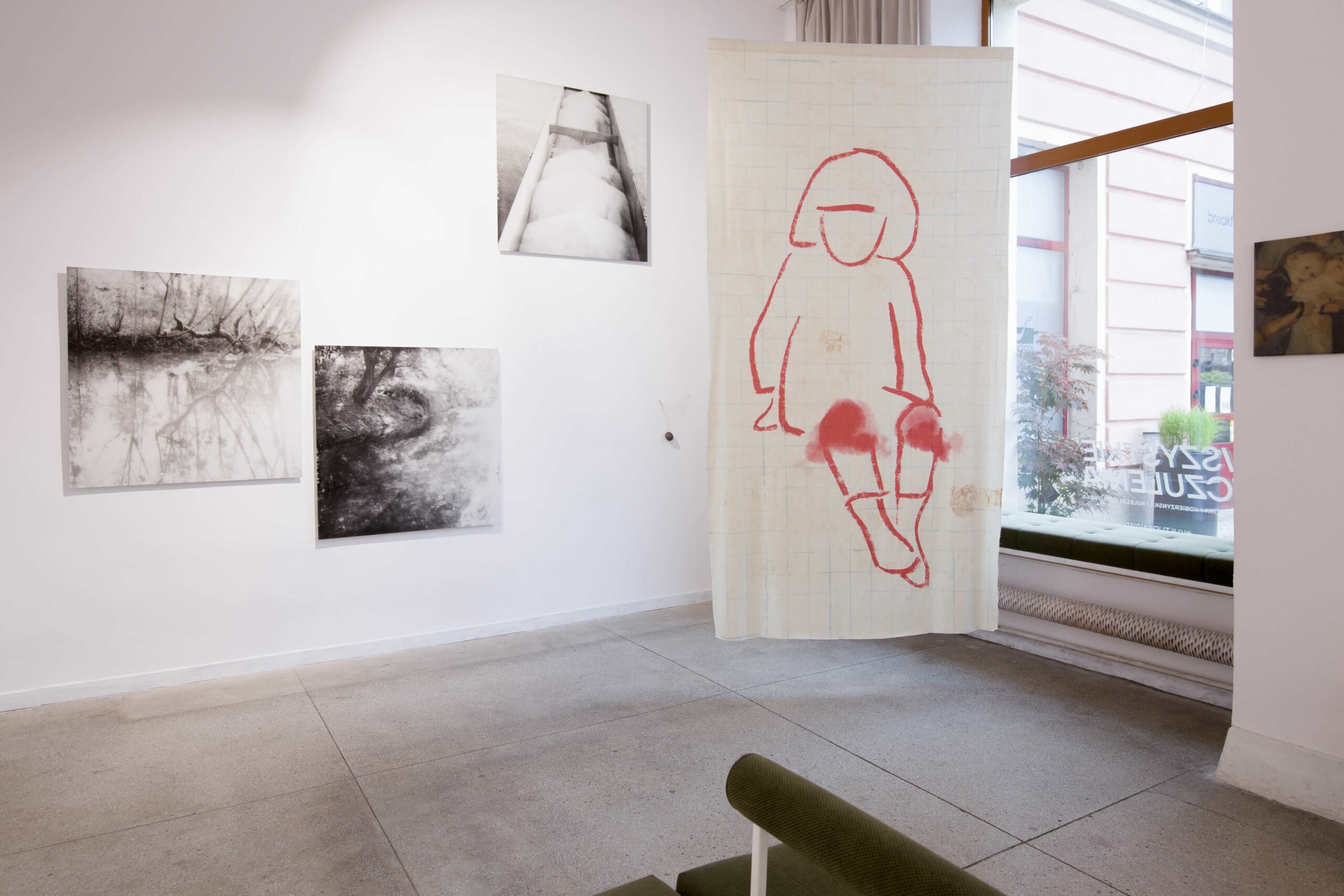
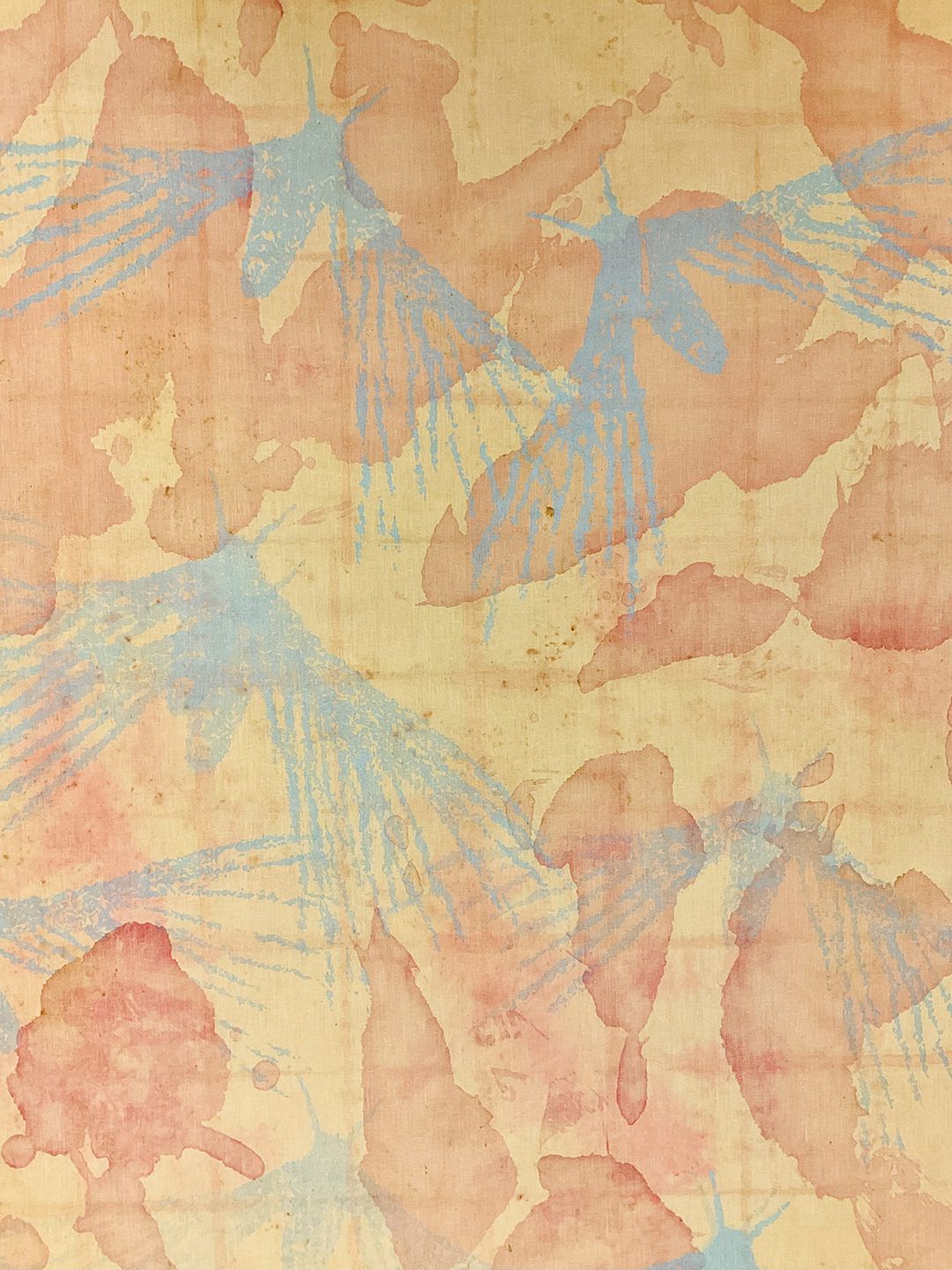
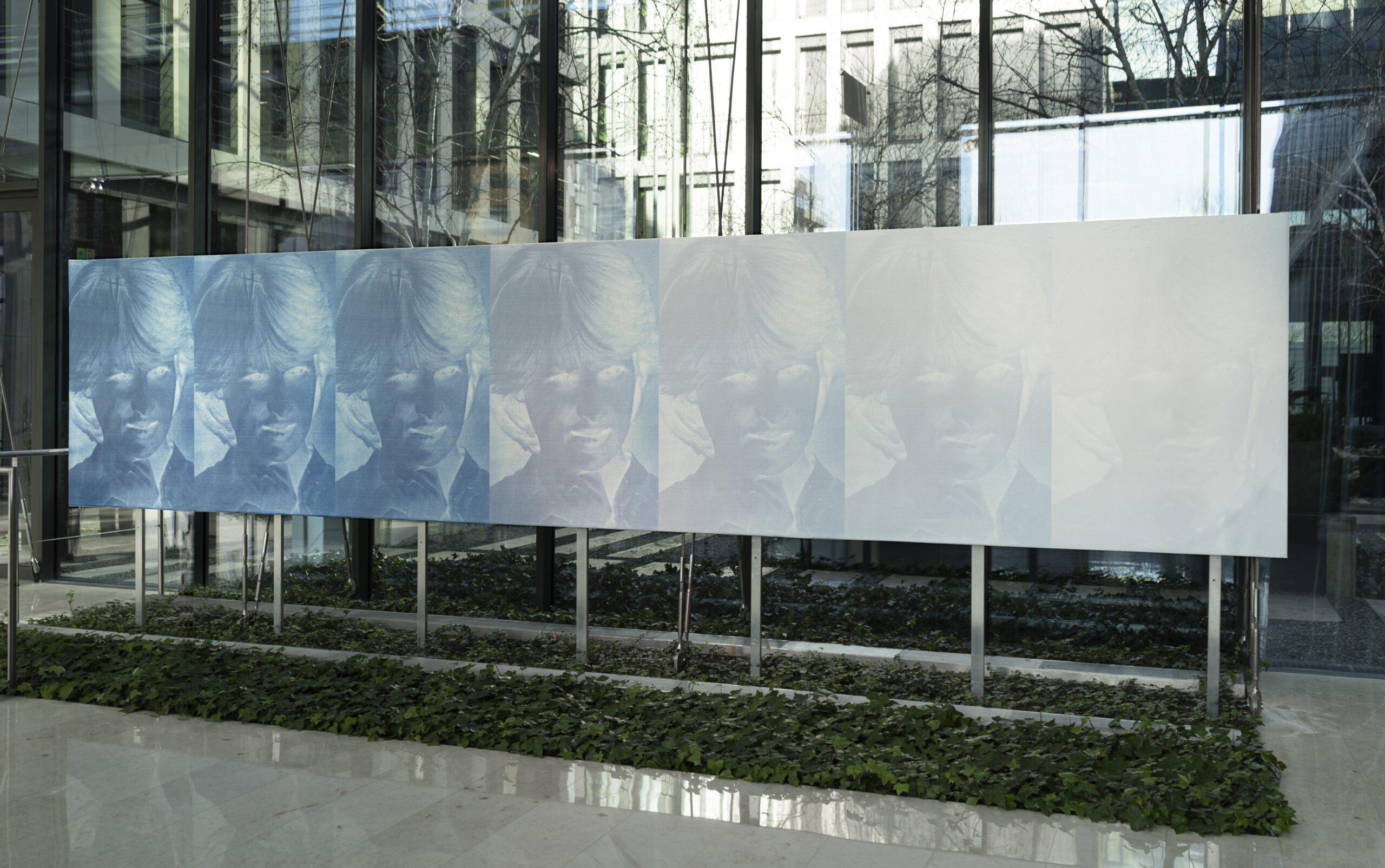
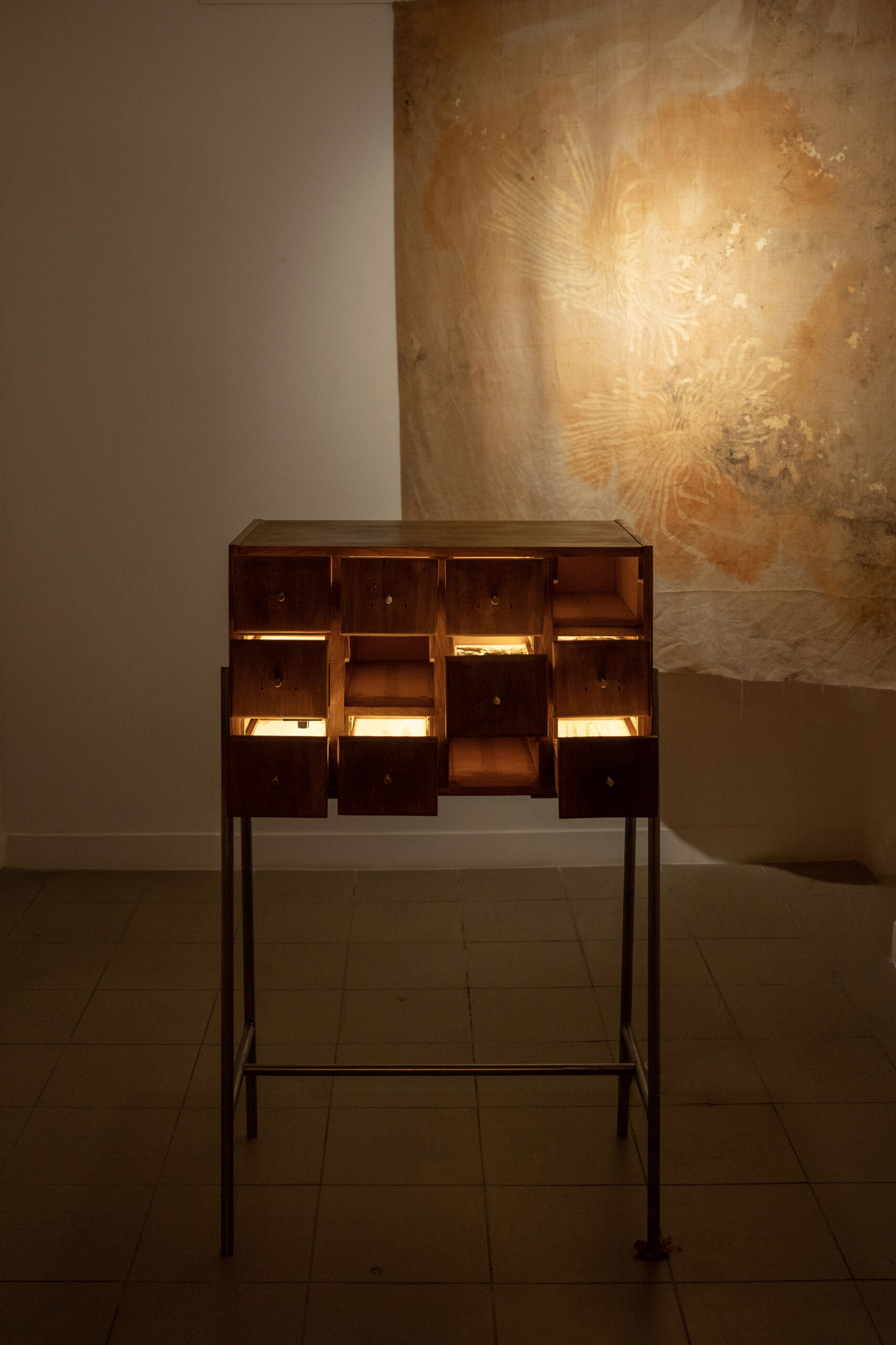
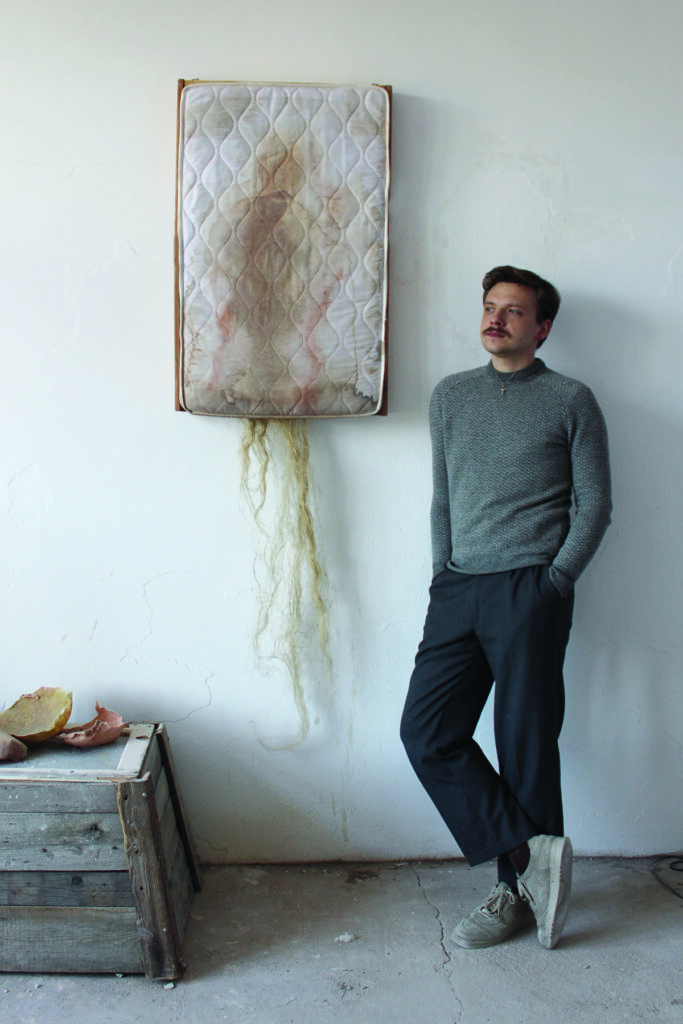
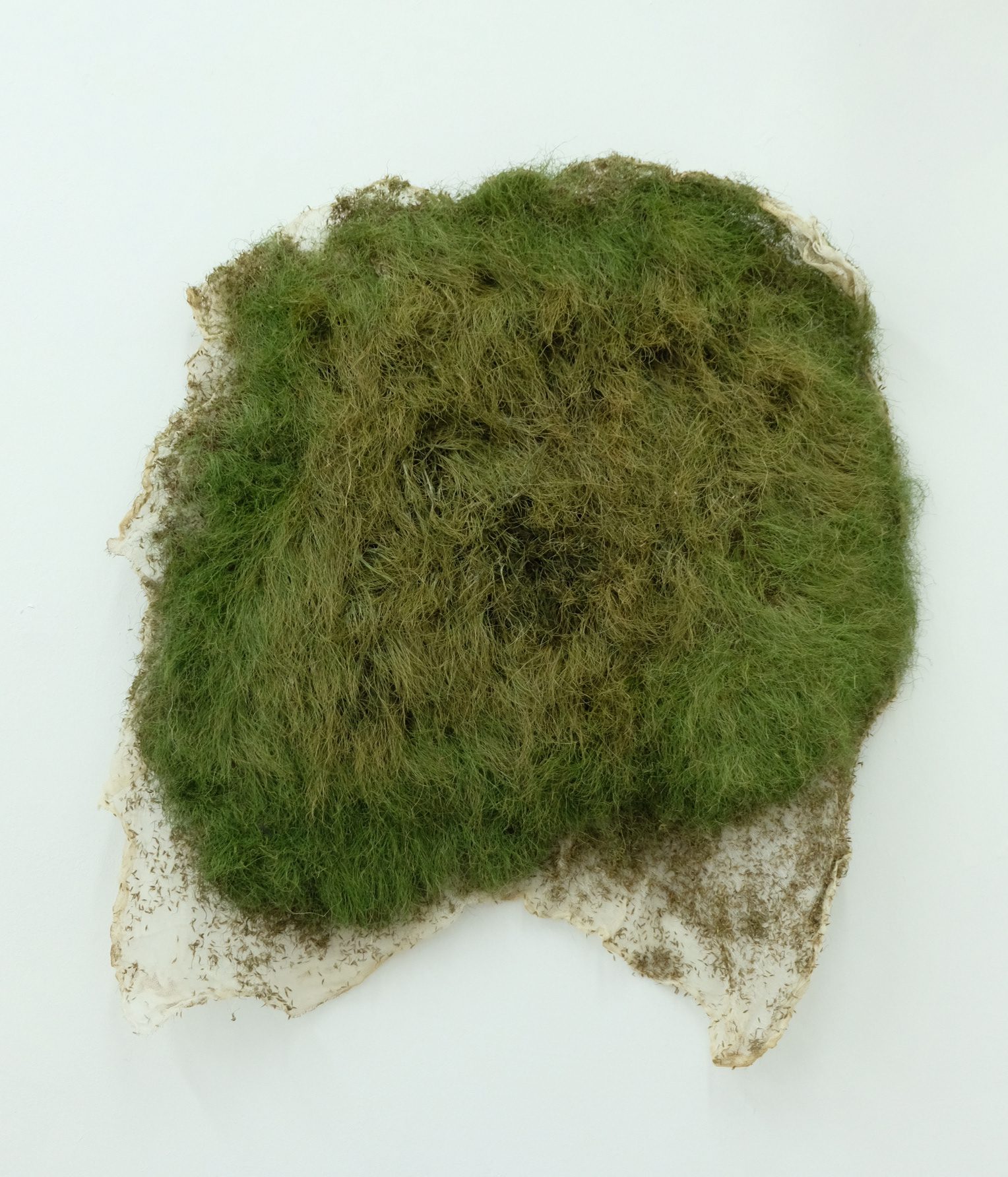
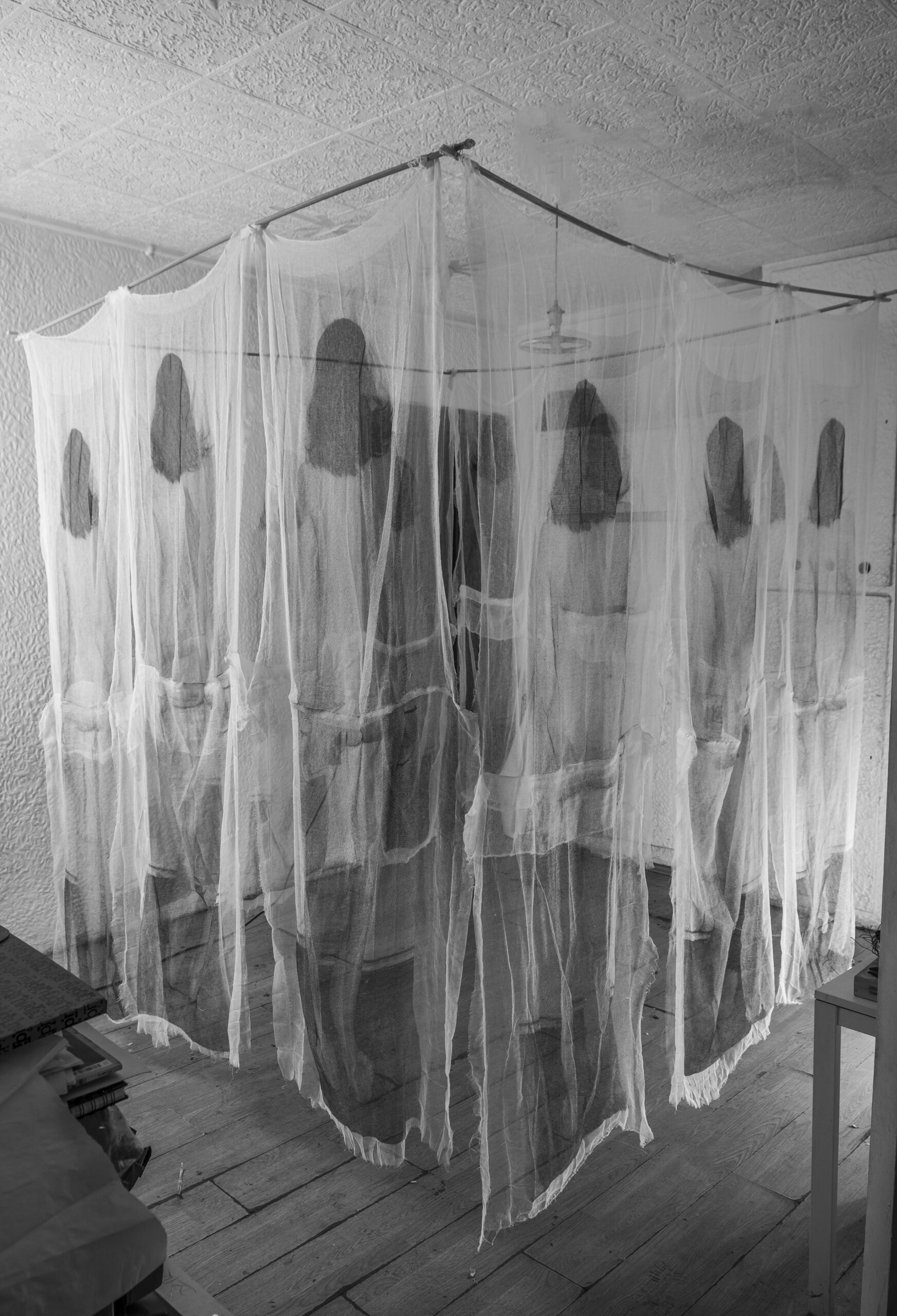
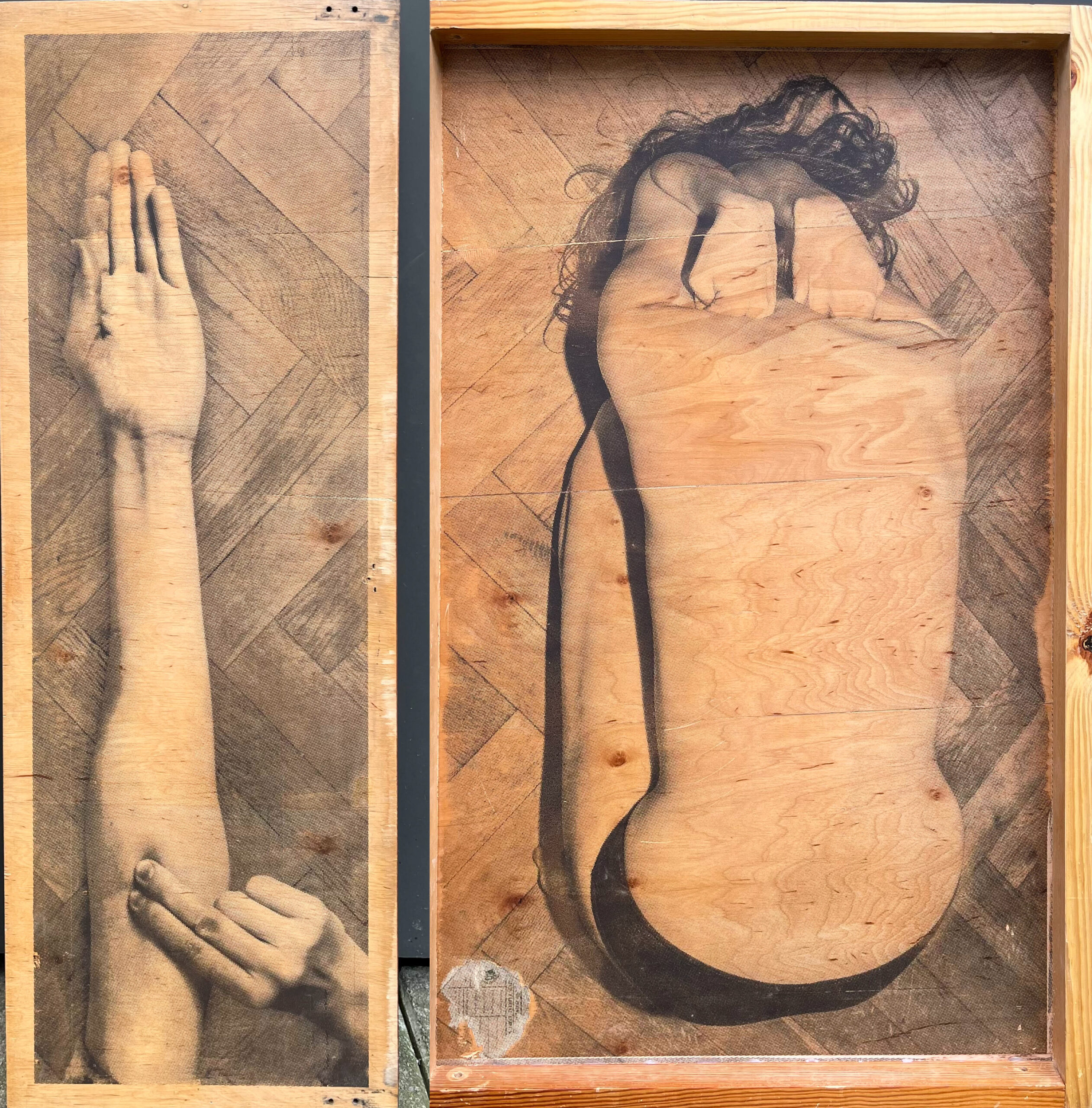
My practice unfolds at the intersection of photography, textiles, and site-specific strategies. I approach memory not simply as a record of the past, but as a living, unstable structure that manifests across the body, image, material, and architectural space. In my work, I return to what is fragile, barely perceptible, and seemingly peripheral: the trace, residue, discoloration, and afterimage, as well as the tension between presence and disappearance. I seek forms through which memory resists closure, emerging instead as an ongoing process of revelation, displacement, and transformation.

Many of my projects are grounded in a reflection on postmemory, inheritance, and identity. I am particularly concerned with what is transmitted between generations beyond narrative—through gestures, affects, silences, and images. I conceive of memory as a layered and unstable matter, marked by fractures, absences, and shifts, which cannot be fully grasped or definitively read. For this reason, I do not attempt to impose a fixed order upon it; rather, I am interested in creating conditions in which it may resonate anew—through light, surface structure, touch, the repetition of gesture, and the presence of the body.

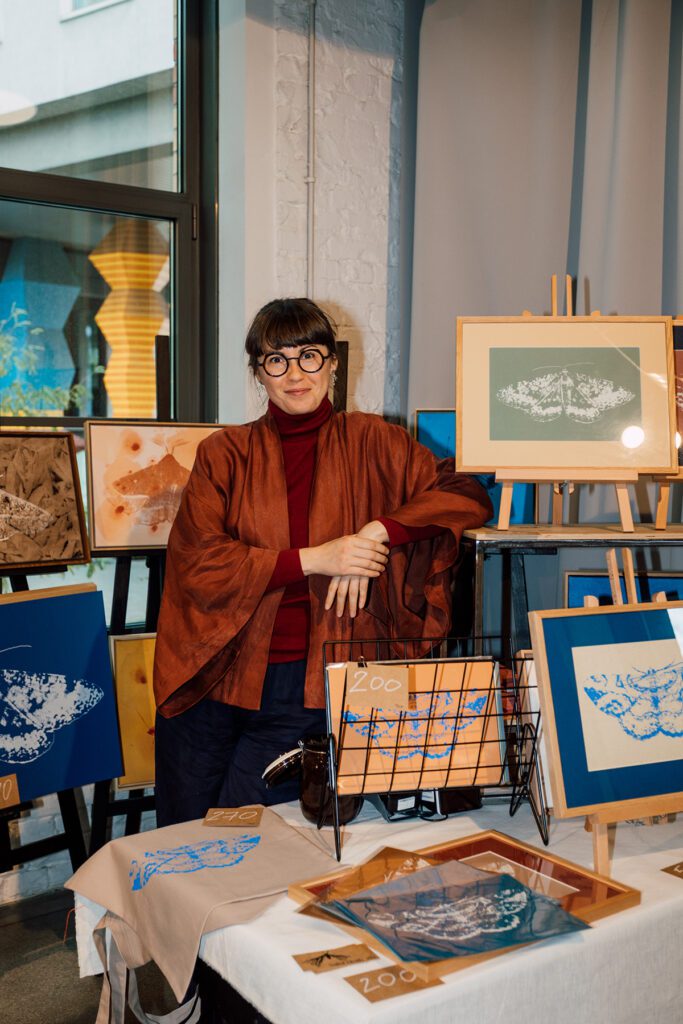
An important context for my work is Saint Moth—an authorial studio that I understand both as a physical space of artistic production and as a symbolic site of transformation. It is there that my artistic practice intersects with work involving natural materials, an attentiveness to process, and a sustained reflection on what remains hidden. The moth, present in the name Saint Moth, functions for me as a particular symbol of transformation. I do not treat it merely as a visual motif, but as a sign of a specific sensitivity—to what is fragile, liminal, flickering, and not fully domesticated.

kamilakobierzynska@gmail.com

Kamila Kobierzyńska, visual artist based in Poznań (Poland), b. 1991, lecturer and artist specializing in photography and textile art. Founder of the Saint Moth Studio in Poznań. Kobierzyńska received a PhD from the Faculty of Photography at the Abakanowicz University of the Arts in Poznań (2021) with her artwork When the cherries blossom. Her dissertation focused on generational postmemory and identity. Kobierzyńska explores the broad materiality of photography and its cultural meanings, creating site-specific objects, unique art textiles, and ephemeral, barely perceptible phenomena. As an educator, she co-runs the Latent Images Studio at the Faculty of Photography at the Abakanowicz University of the Arts and she also leads the Photography Studio at the Zamek Cultural Center in Poznań for over a decade. Her artistic practice has been showcased in exhibitions in Belgium, Georgia, the Czech Republic, Indonesia, Portugal, and numerous venues in Poland.

Anna Kołacka

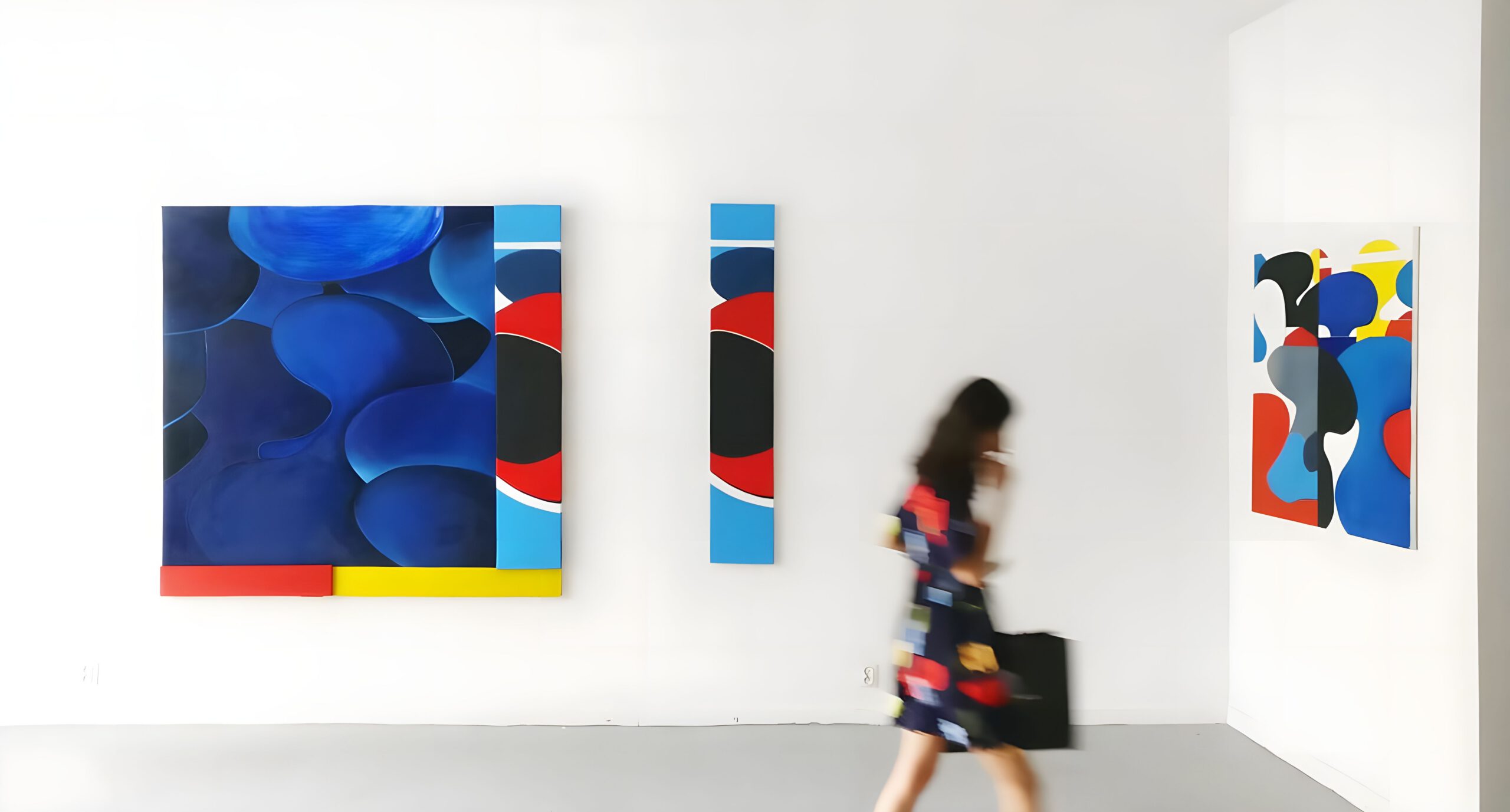
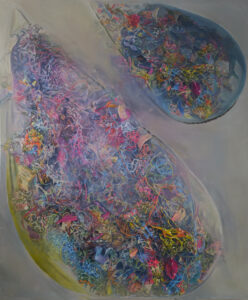
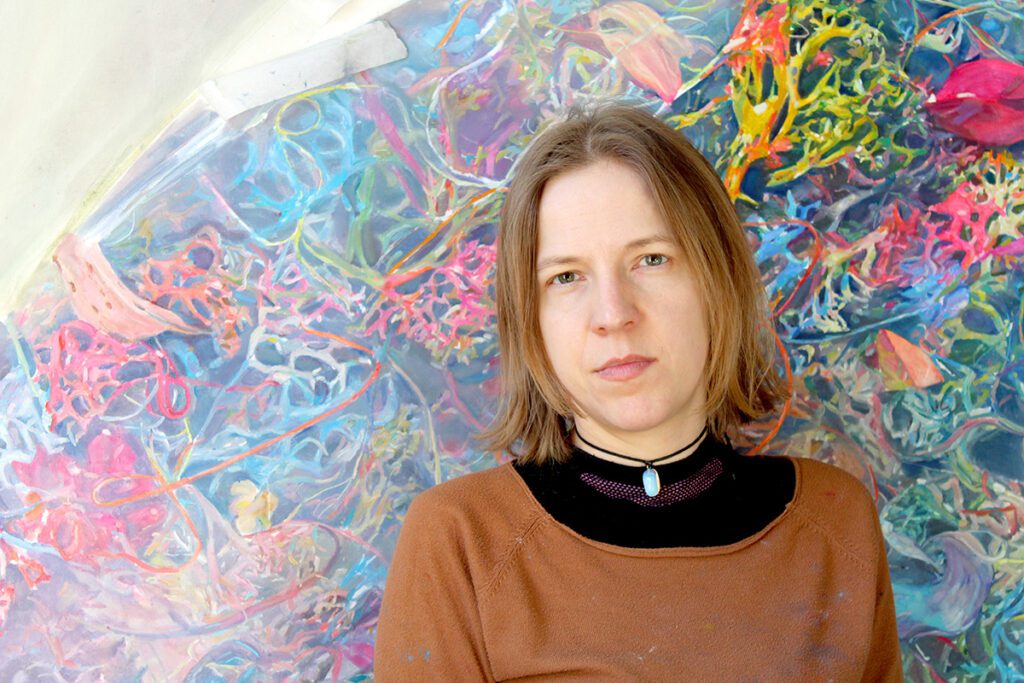
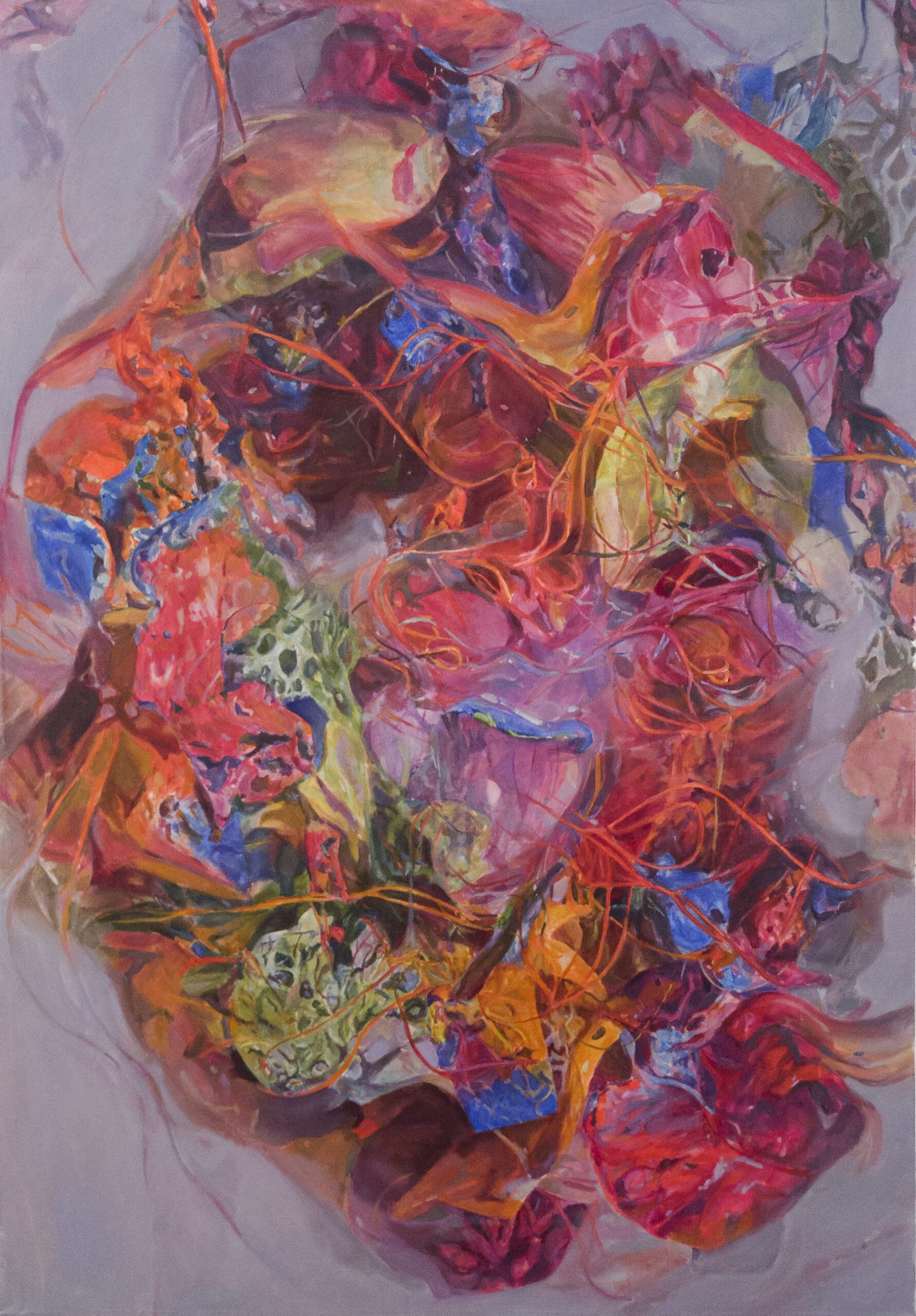
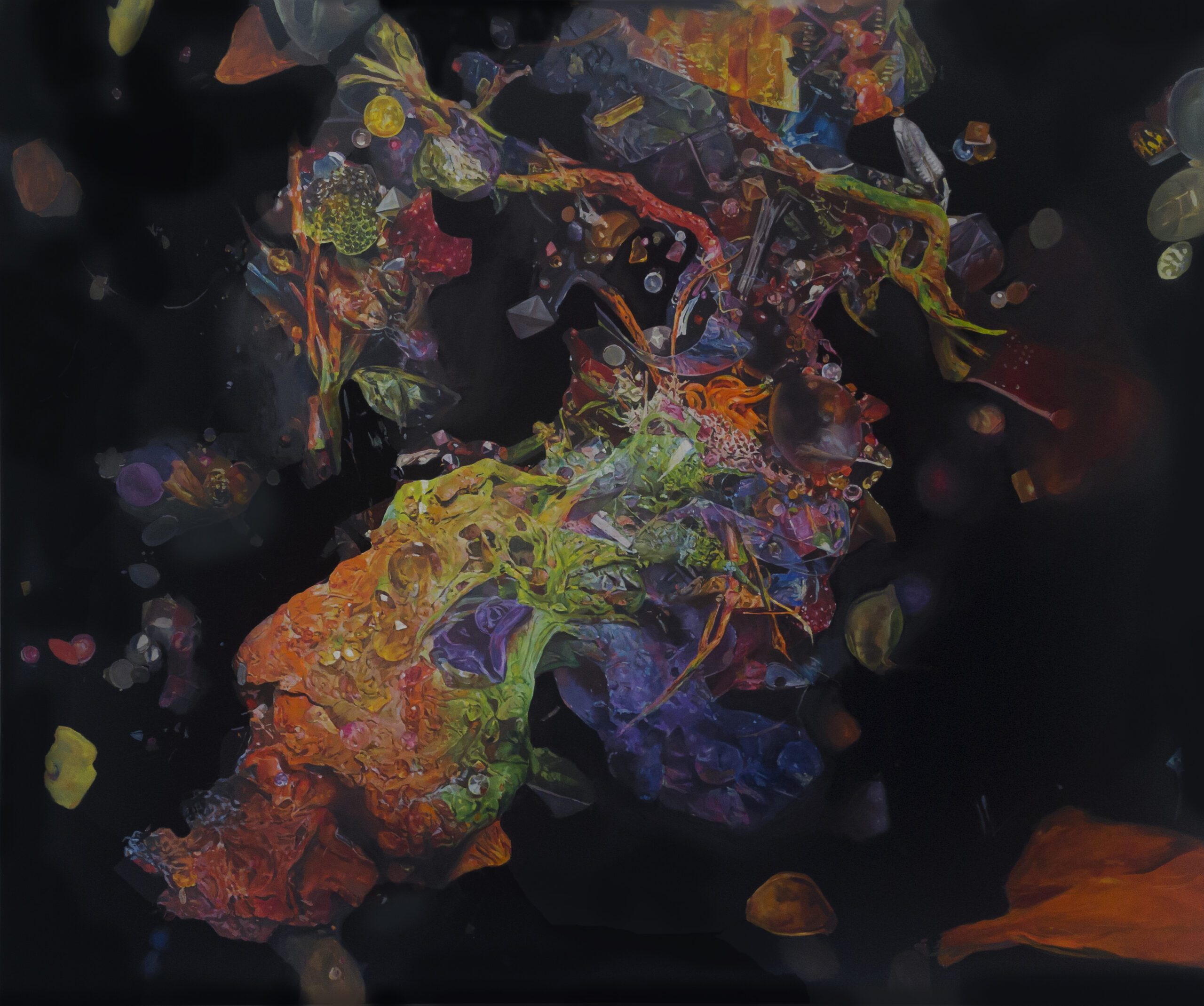
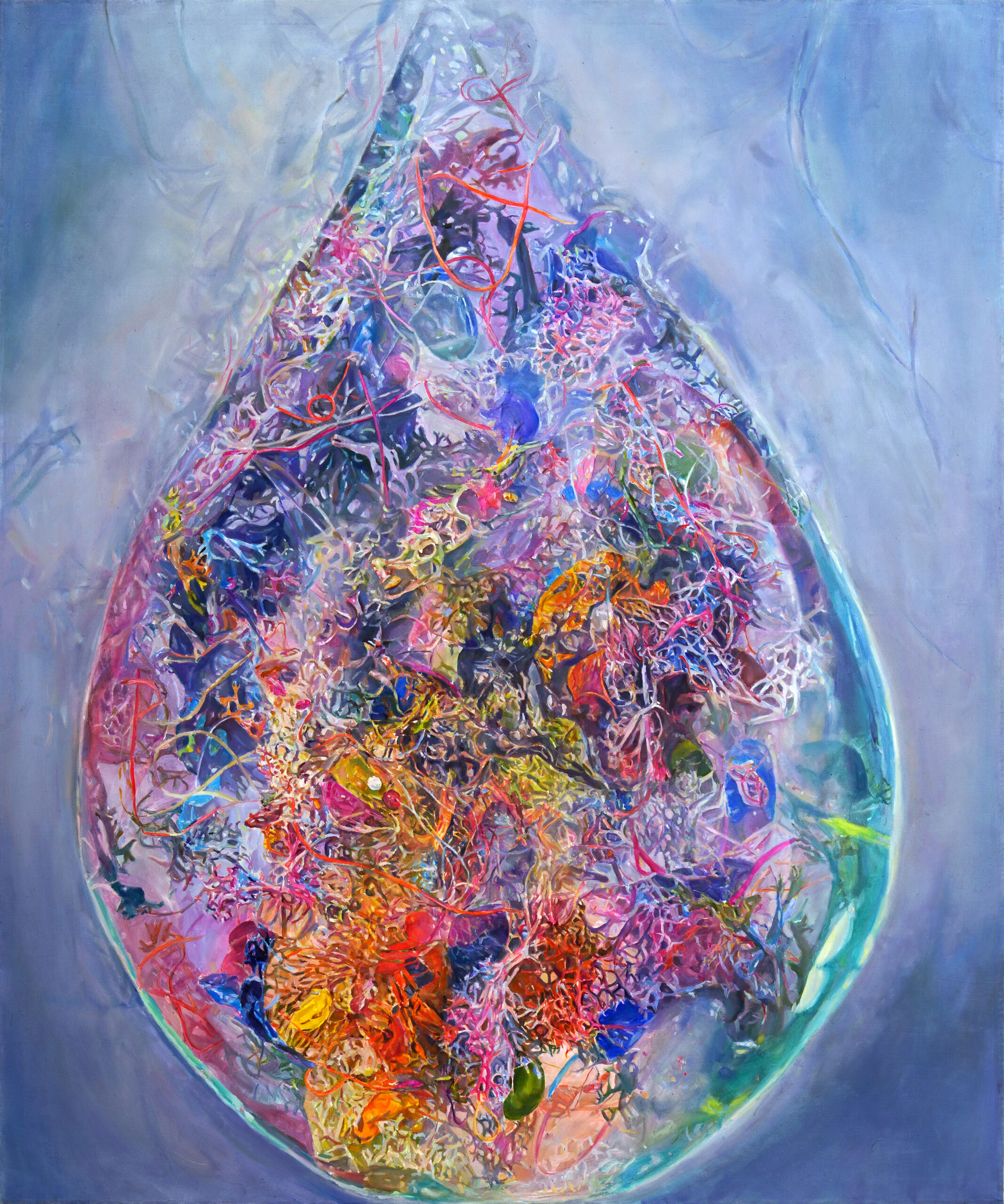
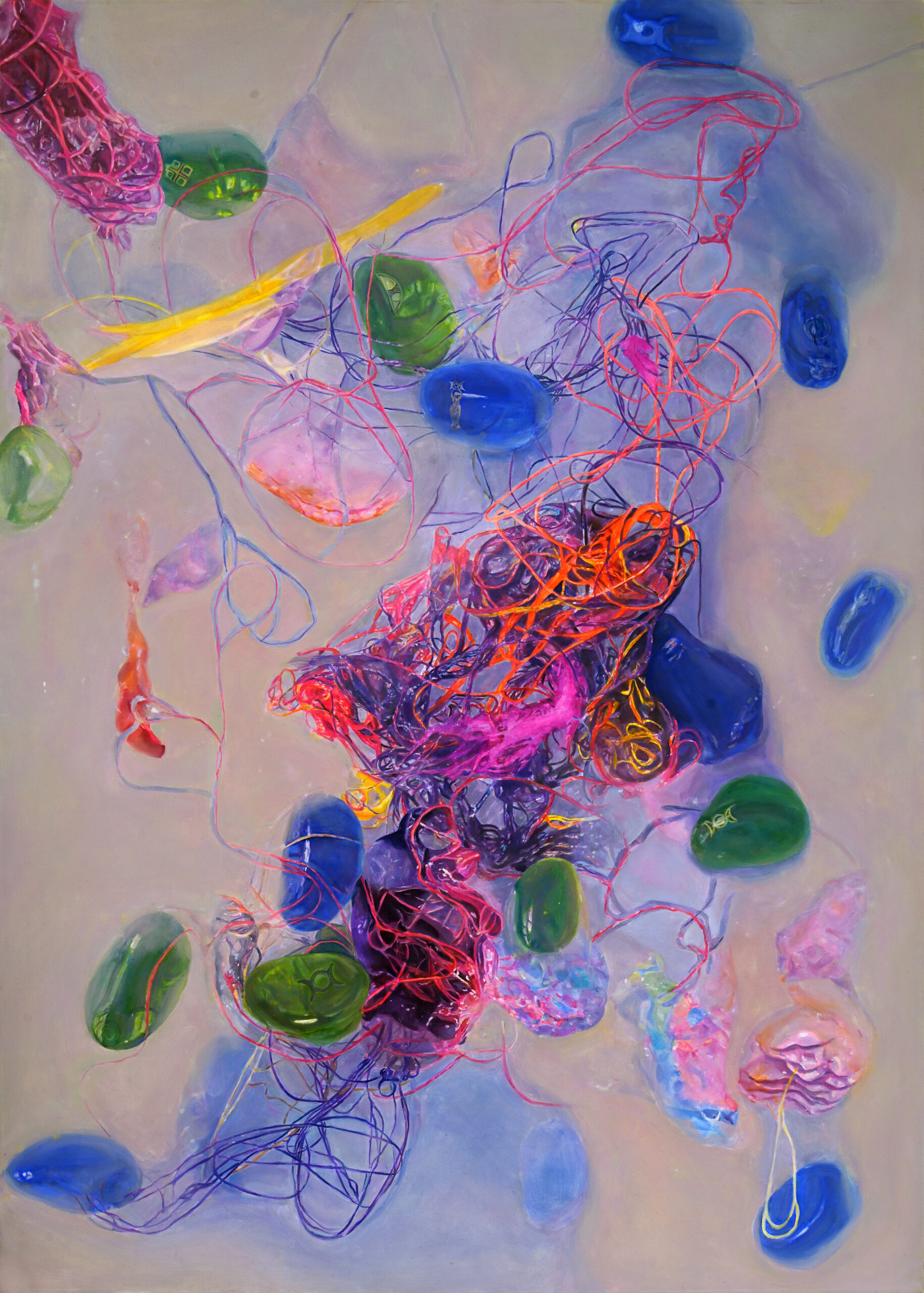
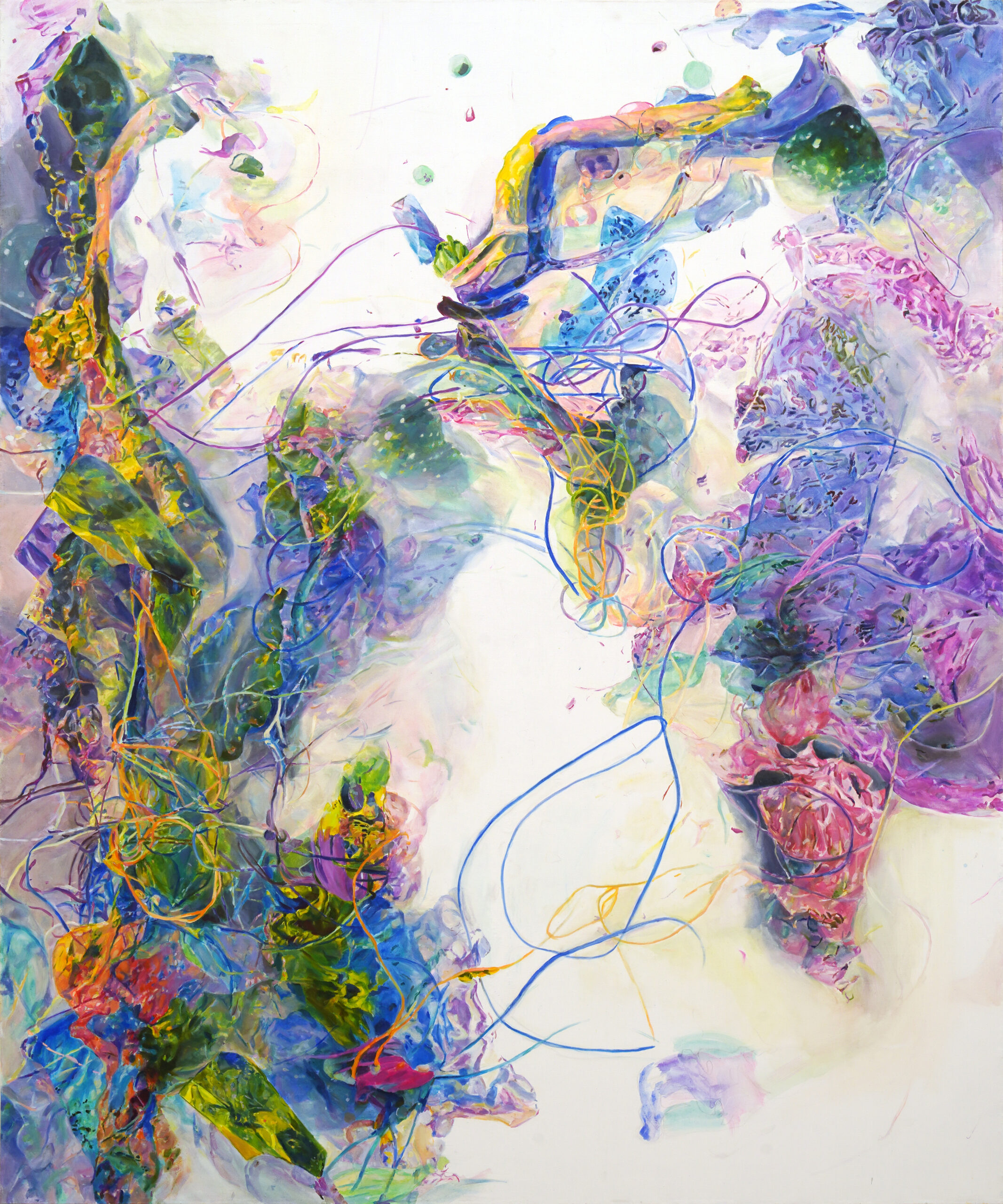
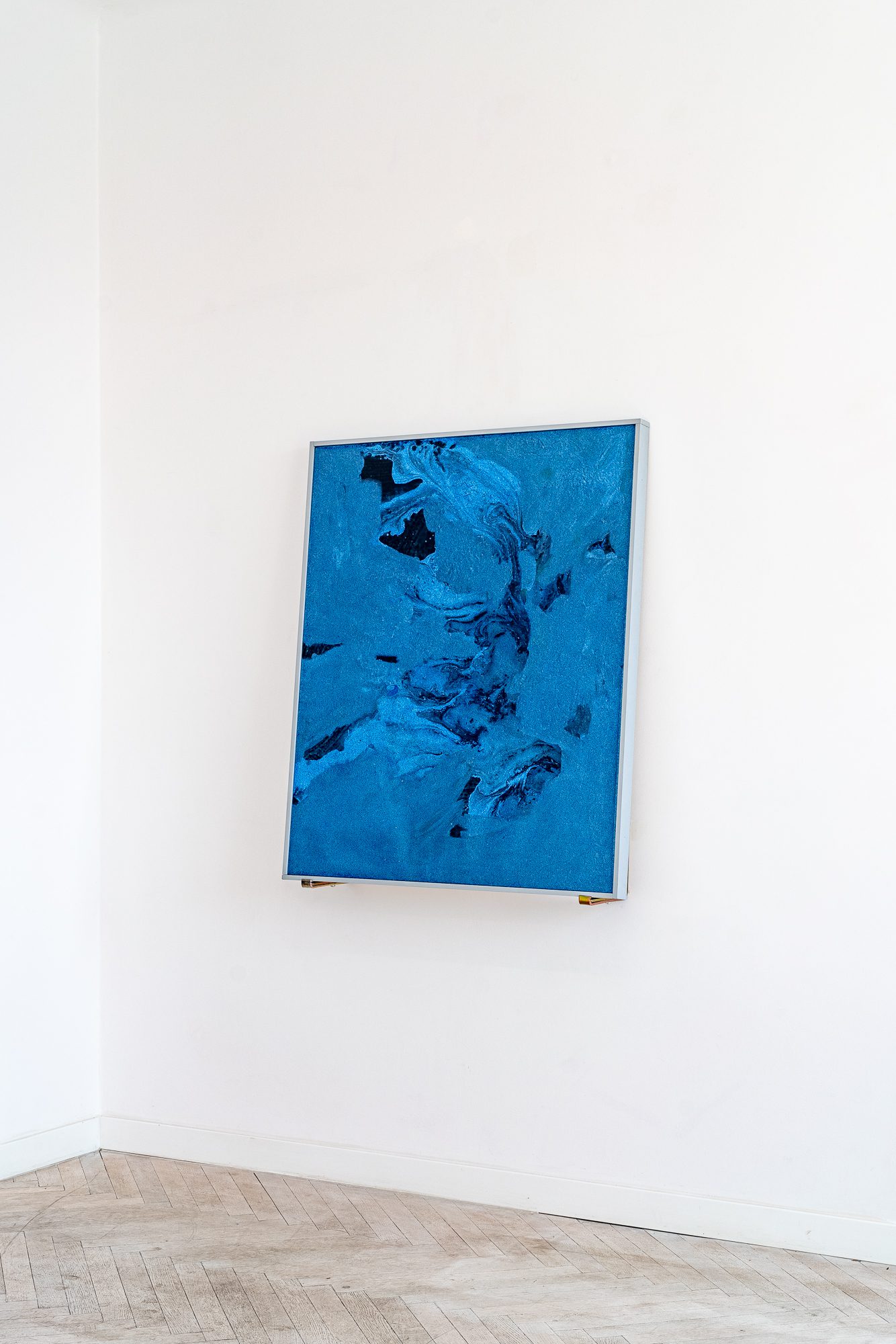
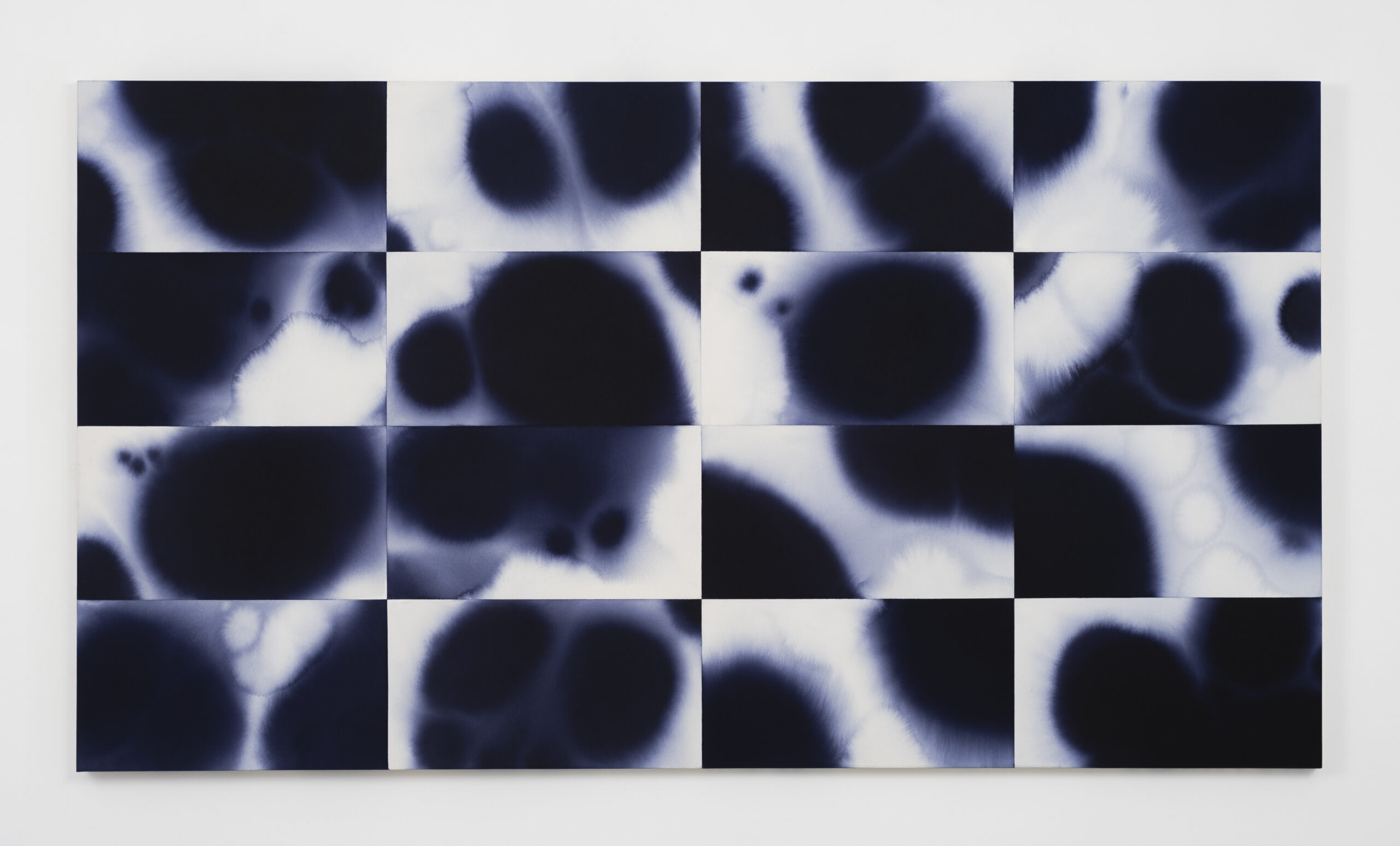
I work in painting. I am interested in the world of organic matter. The forms that appear in my paintings refer to the micro-world, invisible to the human eye without the use of measuring instruments. It is an imagined world, yet rooted in reality, which aims to sensitize viewers to the pulsating, mysterious matter that surrounds us. I try to make viewers aware that even seemingly dead matter is full of life. There is no binary division between what is natural and what is artificial here, following Donna Haraway’s thinking.

In my practice, I explore the “life of nature,” its origins, and the structure and shape of matter. I am fascinated by the awareness that we are part of a single ecosystem with all organisms, connected by processes we do not perceive. The monumental scale of my works arises from the need to convey the immersive character of natural phenomena.

Projections displayed on some works enhance the sense of vitality and continuous movement of what lies beneath the surface of phenomena. It is an attempt to capture the organic energy that permeates everything and connects us with what is non-human.

annarozakolacka@gmail.com

Anna Kołacka (b. 1992, Poznań). Painter, creator of projections for paintings, and assistant professor in the 17th Drawing Studio, led by Prof. Tomasz Bukowski at the Magdalena Abakanowicz University of the Arts in Poznań. She holds a doctorate from the Faculty of Painting and Drawing, and a master’s degree obtained in 2016, also from UAP. She has been nominated, among others, for the 13th Eugeniusz Geppert Competition, and has been a finalist in numerous contests, including LOOSTRO and New Image/New Perspective. She is a recipient of the Young Art Medal, the Grand Prix Franciszka Eibisch, as well as scholarships from the Ministry of Culture and National Heritage (MKiDN) and the Marshal of the Greater Poland Voivodeship.

She has participated in exhibitions in Poland and abroad, most recently at MOS, Gorzów Wielkopolski, Szydłowski’ Gallery, BWA Ostrowiec Świętokrzyski, the 10th Bi-City Biennale of Urbanism/Architecture at OCT Contemporary Art Terminal in Shenzhen, the 16th Asia-Europe Biennale at ArtIstanbul Feshane in Istanbul, and the Open City Festival in Lublin.

In her painting, she explores questions about the structure of matter and its nature. She is interested in the post-human world, one without the presence of humans. In her free time, she enjoys swimming.

Sebastian Krzywak

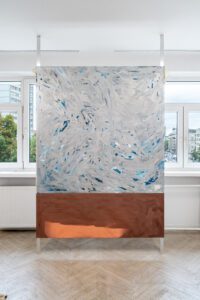
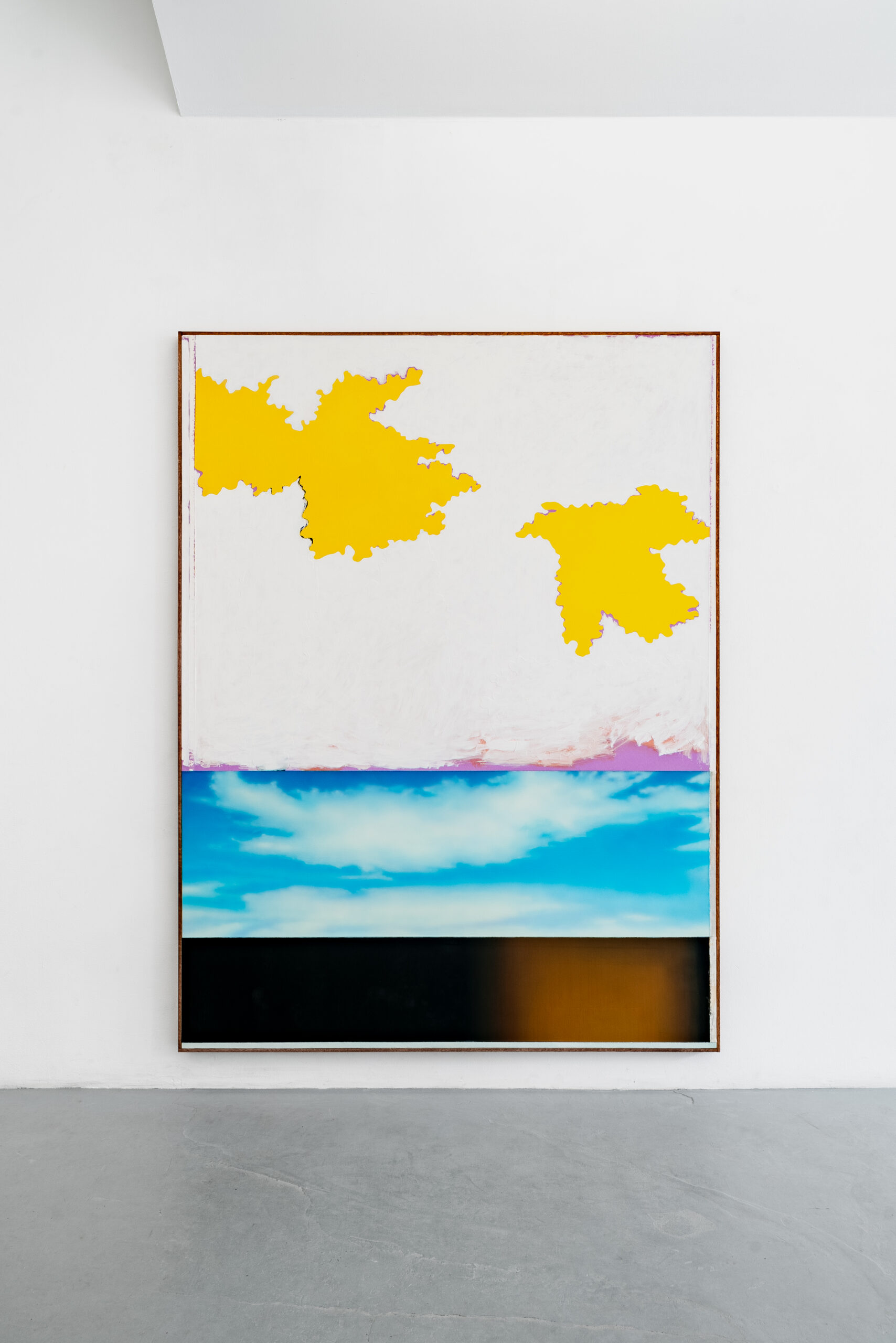
Rooted in the logic of the digital image, his compositions often originate in virtual environments before being translated onto canvas. Through this migration from screen to surface, digital forms acquire texture, density, and chromatic weight. The artist explores the tension between control and accident in the sensuous unpredictability of pigment. The artist’s work can be interpreted as a reflection on contemporary ways of seeing shaped by technology but still rooted in the experience of physicality and nature.

sebastian.krzywak@gmail.com

Sebastian Krzywak (b. 1979, Zielona Góra)  lives and works in Poznań,  is a painter whose work emerges at the intersection of digital imaging and the physicality of paint. He graduated from the Academy of Fine Arts in Poznań in 2005, and received his PhD from the University of the Arts in 2021 where he currently teaches painting.

He has presented his works at numerous exhibitions in Poland as well as in Germany, Slovakia, Lithuania, the Czech Republic, and France. The artist’s works can be found, among others, in the collections of the National Museum in Gdańsk, the Centre of Contemporary Art “Signs of the Times” in Toruń, the Krupa Art Foundation in Wrocław, and in private collections.

Alicja Kubicka

There are infinitely many ways to occupy one’s time and build a career, and painting may not be among the best life choices. The process of creating a painting is free from any obligation, and that is precisely where its difficulty lies. A consistent creative practice requires unwavering faith that these works will one day leave the studio, be exhibited in a gallery, or sold—but there is no guarantee that this will happen. A person committed to producing useless (yet aura-filled) objects entrusts their life to the whims of chance, much like someone aspiring to become an Olympic-level athlete.

One could say I chose this profession over others because what matters most to me is what is unforced. Paradoxically, however—because I have to earn a living—I adhere to the daily schedule that school and later work taught me, obediently alternating between alertness and rest. Therefore, what is most important to me—my creative expression along with all its pleasant consequences—belongs by default to the category of “nonessential,” waiting each day for the moment when no one is watching to emerge into the light, unfold like a shy flower, and catch the tail end of the afternoon.

For me, painting is tangible proof that nonessentiality is a fundamental quality and a condition for the existence of what matters—that if what is important were made “necessary,” it would lose its reason for being. Artistic creation is the practice of loving something that exists even though it need not exist. Until something comes into being, no one knows it was missing—and this applies to everything that exists (myself included). Awareness of this fact makes it impossible for me to resist the impulse to produce nonfunctional artifacts, which one can at most look at and then ponder.

alicja.kubicka93@gmail.com

Alicja Kubicka. Visual artist, born in Bydgoszcz (1993). Graduate of the Faculty of Painting at the Academy of Fine Arts in Gdańsk (2017). Currently lives and works in Poznań.

Author of solo exhibitions and participant in group exhibitions in public and private galleries in Poland (including National Museum in Gdańsk, 2026; Zachęta Project Room, National Gallery in Warsaw, 2025; Municipal Gallery BWA in Bydgoszcz, 2024; Death of Man gallery, Warsaw, 2024; Survival Art Review, Wrocław, 2023; Rondo Sztuki, Katowice, 2023; State Art Gallery in Sopot, 2022; Pani Domu gallery, Poznań, 2022, Municipal Gallery BWA in Wrocław, 2021; Stefan Gierowski Foundation, Warsaw, 2018.).

She creates paintings on canvas, bulky sketchbooks that are hard to exhibit, and awkward sculptures.

She occasionally writes about art, but only when required to do so. In addition to painting, she practices and teaches yoga.

Małgorzata Kuczerawa

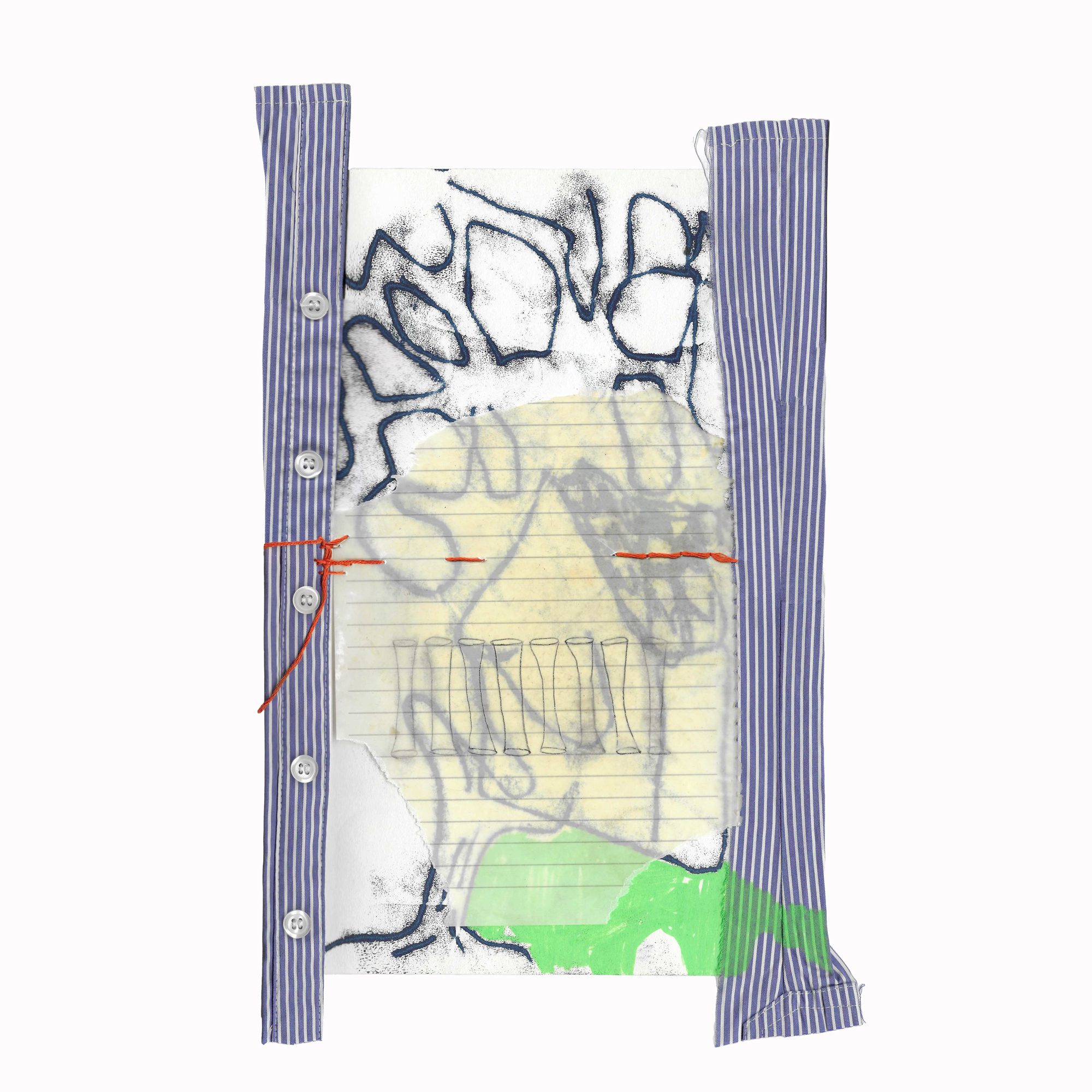
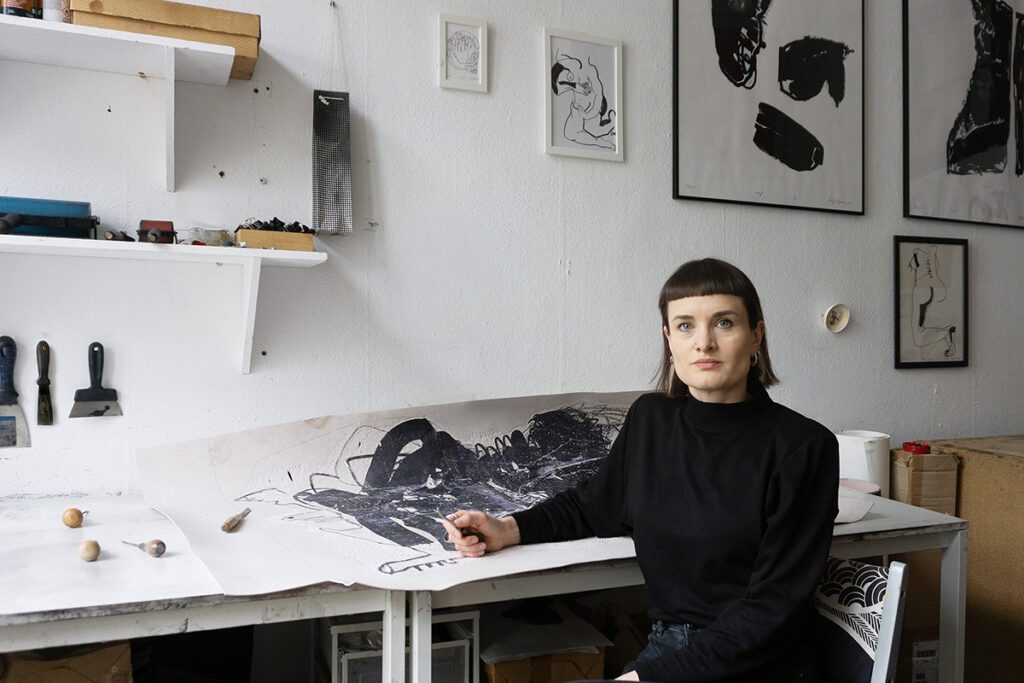
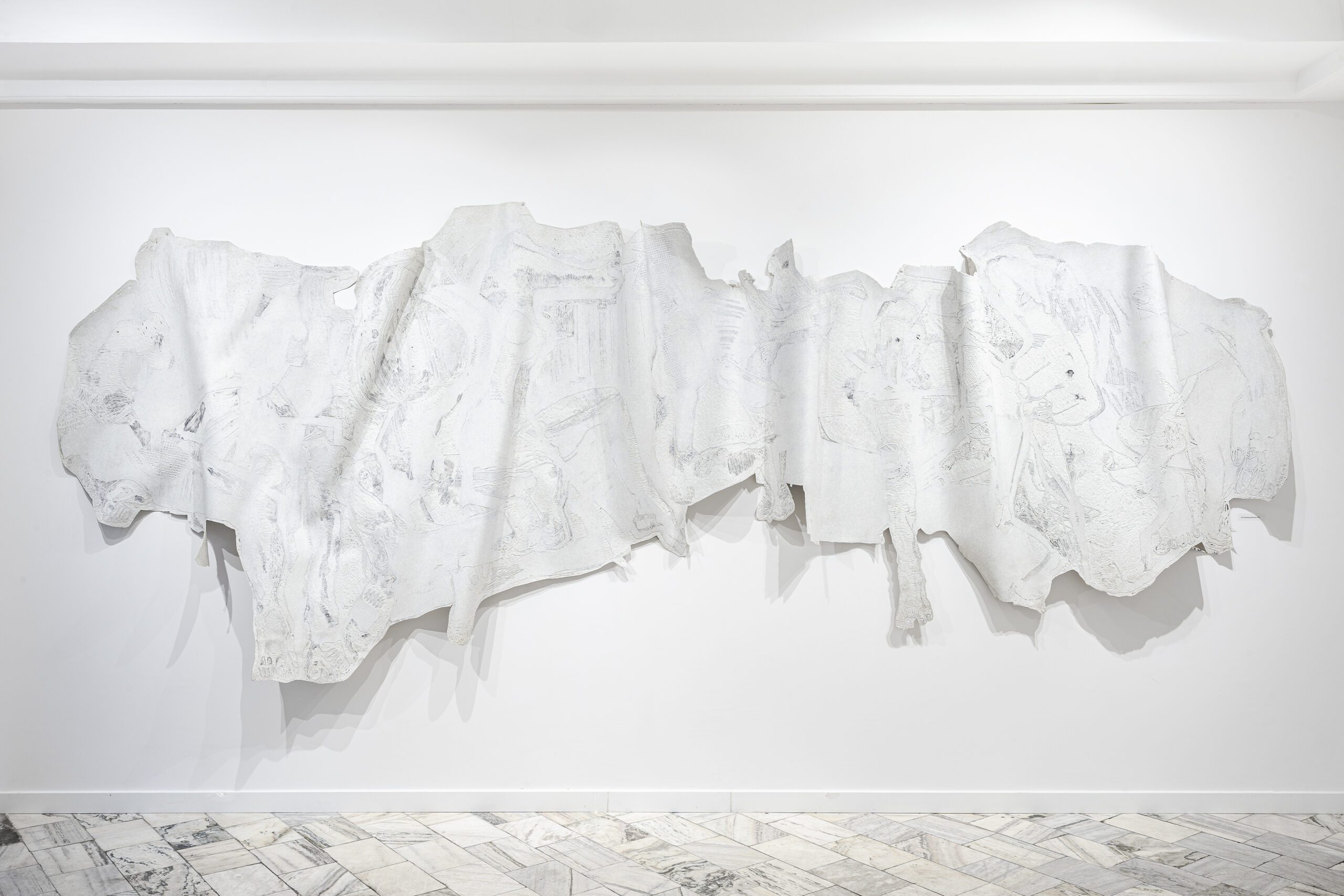
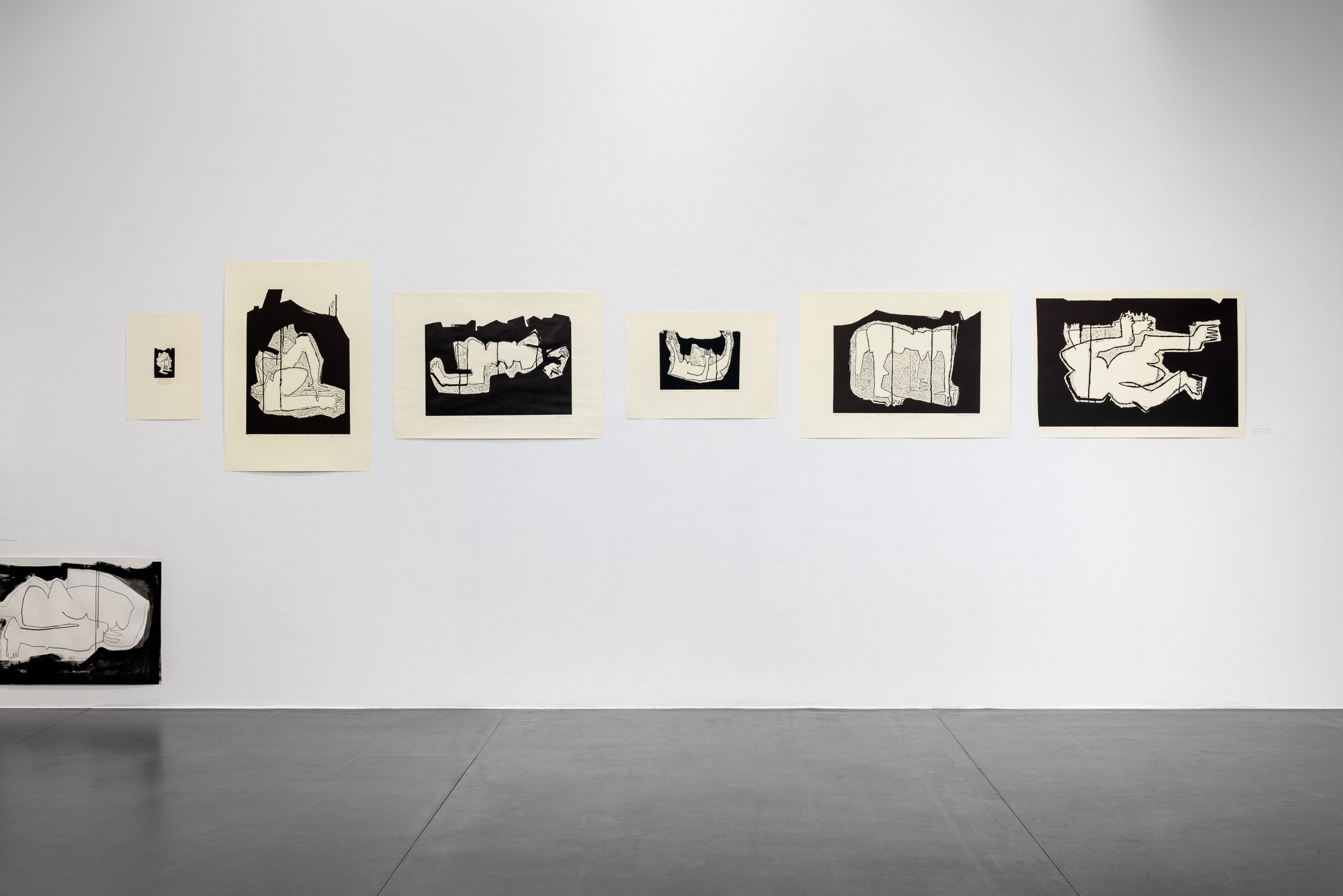
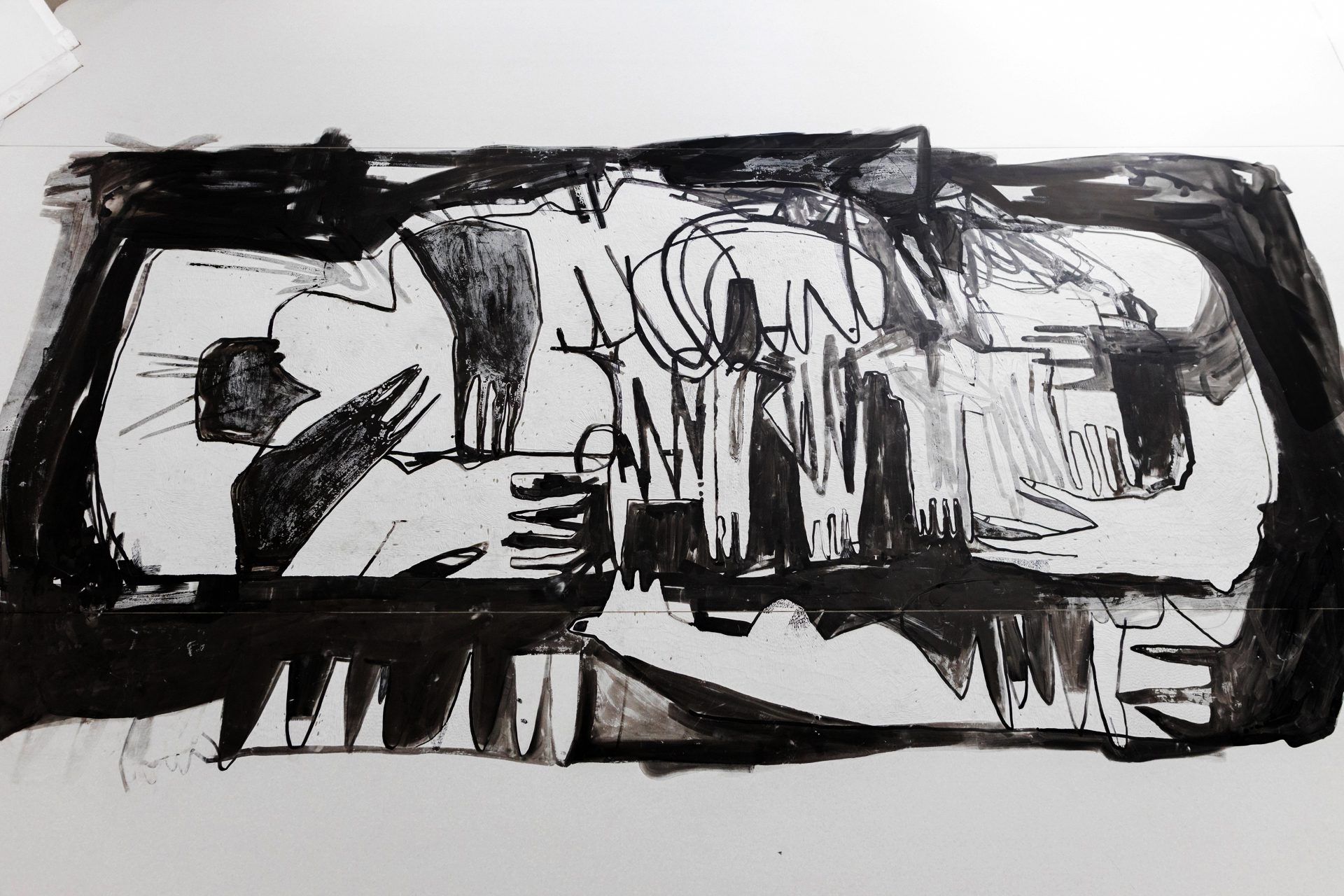
My artistic practice focuses primarily on printmaking techniques, with a particular fondness for intaglio. I simultaneously work in drawing and painting, treating each as a distinct field of experimentation. I am interested in the moment when the medium opens up to space. In my work, this becomes a provocative concept: it can be a theme, a form, a medium, and a content. A key thread in my practice is gesture—understood as a communication code between body and mind. For me, it is a record of the process of thought, movement, and presence. By engaging in dialogue with matter and surface, I explore the limits of my chosen medium, as well as the limits of my own trace. In the creative process, I consciously leave room for what cannot be planned or fully controlled. It is in this zone of unpredictability that the tension between intention and event emerges, allowing for the transcendence of original assumptions and the opening up of new meanings.

gosiakuczerawa@gmail.com

Małgorzata Kuczerawa, born in 2001 in Strzelce Opolskie, is a fifth-year student at the Faculty of Graphic Arts at the Magdalena Abakanowicz University of Arts in Poznań. She primarily works in printmaking techniques. She also works in drawing and painting. She has participated in numerous group exhibitions and won numerous art competitions and scholarships.

Exhibitions and achievements:

– A4 Open call Poznań and Stellenbosch, South Africa, 2025
– International Art Exhibition & Competition Earth’s Whispers Trails of Culture, Sosnowiec, 2025
– Digital Confrontations Wielka Zbrojownia, Gdańsk, 2024

– GSW Spring Salon in Opole, 2024

– Student Painting Triennial in Rzeszów, 2023

– International Glass Drawers Biennial in Warsaw, 2023

– GSW Spring Salon in Opole, 2023

Krzysztof Mętel

I am deeply interested in the creative process, the painterly gesture, and the relationship between painting and extra-pictorial discourses. In my work, I employ montage and appropriation. I often work with salvaged objects—items of uncertain status, such as a sun-bleached military tarp or an illustration in a biometric passport serving as a backdrop for barely discernible tariff stamps.

I enjoy the process of discovering forms that are appropriate for the chosen theme or material. For this reason, my works are often organized into series framed around a particular theme, leitmotif, or formal solution. I am not attached to a single mode of depiction, yet common threads can be traced across seemingly different series.

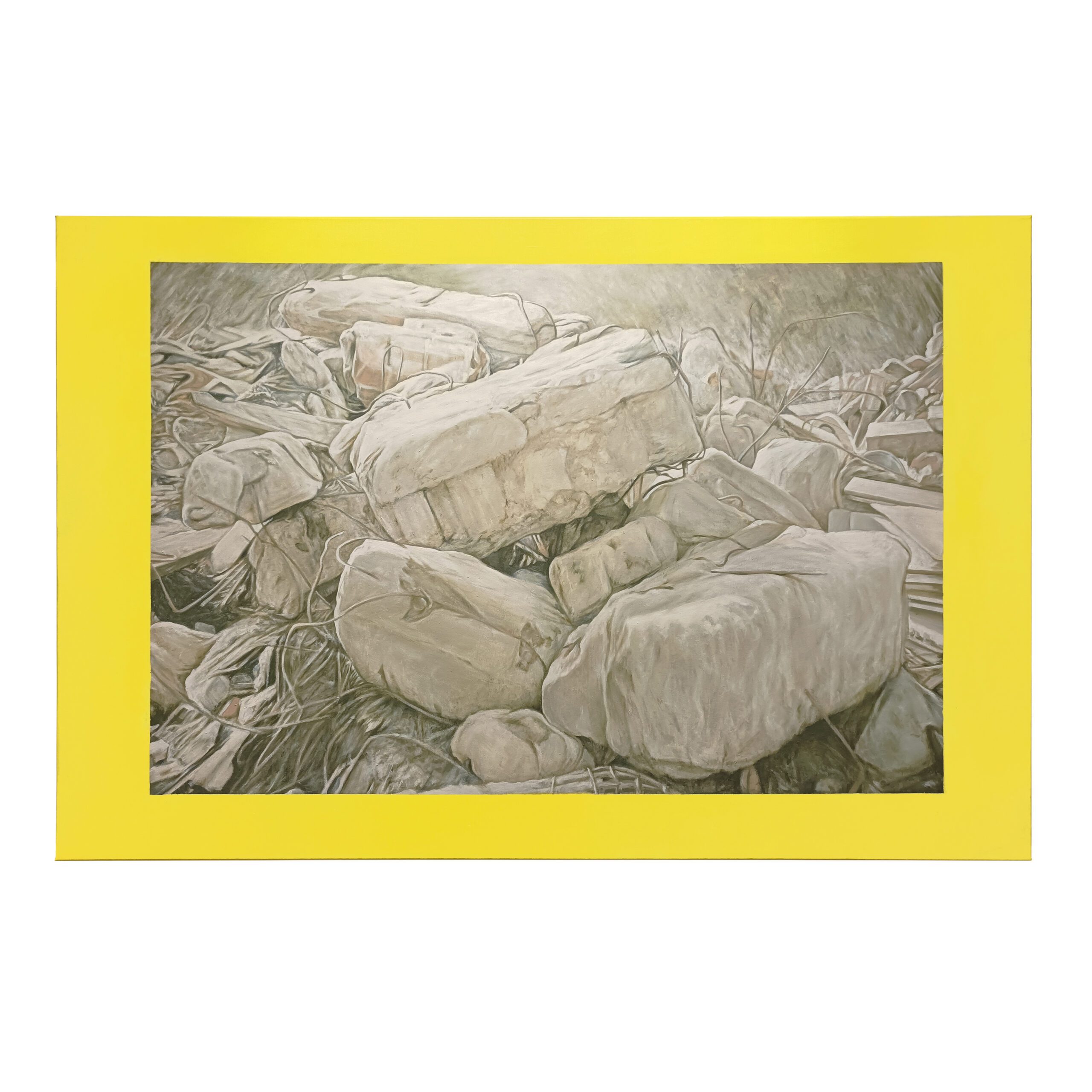
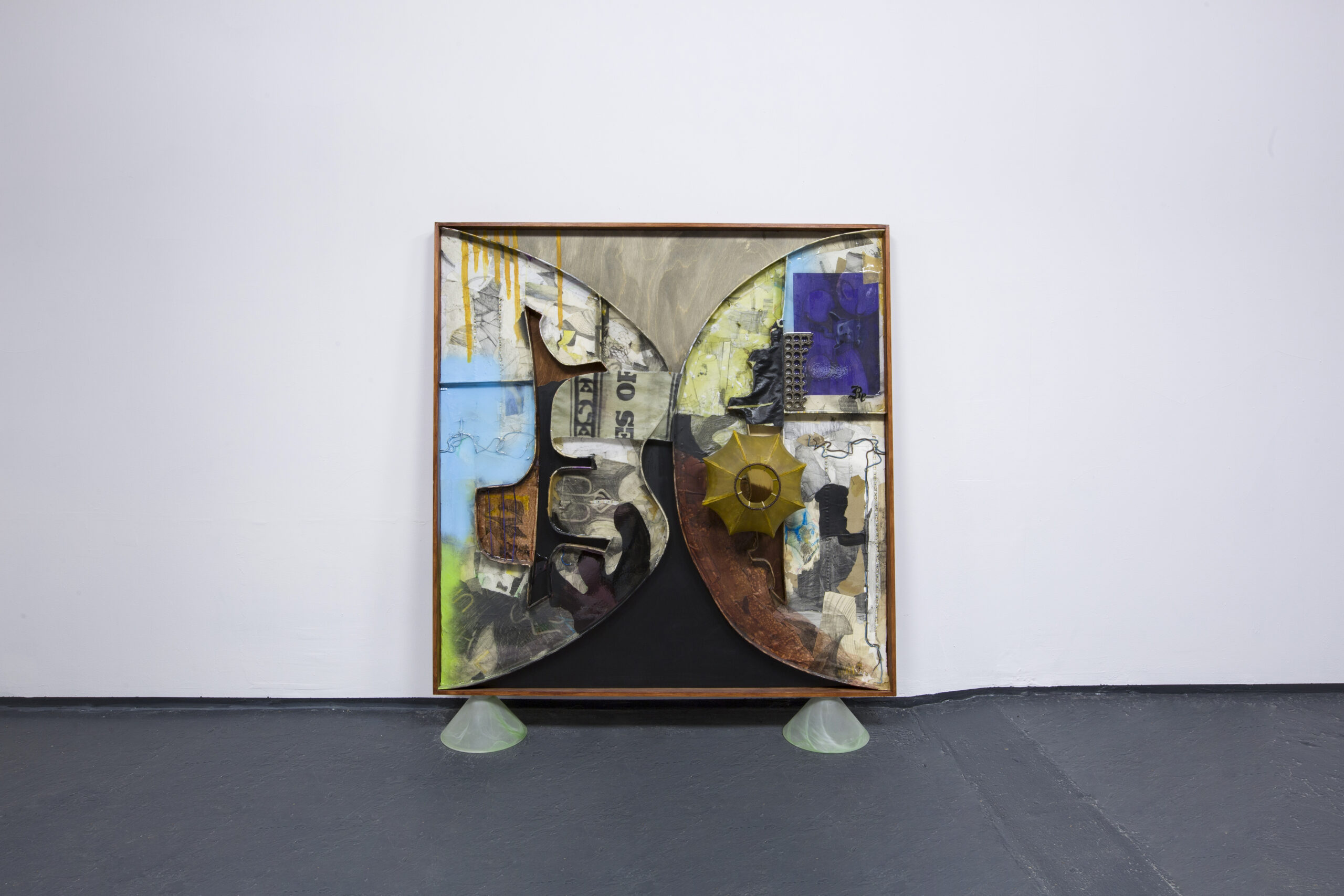
I am moved by the effort of others that has gone to waste. Coming from a city that was repeatedly destroyed and lost many valuable monuments, I have always approached ruins and traces of others’ work with tenderness. Currently, I work with failed and rejected paintings—another stage of engaging with salvaged objects, this time altered by other painters, while my own unsuccessful canvases complete the collection. By intervening in their shape, format, or composition and adding further layers of paint—while always allowing traces of the original solutions to remain visible—I reach a point where unstable constructions begin to stabilize.

A key reference for this practice is the sport I once pursued competitively. I compare the process of confronting works affected by failure to a relay race: a second attempt after an initial failure, or scoring a goal in added time. My recent works explore themes shared by both sport and art: spectacle, success and failure, discipline, competition, and arbitrage.

My practice is characterized by a strong contextualization of the subjects I address and a focus on what usually lies at the periphery of vision, easily overlooked. I value irony and emphasize the intertextual nature of my paintings, while also questioning authorship, originality, and the uniqueness of the artwork.

krzysiek.m.metel@gmail.com

Krzysztof Mętel (b. 1993) is a painter and a PhD graduate of the University of the Arts in Poznań. During his studies, he participated in a student exchange at Shanghai Normal University. His first solo exhibition, entitled Anaesthetics, was held in a rented doctor’s office at a local public clinic in Plac Kolegiacki, Poznań. He was a resident artist at the Centre for Contemporary Art in Gdańsk in 2019 and, together with Mateusz Piestrak, co-founded the artist-run space Pani Domu (The Lady of the House) in 2021.

Mętel is the author of the book Każdy kończy, kiedy mu się podoba (Everyone Finishes When They Please), published by the Contemporary Art Gallery in Opole and Disastra Publishing in 2024. The book is divided into two parts: the first features texts on his latest series of works, a catalogue of works, and photographs from exhibitions; the second contains nine in-depth interviews conducted by Mętel with prominent younger-generation artists, focusing on their use of montage, collage, and assemblage in practice.
He is currently employed at his alma mater.

Anna Myszkowiak

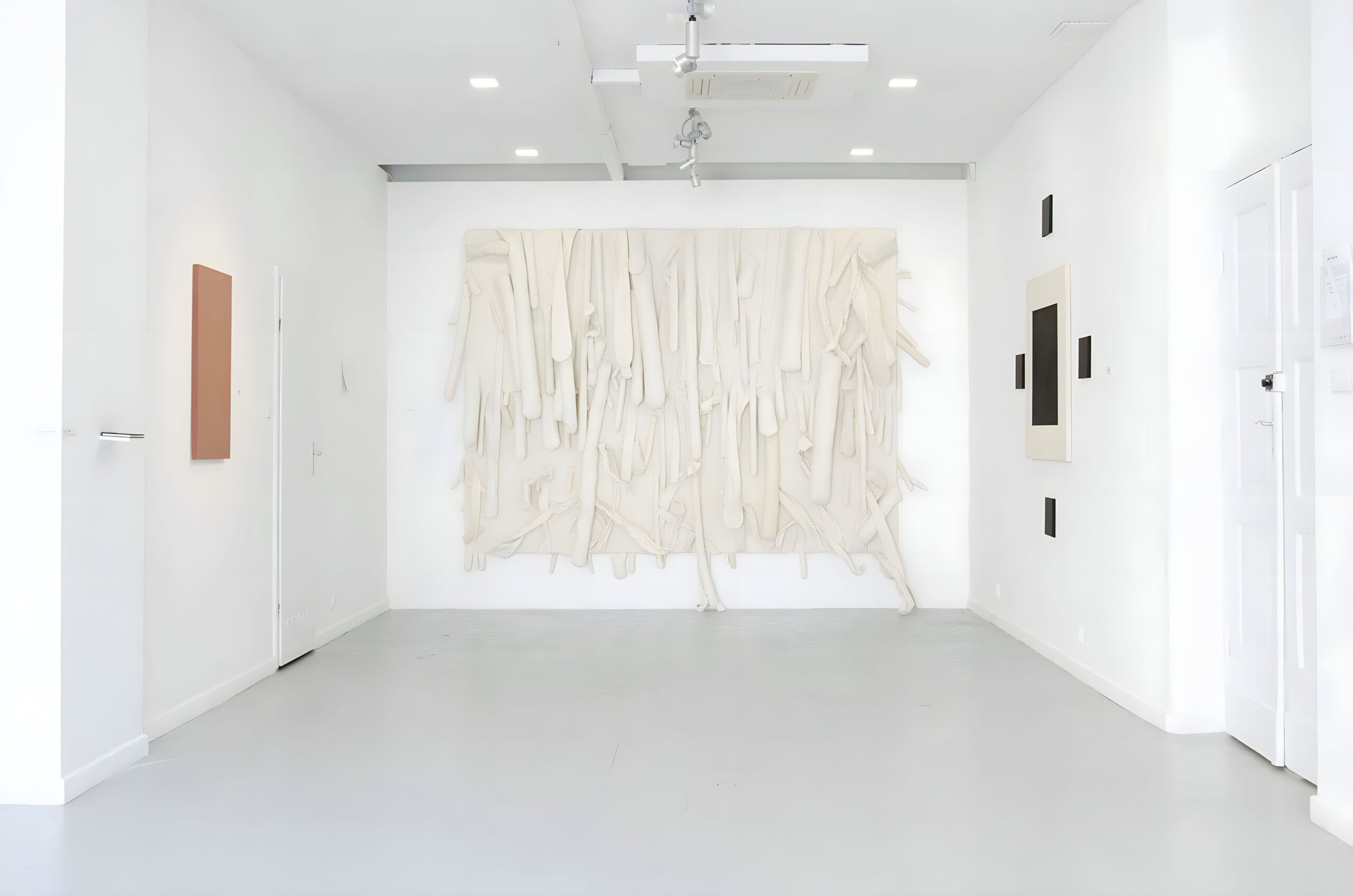
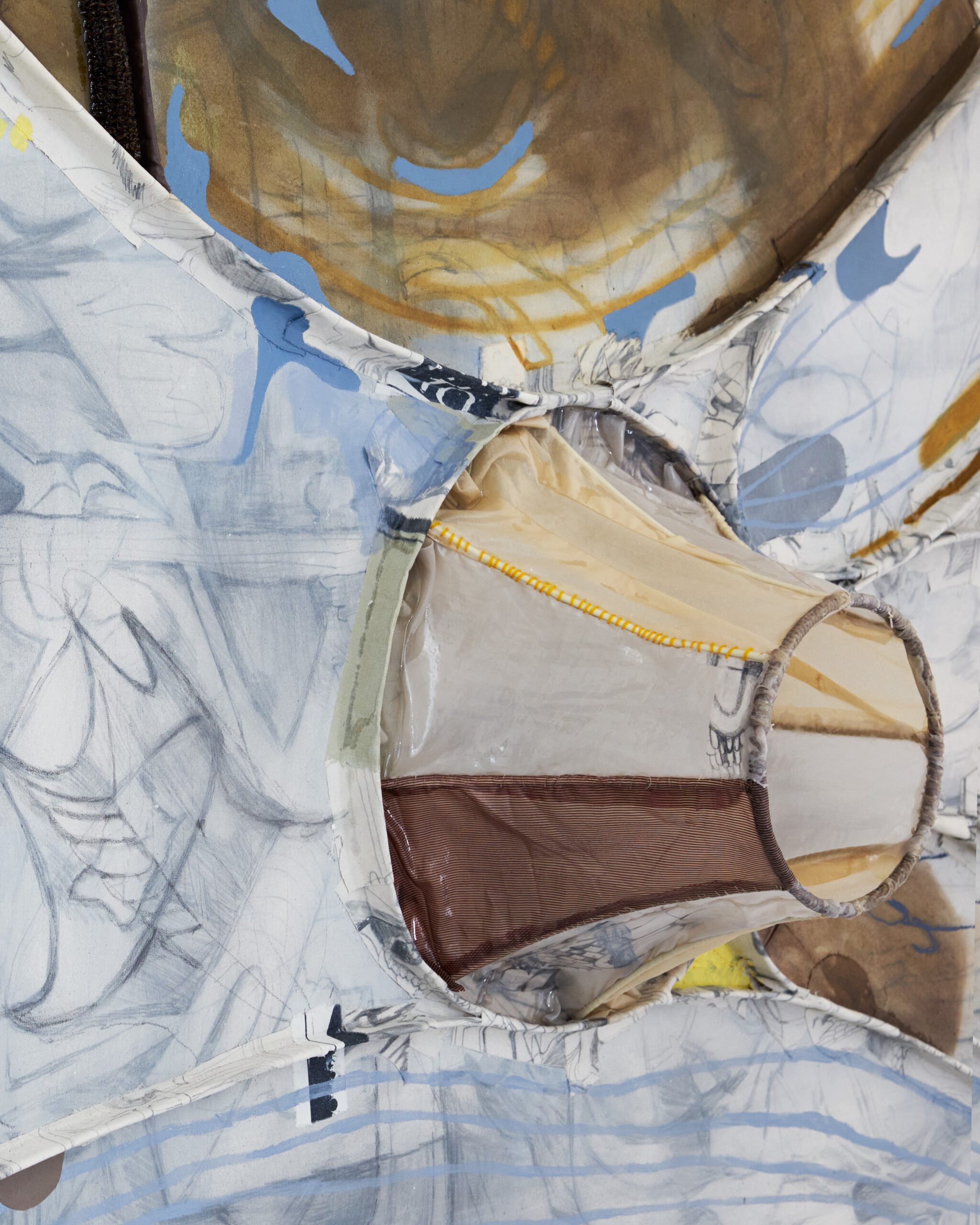
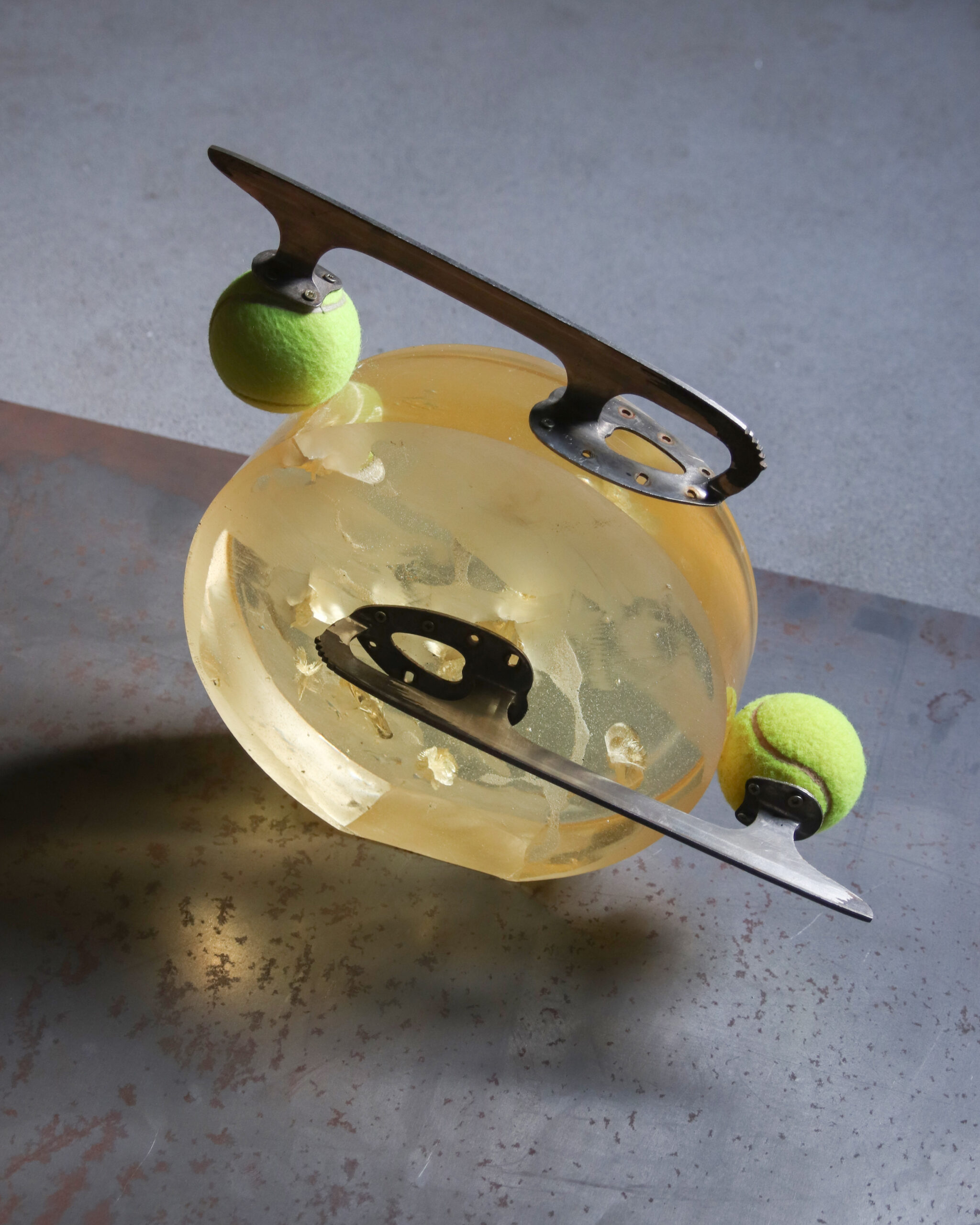
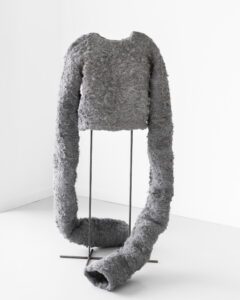
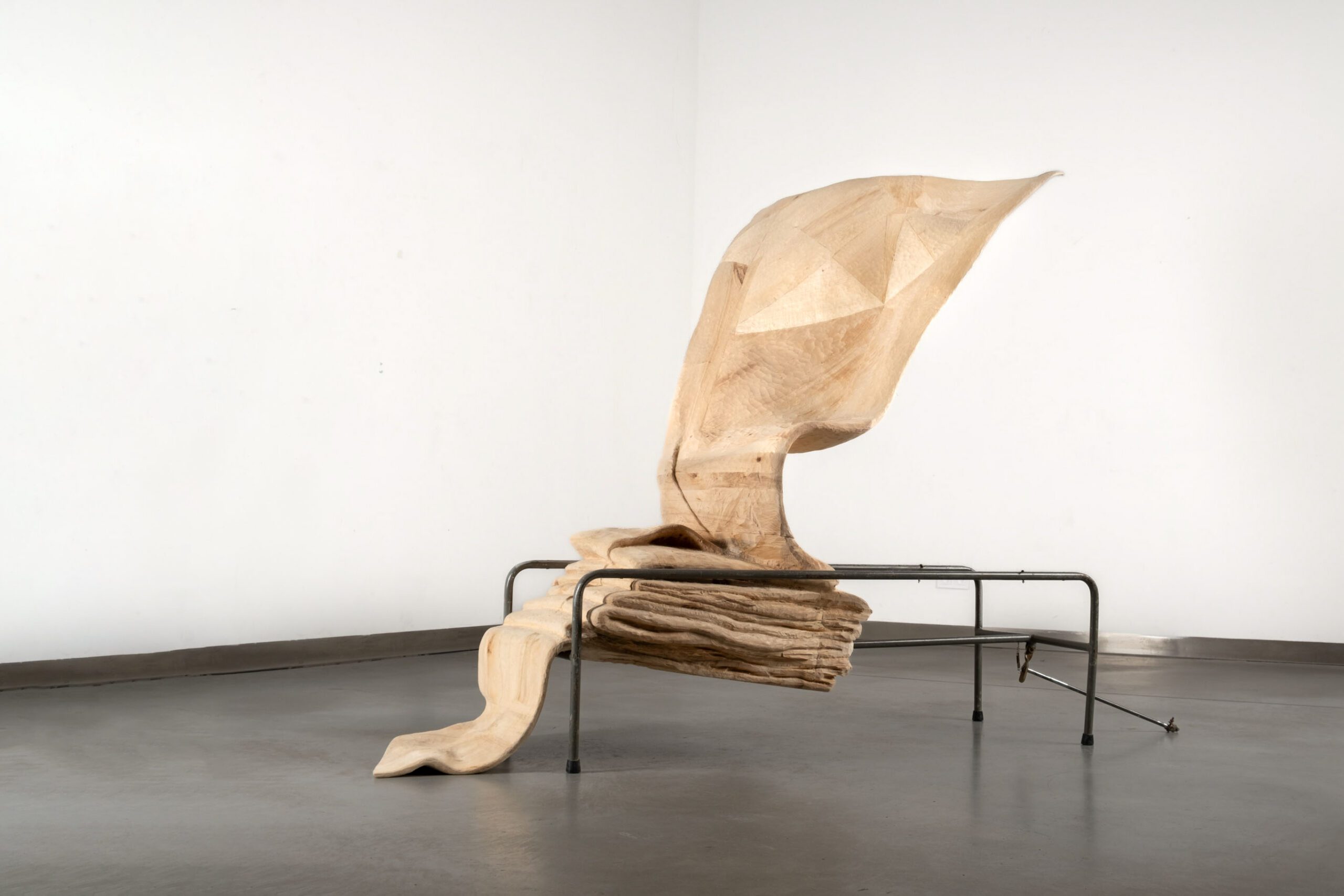
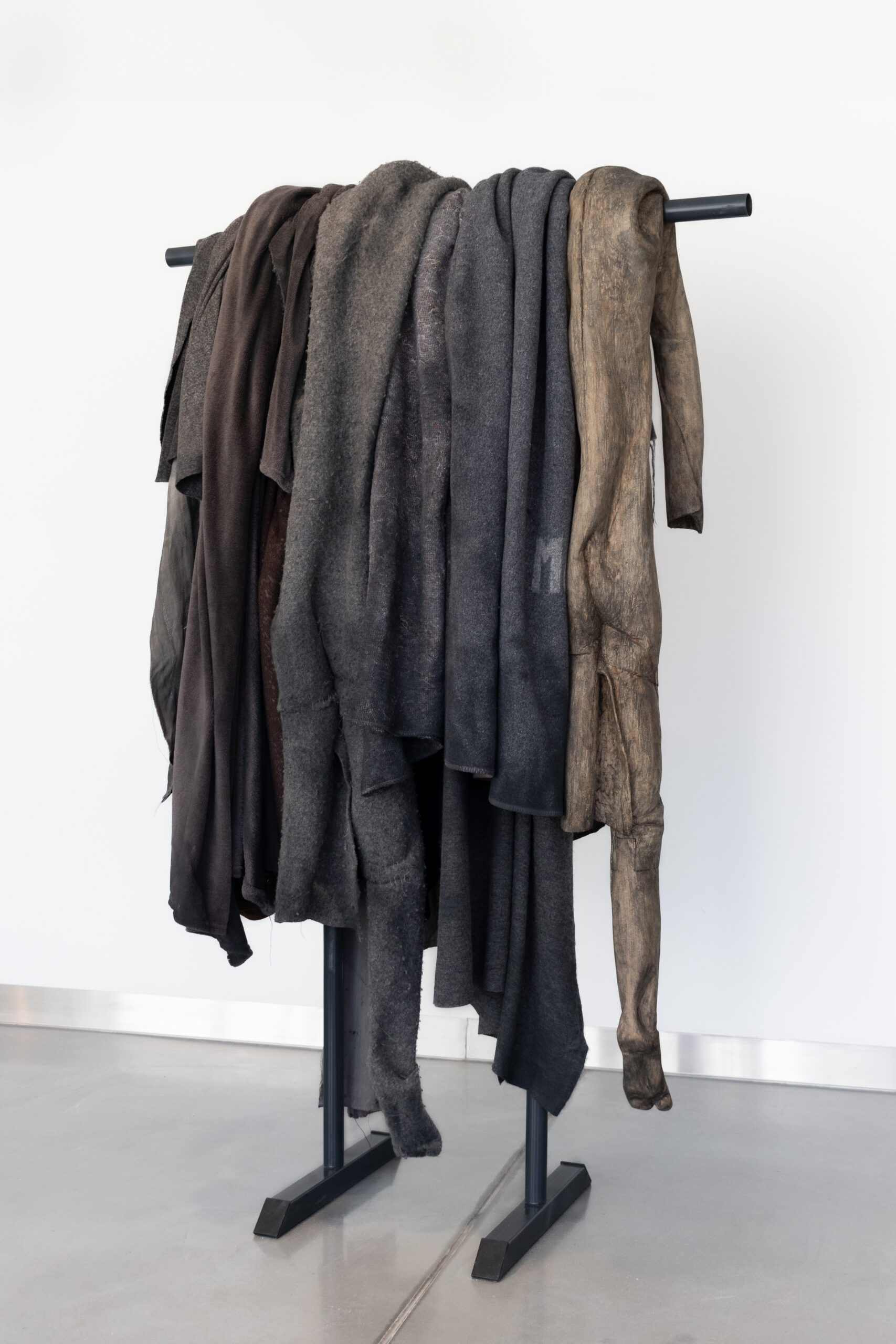
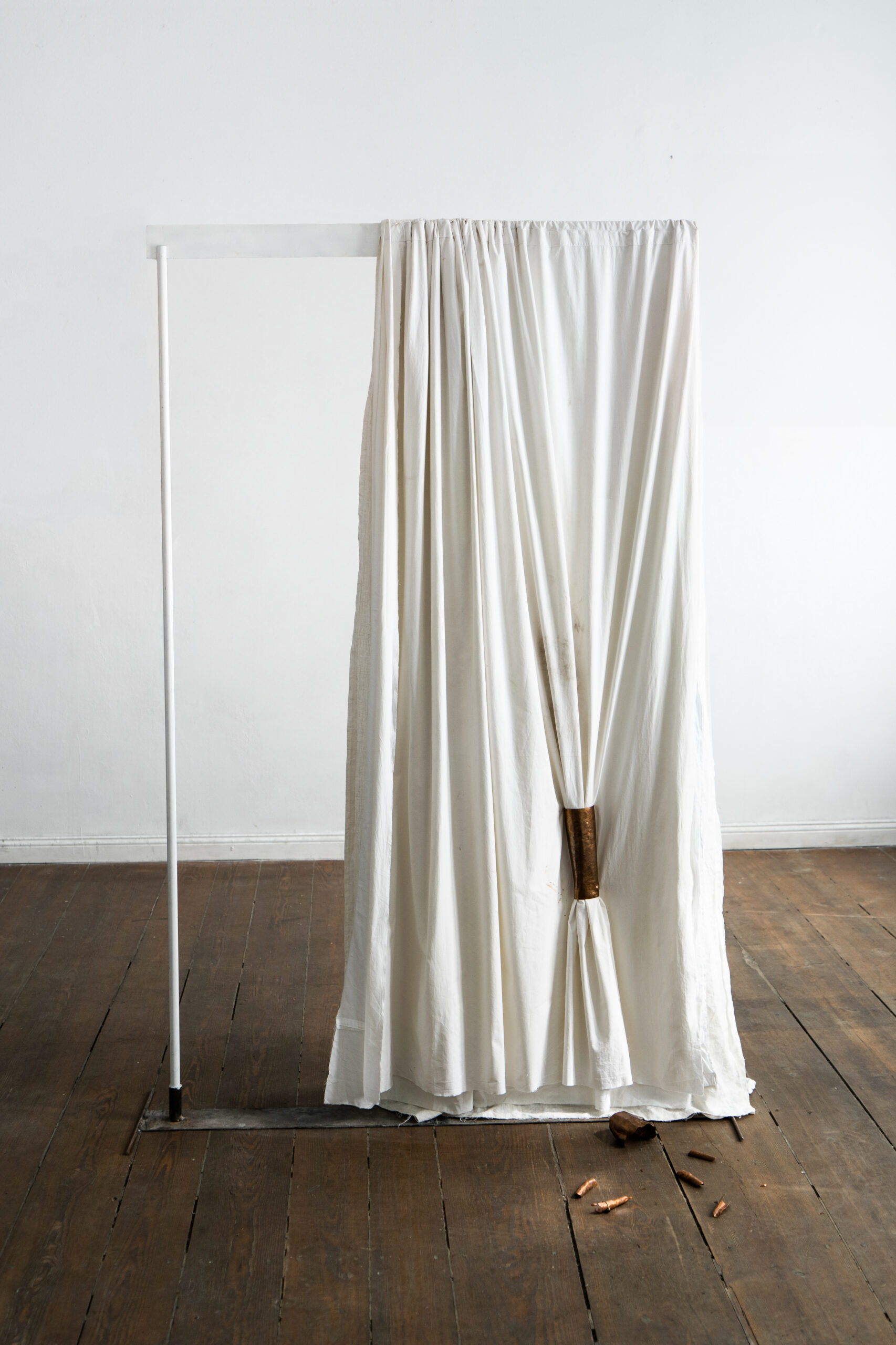
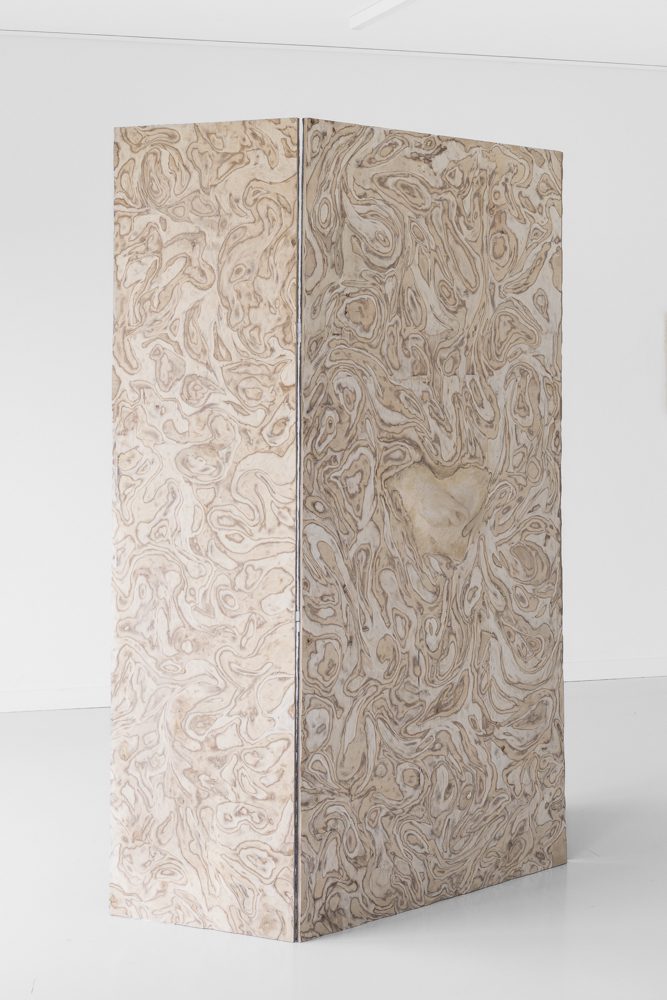
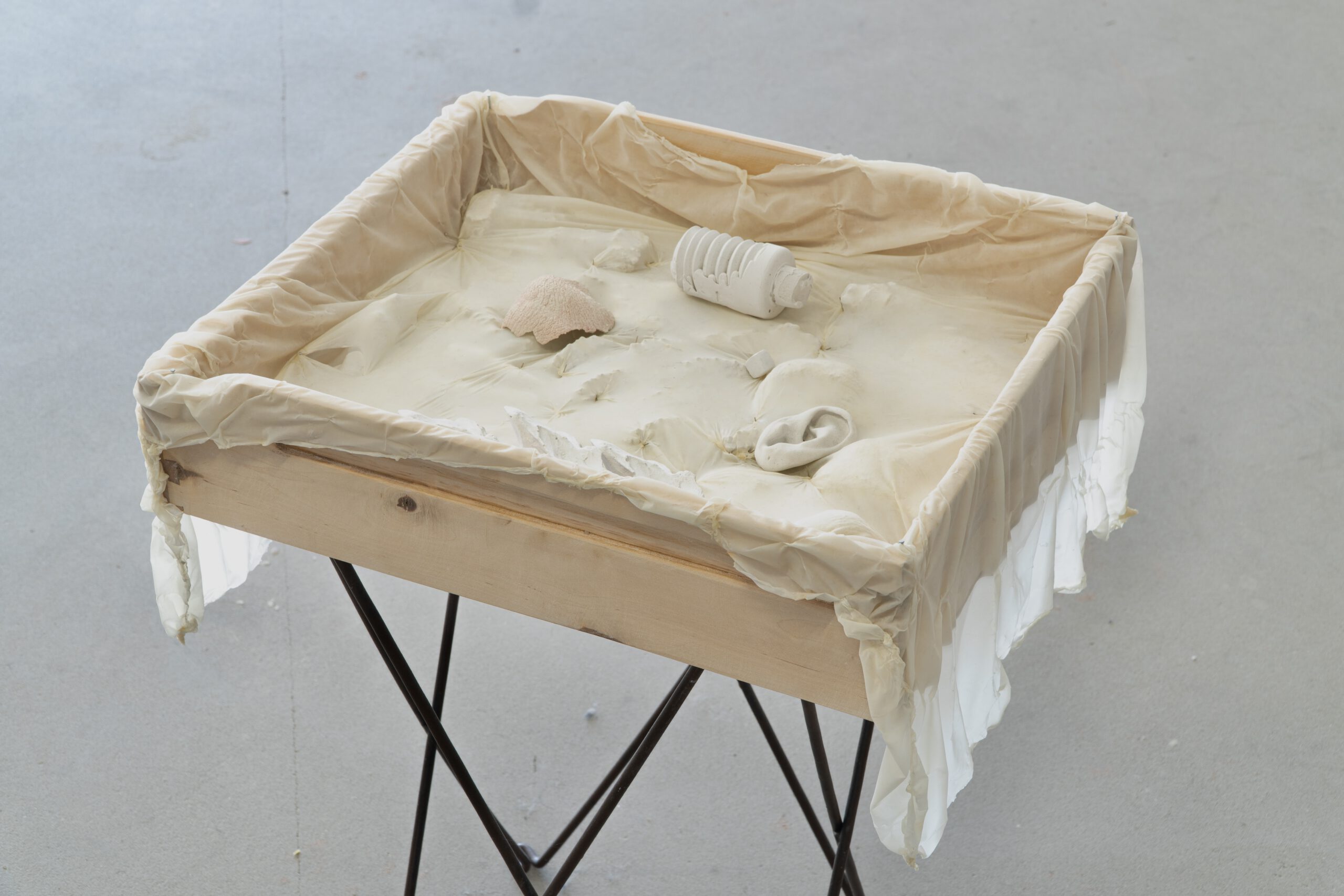
Myszkowiak’s work arises from a sphere where sculptural craft, corporeality, and everyday experience coexist and enter into dialogue. The artist employs classic sculptural materials – wood, metal, and plastics – combining them with everyday objects, allowing her to tap into their semantic resources and evoke new meanings and associations. She strives to express herself through materials and their physical properties, as well as cultural significance.
A central thread in her practice is the exploration of personal experiences, such as living with atopic dermatitis or observing one’s own existence in the world, which become a starting point for reflection on discomfort, delight, and corporeality. Her works – sculptures, installations, and drawings – are the result of intense impressions or reflections, often operating within a field of ambivalence, provoking both anxiety and delight.
The artist works within a rich network of cultural references, drawing inspiration from literature, poetry, and music, which become an integral part of her practice. The titles of her works sometimes come from literary texts or musical pieces, weaving an additional semantic dimension into the work. An example is the sculpture I am here and yet I am not here (PL: Jestem, a trochę mnie nie ma) whose title is taken from Joanna Longić’s piece mięsień (Tęskno), and its visual structure references the nomenclature of the musical world – visually loud versus deaf (obverse/reverse).
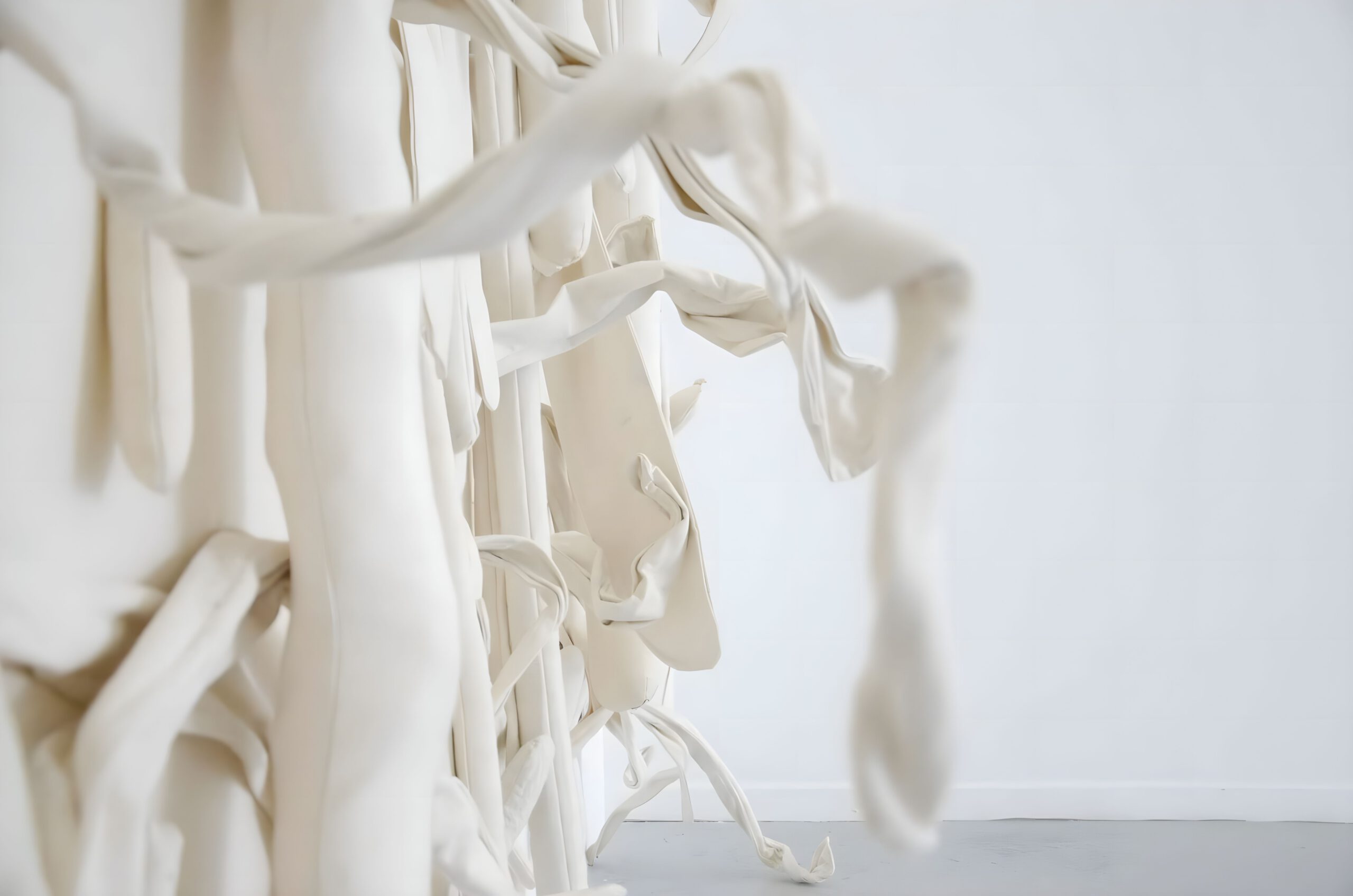
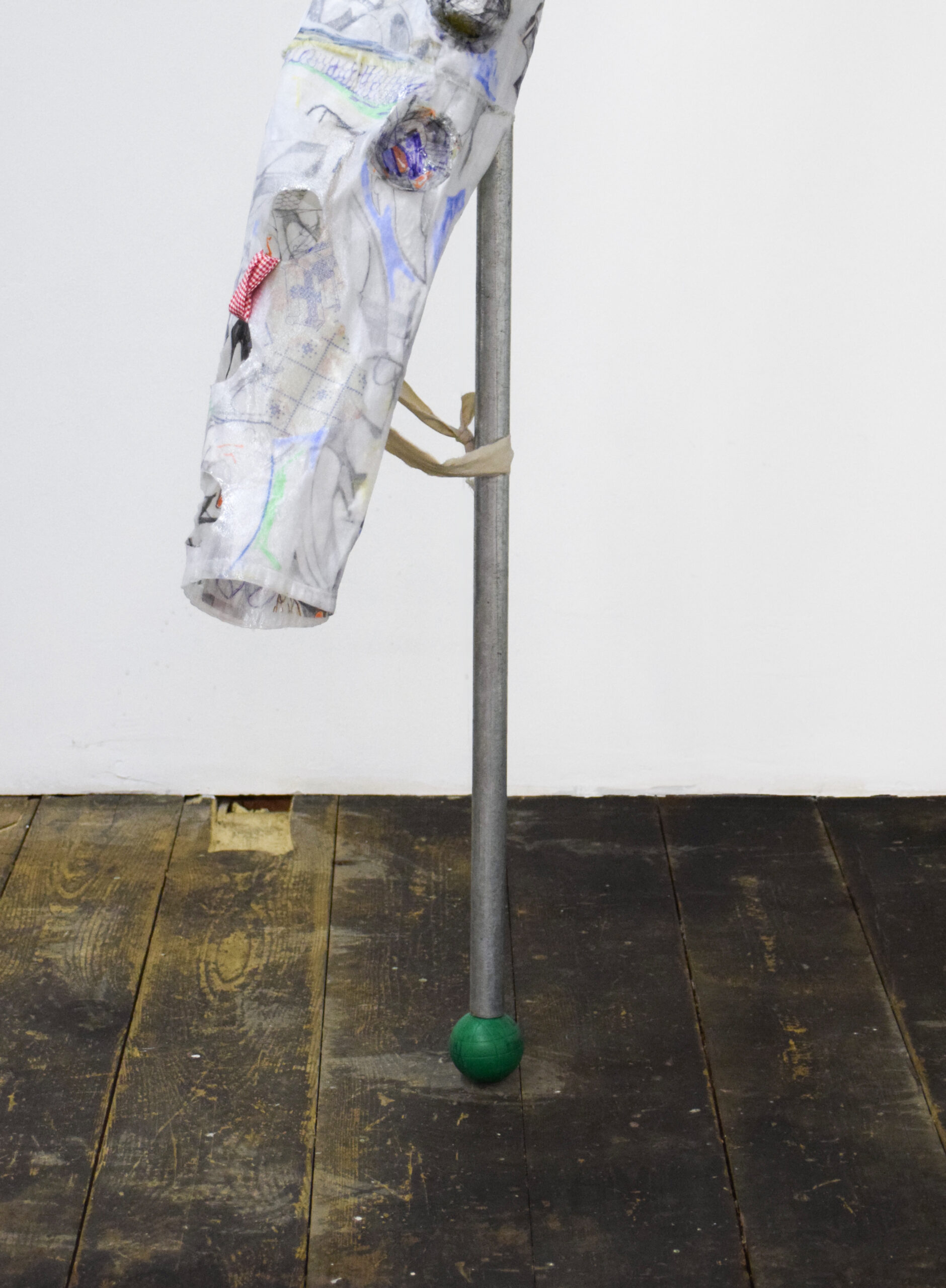
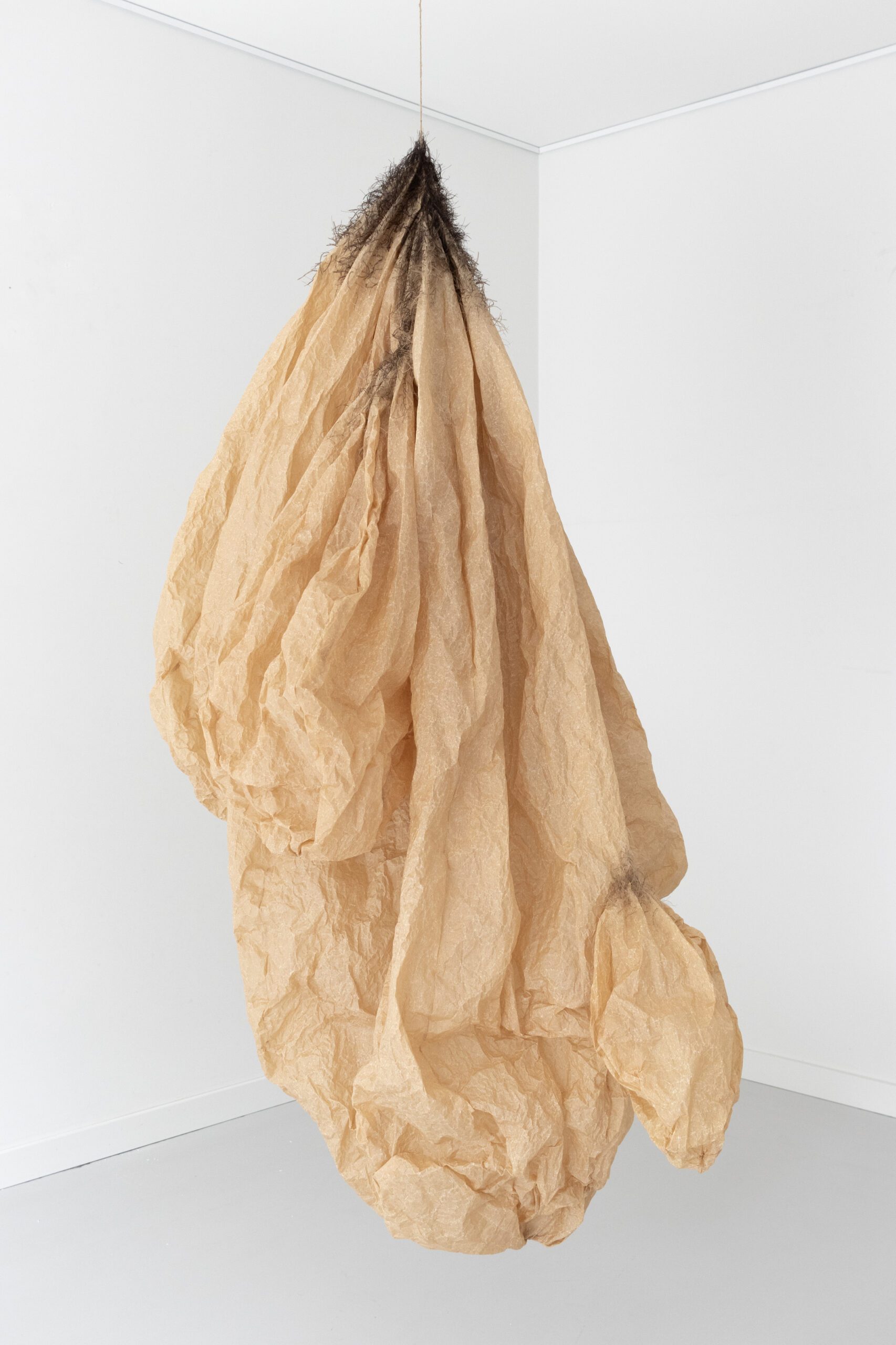
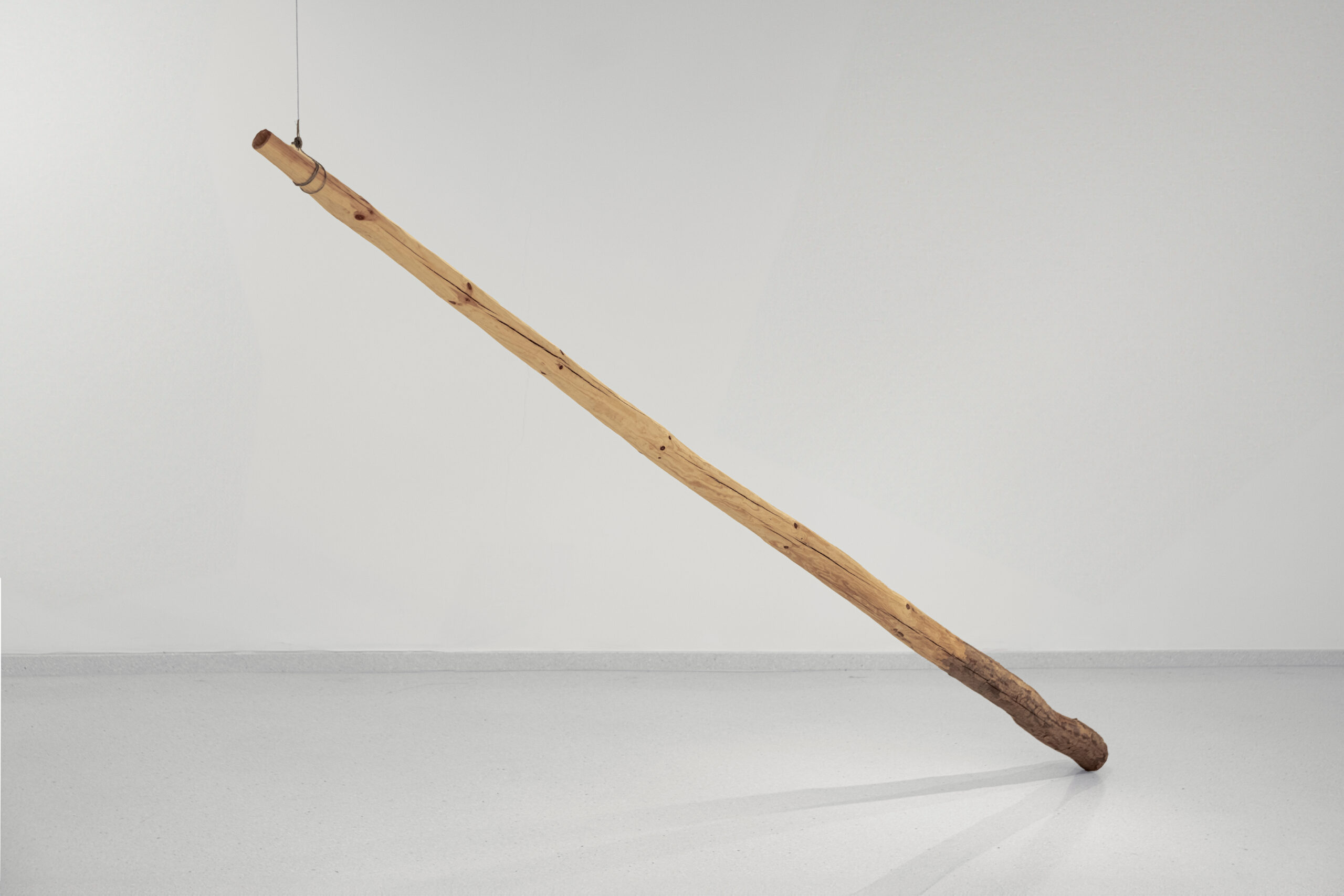
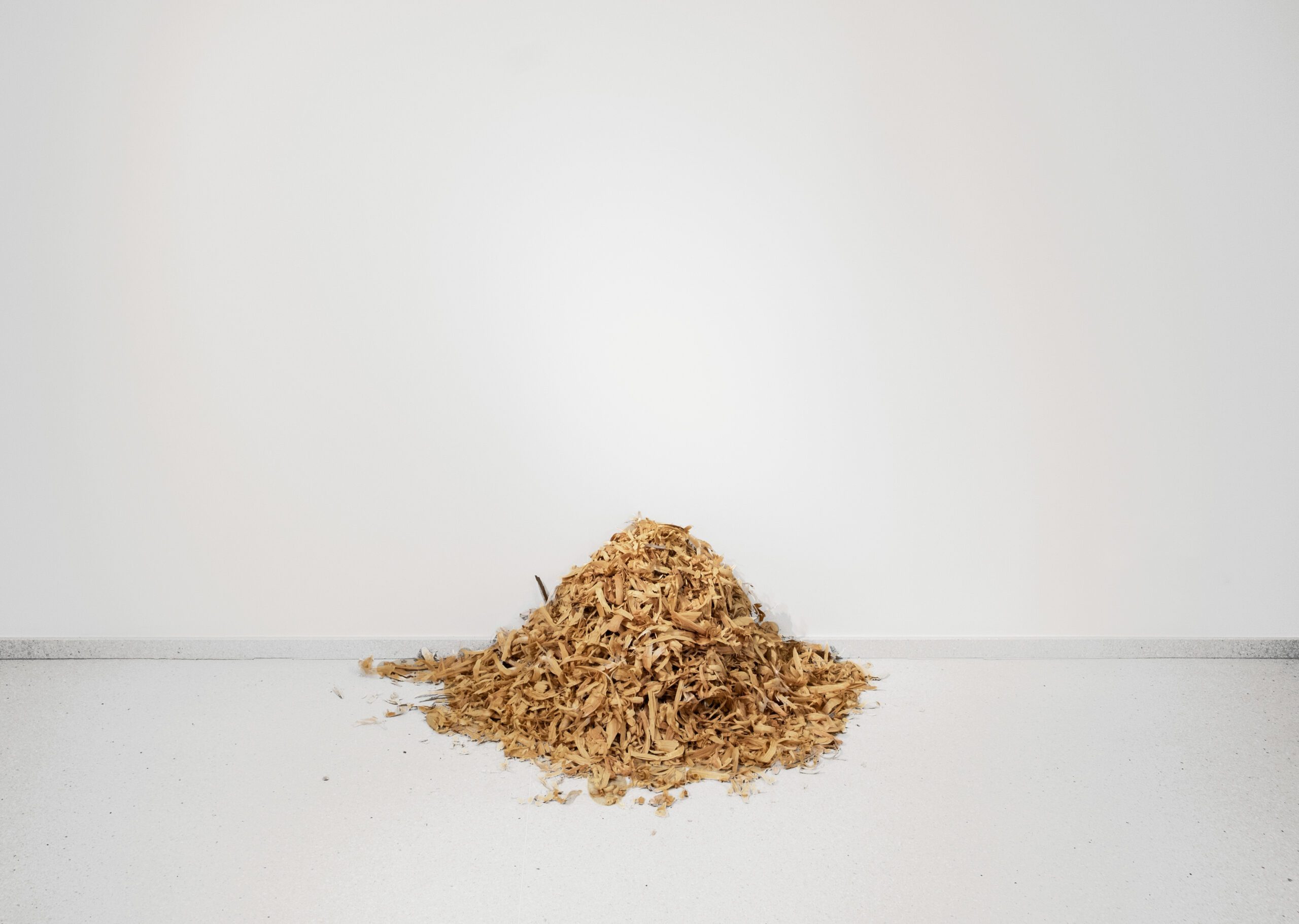
The artist’s practice places great emphasis on craftsmanship as a space for experimentation and a carrier of meaning. Sculptural matter is not merely a raw material for forming objects, but a medium. Myszkowiak searches for the most appropriate creative method for a given task, which leads her to frequently explore, but also to set aside previously mastered techniques. She weaves metal, sews paper, shreds wood – all of this seems necessary and appropriate in the context of her work; it also significantly influences the sensory and intuitive reception of her sculptures.

myszkowiakanna@gmail.com

Anna Myszkowiak (born 2000, Biłgoraj) is a sculptor who also creates objects and installations. A graduate of the Faculty of Sculpture at the University of the Arts in Poznań and of the ZSP in Lublin (specialization in woodcarving). Student of Cultural Studies at Adam Mickiewicz’s University. Her works refer to the broadly understood being in the body, the issues of discomfort and delight. She uses both classic sculptural materials such as wood or metal as well as everyday objects, e.g. blankets, sheets, baking paper, objects found on the street. She likes it when her works evoke ambivalent feelings, she calls her work impressionistic. Winner of the Grand Prix at the 16th Autumn Art Salon LOOSTROO (2023) and the main prize winner at The V Textile Art Biennal in Poznań (2025), scholarship holder of the Ministry of Culture and National Heritage for artistic achievements (2024, 2019). She collaborates with the Molski Gallery.

Piotr Owczarek

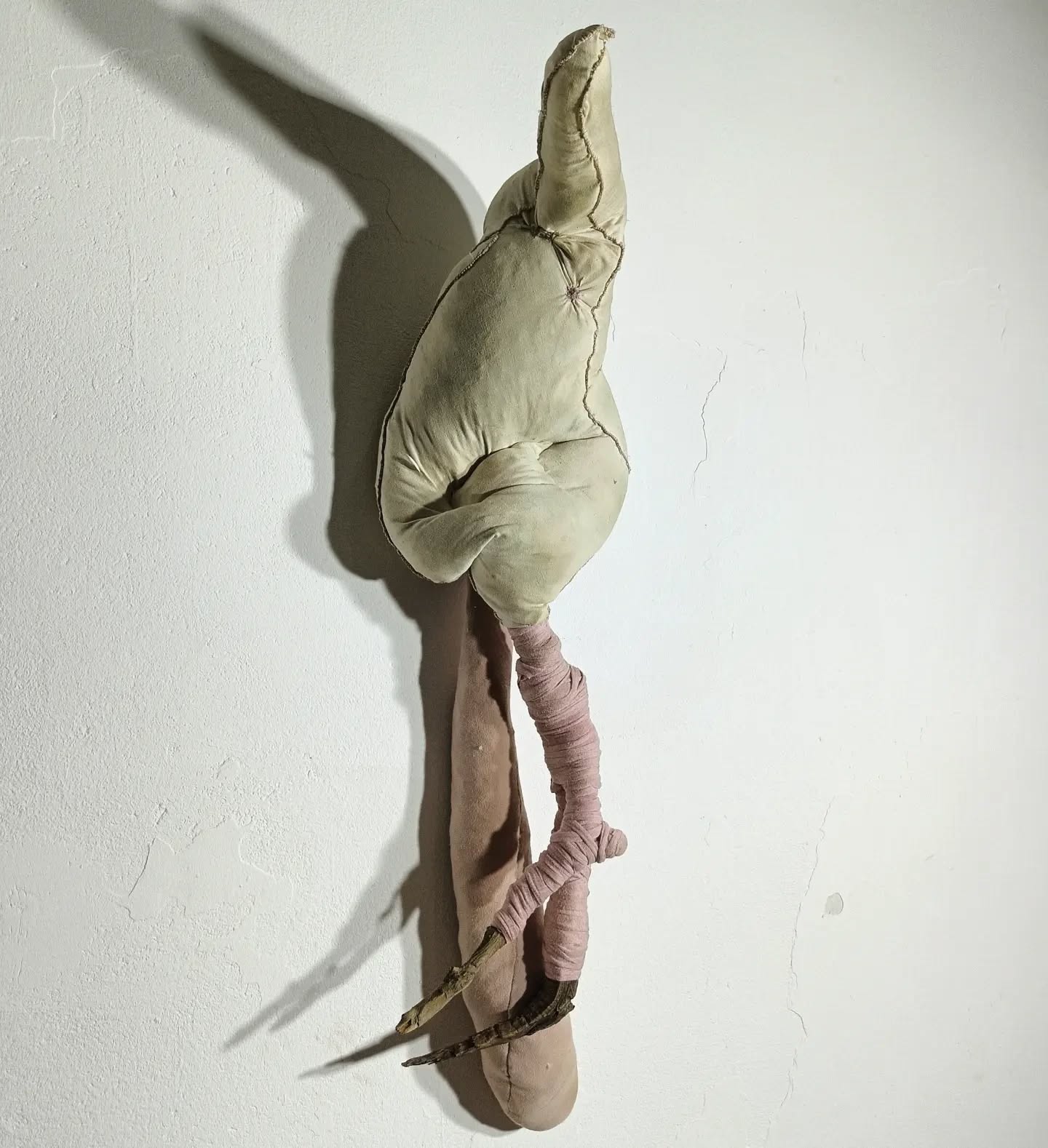
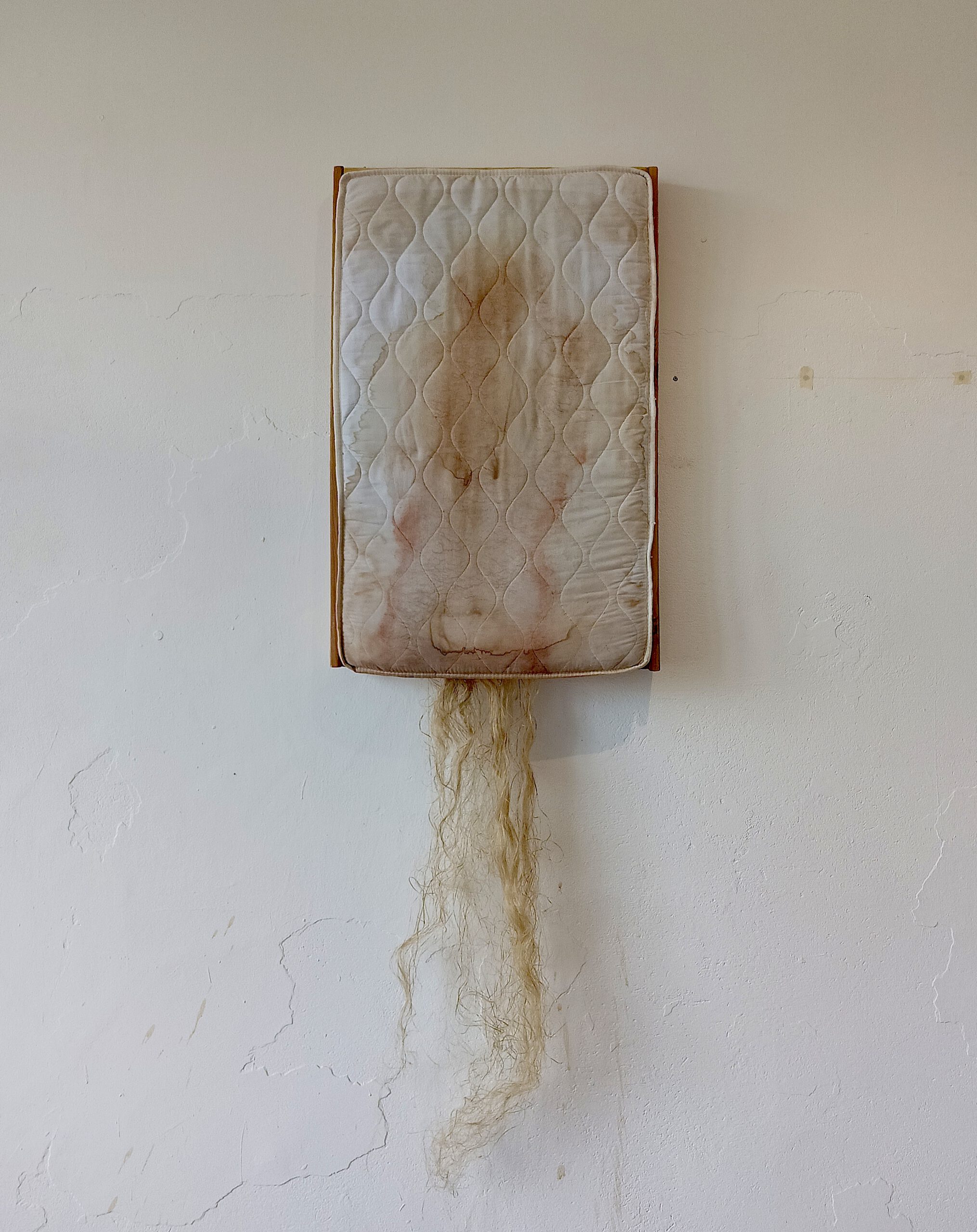
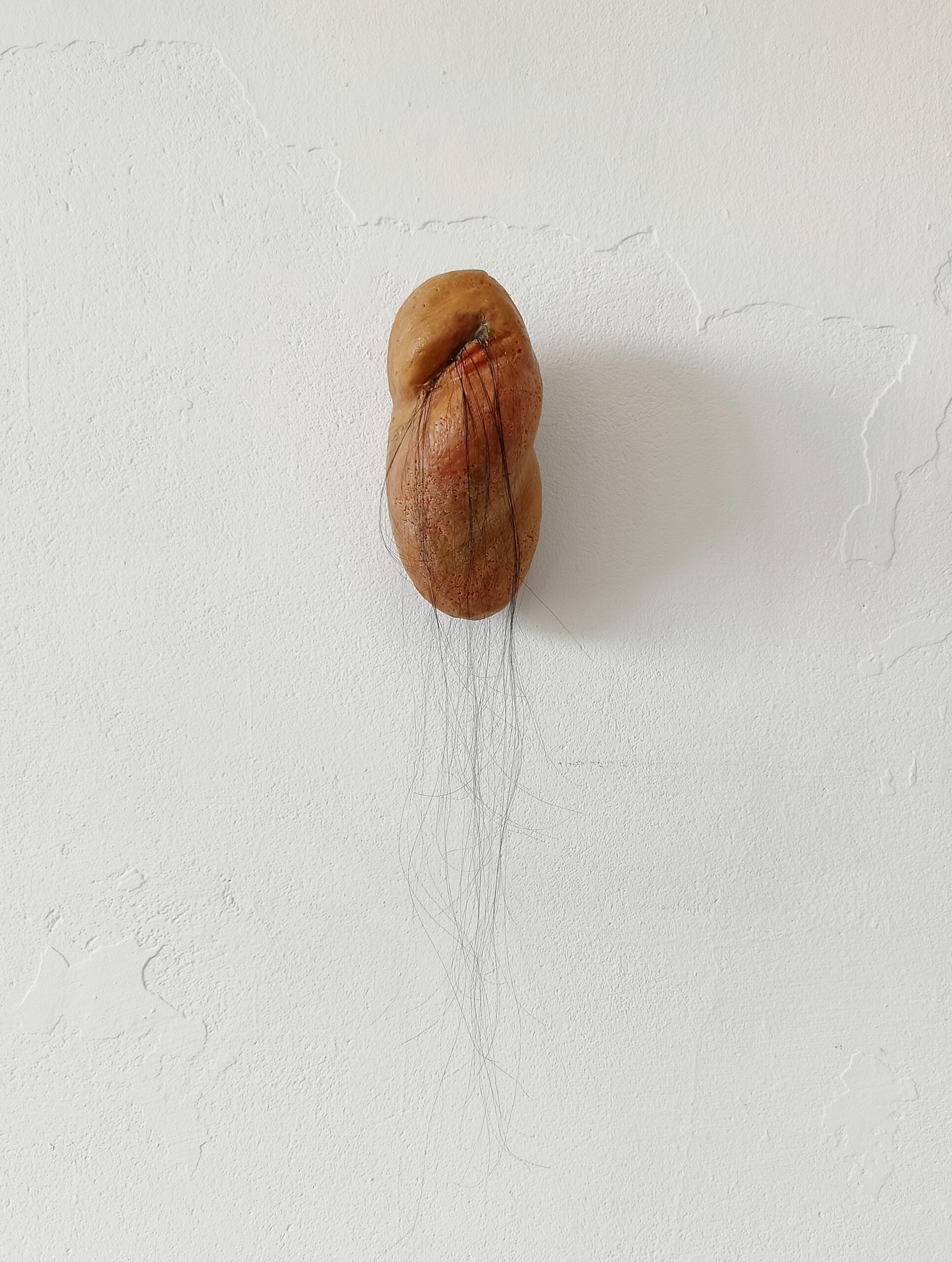
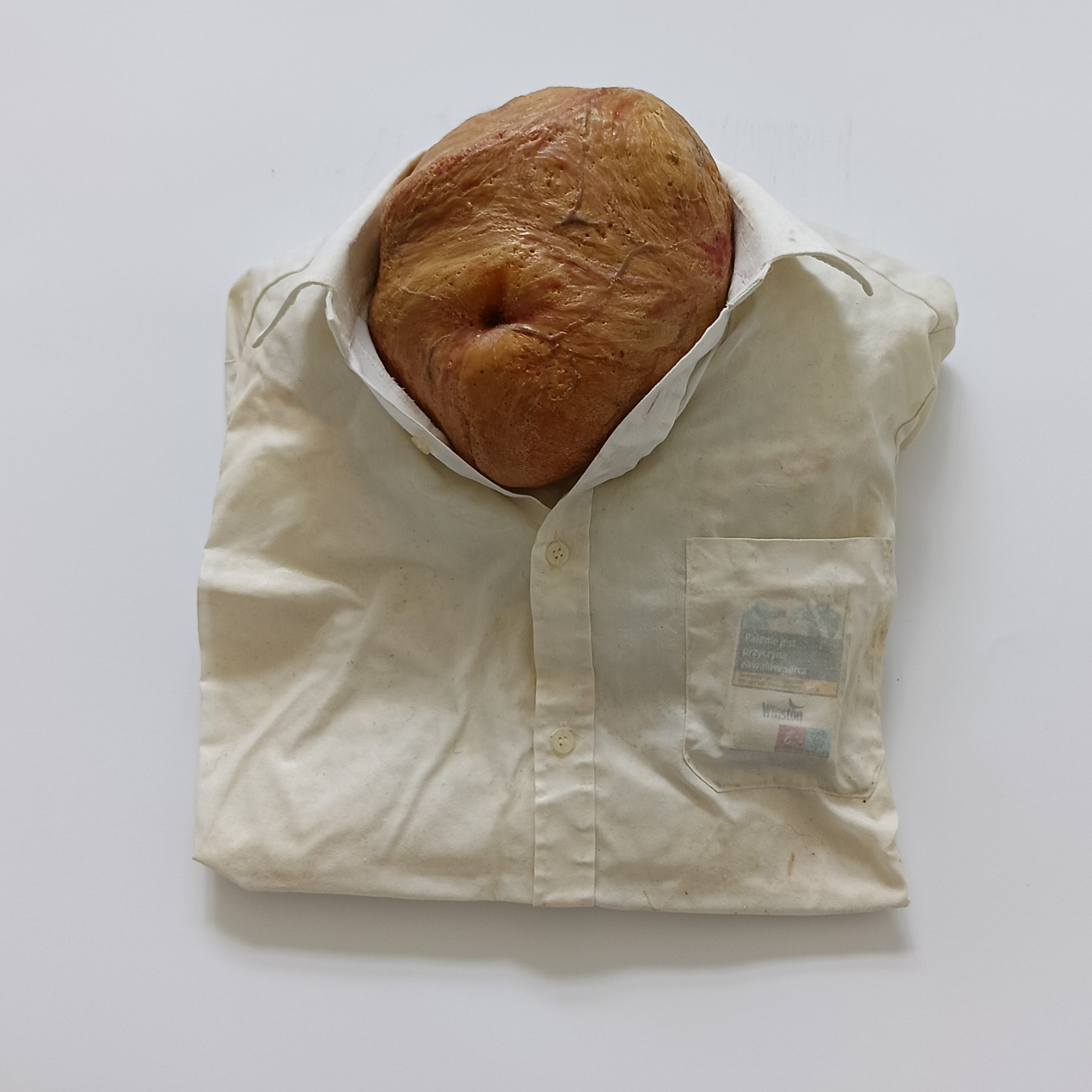
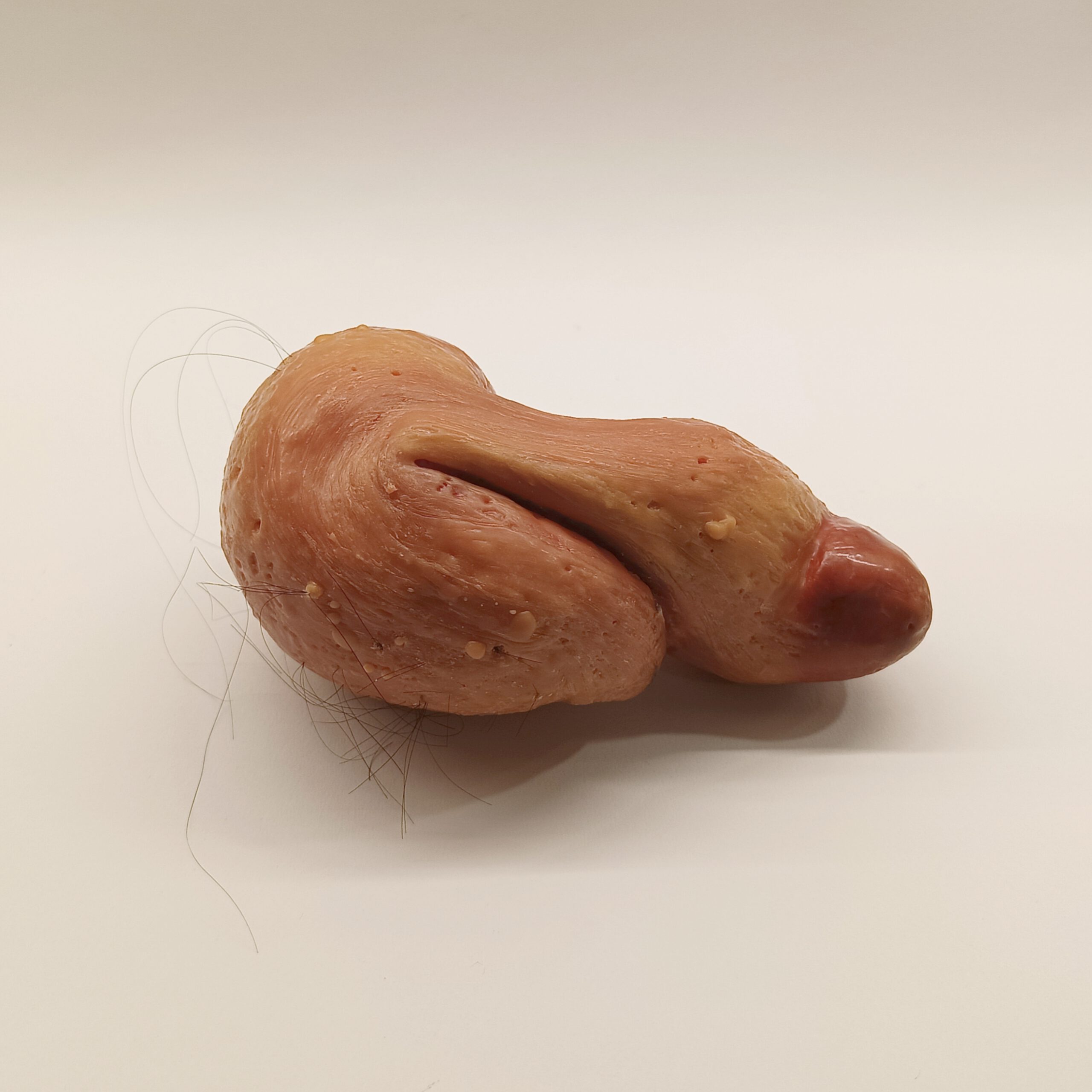
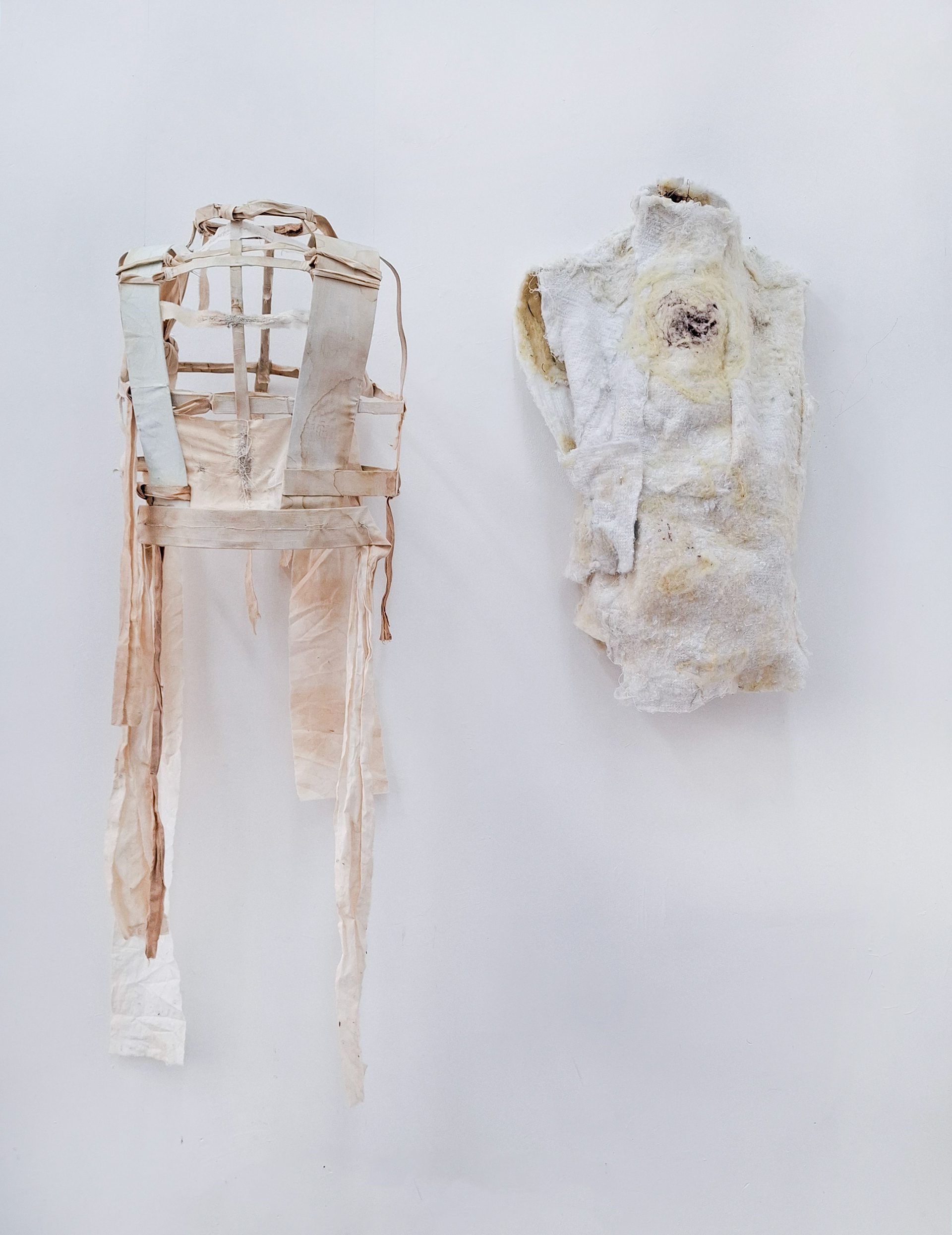
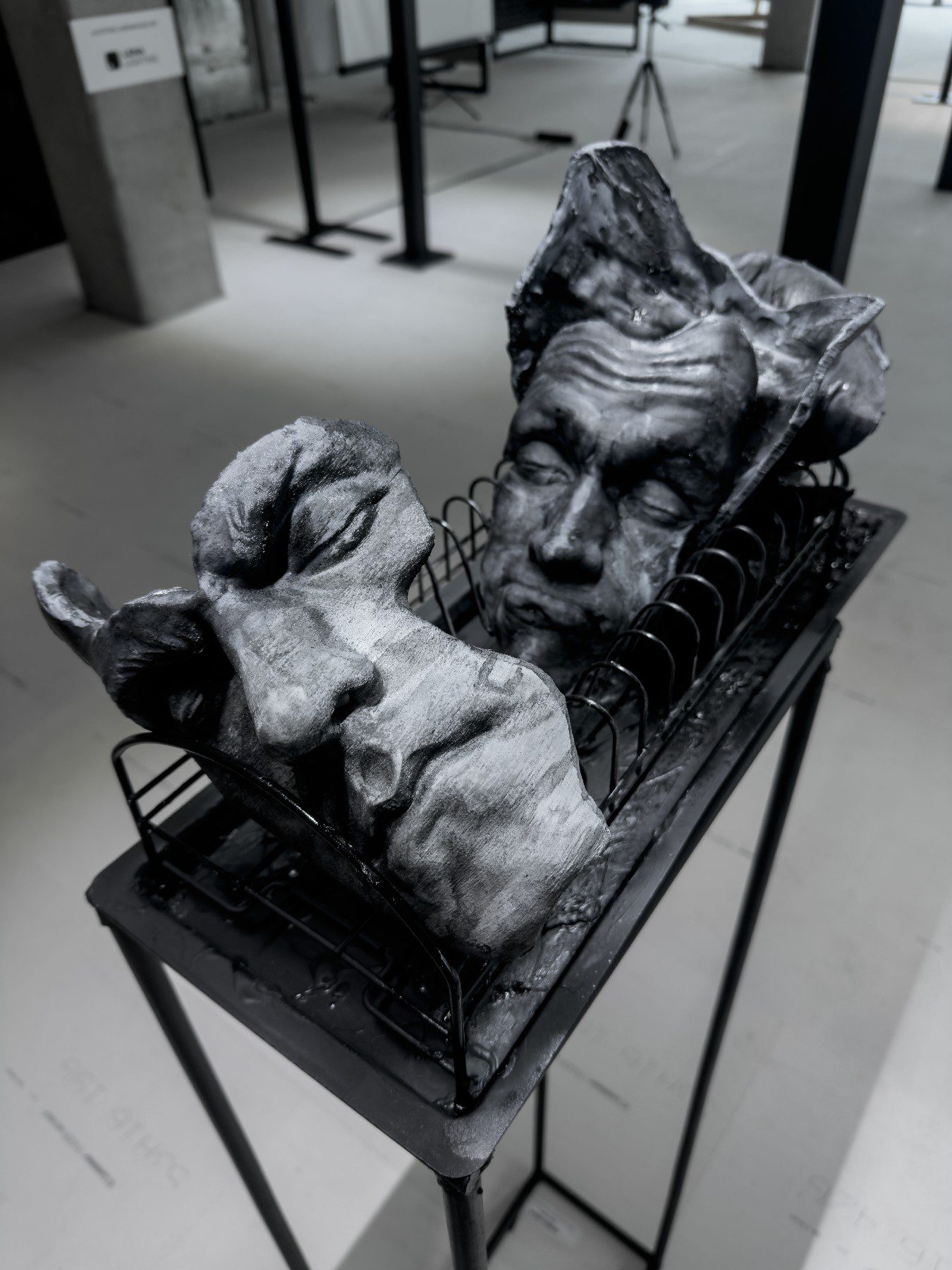
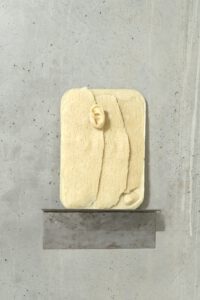
The starting point for my artistic practice is the human body – its fragment, trace, or outline. My works do not refer to anatomy in a literal sense, but rather to the experience of corporeality understood as matter subject to transformation, tension, and gradual decay. The body present in my works is a reduced body – deprived of full integrity, brought down to a fragment that becomes a carrier of meaning. In my practice, I strive to combine different media and techniques: sculpture, drawing, and watercolor – treating them as coherent tools to explore the relationships between matter, form, and space. My works focus on examining the condition of contemporary humans, with particular attention to the tensions related to corporeality and the experience of masculinity.

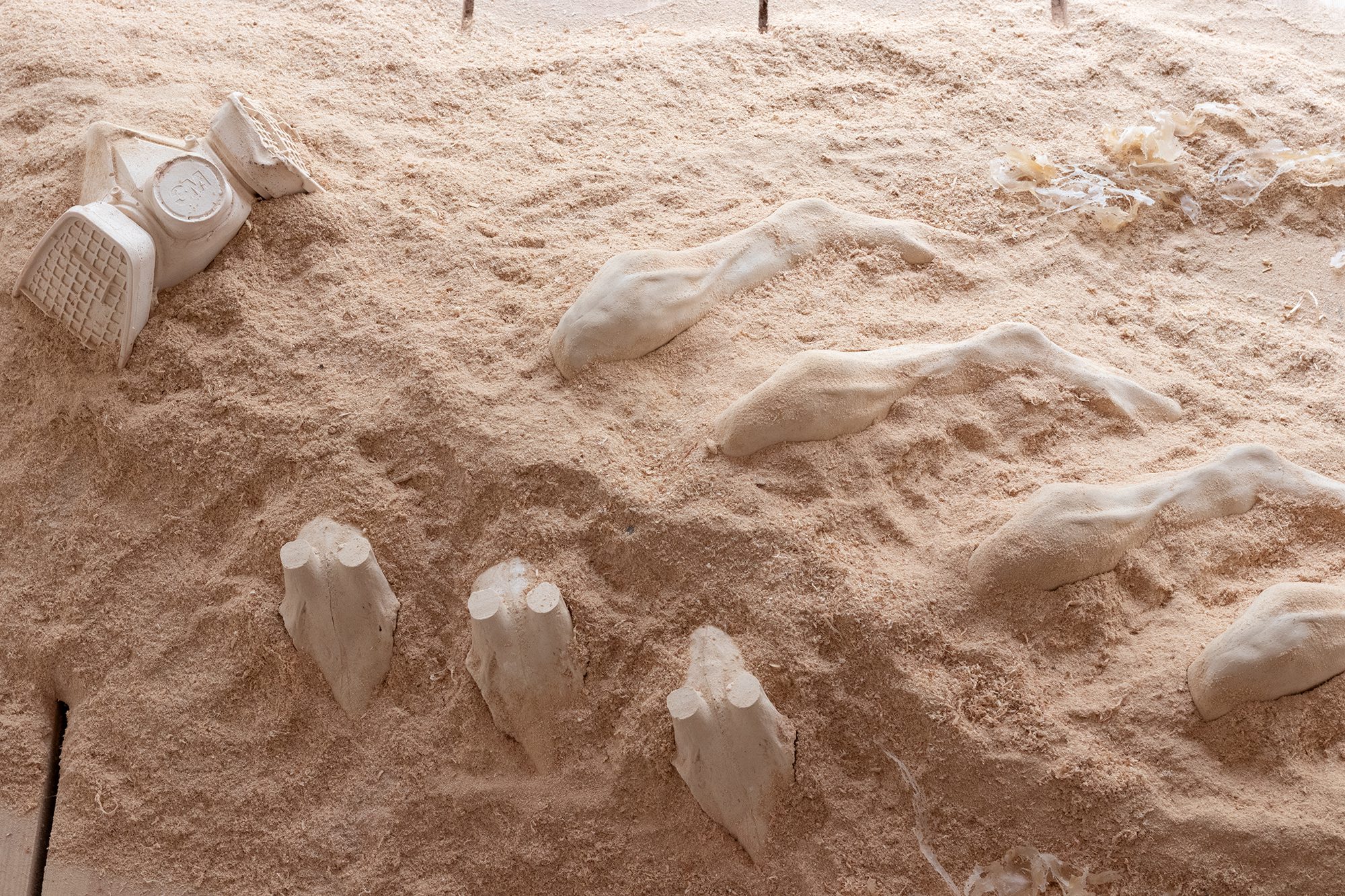
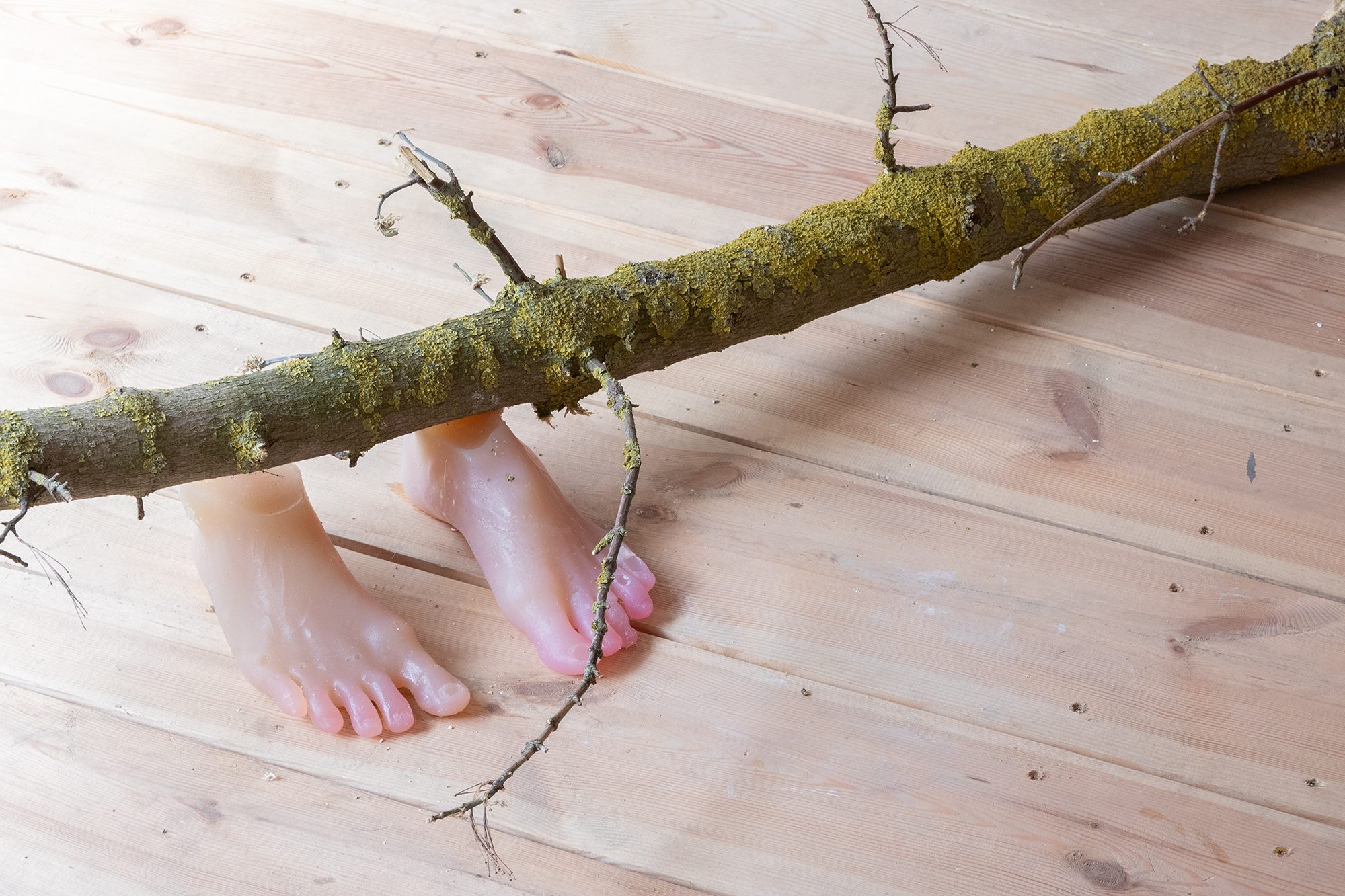
In sculpture, I primarily work with wax, wood, and fabric, although I also often return to working with plaster. The fragmentary forms of the objects I create, with their distinct texture and color – which is also an important element of my practice – become records of the tensions inherent in the material itself and attempts to reach the essence of form. The objects retain an echo of anatomy, yet remain detached from literal representation of the body, gaining autonomy and new significance. The aim is not deformation for its own sake, but the attempt to capture the moment when a form loses its stability and to reveal a truth that emerges not in an ideal shape, but in its disruption.

In drawing, the central role is played by the interplay of mark and line and the tension that arises between them. I mainly work in watercolor, which allows me to build form through glazing, as well as to incorporate chance and partial loss of control over the medium. The line can organize, intersect, or emphasize parts of the composition, while the mark becomes a carrier of rhythm and weight. Corporeality in my drawings is not depicted directly, but suggested – present as a residue or echo. As in sculpture, I aim to examine not the perfect shape, but its reflection and trace.

piotr.owczarek.93@gmail.com

Piotr Owczarek. Born on April 29, 1993, in Bartoszyce, in the Warmian-Masurian Voivodeship. From 2009 to 2013, he attended the Fine Arts High School in Gdynia-Orłowo, majoring in artistic photography. He is a graduate of the University of the Arts in Poznań, where in 2020 he defended his diploma project “Źrzadło” under the supervision of Prof. Wiesław Koronowski. He was awarded an honorary distinction in the Best Diploma Competition at the Academy of Fine Arts in Gdańsk. In 2021, his diploma project was also nominated for the 40th edition of the Maria Dokowicz Competition, where it received two special awards. During his studies, he was also an active member of the Pigmalion Brigade and the Sculpture Scientific Circle.

His artistic interests focus primarily on the human figure and broadly understood figurative sculpture. In his practice, he reflects on corporeality, the fragmentary nature of form, and the relationship between matter and its processes of transformation. He combines classical sculptural techniques with contemporary materials such as silicone and resin, using them as tools for experimenting with texture, structure, and the physicality of form. In his most recent works, he concentrates on reducing the figure to a fragment or trace, exploring the tension between organic shape and its decay.

Mateusz Piestrak

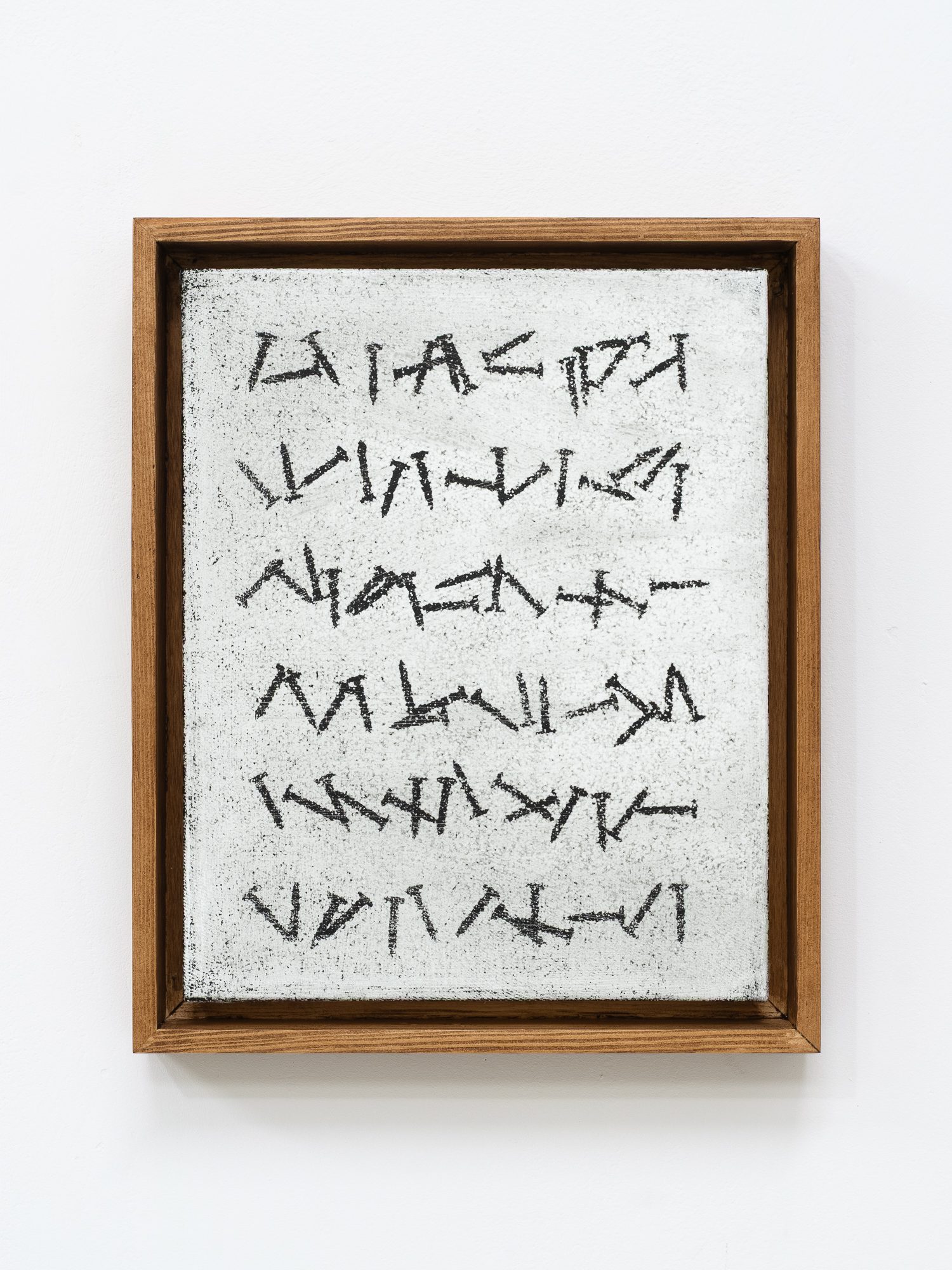
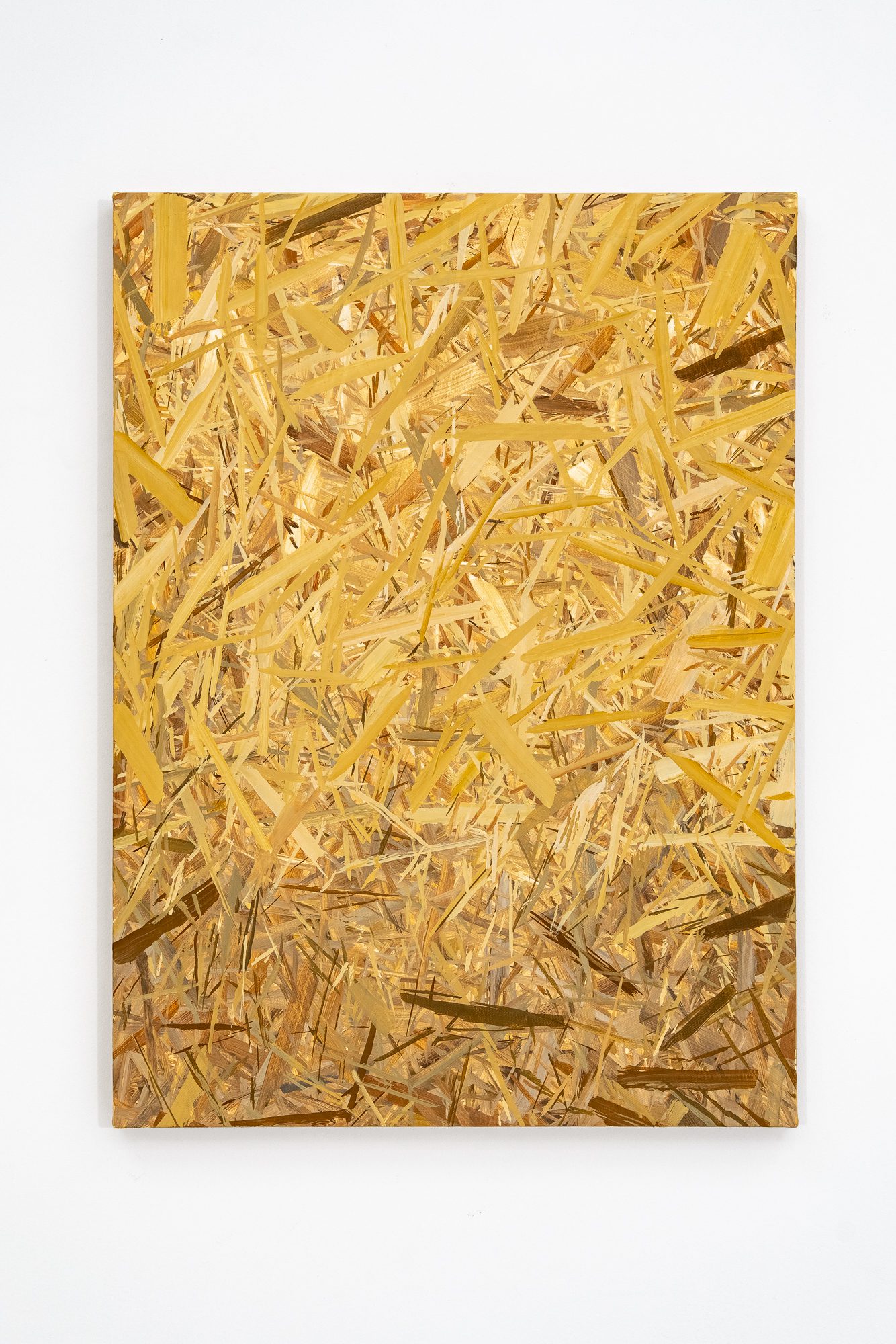
I create various images, searching for hidden meanings in ordinary objects and everyday matters. I paint, I draw, I record. Look: a handful of nails has scattered to form the phrase: „art is fiction that speaks truth” – so you can assume that a painted board might grow back into a forest (after all, „piestrak” is also the name of a little-known species of mushroom). If you want, you can create other worlds with your imagination. Those who have less of it will be willing to pay for it. As you walk past their houses, look for some new things – they may cast interesting shadows. They’re worth painting.

piestrax@gmail.com

Mateusz Piestrak (1991) – painter, visual artist. He studied painting in Poznań, where he currently lives, works, and co-runs the Pani Domu gallery. He received awards and participated in exhibitions. In his free time, he dances.

Karolina Piotrowska

In her artistic practice, she focuses on issues of ethnographic identity and the relationships between memory, place, and history. Her primary source of inspiration remains her native Podkarpacie region. For several years, she has addressed the topic of discrimination against ethnic and national minorities in Poland, with particular attention to the Lemko region (Łemkowszczyzna). In her work, she tells stories of non-existent and disappearing villages, as well as contemporary experiences of marginalization within minority communities. Her most recent projects also address long-standing social issues affecting the region, such as transport exclusion, school closures caused by demographic decline, and the gradual disappearance and erasure of the region’s history.

kakapiotrowska17@gmail.com

Karolina Piotrowska is a visual artist from the Podkarpacie region of Poland. She is a graduate of printmaking at the Magdalena Abakanowicz University of the Arts in Poznań. She completed her MA diploma project, titled O(j/b)czyzna, in the Spatial and Intermedia Graphics Studio under the supervision of Dr Witold Modrzejewski. She is the founder and director of the “Nisko” gallery/art space in Poznań, where she curates and organizes exhibitions.

In her artistic practice, she focuses on issues of ethnographic identity and the relationships between memory, place, and history. Her primary source of inspiration is her native Podkarpacie region. For several years, she has been exploring the topic of discrimination against ethnic and national minorities in Poland, with particular attention to the Lemko region (Łemkowszczyzna). In her work, she tells stories of non-existent and disappearing villages, as well as contemporary experiences of the social marginalization of minority communities.

Martyna Rzepecka

Martyna Rzepecka is a printmaker and visual artist. She works in traditional printmaking techniques (primarily relief printing), expanding her practice to include tactile objects and installations. She is fascinated by corporeality and the body as an object, which serves as both a visual inspiration and a form she repeatedly deconstructs and transforms in her drawings and prints. She refers to her linocuts as bodycuts.

From the beginning, the artist has consistently focused on fragments and on removing specific identity from figurative representations, attempting to move away from literalism toward creating tension in the interpretation of her works. Currently, her practice engages with the context of female corporeality. Observation and the presence of the body within the printmaking process, as well as how it evolves over time, are also central to her work.

Her passion for fencing naturally intersects with her artistic activity. Since 2023, while working on the Left Hand Exercises project, she has focused on the presence and physical demands of her own body within both the creative process and fencing training—transforming physical limitations into new artistic value.

Drawing plays a crucial role in Rzepecka’s practice: it is the starting point of the process, a visual record of thoughts and emotions, an intuitive manifesto, and ultimately an independent form of artistic expression. Building on traditional printmaking, she also creates spatial works— installations and objects that capture the process of carving into the matrix.

The creative act itself—cutting and preparing the matrix—is considered by her as the center of the printmaking process; in this understanding, the matrix functions as an independent artwork. The process of carving linoleum becomes a form of meditation—a confrontation with resistant material, revealing the tension between gesture and matter. It is the point of contact between the artist’s body and the graphic “skin” (matrix).
Simultaneously, during creation, she collects and documents ephemeral traces of the process: imprints of the matrix on the skin, the studio floor, and remnants of the matrix that would traditionally be discarded. Rzepecka exhibits these “residues” alongside her works as derivatives of the process, both initiating the print and forming an integral part of the creative act.
Her experience working with audiences has informed her interest in the artist–viewer relationship.
She frequently opens her works to haptic engagement, inviting direct tactile interaction. Through touch, she allows for an ambiguous entry into the creative process, which is typically invisible.

art.rzepecka@gmail.com

Martyna Rzepecka. A visual artist and printmaker based in Poznań. In 2017, she obtained a PhD in Fine Arts from the Faculty of Fine Arts at Nicolaus Copernicus University in Toruń. She works in traditional techniques, including drawing and printmaking (mainly relief printing), which she expands with tactile objects and installations.

Rzepecka has participated in over 100 national and international exhibitions, both in Poland and abroad, including: matryca.matka (matrix.mother) – solo exhibition, Galeria Szewska 16, Poznań (2025); Left Hand Exercises 2 – solo exhibition, BWA Tarnów (2025); The 13th International Latgale Graphic Art Symposium – The Rothko Museum, Daugavpils, Latvia (2025); GRAPHIC SKIN – International Centre for Graphic Arts, Kraków (2025); Left Hand Exercises – solo exhibition, Le Charbonnage, Genk, Belgium (2024); The 35th Ljubljana Biennale of Graphic Arts – Cukrarna, Ljubljana, Slovenia (2023). She is a recipient of awards, including the prize in the competition for experimentation in visual arts ATTEMPT 5 at the Jan Tarasin Art Gallery in Kalisz (2024), as well as artistic scholarships, such as Polish Culture Abroad – Adam Mickiewicz Institute (2020, 2023), and the artistic scholarship of the Marshal of the Kuyavian-Pomeranian Voivodeship (2017, 2023). Martyna Rzepecka’s works are held in the collections of art galleries and private collections in Poland and abroad, including Belgium, Switzerland, Spain, the Netherlands, Canada, and China. She has participated in artist residencies and academic conferences, and is a member of the international women’s printmaking collective Magenta Research Collective and the RYS Cultural Foundation. She is a co-curator of the International Student Drawing Exhibition RYSOWAĆ (TO DRAW) at the Wozownia Art Gallery in Toruń. She conducts artistic and educational workshops in cooperation with institutions such as the Centre for Contemporary Art in Toruń, the Zamek Culture Centre in Poznań, and the MCA Educational Association in Poznań (the 5 Senses project). She currently works as an assistant professor in the Department of Drawing at the Faculty of Fine Arts in Toruń and as a lecturer in graphic design at Collegium Da Vinci in Poznań. She lives and works in Poznań, where she also practices fencing.
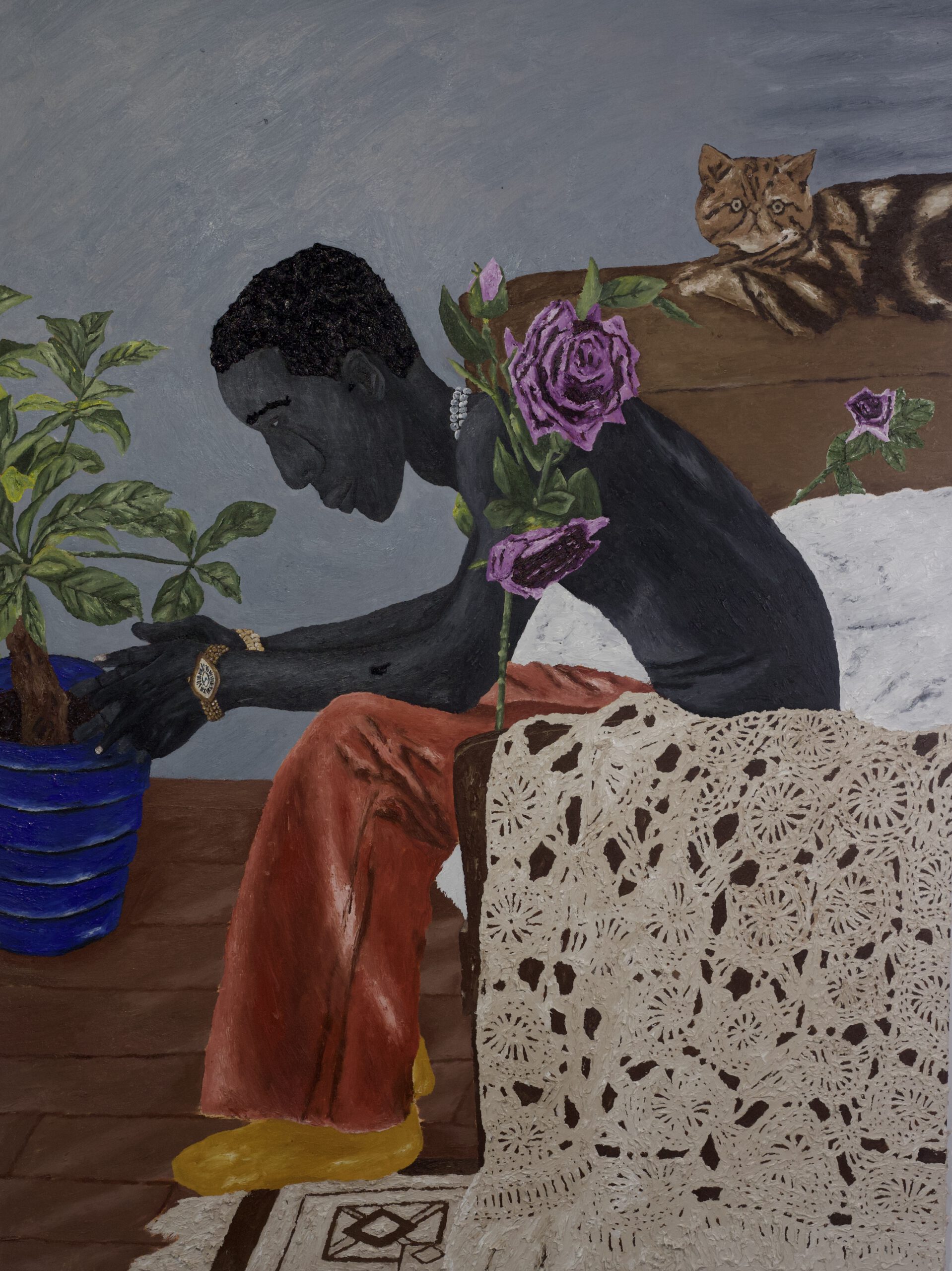
Paul Senamie

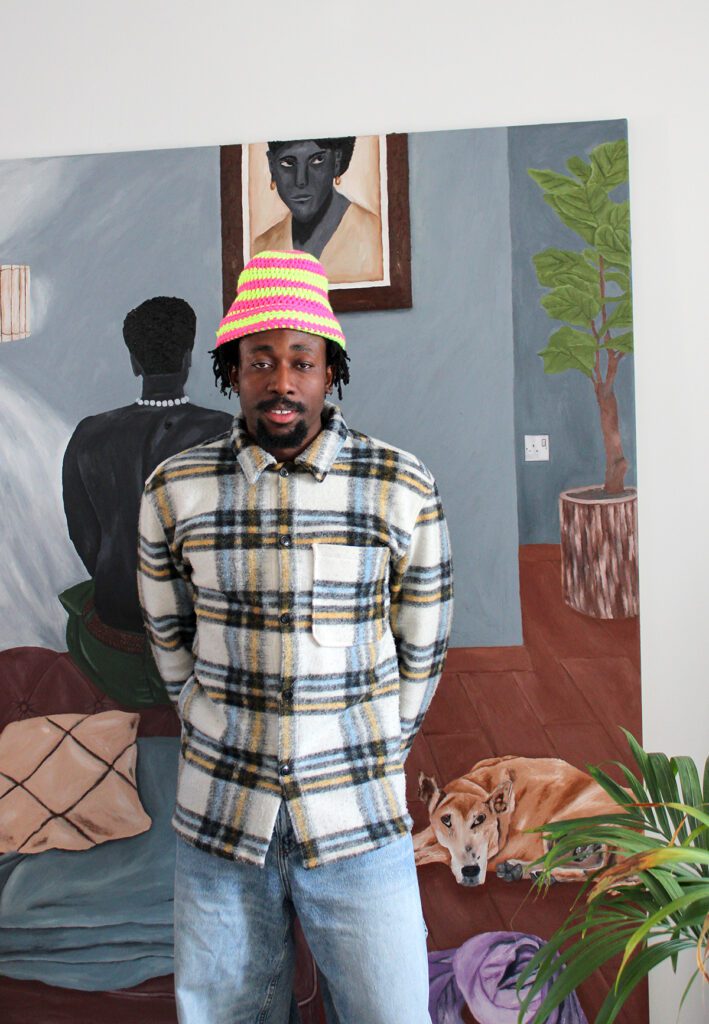
My artistic journey is rooted in a creative upbringing that instilled in me a profound appreciation for the arts as a means of connection. With a father who pursued art part-time and a mother who studied it formally, I was encouraged to explore creative expression from an early age. My path led me through photography and a Master’s degree in Horticulture at the Poznań University of Life Sciences in Poland, where I developed a deep understanding of organic forms and growth cycles. These insights later permeated my painting, transforming natural processes into metaphors for personal and emotional evolution. Ultimately, I discovered that art offered a constructive outlet for my ideas and emotions, guiding me away from self-destructive patterns and establishing painting as my primary mode of expression.

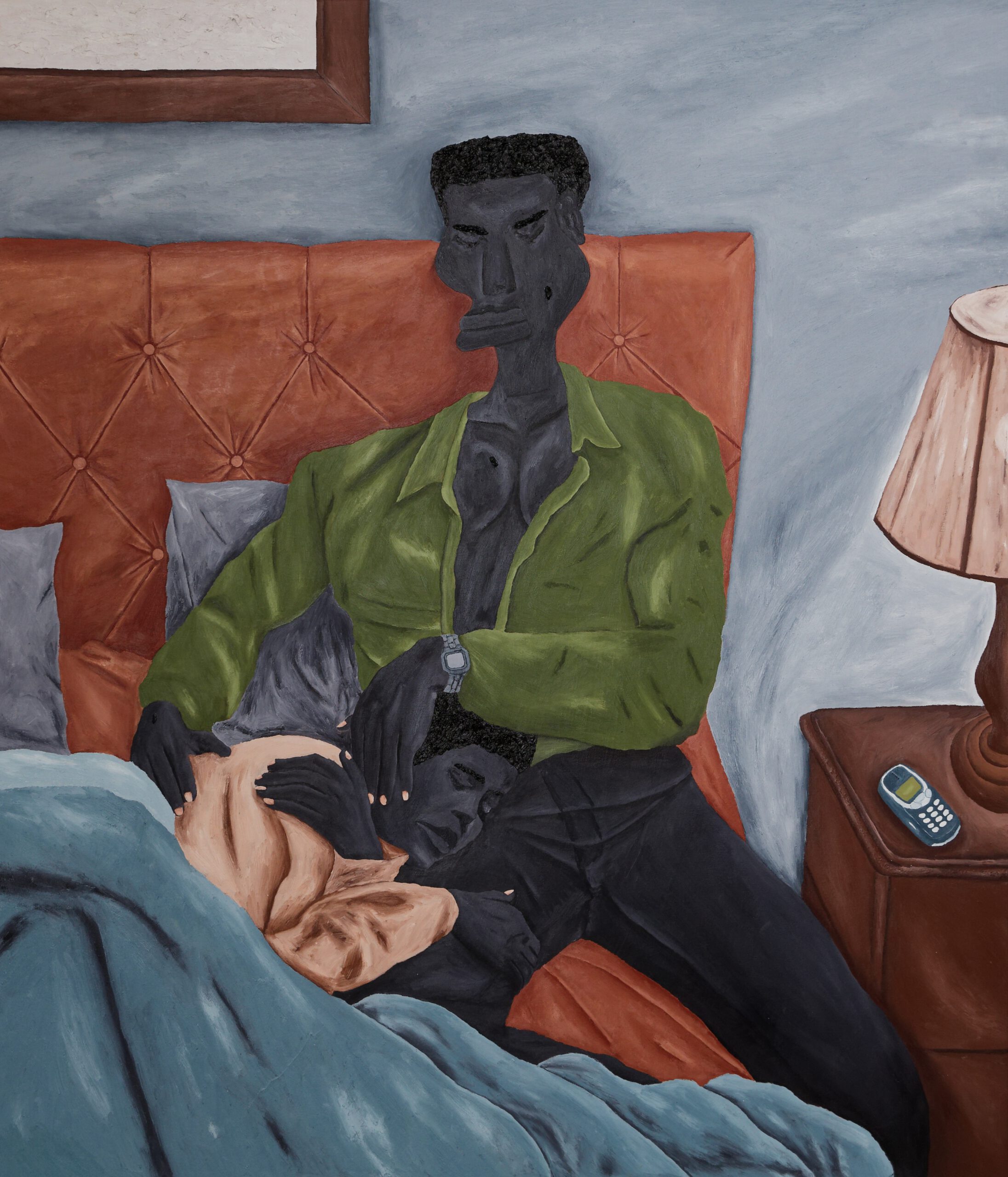
In my work, I combine oil and acrylic paints to create bold contrasts of color and intricate textures that articulate narratives at the intersection of traditional techniques and contemporary influences. This approach fosters a dialogue between past and present, imbuing each piece with a sense of timelessness infused with contemporary vitality. Moving beyond conventional realism, my stylized forms seek to capture the essence and inner worlds of my subjects, revealing layers that extend beyond physical appearance.

As an immigrant from Africa, my work engages with themes of social anxiety and broader societal concerns, offering a distinct perspective on the human condition. Infused with hope, strength, and resilience, my compositions invite viewers to engage with deeper dimensions of experience. Through each brushstroke and detail, my practice encourages reflection and the discovery of new insights into the complexities of human existence.

artbysenamie@gmail.com

Paul Amusa, professionally known as Senamie, is a self-taught figurative artist born in 1994 in Lagos, Nigeria. Raised in a deeply creative household, his father pursued art as a passionate part-time practice, while his mother studied it formally. He was surrounded by artistic influences from an early age. Although he initially explored fine art photography and earned a Master’s degree in Horticulture from the Poznań University of Life Sciences, Senamie found his true calling and deepest fulfillment in painting. His work draws profound inspiration from his African heritage, music, everyday life, and personal experiences.

Now based in Poznań, Poland, Senamie is the founder of Mothrland Atelier, a vibrant creative hub and curatorial collective established in 2025. It fosters multidisciplinary practices, high-end photography, collaborative projects, exhibitions, workshops, and cultural events—celebrating community through art, where raw industrial heritage meets fluid creative expression, and remaining open to visionaries, dreamers, and collaborators.

His distinctive style blends figurative and abstract elements, featuring bold colors, exaggerated forms, rich textures, and intricate details that reflect deep personal introspection and the resilience of the human spirit. As an African immigrant, he engages with themes of social anxiety, identity, migration, resilience, hope, and broader societal concerns, creating narratives that are both intimate and universally resonant. Through masterful brushwork and poignant storytelling, Senamie’s evolving practice invites viewers into an emotional journey, uncovering layers of the human condition.

Monika Shaded

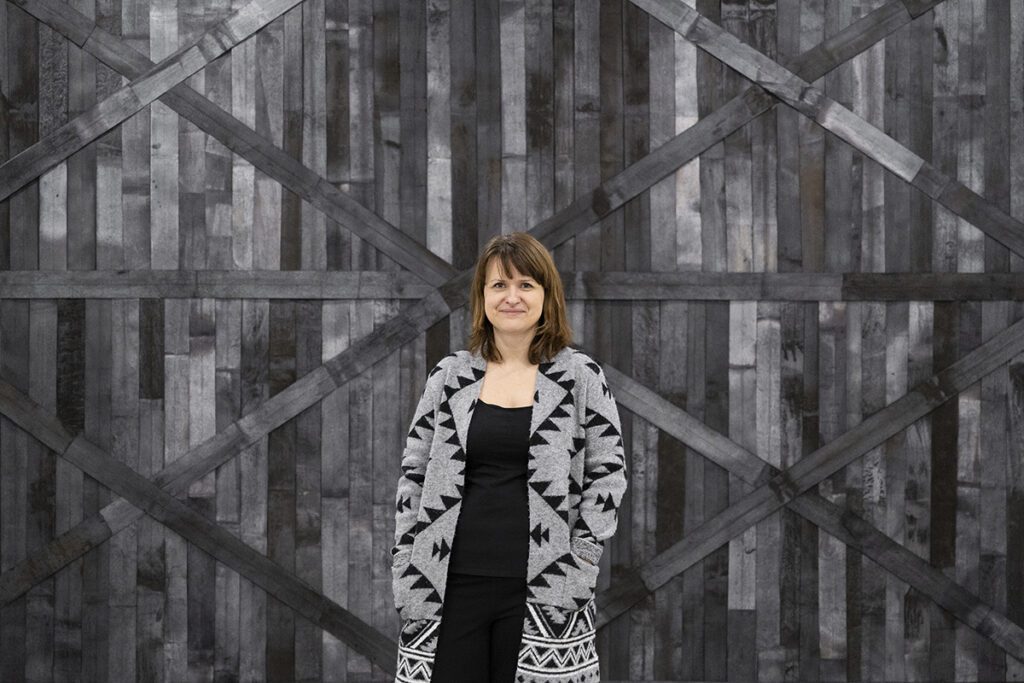
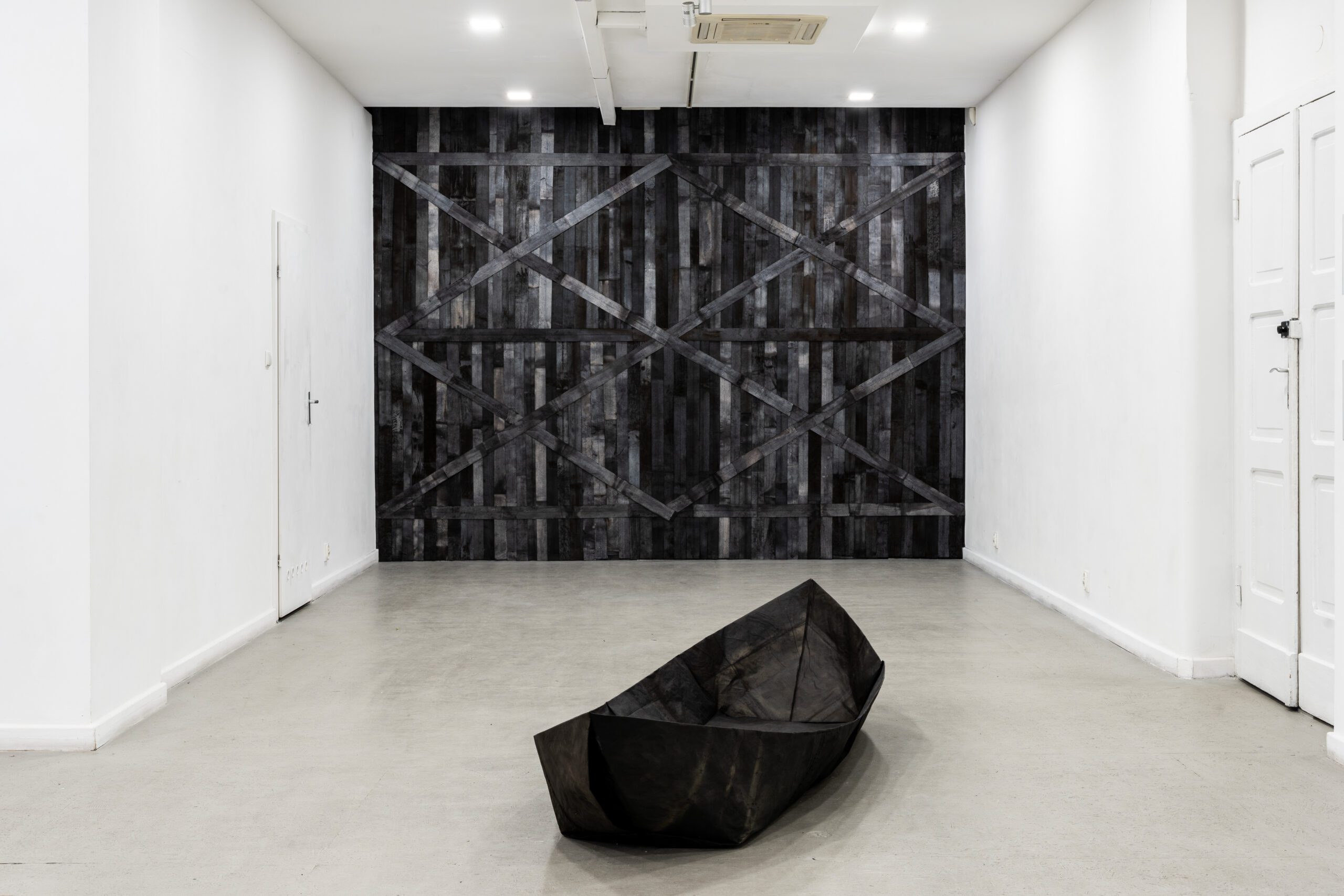
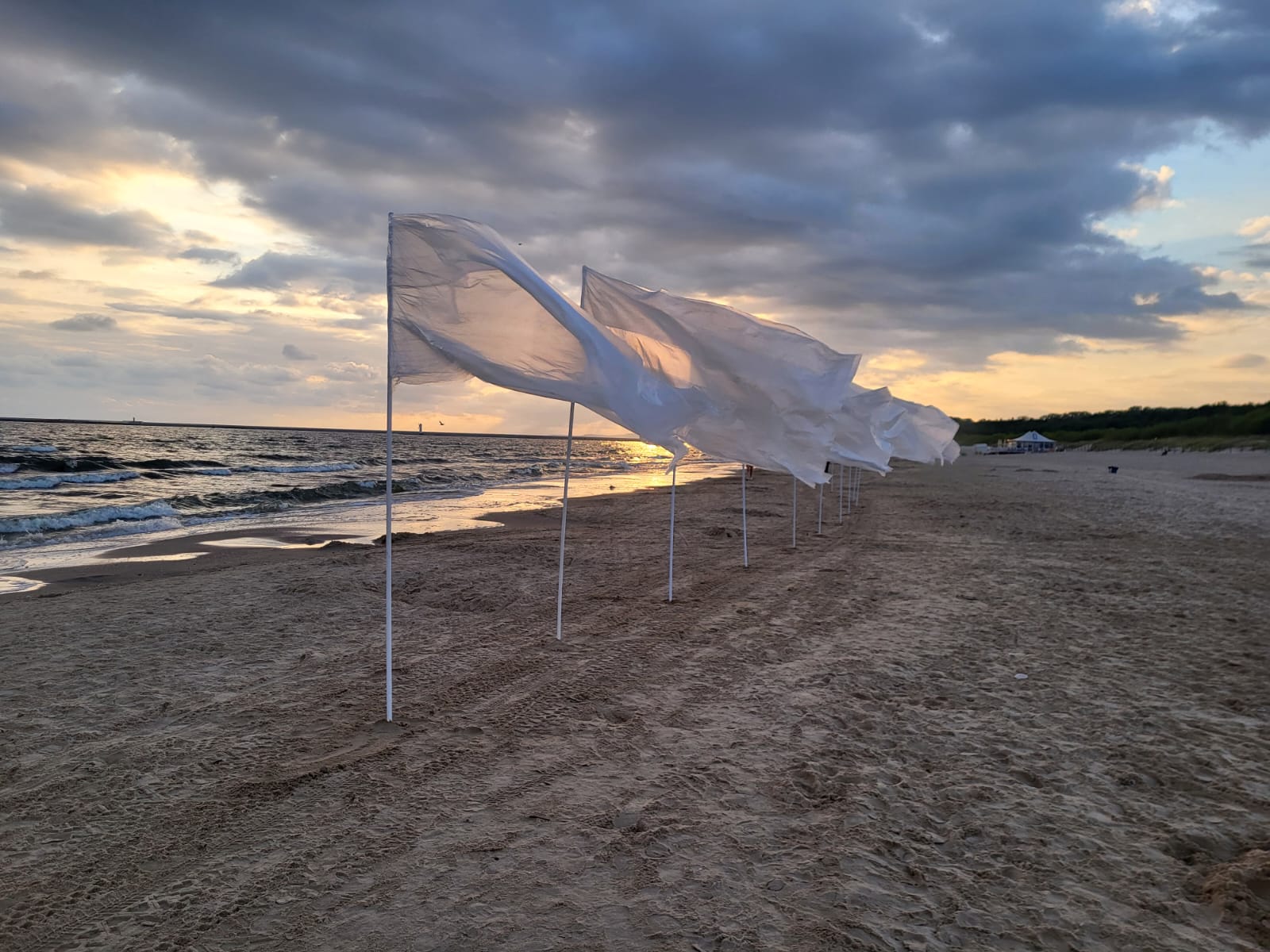
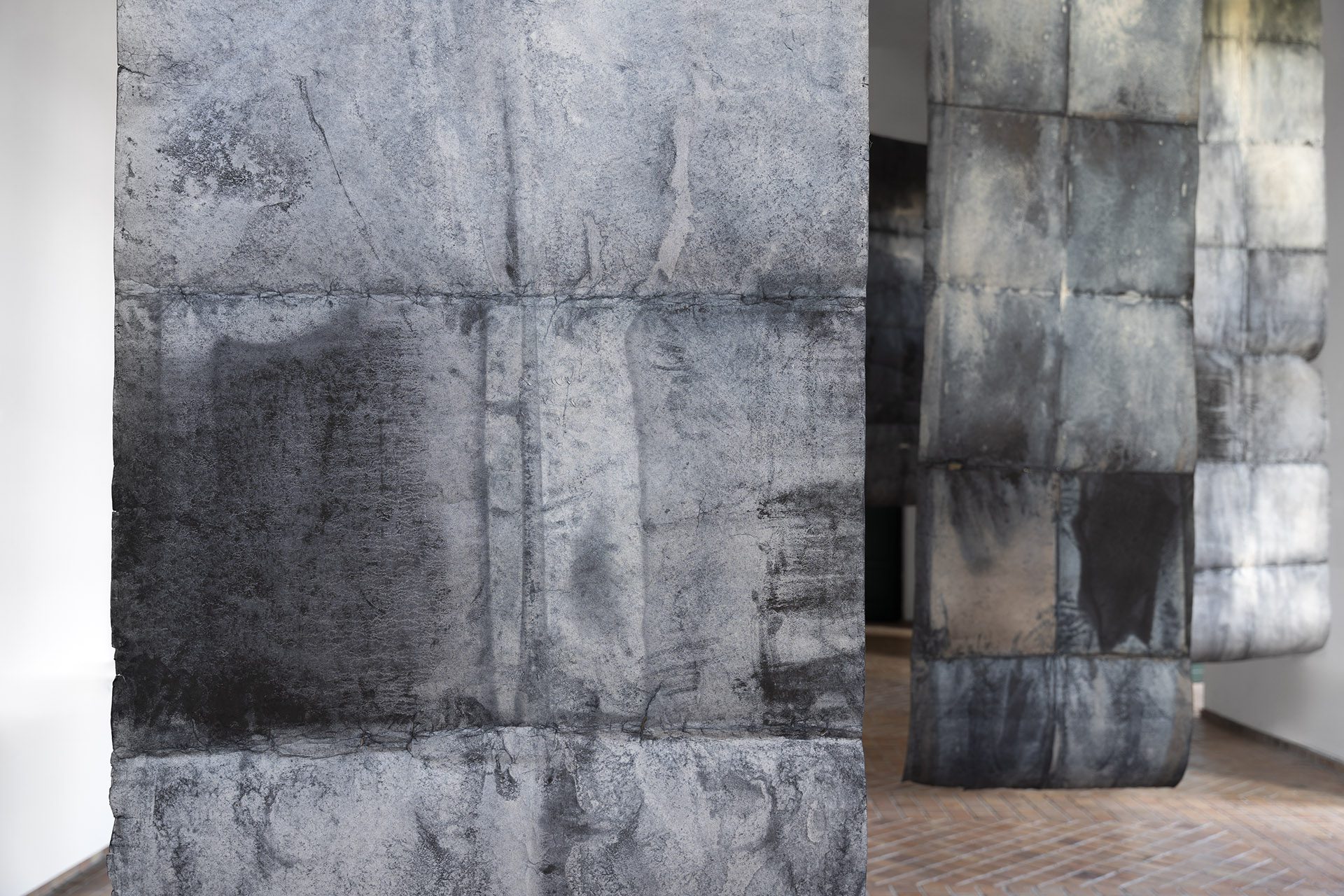
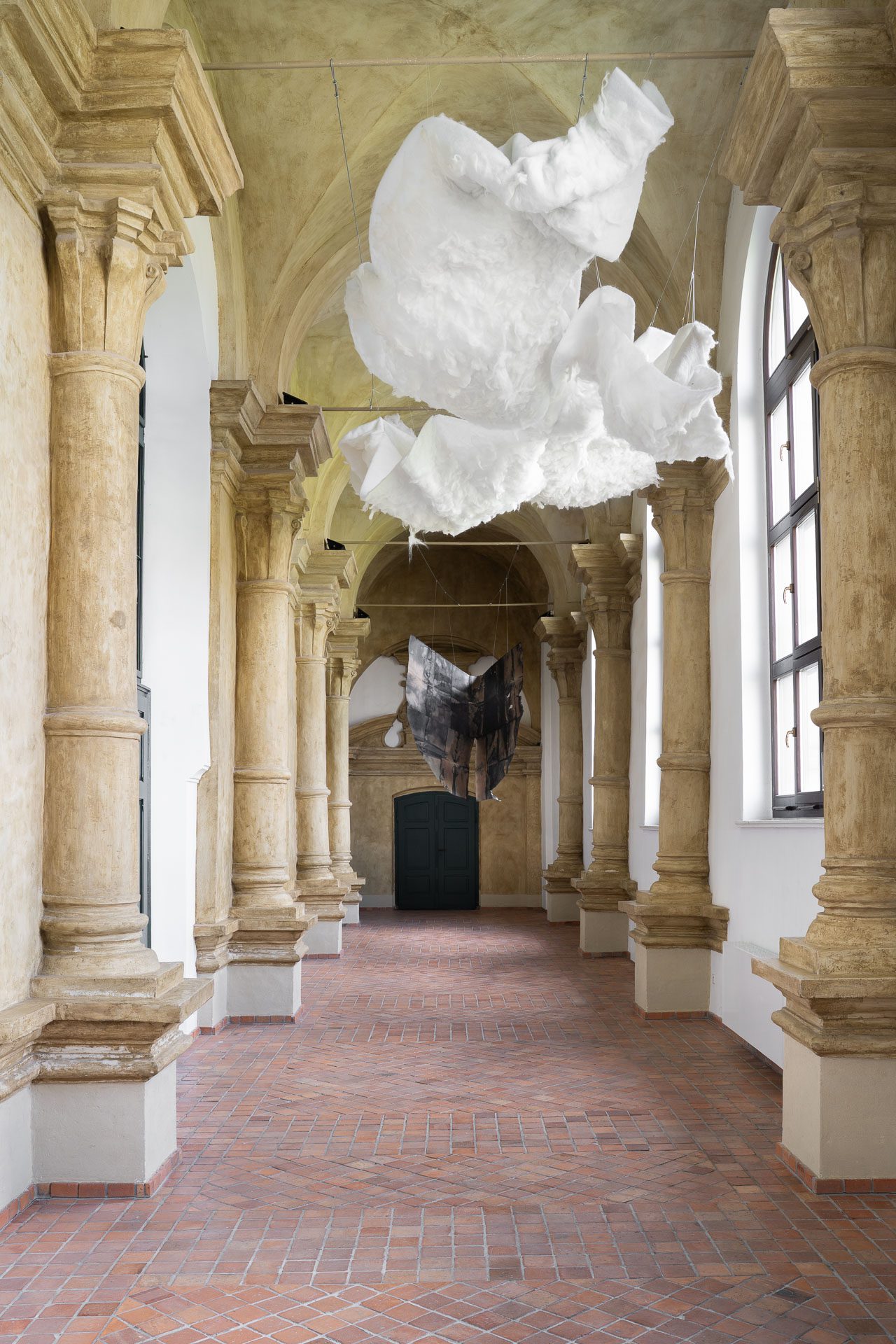
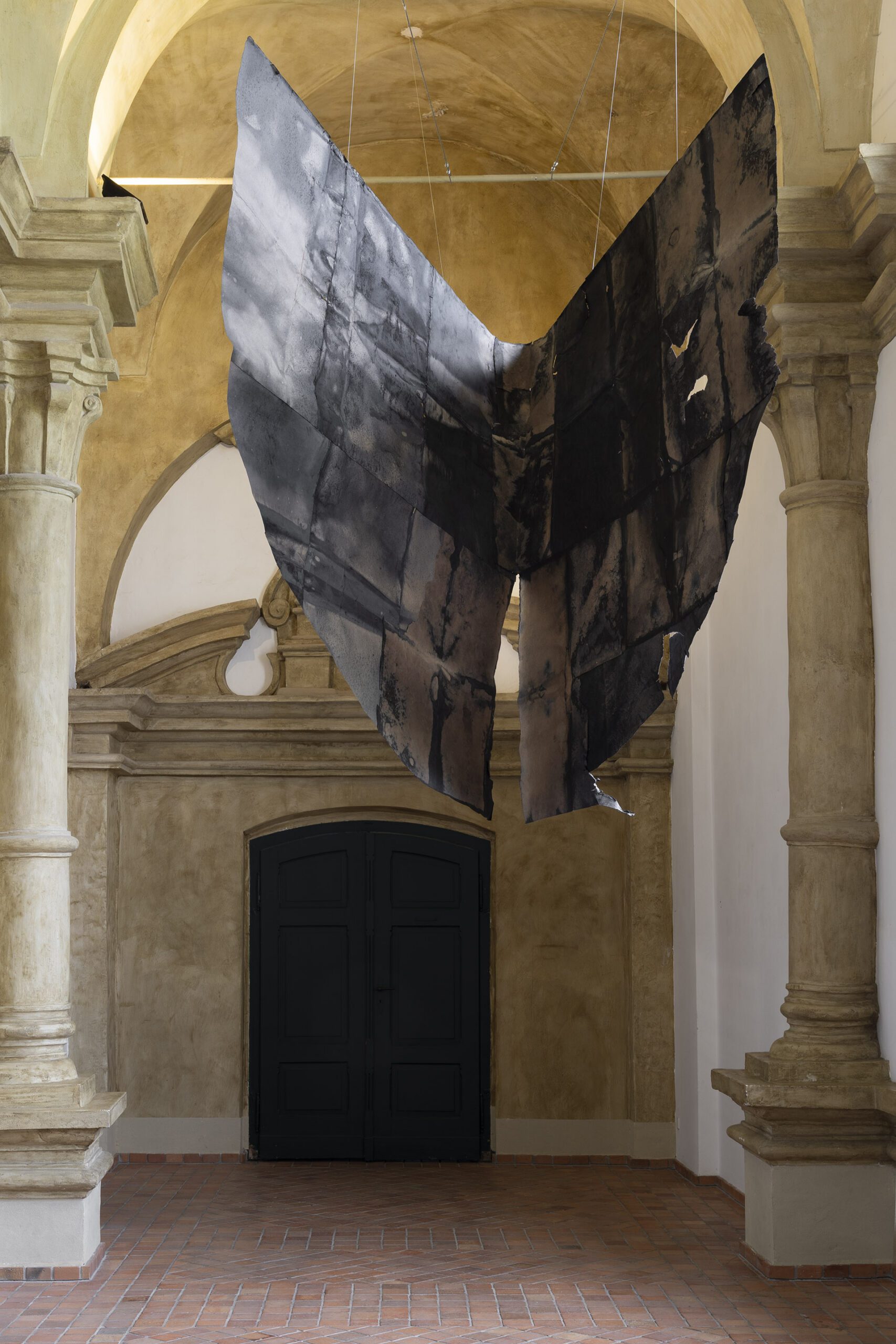
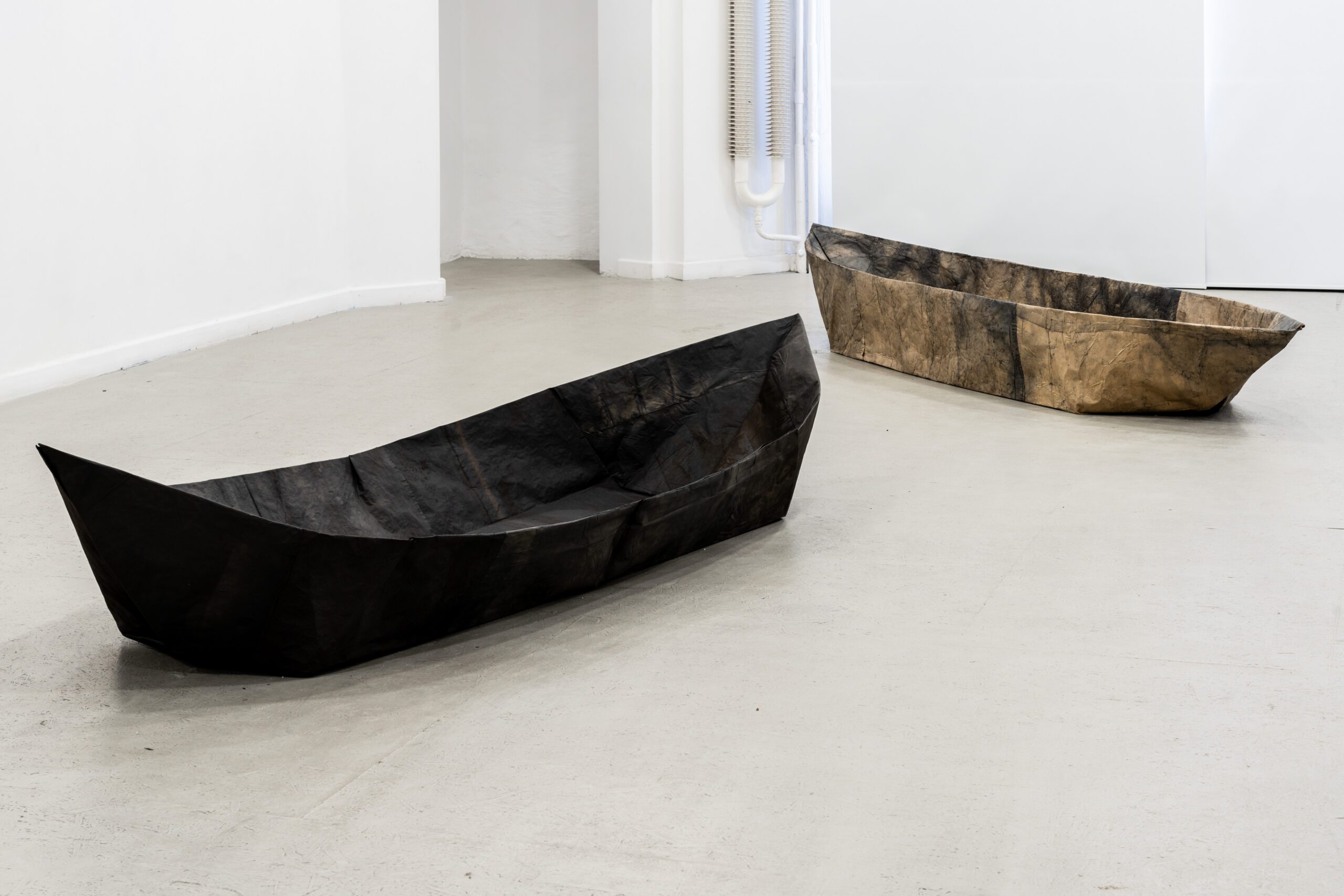
Monika Shaded’s artistic practice includes drawing, artist’s books and spatial installations created from paper and textile. Her works are imbued with existential themes expressed in a poetic manner through the use of symbols, signs and associative imagery. In her practice, she often employs ephemeral materials such as paper and textiles, carrying meanings related to fragility, transience and memory.

She is interested in exploring the “ultimate mystery” – that which remains unnamed and escapes full understanding – as well as questions concerning the meaning and motivations of human life.

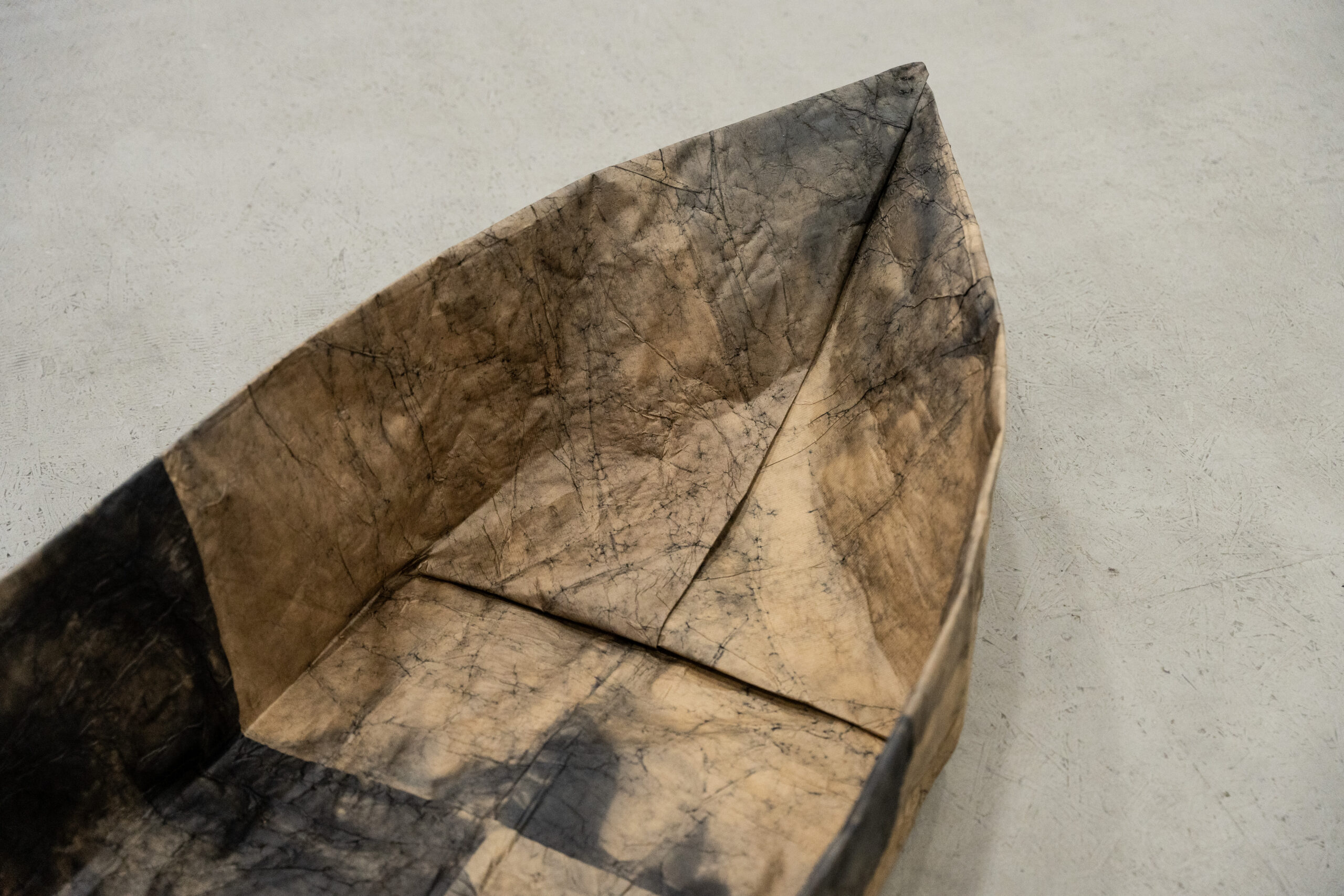
The artist most often works with paper – a fragile material particularly susceptible to destruction. Its delicacy is further emphasized through processes of dyeing, soaking and layering. The symbolic dimension of her works intertwines with their materiality – phenomena are made visible through objects which at the same time remain simply what they are. Forms such as boats, clouds, gates, banners and flags appear in her works.


monika.shaded@gmail.com

Monika Shaded (b. 1983, Ciechanów, Poland) is a visual artist. She graduated from the Faculty of Art Education at the Magdalena Abakanowicz University of the Arts in Poznań in 2008, completing studies in art criticism and promotion as well as art pedagogy. In the same year, she received her diploma in painting with distinction. In 2013 she obtained a PhD in Fine Arts. She currently works as an assistant professor at the VIII Painting Studio at the University of the Arts Poznań.

She is the recipient of numerous awards and scholarships, including the Second Prize at the 4th International Biennial of Artistic Textile in Poznań and a finalist of the international Lodz Abstract Art Festival (LAAF). She has received scholarships from the Polish Ministry of Culture and National Heritage, the City of Poznań and the Marshal of the Wielkopolska Region, as well as the Rector’s Award of the University of the Arts Poznań for organizational activity.

Her works have been presented in solo and group exhibitions in Poland, including the Arsenał Municipal Gallery in Poznań, BWA Gallery in Bydgoszcz, BWA Gallery in Piła and Szewska 16 Gallery in Poznań, as well as at festivals such as SLOT Art Festival, FAMA and Poznań Art Week. A full list of exhibitions is available at www.monikashaded.com.

She is also active as a curator, serving as curator of the International Painting Competition of the Three Bridges Foundation (1st–3rd editions), a member of the curatorial team of the Maria Dokowicz Competition for the best diplomas at the University of the Arts Poznań, and curator of the “Serce dla Serca” Gallery at the Cardiology Hospital in Poznań.

Alongside her artistic practice, she is engaged in art education for children, youth and adults. She has collaborated with the National Museum in Poznań and teaches drawing in postgraduate studies at the Faculty of Painting and Drawing at the University of the Arts Poznań.


Andrzej Staniek

I do not regard the creative act as an expression of freedom or a confirmation of my own agency. Creation always takes place within a network of dependencies — technological, material, and historical — that shape and constrain what I am able to say and show.

I am drawn to Roland Barthes’ notion of the death of the author — the idea that meaning is not born from the creator’s intention but emerges in the tension between language, image, and the viewer. In this sense, I am not the source of meaning but rather someone navigating a landscape of pre-existing forms, codes, and narratives. Creation becomes, for me, a process of working with borrowed material — digging through things that precede me and often escape my control.

I am also inspired by Donna Haraway’s posthumanist perspective, which emphasizes the entanglement of humans, things, and technologies. This way of thinking allows me to see the creative act not as an individual gesture, but as the effect of multiple forces — including non-human ones.

I understand creation, therefore, as a critical act — breaking apart established forms, challenging the languages and images we too easily accept as natural. What interests me is the moment when the work begins to expose its own limitations, when the medium ceases to be transparent. Because it is only there — in the fracture — that art truly begins.

andrzejstaniek334@gmail.com

Andrzej Staniek (b. 2000) is a visual artist based in Poznań, Poland. He holds an MA in Intermedia Photography from the Magdalena Abakanowicz University of the Arts in Poznań. His practice focuses on 3D media, sculpture, and object- based art, exploring speculative ecologies, non-human agency, and material transformation.

Konrad Smela

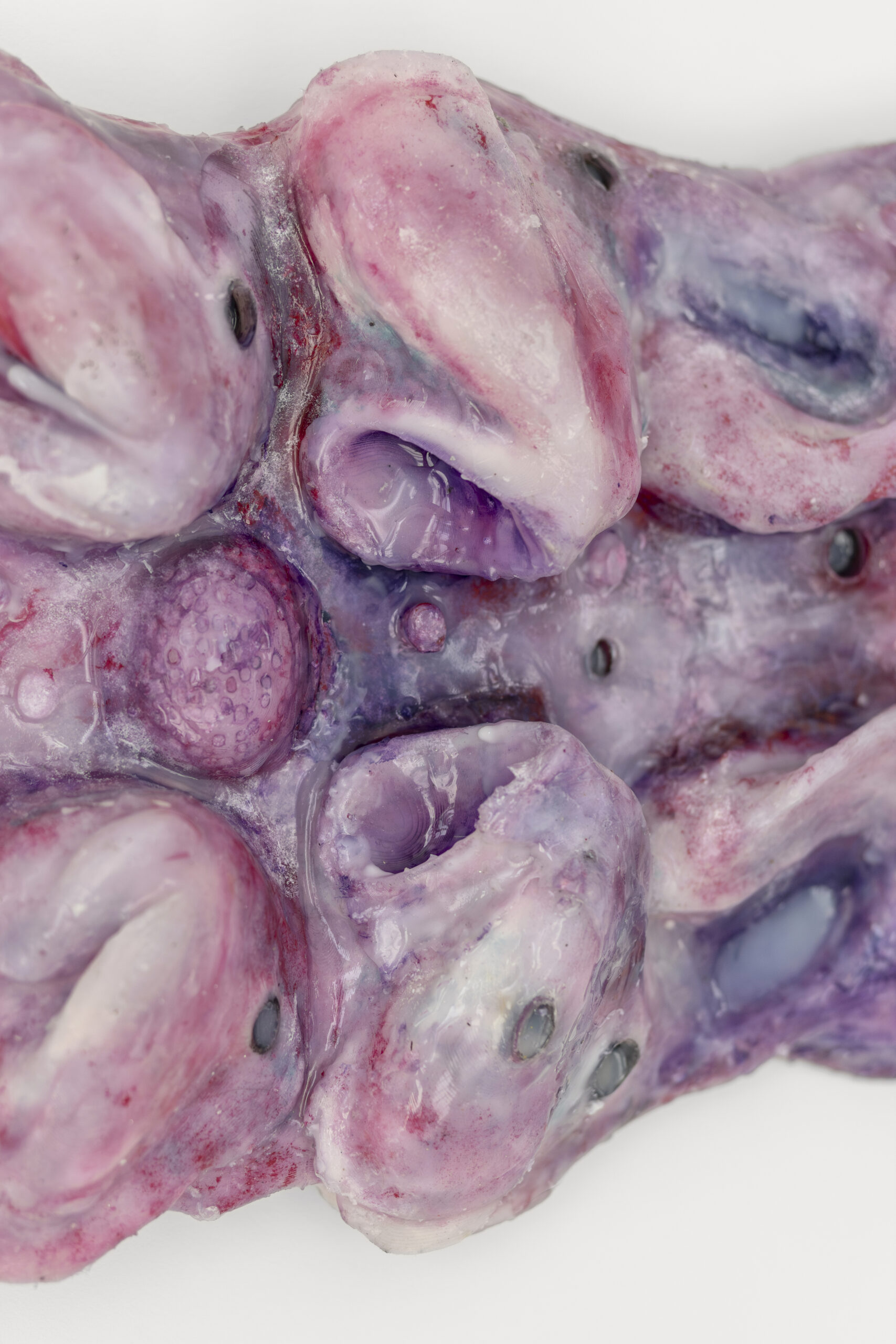
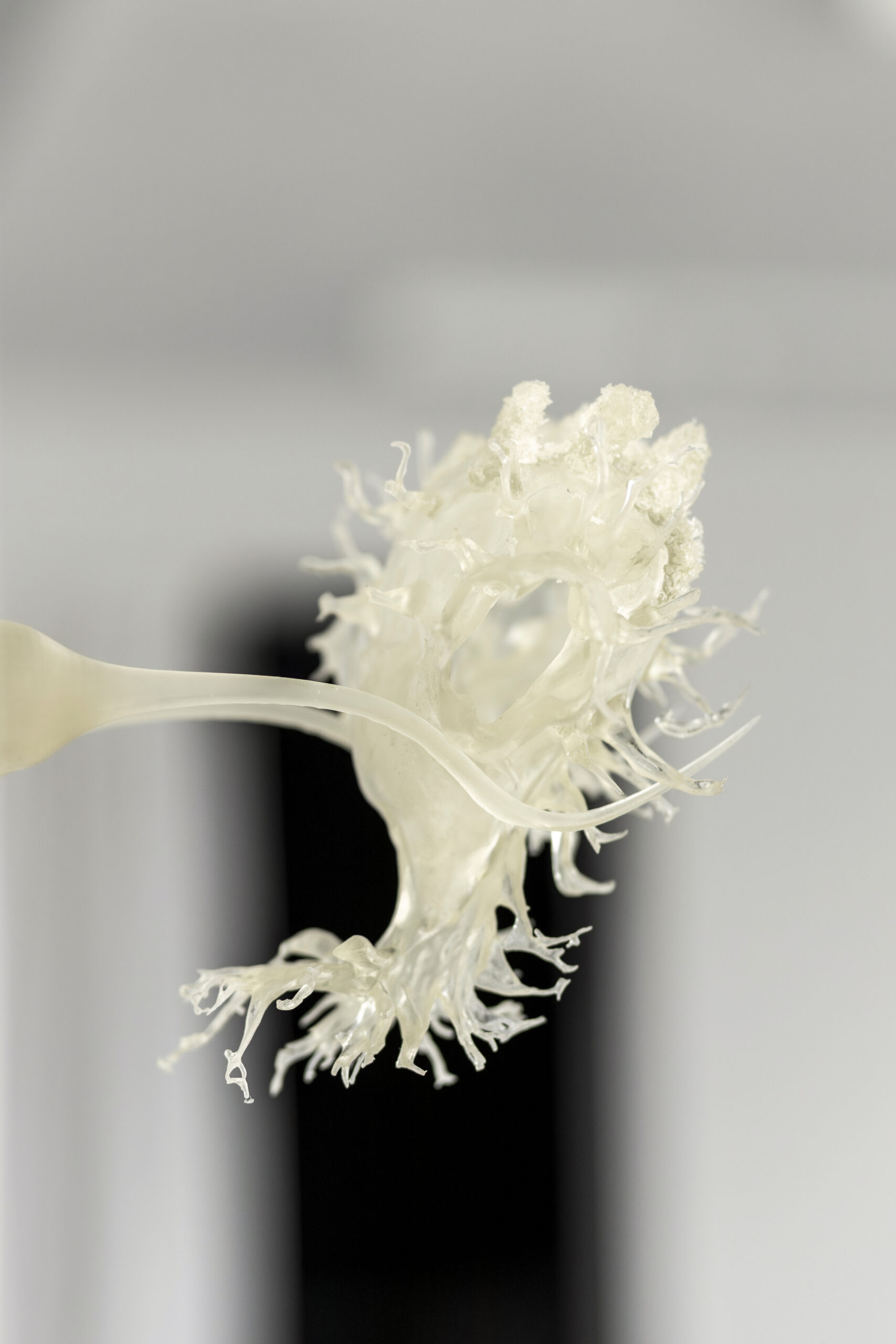
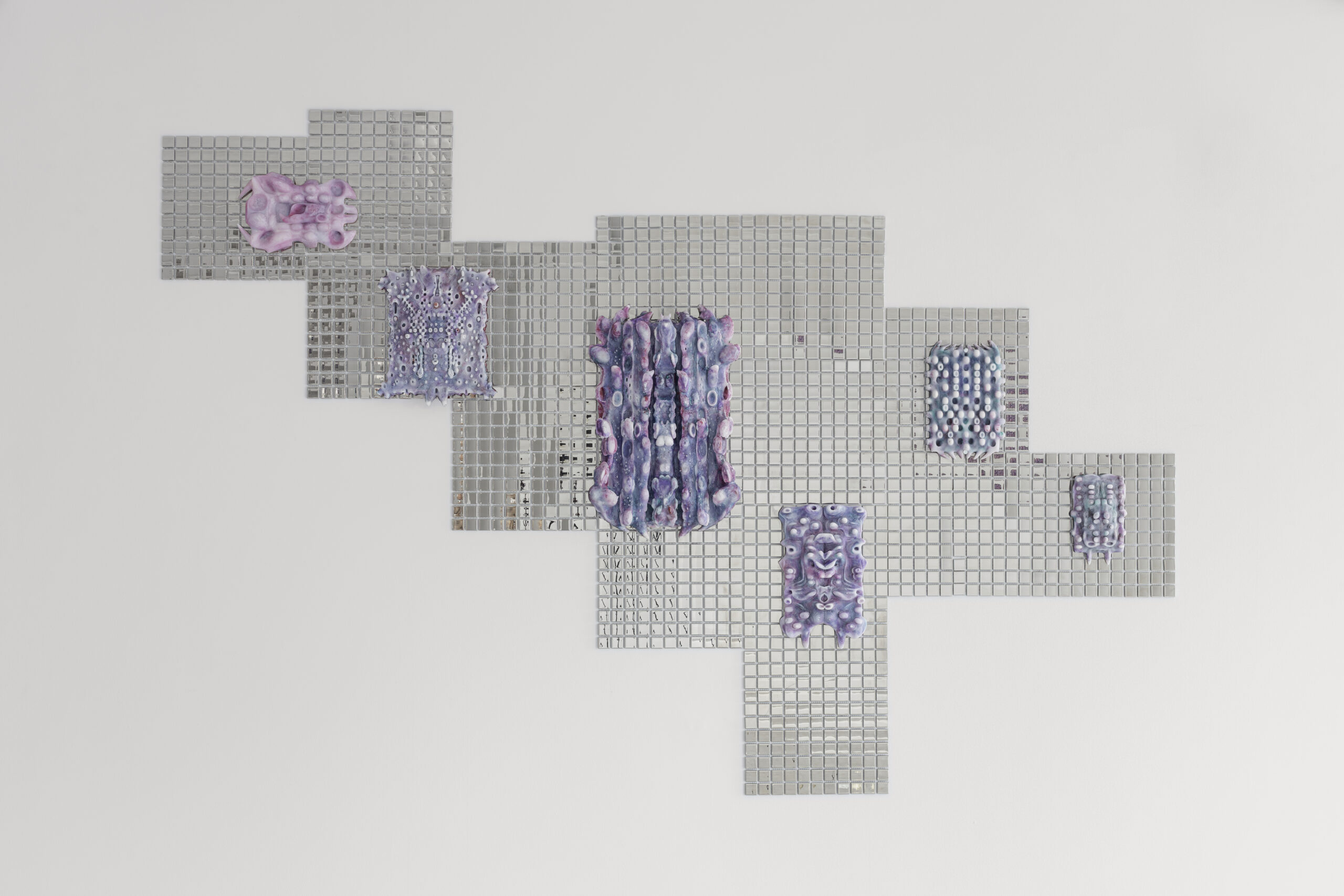
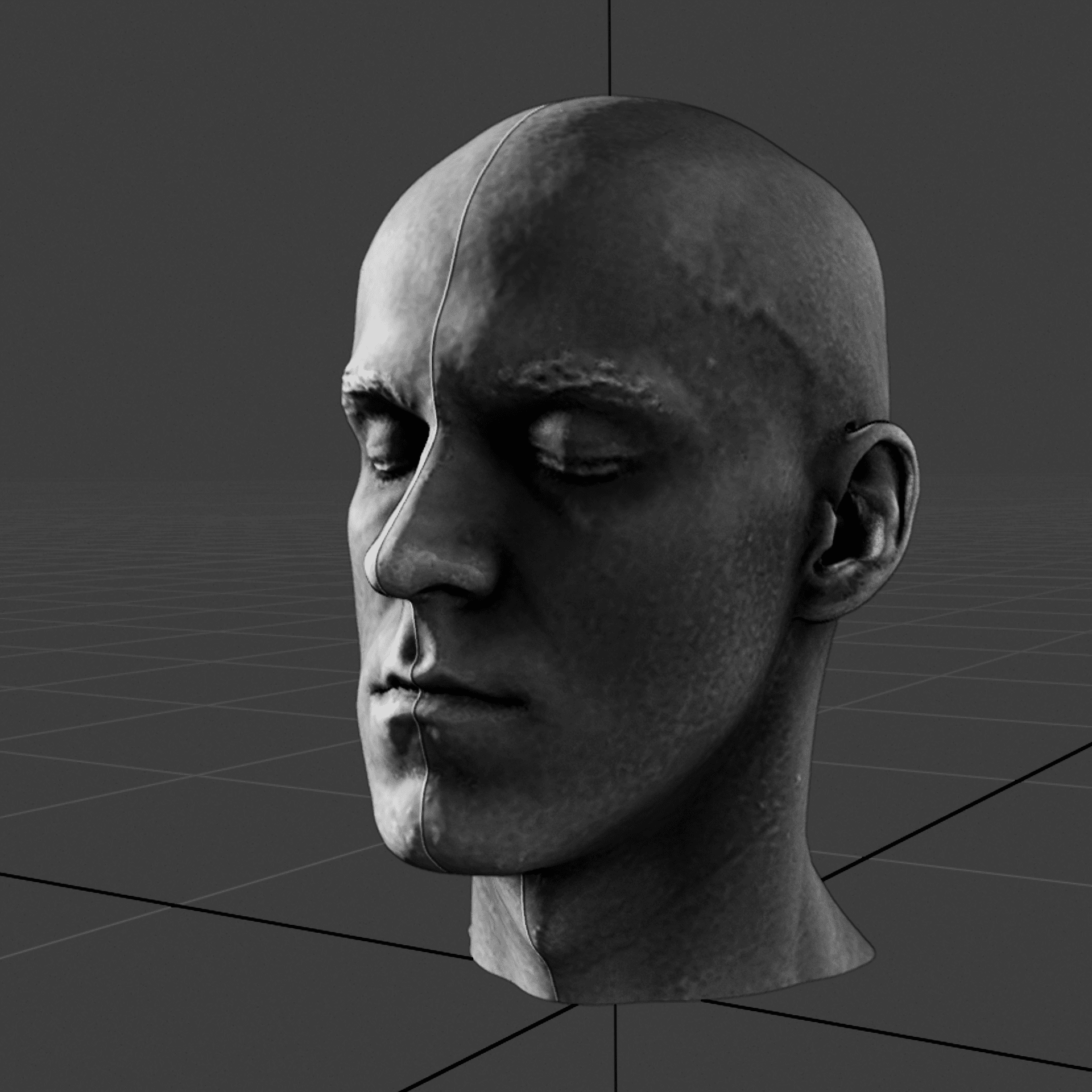
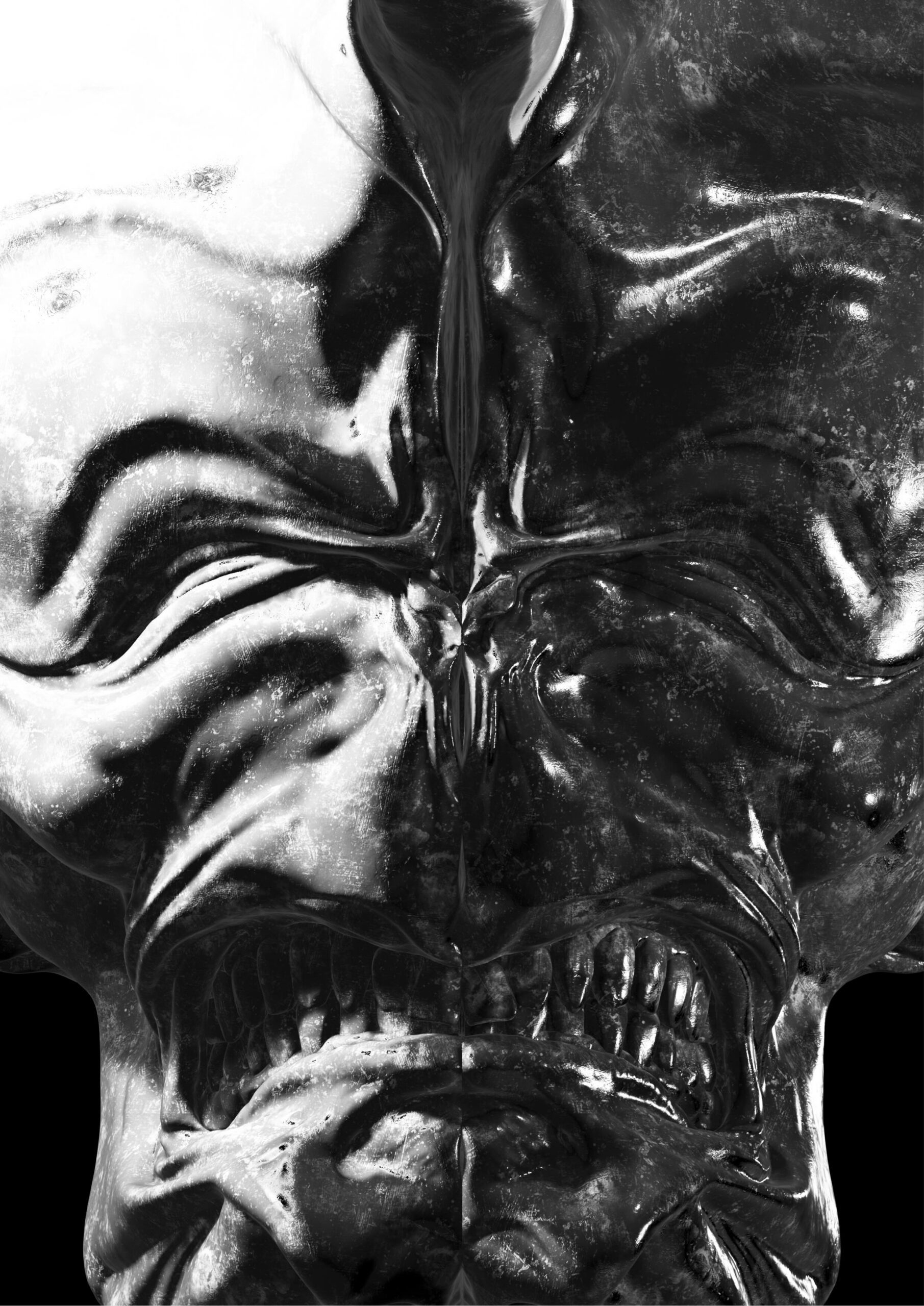
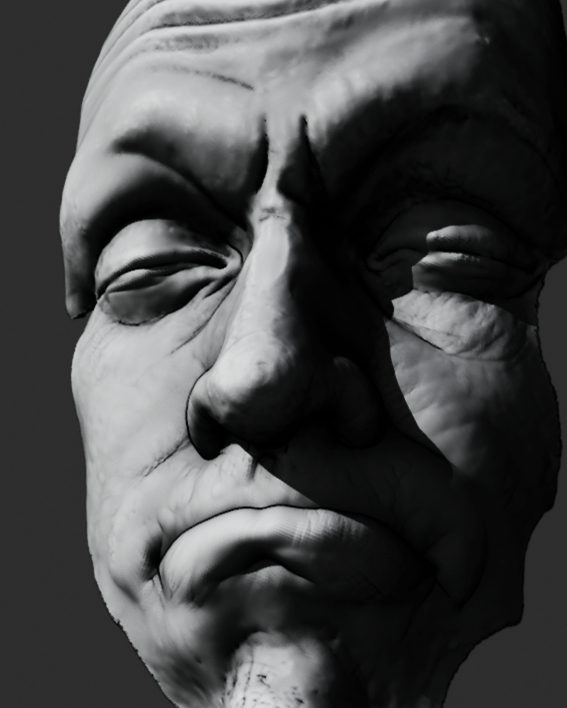
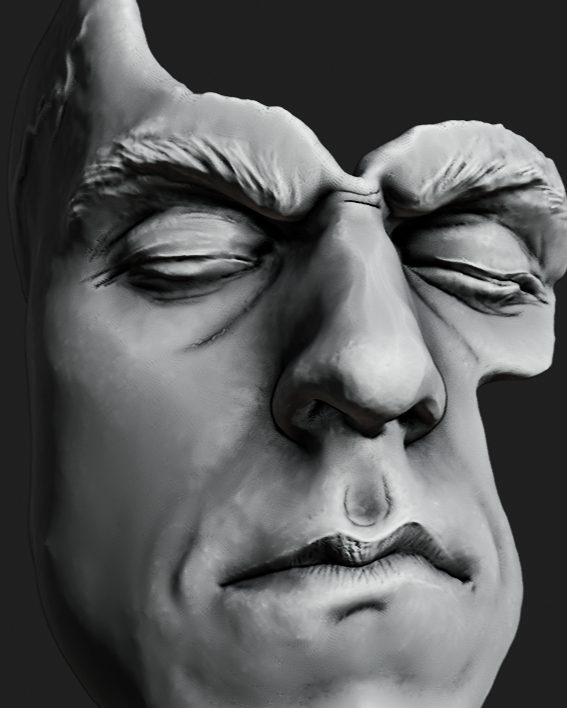
In recent years, my artistic practice has been devoted to exploring the potential of new technologies in sculpture, such as broadly understood 3D modelling and digital sculpture, 3D scanning, and 3D printing. Most of my works are based on an attempt to harness the properties of the materials used and the new possibilities offered by the aforementioned categories. Each new technique, just like traditional ones, determines the way I work and opens up a different range of formal possibilities. I try to discover as many of these as possible, which is why my works span varied subject matter and are rendered in different stylistic registers — from grotesque exaggeration of human facial expressions, through linear relief loosely referencing nature, to complete abstraction.

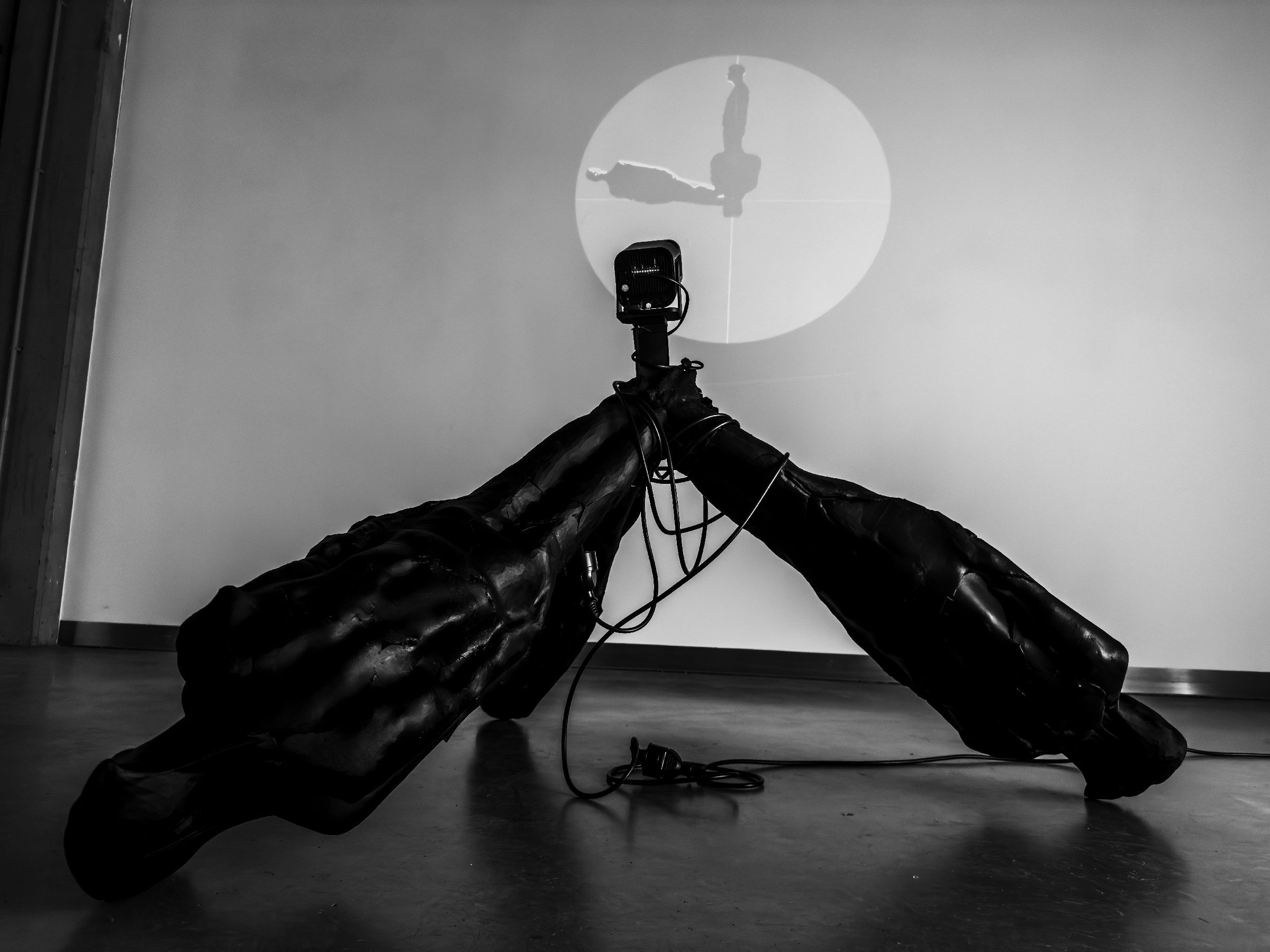
The need for experimentation and the search for new solutions is also rooted in my work with students at the Sculpture Department of the Magdalena Abakanowicz University of the Arts in Poznań — since 2024 I have been coordinating the Digital Techniques in Sculpture Laboratory, which has strongly shaped the character of my works. These are also created with a view to acquiring new knowledge, which is later passed on through teaching. Most works are produced using 3D printing, 3D scanning, video projection of 3D animation, as well as renders used as 2D graphics forming an integral part of the sculptural work.

I also work as an assistant in the study sculpture studio at the aforementioned Sculpture Department — a practice grounded in the study of nature, the live model, and the use of traditional materials such as clay, plaster, and so on. Hence, part of my most recent explorations involves an attempt to build a bridge between traditional techniques and new technologies. Some of the works I am currently developing are based on a juxtaposition of tangible matter with matter of digital origin. I am trying to return to themes I explored long ago — dating back to my student years — in order to reinterpret them through the lens of accumulated experience and the possibilities afforded by newly acquired knowledge and practice.

konrad.smela@uap.edu.pl

Konrad Smela. Born in 1996 in Poznań. In 2016, he graduated with distinction from the Piotr Potworowski Fine Arts High School in Poznań, specialising in Spatial Design. In 2022, he graduated with distinction from the Magdalena Abakanowicz University of the Arts in Poznań with a degree in Sculpture. His practical master’s work was nominated for the Maria Dokowicz Award for the best UAP diploma, as well as for the nationwide Best Diplomas of the Academy of Fine Arts 2022 competition in Gdańsk.

He has participated in numerous group exhibitions both in Poland (including Poznań, Warsaw, Toruń, Kraków, Katowice, and Lublin) and abroad (Czech Republic, France). Since 2022, he has been working at his home university as an assistant in the 3rd Studio of Sculpture and Environment — Study Sculpture. In 2023, he presented two solo exhibitions of sculpture and drawing. He also curated a group exhibition project and a zine publication entitled “Umieralnia” (“The Dying Room”), and since 2023 has served as commissioner and co-curator of the Student Biennial of Small Sculptural Form named after Professor Józef Kopczyński.

He is interested in a broad range of sculptural and drawing techniques — from classical approaches to new technologies. Formally, he works with both figuration and abstraction. He does not entirely believe in the mutual exclusivity of these concepts, preferring to treat them as two opposite poles on a spectrum.

His recent work is oriented toward exploring the potential of new technologies in sculpture, such as digital sculpting, 3D scanning, and 3D printing. He draws inspiration from experienced emotions (usually negative ones), (pop)cultural themes, and existential reflections.

Małgorzata Szymankiewicz

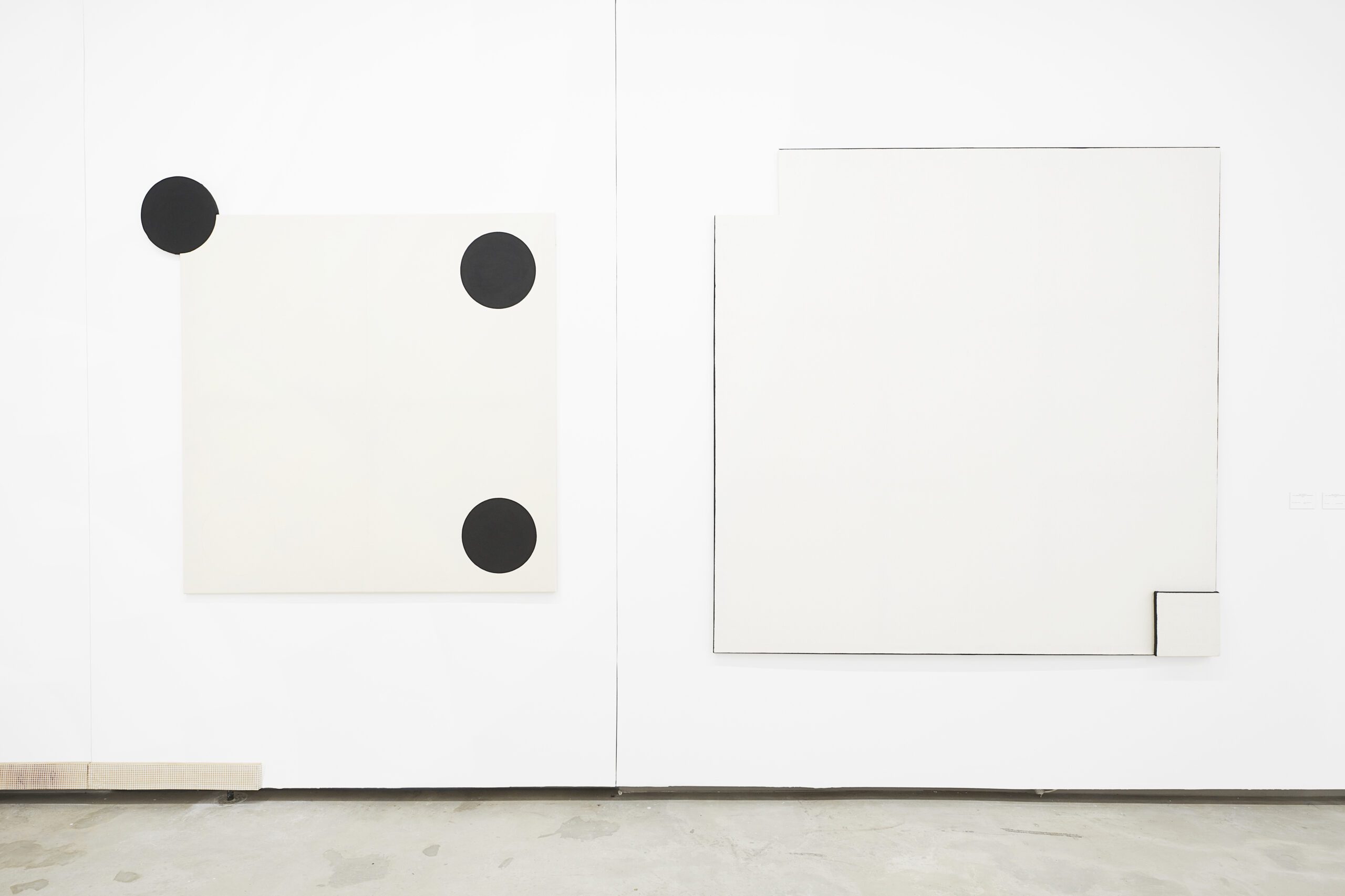
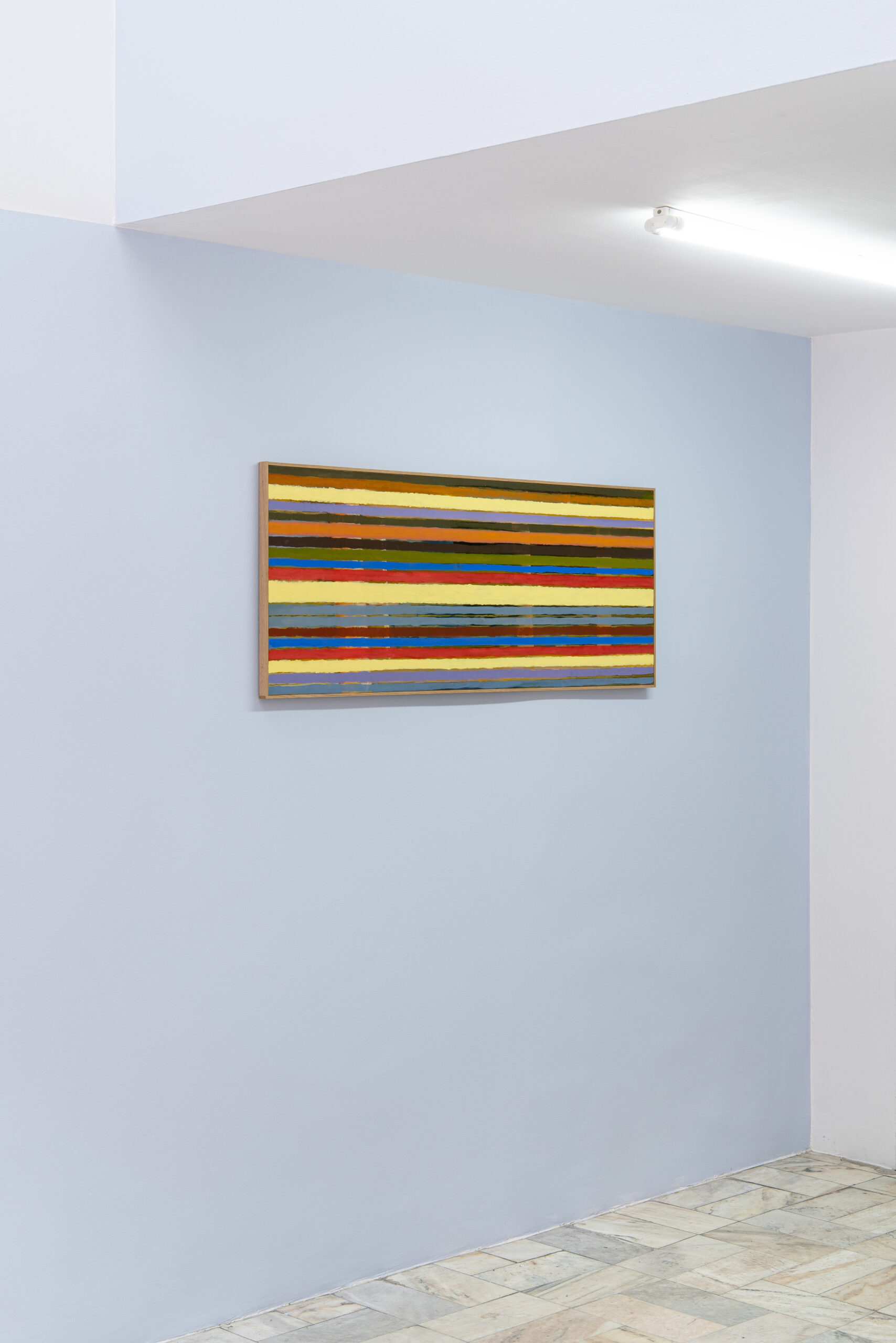
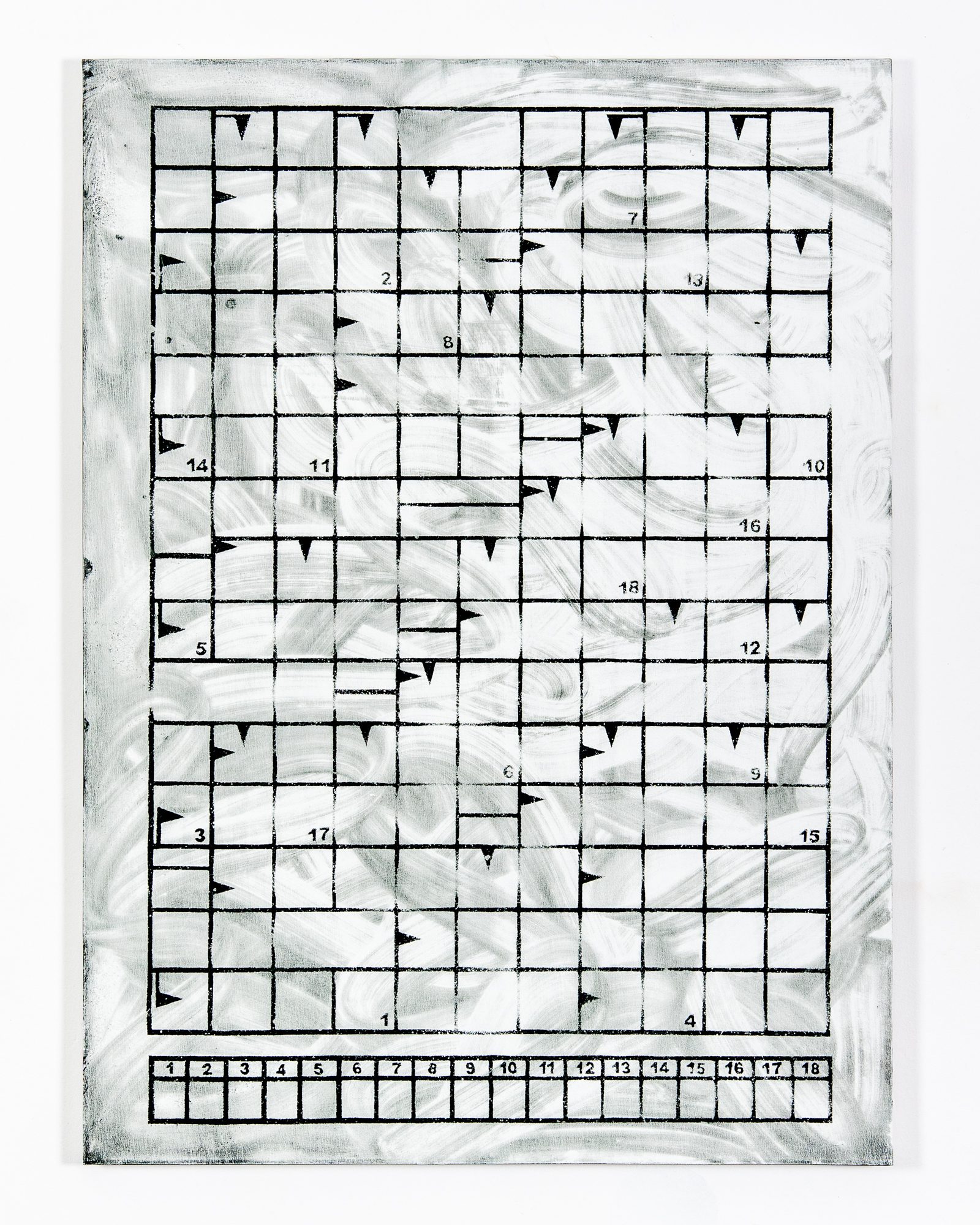
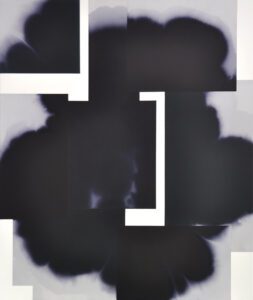
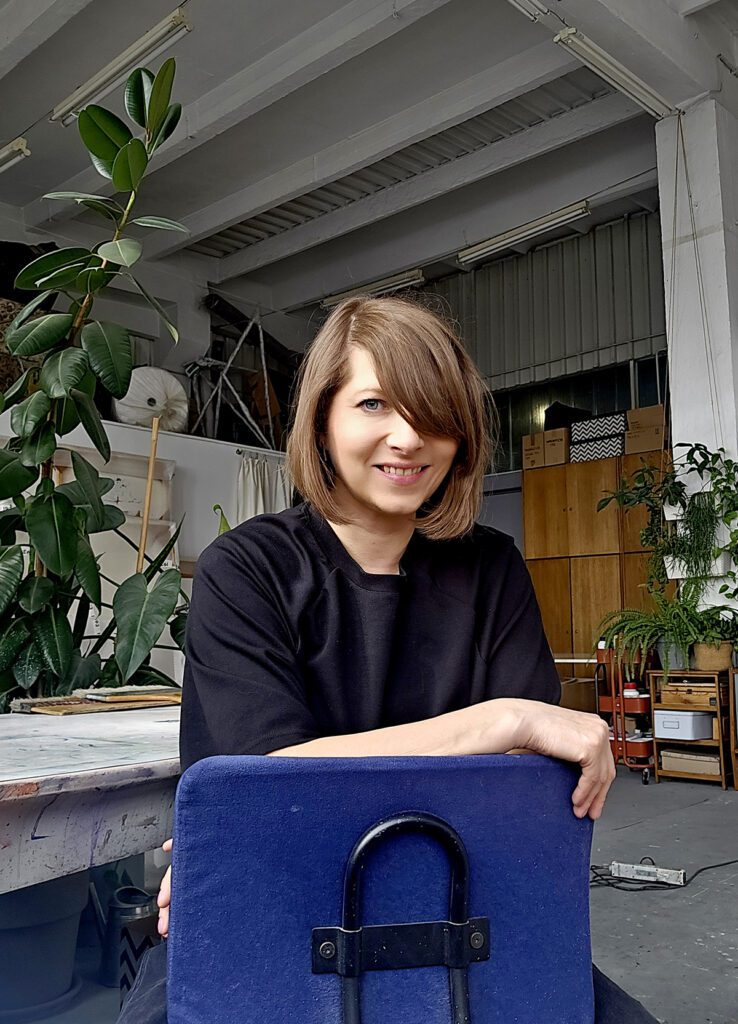
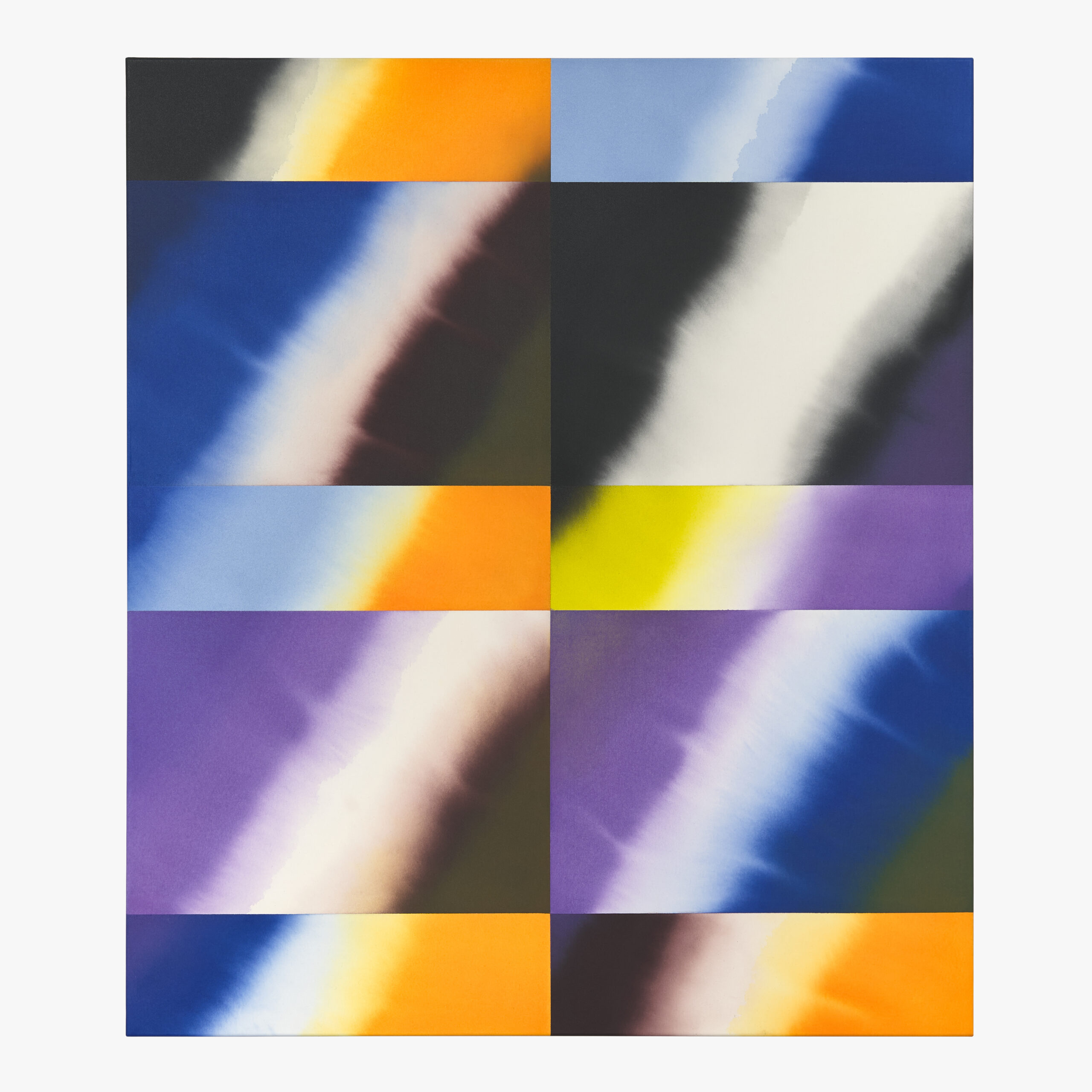
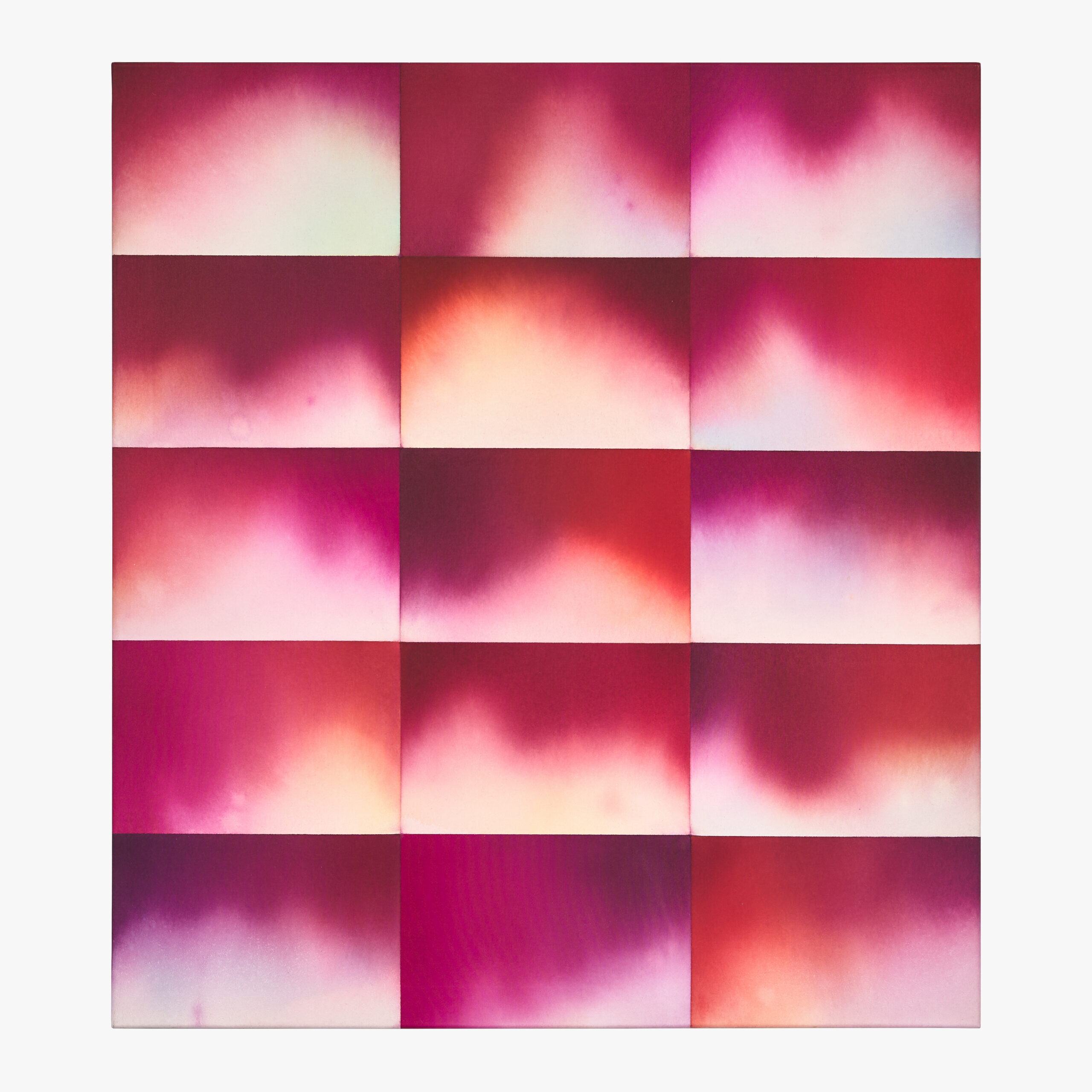
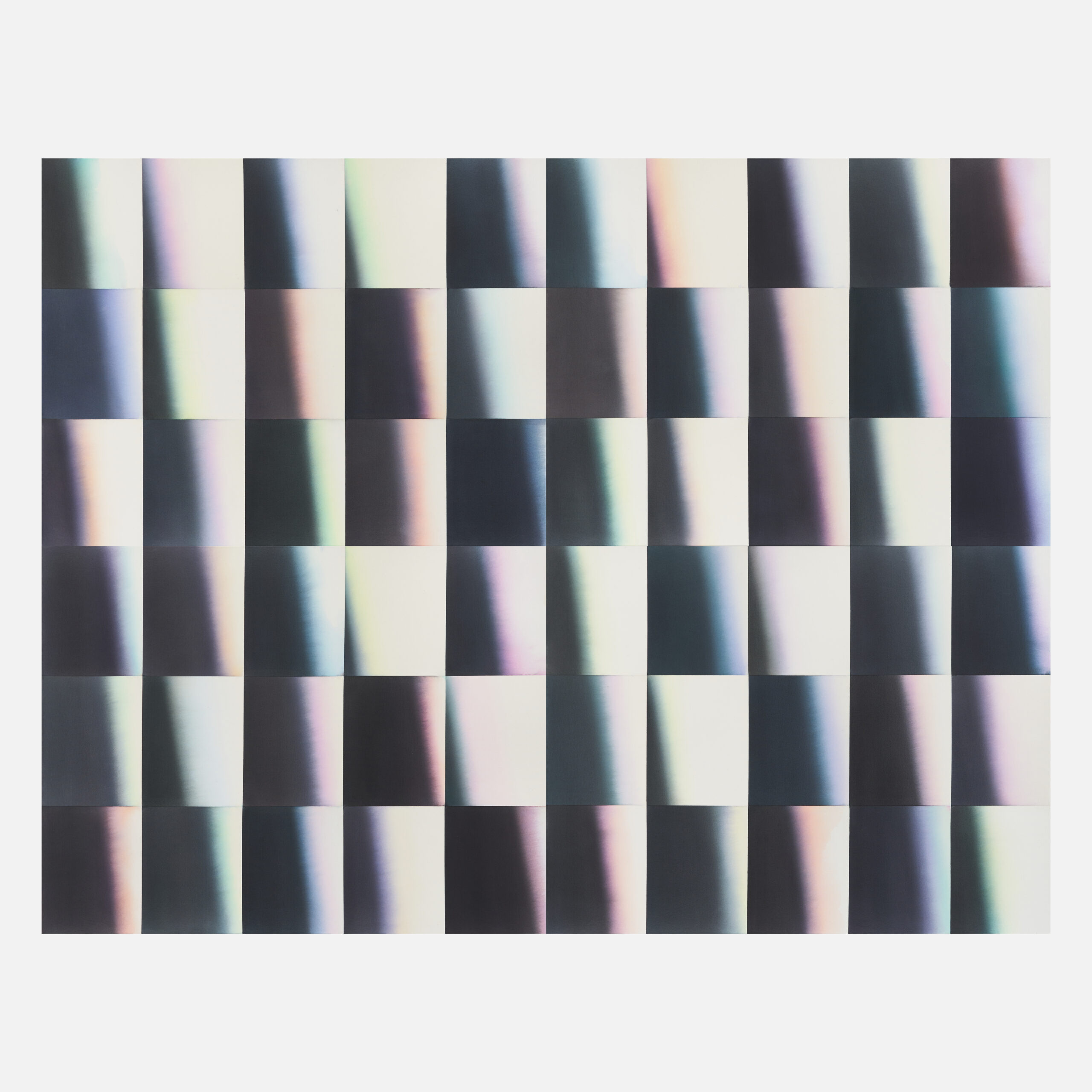
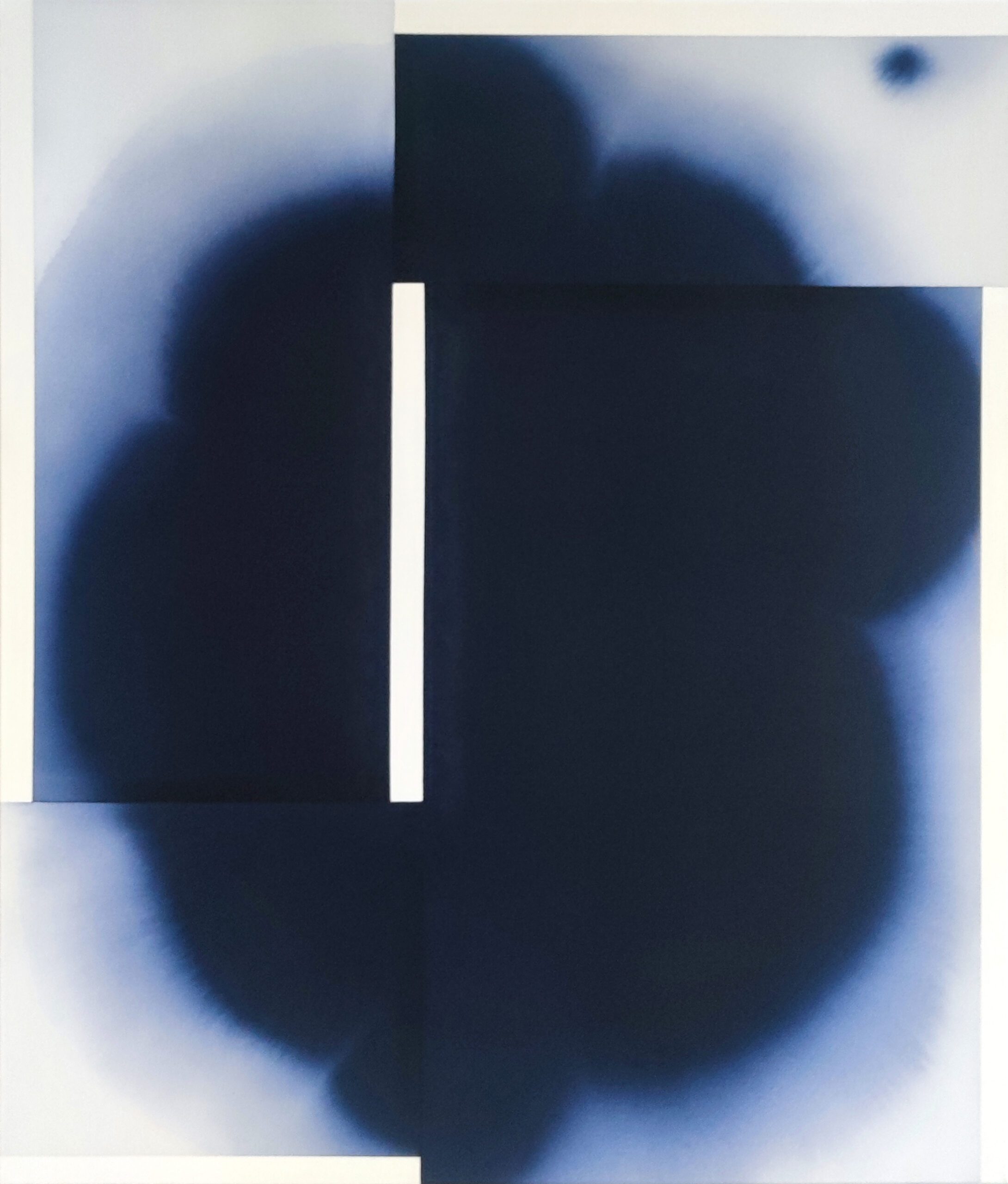
My painting practice operates within the field of (post-)abstraction, understood not as “pure form” but as an epistemic and communicative instrument. Rather than neutralising content, form activates it through relations, tensions, and difference. I begin with the constructive principles of the image: the division of the pictorial plane, modular composition, and the development of series. In this way, I mobilise the relational potential of the painting, which becomes a space of negotiation between gazes, values, and regimes of visibility.

What is “divided” pertains not only to the image itself, but also to community, identity, and the economy of attention. Art, as an act of sharing an idea, can simultaneously produce proximity and reveal existing inequalities, isolation, or an absence of dialogue. Central to my interests are notions such as the grid, the system, and the network/web—understood both as formal motifs and as models for describing reality in its social, economic, and historical dimensions. Of particular significance to me is the modernist motif of the lattice/grid (discussed, among others, by Rosalind Krauss), which I treat as a matrix that both organises and problematises. The grid, line, boundary, or point are not merely compositional elements; they are carriers of meaning that provoke questions of division, control, normativity, and exception.

I employ strategies drawn from the aesthetics of collage and techniques of postproduction: cutting, fragmentation, repetition, recombination, and the conjunction of contradictions. These gestures—only ostensibly technical—I understand as fully meaningful. They become a form of “politics” and “philosophy” inscribed into the materiality of the image: they challenge the status quo of any totality and generate a space in which divergent values collide. In this way, I resist framing reality as an indisputable, one-dimensional whole. The image should rather disclose a multiplicity of perspectives and their irreducible friction than offer the semblance of objective description.

At the same time, I do not fully trust rigour. Relations are, for me, unpredictable; therefore I introduce contingency, organic processes, and the freedom of the painterly stain. In doing so, the order of the grid is negated, setting the image into pulsation or motion, instability, and deformation. I am interested in the tension between intentionality and event, project and memory, rule and that which escapes the script. Painting becomes the production of a situation over which I do not have complete control (for instance, working in fragments by masking parts of the canvas), in order to see whether the elements cohere into unity or instead generate dissonance, collision, or dispute.

I regard abstraction as inherently democratic—not because it is “easy,” but because it begins with a sensuous encounter in which ready-made interpretive schemes no longer apply. Every viewer possesses sufficient competence for the work to “come to completion” within them, each time differently. The image does not need to explain anything or “repair” the world. It can, however, create a space of attentiveness in which a fragment ceases to be the “inferior part” of a whole and becomes an autonomous unit capable of forming new constellations of meaning. For me, painting functions as a subtle ontology: a practice that allows one to think through the relation between unity and multiplicity, order and chaos, and, simultaneously, how we negotiate commonality in a world that is materially fractured.

szymankiewicz777@wp.pl

Małgorzata Szymankiewicz (b. 1980) is a graduate of the University of the Arts in Poznań (2005), where she completed studies at the Faculty of Painting and the Faculty of Artistic Education. In 2019, she received the postdoctoral degree of habilitated doctor (dr hab.) from the Academy of Fine Arts in Katowice. She is a Professor at the Academy of Art in Szczecin, where she co-leads a painting studio at the Faculty of Painting and Curatorial Practices.

Her works are held in the collections of the National Museum in Poznań, the National Museum in Gdańsk, the “Zachęta” institutions in Szczecin and Poznań (acquired through the National Collection of Contemporary Art programme), Galeria Bielska BWA in Bielsko-Biała, the Pizzuti Collection in Columbus, Ohio (USA), the Contemporary Art Department of the National Museum in Szczecin, as well as the Pekao Project Room collection at Ujazdowski Castle Centre for Contemporary Art in Warsaw, and in other private collections in Poland and abroad.

She works with painting and object-based forms. Her interests focus on conceptual and formal questions and on the traditions of Polish and international abstract painting. She lives and works in Poznań and Szczecin.

Agnieszka Topolska

In my artistic practice, I explore the relationships between matter, the body, and social structures that shape everyday life in the context of late capitalism. I primarily work with sculpture and installation. I see art as a tool for questioning dominant hierarchies and worldviews based on the logic of supremacy.

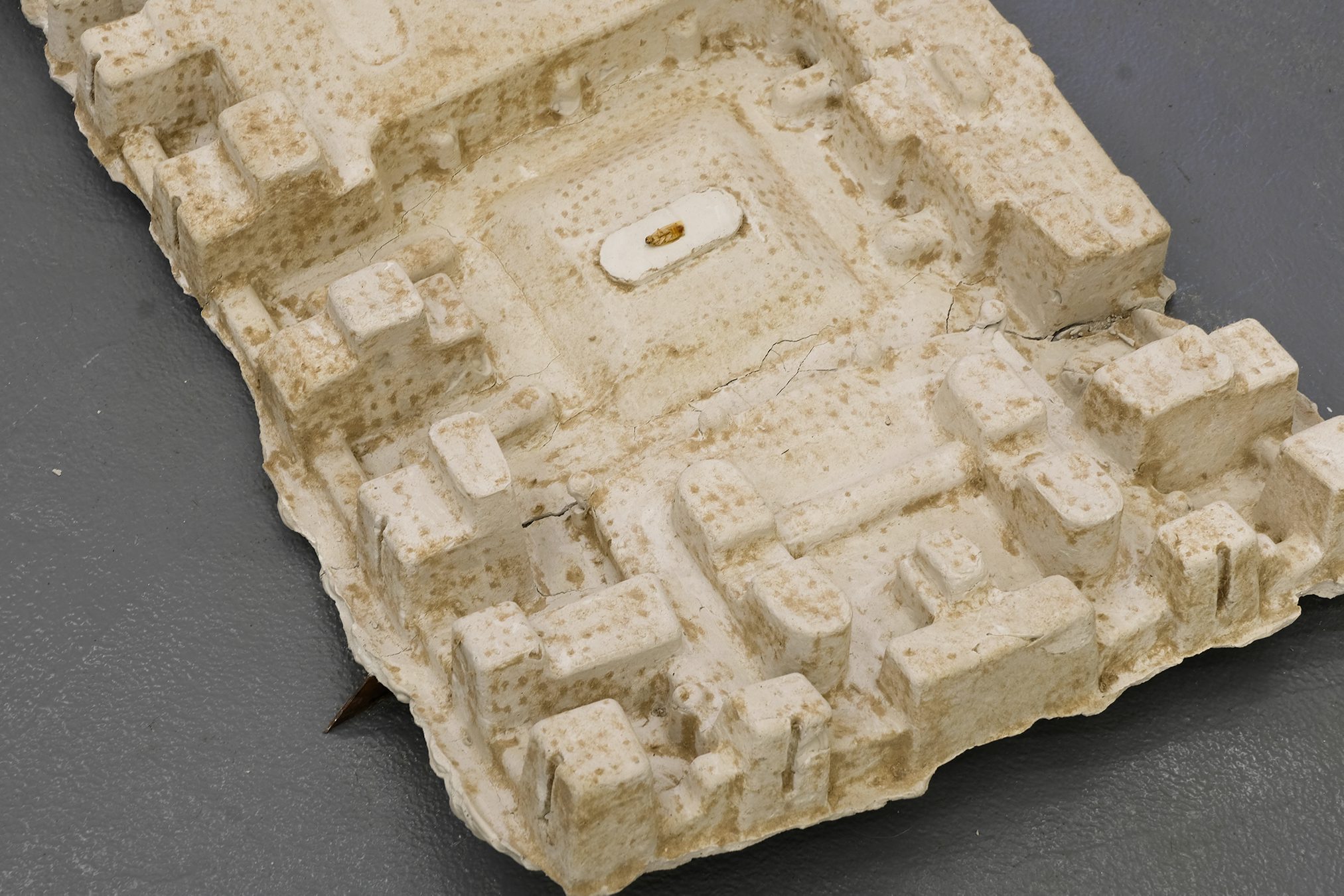
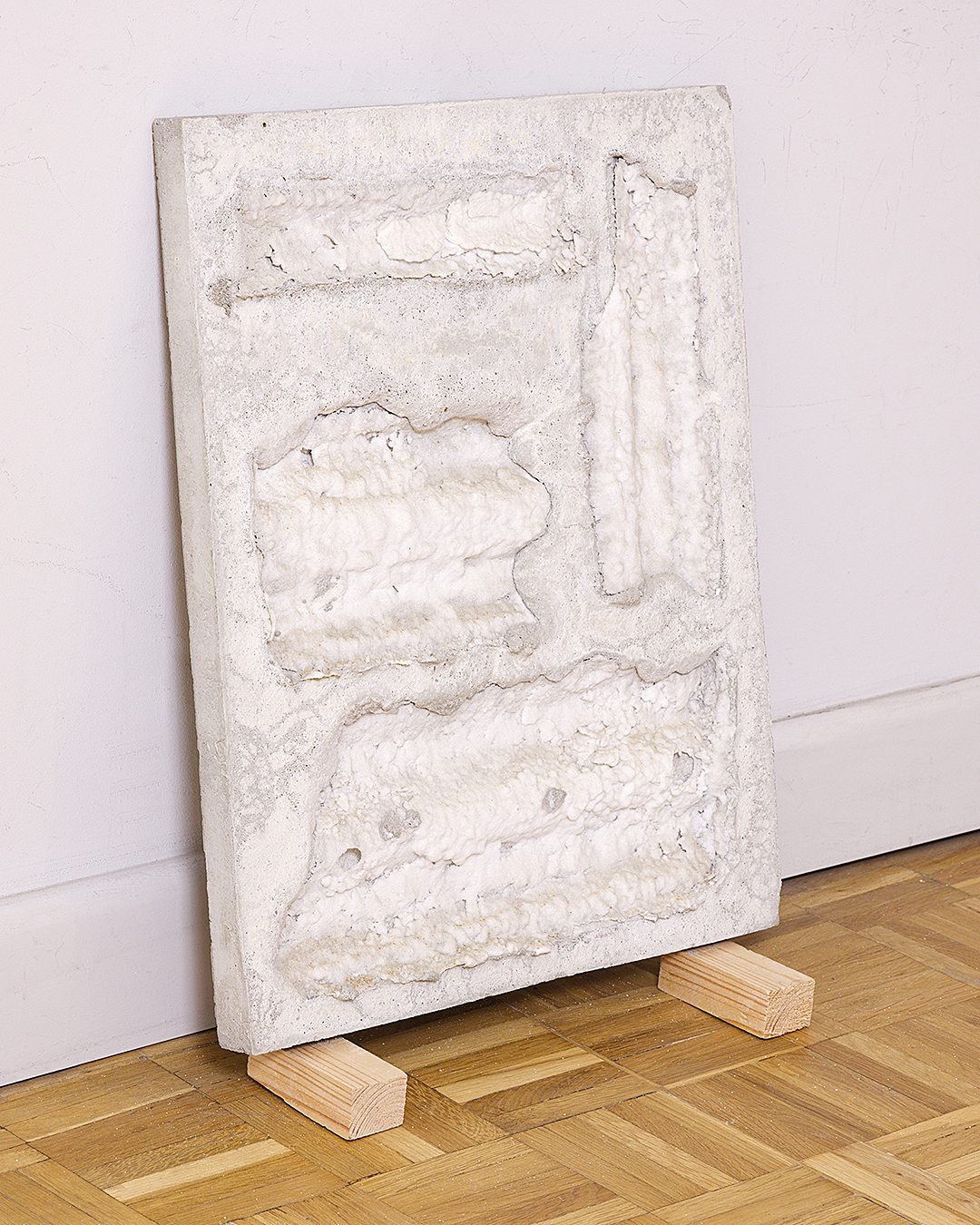
I am interested in the hidden reality that exists beneath the material surface of objects. An important part of my practice is working with found objects and with the life cycles of materials. I also use organic matter, exploring the relationship between what is human and what is more-than-human.

My work often combines found elements with process-based sculptural work. Time spent in the studio and direct contact with materials are essential to my practice. I see artistic work as a way of confronting climate anxiety, visions of catastrophe, and the weight of existence in the era of the Capitalocene.

Curatorial and community-based activities are also an important part of my work. I focus on creating spaces for dialogue, promoting contemporary art, and making it more social, inclusive, and accessible. I pursue these values, among other ways, through my involvement in Galeria Szczur in Poznań, which I co-create.

aggtopolska@gmail.com

Agnieszka Topolska (b. 1998, Poznań, Poland) is a visual artist and curator. She primarily works with sculptural objects and installations. In her curatorial practice, she focuses on creating spaces for dialogue and increasing the accessibility of contemporary art. She graduated from the Intermedia program at the University of the Arts Poznań, where she is currently pursuing her MA degree. She is the founder and co-creator of Galeria Szczur in Poznań.

Wiktor Wolski

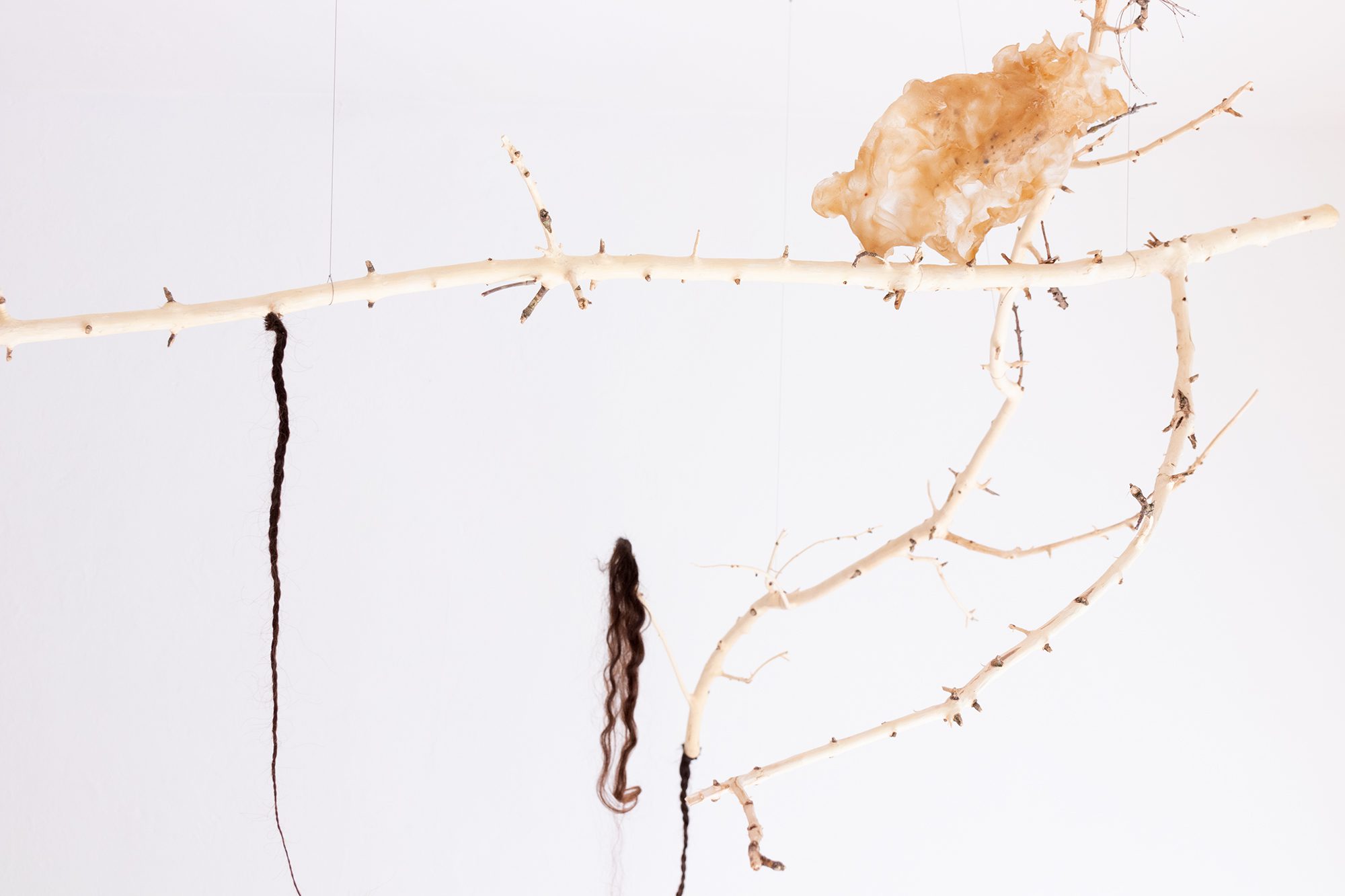
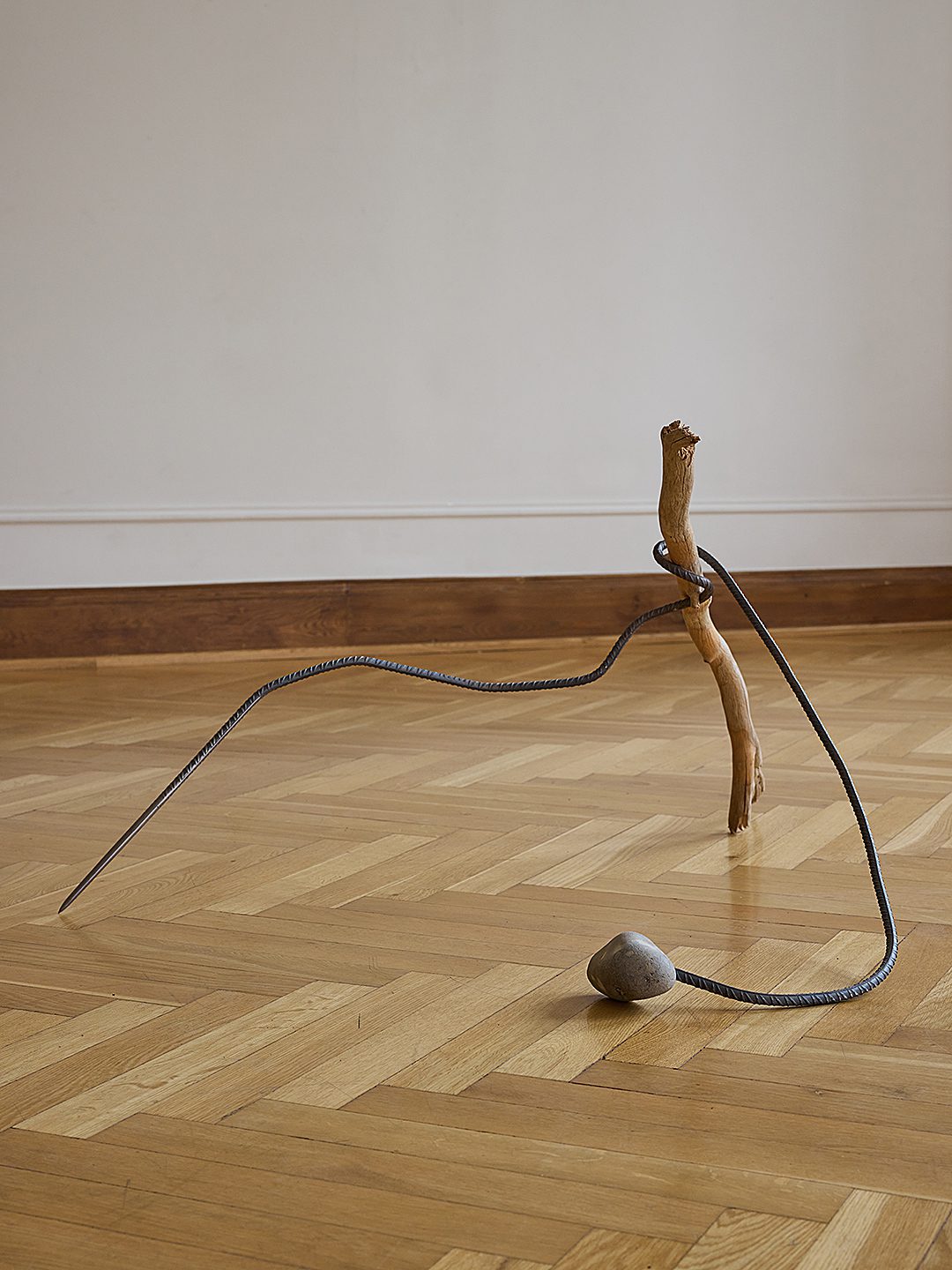
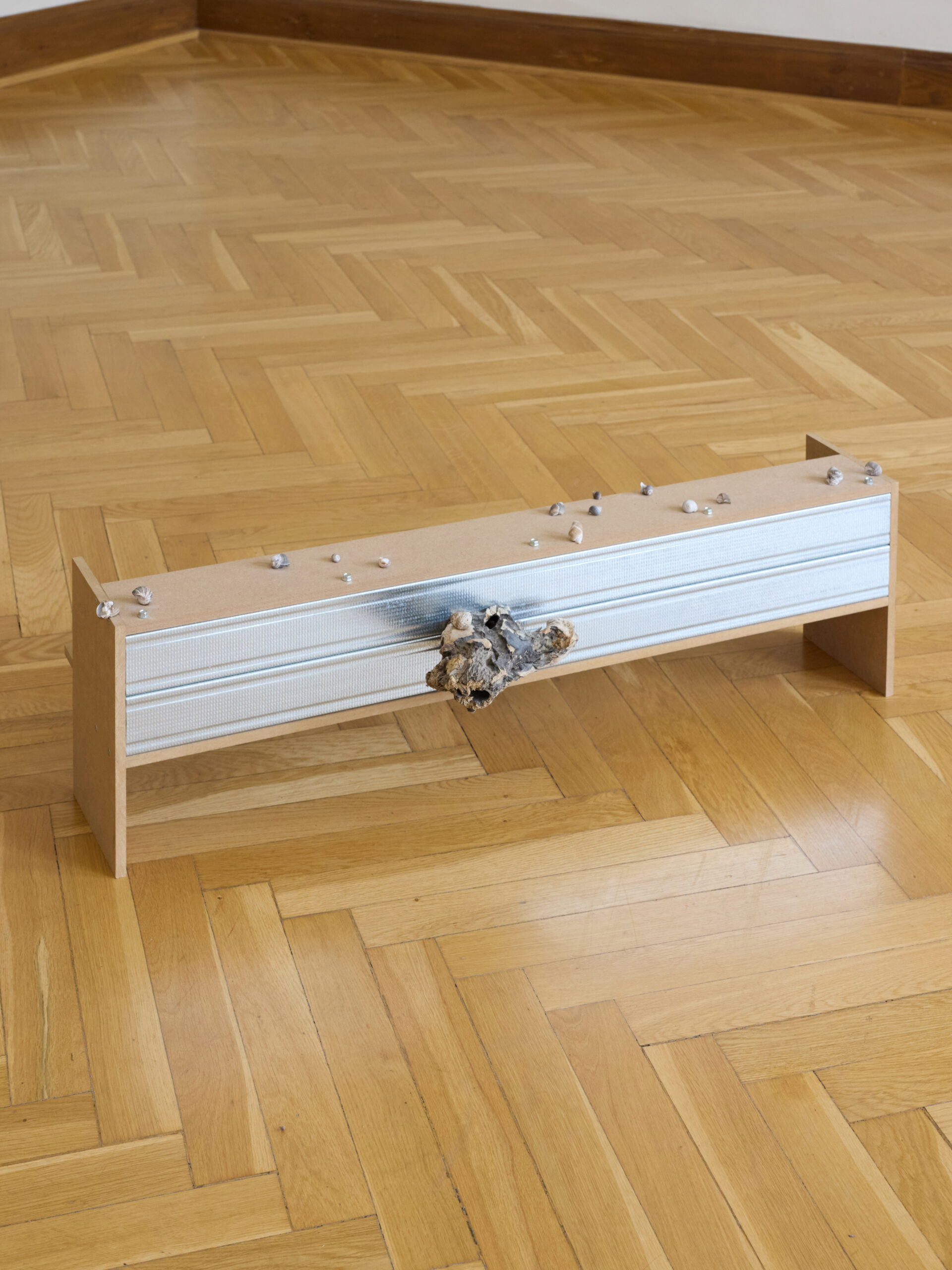
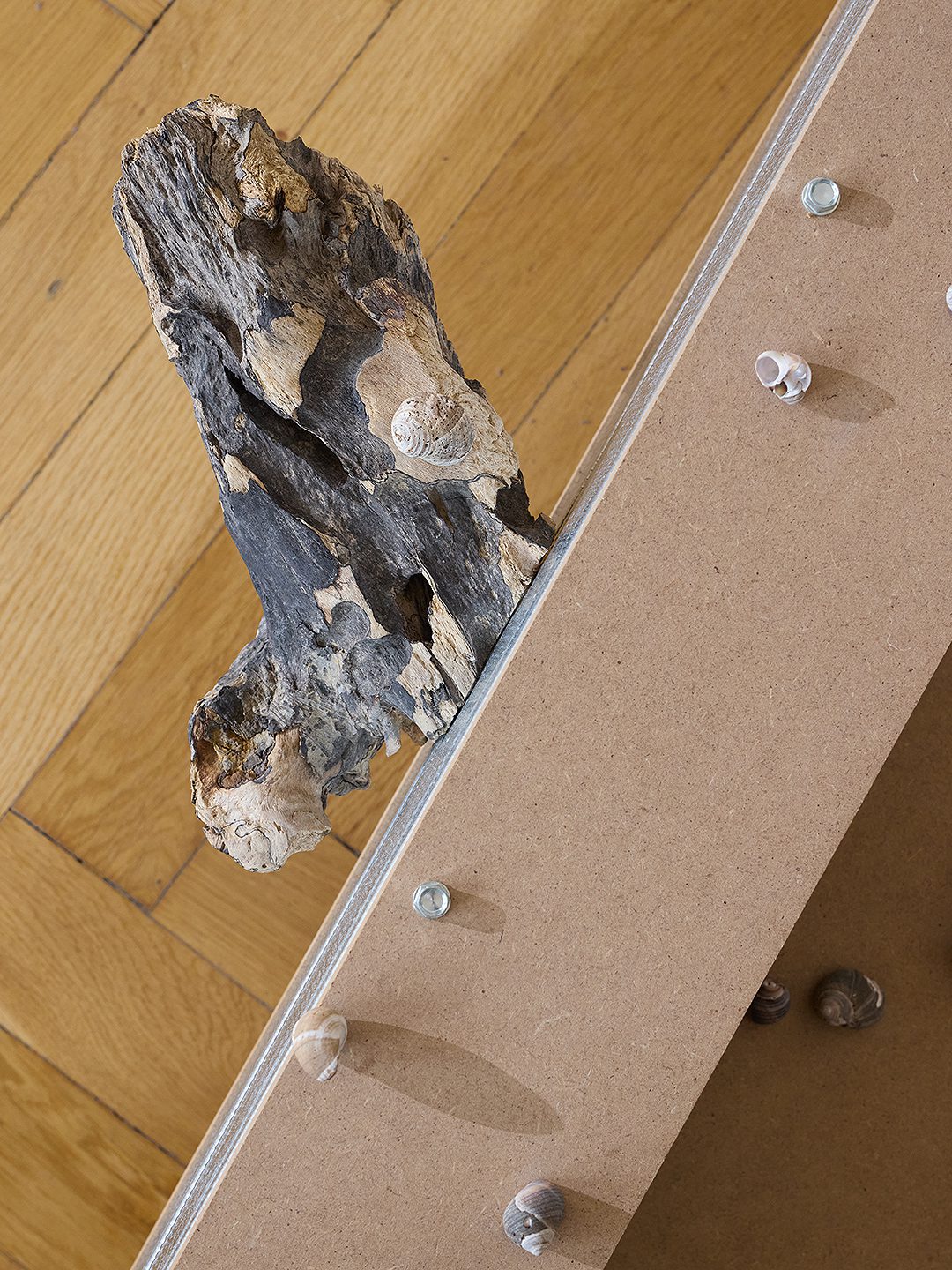
I create mostly objects and installations. In my practice, I combine industrial/construction materials, furniture fragments (often found, salvaged, giving them another life) with natural materials or those given back by nature. I’m fascinated by ruins, leftovers, and shells; the remains of forest huts and ramshackled barns; views that will disappear in the blink of an eye or be buried in the ever-increasing noise. I like them to be at least a little playful.

w.teodor.wolski@gmail.com

Wiktor Wolski (born 1992). In 2020, he graduated with a Master’s degree from the Faculty of Graphic Arts and Visual Communication at the University of Arts in Poznań.He co-founded the Poznań-based self- publishing collective Ostrøv, with which he collaborated with numerous artists, initiatives, and institutions from Poznań and Poland (Places of Everydayness – in collaboration with the Arsenał Municipal Gallery, the Institute of Sociology UAM, with the support of Meble Vox; Manors and Palaces – a book by Małgorzata Myślińska, as part of the Zamek Cultural Center residency). He was a finalist in the Hestia Artistic Journey 2017. He has participated in exhibitions in Poland and abroad (including Art in Art, Mocak; Argument Place,Stadtgalerie, Bern).

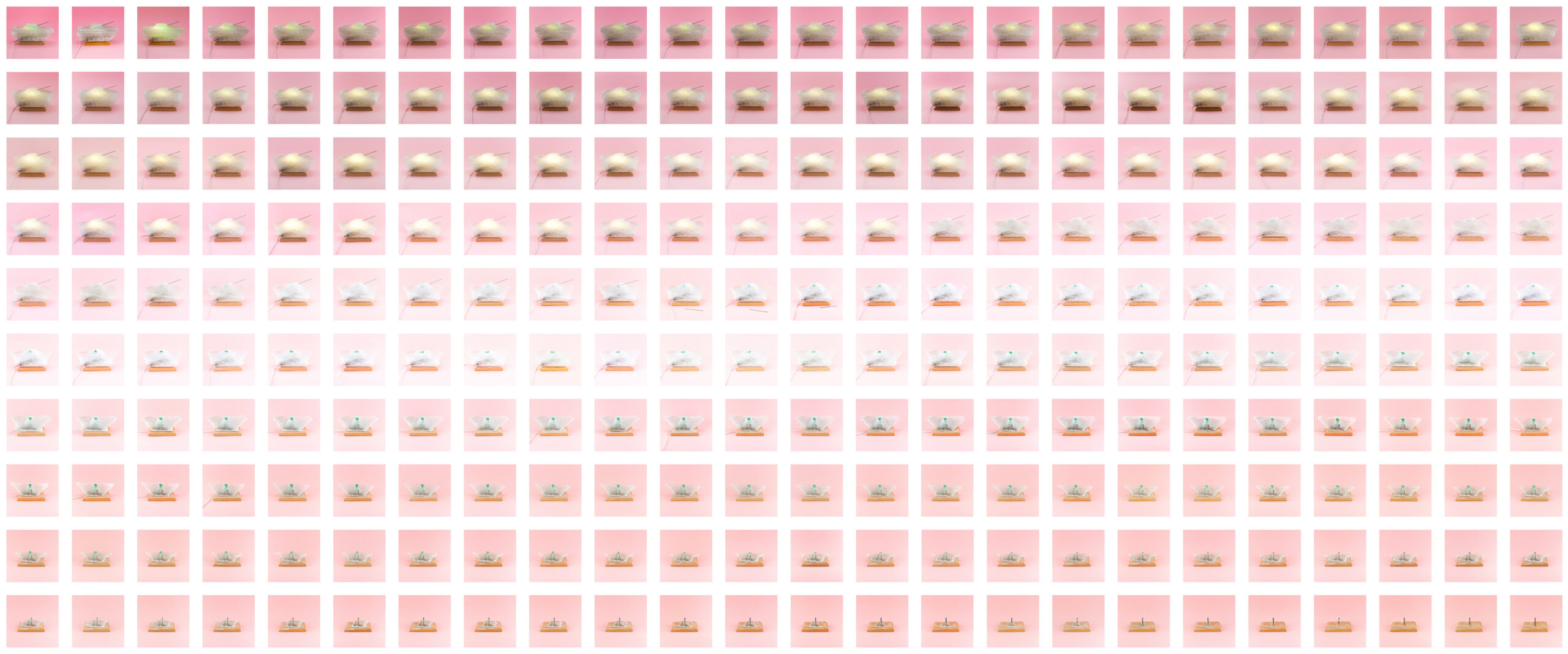
Klara Woźniak

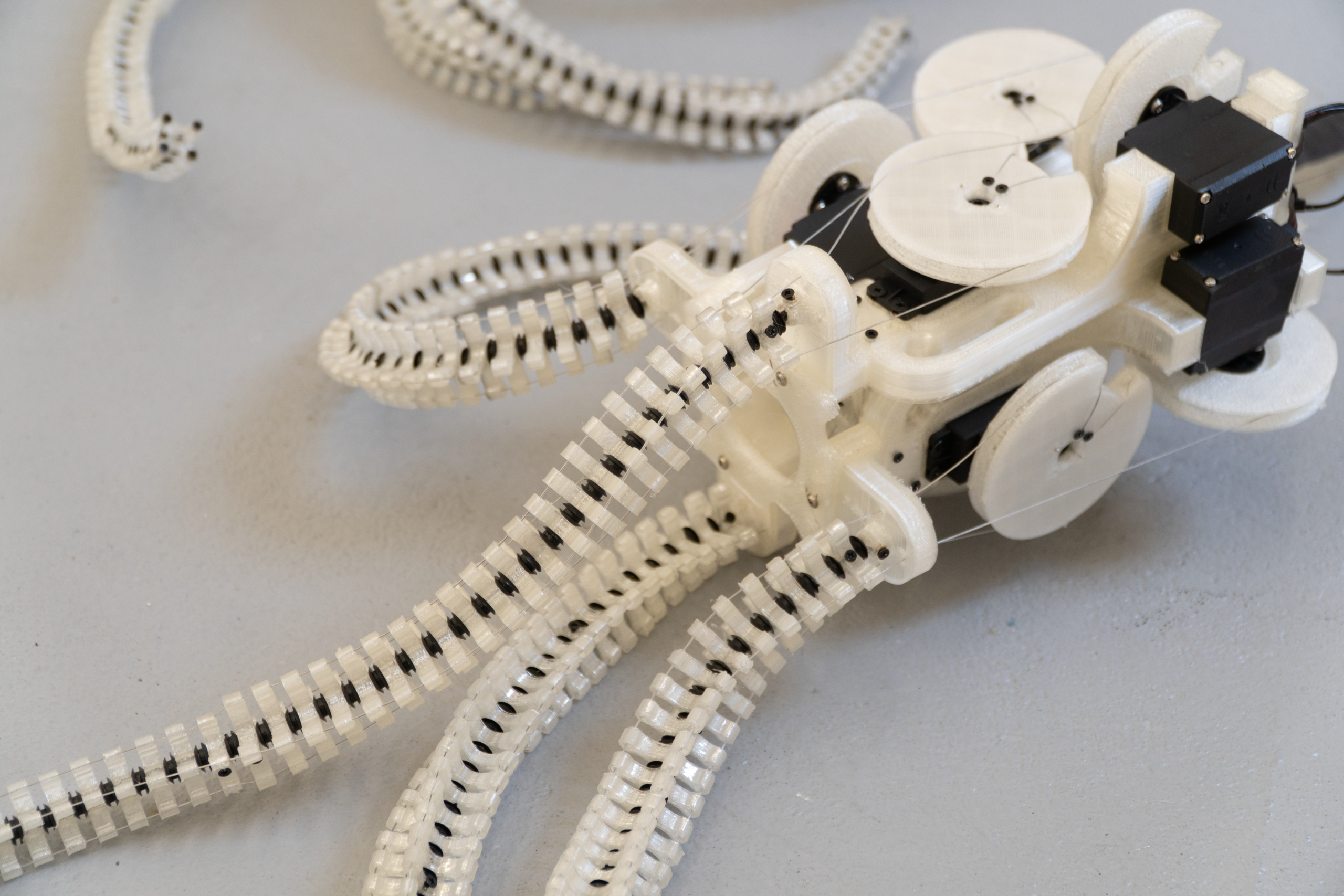
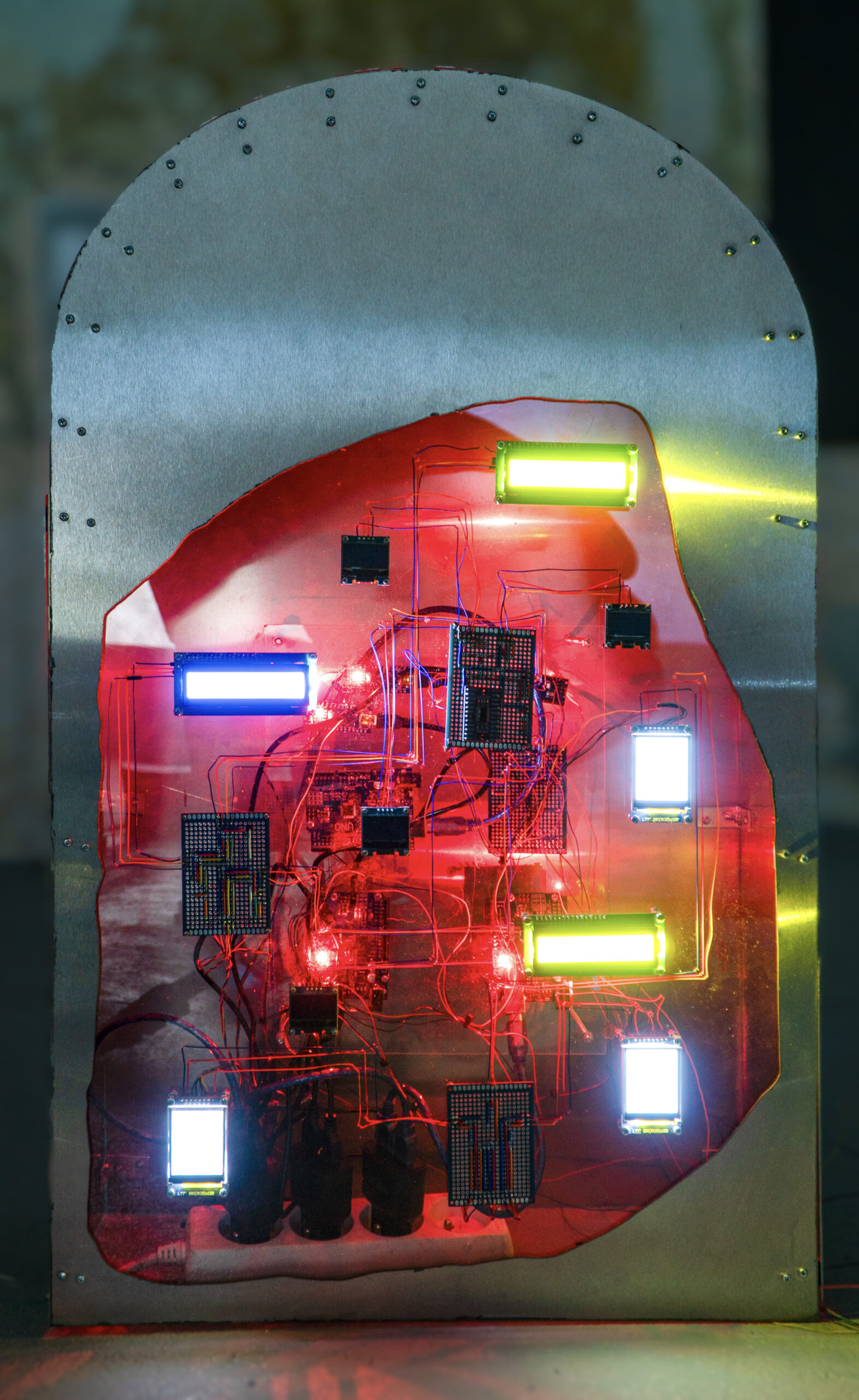
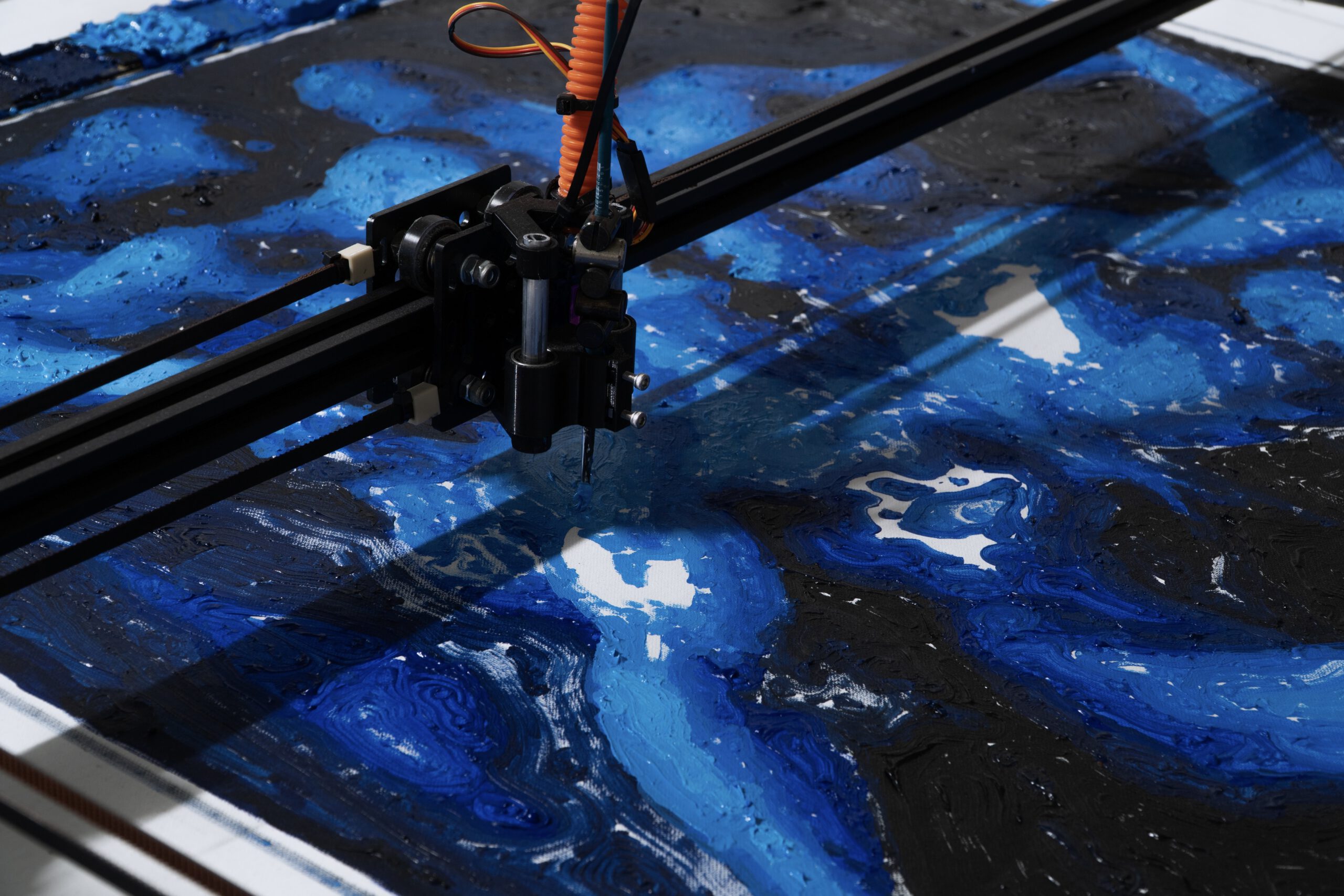
My artistic practice focuses on the exploration of informational and cybernetic systems, as well as the intersections between science and art. I work primarily with new technologies, including robotics, design, or programming and treating them both as tools and as subjects of critical reflection. Through installations, robotic objects, video games, and simulations, I create research- based environments in which I test relationships between humans, machines, and technological infrastructures.

My works often engage with the climate catastrophe and necropolitics, examining how power over life and death is distributed within society through technology, science, and systems of data governance. I am interested in futurist forms of coexistence, relationships between human and non-human agents, and communication systems that shape our perception of reality and the possibilities of living together.

klara.wozniak99@gmail.com

Klara Woźniak (b. 1999, Warsaw, Poland) is a visual artist and a graduate of Photography at the University of the Arts in Poznań. Since 2023 she has been an assistant in the Experimental Photography Studio at UAP. Since 2024 she has co-created the Szczur Gallery in Poznań. Her interests include generative imagery, cybernetic and information systems, and machine vision. She works with short film forms, simulations, robotic objects, and multimedia installations. Her works have been exhibited in Poland, Greece, the United Kingdom, Italy, and the United States (selected exhibitions: From the Ashes, Zachęta — National Gallery of Art; 8304, Krakow Photomonth; Feed Your Demons and Meet the Ally, One Project London; Wizyta, CK Zamek; 1989, MPAC; Bieguny, GaMA).

Scroll to Top